
Choosing the right meat packaging format is a sourcing decision that affects shelf life, cold chain logistics, retail presentation, and your cost per unit. This guide breaks down seven packaging types widely used across fresh, frozen, and processed meat products, so procurement teams and food processors can match each format to the right application.
Whether you supply supermarket chillers, export frozen beef, or run a cooked-meat processing line, each format below comes with distinct trade-offs in protection, equipment investment, and freight efficiency. Understanding these differences upfront helps you avoid over-specifying materials or under-protecting high-value cuts.
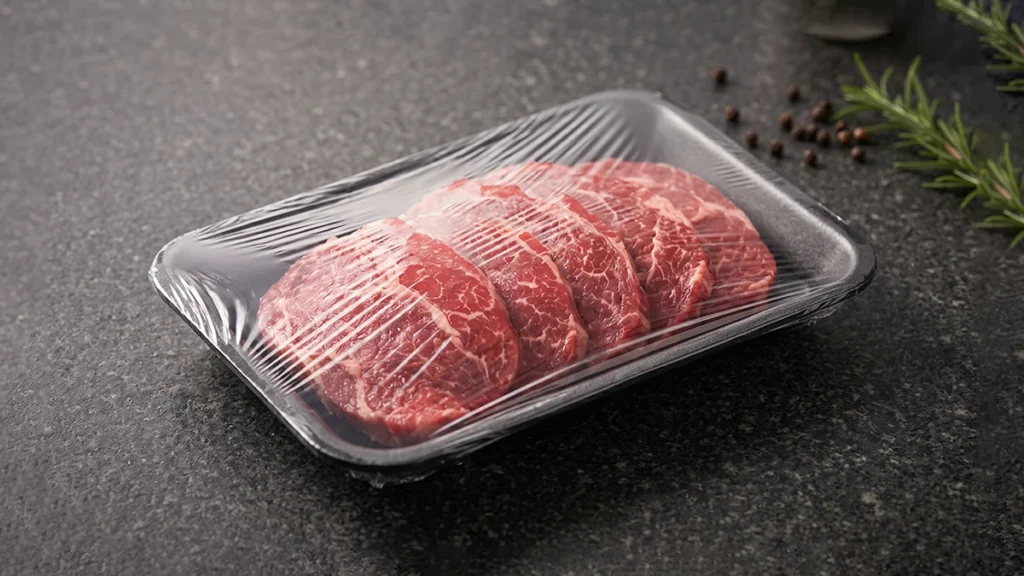
Overwrap Packaging (Stretch Film on Tray)
Overwrap is the most familiar format at the retail level: a meat cut sits on a plastic tray, and a stretch film is wrapped and sealed over the top. The film clings to the tray edges, holding the cut in place while allowing a limited amount of oxygen exchange that keeps fresh beef and pork looking bright red.
Best-fit applications
- Fresh red meat and poultry portions sold in supermarket chillers
- Short-shelf-life products moving quickly through retail channels
- Sausages, diced meat, and sliced products where visual display matters
Pros and cons
The main advantages are low material cost, strong product visibility, and simple operation on manual or semi-automatic wrapping stations. It is often the most affordable entry point for processors supplying local retail.
The limitations are just as clear. Oxygen transmission keeps the meat attractive but shortens chilled shelf life to a few days, drip loss can pool in the tray, and the format offers little physical protection during rough distribution. For export or extended cold chain, it is usually the wrong tool.
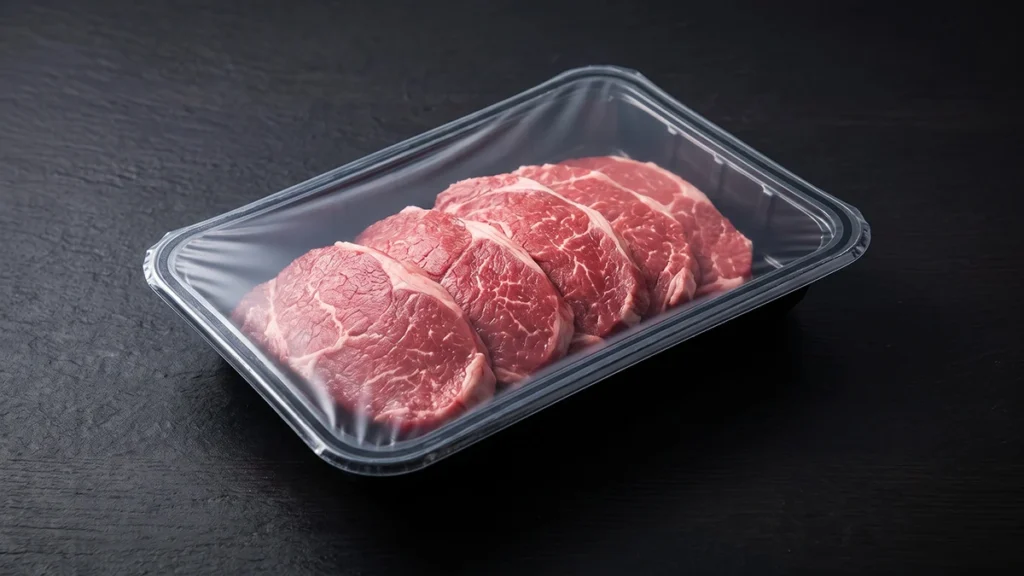
Modified Atmosphere Packaging (MAP)
MAP replaces the air inside a sealed tray or pack with a controlled gas mixture, typically high oxygen for fresh red meat to preserve color, or high carbon dioxide with nitrogen to slow microbial growth on poultry and cooked meats. A barrier lidding film is sealed onto a rigid tray on a tray-sealing machine.
Best-fit applications
- Premium fresh meat sold under supermarket own-label programs
- Central kitchen and foodservice portions needing several extra days of chilled life
- Cooked and marinated meats where color stability drives purchase decisions
Pros and cons
MAP extends chilled shelf life well beyond overwrap, reduces drip through absorbent pad systems, and supports stackable, leak-resistant pack designs. It also allows portion control and consistent retail presentation.
On the buyer’s side, MAP requires barrier trays and films, gas flushing equipment, and reliable seal integrity testing. Costs per pack run higher, and any leak in the seal defeats the entire gas mixture, so quality control discipline matters more than with simple overwrap.
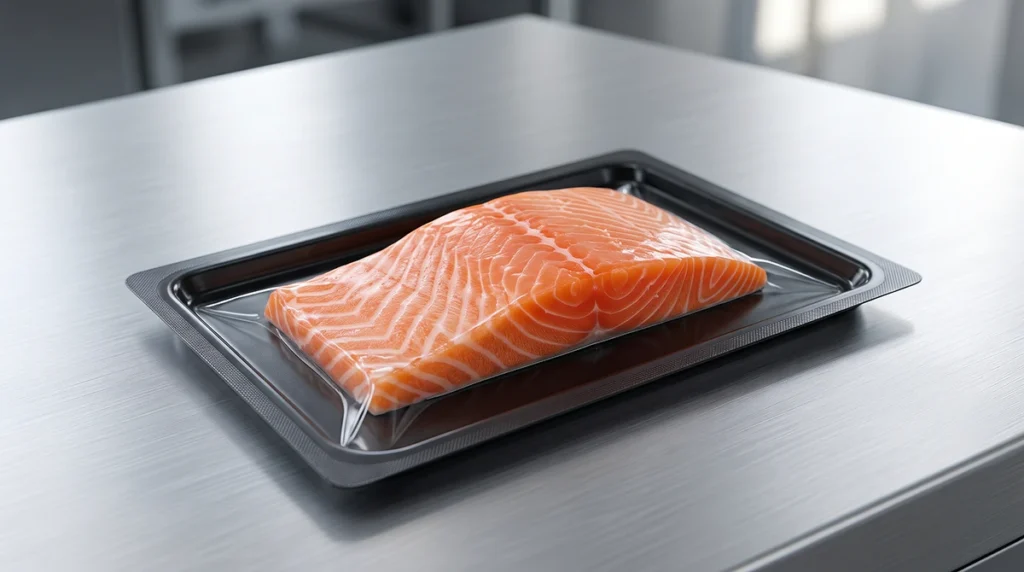
Vacuum Skin Packaging (VSP)
VSP draws a heated barrier film down over the meat and the tray, creating a second-skin that hugs every contour of the cut. Because almost all air is removed, the film locks the product in place and virtually eliminates free-flowing drip inside the pack.
Best-fit applications
- Premium steaks, lamb racks, and portion-controlled cuts
- Products destined for long chilled distribution or export markets
- Marinated meats, where the skin keeps sauce evenly distributed
Pros and cons
VSP delivers the longest chilled shelf life among tray-based formats, a compact and leak-free pack shape that handles pallet stacking well, and an upscale look that supports premium pricing. The tight skin also immobilizes the cut, reducing damage in transit.
The trade-offs are higher film and tray costs than MAP, a distinctive appearance that some shoppers associate with frozen rather than fresh, and dependence on skin-pack machinery. If your retail channel values bright red color over shelf life, high-oxygen MAP may still win the shelf test.
Vacuum Shrink Bag (Cryovac-Style Packaging)
Here the meat goes into a multi-layer barrier bag, vacuum is drawn, and the bag is heat-sealed, then passed through hot water or steam to shrink the material tightly around the cut. This is the workhorse format for primal cuts, whole muscles, and bulk bone-in products moving from processors to further processors and foodservice distributors.
Best-fit applications
- Whole primal cuts, briskets, and bone-in beef or pork shipped chilled or frozen
- Cured hams, smoked products, and deli muscles
- Bulk export shipments where pack durability and cube efficiency matter
Pros and cons
Shrink bags are tough, puncture-resistant against bones, and highly space-efficient once shrunk tight. They offer long chilled and frozen shelf life at a relatively low material cost per kilogram of meat, which is why the format dominates B2B meat trade.
The limitations are presentation-related rather than protective: the pack hides the product, so it suits trade channels more than retail shelves. It also requires a chamber vacuum sealer or rotary vacuum machine, so smaller operations without equipment often source pre-packed product instead.
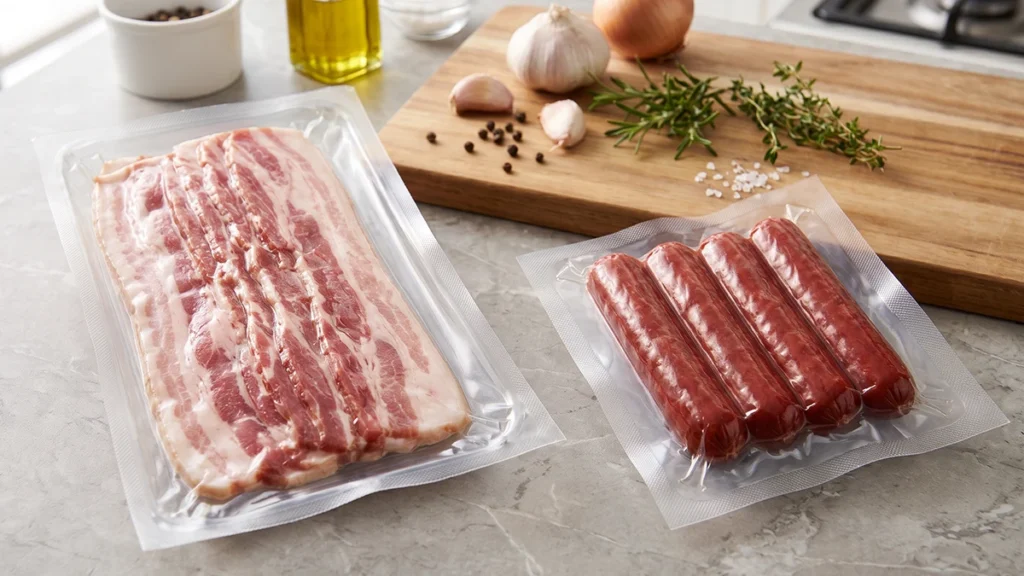
Thermoforming FFS Film and Stand-up Pouch Formats
Thermoforming form-fill-seal lines create the package bottom web from a roll of film, form the cavity, load the meat, and seal a top web in one continuous process. Stand-up pouches and pre-made zipper bags occupy the other end of the flexibility spectrum, common for jerky, snack sticks, frozen marinated meat, and value-added retail products.
Best-fit applications
- High-volume sliced bacon, ham, and salami on thermoforming lines
- Dried and semi-dried meat snacks in printed stand-up pouches
- Frozen marinated cuts and value packs in resealable zipper bags
Pros and cons
Thermoforming FFS offers excellent production speed, precise portion control, strong seal integrity, and low packaging material cost at scale, which suits processors running the same SKU for long shifts. Pouch formats bring shelf presence, resealability, and lightweight freight advantages for snacks and frozen lines.
Both routes demand upfront investment: thermoforming requires the machine and changeover time between formats, while pre-made pouches cost more per unit than roll film. Smaller buyers frequently start with pre-made pouches and graduate to FFS lines as volume grows.
Canned and Retort Packaging (Cans, Retort Pouches, and Tinplate Boxes)
This category covers fully sterilized shelf-stable formats. Metal cans and tinplate boxes carry cooked meats through commercial sterilization, while retort pouches apply the same thermal process to flexible multi-layer laminates. The result is ambient storage without refrigeration for years rather than days.
Best-fit applications
- Canned luncheon meat, corned beef, and potted meat spreads
- Retort pouches for cooked curries, stews, and military or emergency rations
- Premium gift tins and tinplate boxes for seasonal meat product assortments
Pros and cons
Shelf stability is the headline benefit: no cold chain, long distribution reach, and strong performance in markets with unreliable refrigeration infrastructure. Metal formats also resist physical damage exceptionally well and support high-heat sterilization without deformation.
The costs show up in weight and freight, since metal adds significant shipping mass, and in the capital intensity of retort equipment and canning lines. Retort pouches cut freight weight substantially and heat faster, though they demand careful handling to avoid punctures and require rigorous seal validation.
Quick Comparison for Procurement Teams
| Packaging Type | Typical Products | Chilled/Ambient Shelf Life | Relative Material Cost | Equipment Required |
|---|---|---|---|---|
| Overwrap on tray | Fresh retail cuts | Short (chilled) | Low | Trays, film, wrapper |
| MAP tray | Fresh/chilled retail, foodservice | Medium to long (chilled) | Medium | Tray sealer, gases |
| VSP | Premium cuts, export chilled | Long (chilled) | Medium-high | Skin packing machine |
| Vacuum shrink bag | Primals, frozen, cured | Long (chilled/frozen) | Low-medium | Vacuum sealer, shrink tunnel |
| Thermoforming FFS | Bacon, ham, sliced deli | Medium to long (chilled) | Low at volume | Thermoforming line |
| Stand-up/zipper pouch | Jerky, snacks, frozen value packs | Varies by process | Medium | Filling/sealing machine |
| Can / retort pouch | Cooked shelf-stable meats | Years (ambient) | Medium-high | Retort or canning line |
Shelf life figures above are indicative and depend on formulation, hygiene, temperature discipline, and packaging specification, so treat them as directional rather than guaranteed.
Sourcing Considerations Before You Commit
Format choice is only half the decision. From a purchasing standpoint, these factors routinely determine whether a packaging program runs smoothly:
- Cold chain length: Map your real distribution time from pack date to consumption, including retail display days, and add a safety margin before selecting a format.
- Equipment compatibility: Confirm your existing sealers, tray lines, or filling machines can run the material, or budget for machinery alongside consumables.
- Certification and compliance: Verify food-grade compliance with the standards your markets require, such as FDA or EU regulations, especially when exporting.
- MOQ and customization: Printed films and custom tray sizes usually carry minimum order quantities; align these with your SKU forecast to avoid trapped inventory.
- Sample validation: Run real product trials on real equipment before committing to volume orders, since lab shelf life data rarely matches your line conditions.
Frequently Asked Questions
Which meat packaging type gives the longest shelf life?
For ambient distribution, canned and retort formats last years, far beyond any chilled option. Among chilled formats, vacuum skin packaging and vacuum shrink bags typically deliver the longest shelf life because near-total oxygen removal slows spoilage more effectively than gas mixtures that still contain oxygen.
Can I switch from overwrap trays to MAP without changing retail display?
In many scenarios yes, since MAP packs use similar tray footprints and stack well in the same chillers. You will need a tray-sealing machine, barrier materials, and gas supply, plus confirmation that your retailer accepts the altered presentation, so run a shelf and sales trial first.
Is vacuum packaging suitable for fresh ground meat?
It works technically, but it is rarely the first choice. Removing oxygen turns fresh ground meat brown-gray, which shoppers often misread as spoilage even when the product is safe. Ground meat is usually overwrapped or MAP-packed with high oxygen to preserve the red color retailers and consumers expect.
Do retort pouches really replace metal cans?
They replace cans in many applications, particularly cooked meals, rations, and export products where freight weight matters. Cans still win where maximum puncture resistance, premium gift presentation, or established consumer perception matters, so the choice depends on your channel rather than on technology alone.
What should I check before ordering packaging materials from a new supplier?
Request food-grade certification documents for your target markets, physical samples matching your specification, and a trial run on your own equipment. Confirm the supplier’s MOQ, lead time consistency, and quality control process for seal strength and film thickness before placing volume orders.