
Color is one of the first things a buyer specifies, and one of the easiest to get wrong. The range you can actually order depends less on your artwork and more on the material the cup is made from.
PET, PP, PLA and paperboard each take color through a different route. This guide covers what the four materials can realistically deliver, where the limits sit, and what to check before you approve a sample.
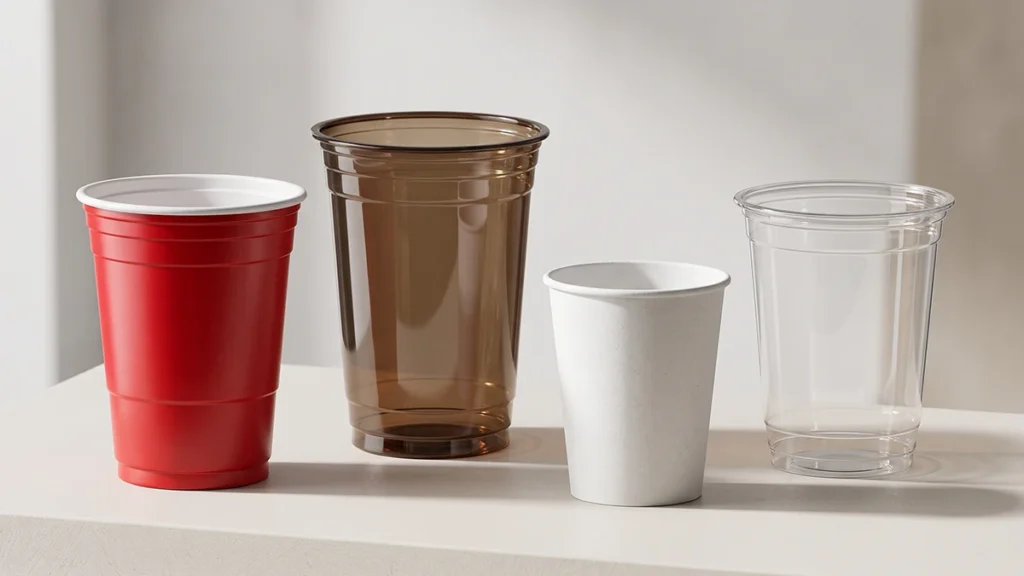
The four materials, before color enters the picture
- PET: Rigid and glass-clear, which is why cold-drink programs use it for iced coffee, smoothies and fruit cups. Clarity is the feature you are paying for.
- PP: Naturally milky and semi-translucent, with better heat tolerance and a slightly waxy surface. It suits hot-fill, portion and deli cups, and it accepts solid pigment readily.
- PLA: Plant-derived and usually clear, but it softens at temperatures that PET or PP handle without trouble. Most programs keep it on cold applications.
- Paper: Paperboard plus a liquid-barrier lining. The outside of the cup is a printable sheet, so here the color discussion is about ink, not resin.
In practice, the first decision is not a shade. It is whether you want the drink visible. Once that is settled, half the color options on a supplier’s list stop being relevant.
Two different routes to color
Color compounded into the resin (PET, PP, PLA)
For plastic cups, color comes from a masterbatch mixed into the resin before forming. That means the shade runs through the full wall thickness and shifts with it — a thick cup reads darker than a thin one at the same loading.
Pigments also have to meet the same food-contact requirements as the base resin. For PLA grades, the colorant and its carrier need to stay within the compostability scope of the material, which narrows the palette compared with conventional plastics.
Ink applied to the surface (paper cups)
Paper cups put color in a printed layer, so full-wrap artwork, spot colors and finishes are all on the table. What changes the result is the base board: white board reproduces bright shades more faithfully, while kraft board warms and mutes everything printed on it.
The trade-off sits on the inside. Cup interiors generally stay white or natural, and large areas of heavy ink coverage can complicate the recycling or composting story a buyer wants to tell.
Color options and limits at a glance
| Material | Base look | Color options you can realistically spec | Main constraint |
|---|---|---|---|
| PET | Crystal clear | Clear, light transparent tints, printed or labeled decoration | Tinting reduces the clarity that justifies choosing PET |
| PP | Milky, semi-translucent | Solid opaque shades, white, frosted tints, Pantone-matched bodies | No glass-like transparency; ink adhesion may need surface treatment |
| PLA | Clear to slightly hazy | Clear, soft tints, limited solids, printed decoration | Colorants must stay within the grade’s compostability scope |
| Paper | White or kraft brown | Full CMYK/Pantone printing, kraft look, matte or gloss finish | Kraft shifts bright colors; the interior stays plain |
A pattern worth noting: the more transparent the material, the more a body color costs you in product visibility. The more opaque the material, the more freedom you have with pigment, and the more the final shade depends on wall thickness and lighting.
Where the constraints show up in real orders
- Approve under real light. A tinted PET cup looks different on a backlit screen, under warehouse fluorescents and inside a chilled display case.
- Match on the finished cup. Pantone references give a direction, not a guarantee, once resin, wall thickness and translucency are in play.
- Ask what carries the pigment. On PLA programs, the masterbatch carrier matters as much as the shade for keeping a compostability claim intact.
- Budget for setup. Non-stock shades and custom print runs usually bring plate or compounding setup conditions and minimum order quantities.
- Check the whole set. Cups, lids and sleeves rarely share a substrate, so agree on an acceptable tolerance across all of them.
Matching one brand color across a mixed order
Mixed-material programs are where color approval gets difficult. A brand red compounded into PP will not read the same as that red printed on kraft board, even when both follow the same reference.
Working with a single supplier’s custom disposable cups range keeps that comparison inside one sampling round. With OEM/ODM color and print work available across plastic and paper cups, you can put physical samples side by side instead of judging them on separate screens — worth doing before a wholesale run is committed.
FAQ
Can PET cups be ordered in opaque colors?
Yes, technically. PET accepts masterbatch pigment, but an opaque body removes the glass-like clarity that usually justifies choosing it, so most cold-drink programs stay with clear or lightly tinted cups and move branding into printing or labels.
Which material gives the widest color range for branding?
Paper cups, because the shade sits in the ink layer rather than in the resin. A short approval path helps:
- Choose white or kraft board first, since that decision shifts every printed color.
- Confirm whether the artwork needs Pantone spot colors or CMYK.
- Review a printed sample before releasing the run.
Will one Pantone shade look identical on PP cups and paper cups?
No. PP carries color through a semi-translucent wall, while paper shows ink on a white or brown surface, so the same reference reads differently. Set a visual tolerance for both substrates before production.
Can PLA cups be colored without affecting the compostability claim?
Yes, in many cases, but the pigment and its masterbatch carrier must remain inside the certification scope of the specific PLA grade. Confirm the colorant package with your supplier, particularly for darker tones.
Do custom colors change minimum order quantities?
Yes, typically. A non-stock shade usually requires a dedicated compounding or print setup, which suppliers tend to gate behind minimum order quantities, while stock colors stay more flexible. Ask for the threshold at the quoting stage.