For food service businesses, packaging decisions often focus heavily on upfront purchase price. However, this narrow perspective can lead to significant hidden costs when choosing lower-quality plastic clamshell containers. These concealed expenses can ultimately impact your bottom line far more than the initial price difference between standard and premium packaging options.
At Reliancepak, we’ve worked with thousands of food businesses to optimize their packaging strategies. This comprehensive analysis explores the full spectrum of hidden costs associated with low-quality plastic clamshell containers, providing the insights you need to make truly informed packaging decisions that support your business goals.
Beyond Purchase Price: Understanding Total Cost of Ownership
The true cost of plastic clamshell containers extends far beyond the initial purchase price. A comprehensive total cost of ownership (TCO) analysis reveals that upfront price often represents just a fraction of the overall financial impact of packaging choices.
Total cost of ownership encompasses all direct and indirect costs associated with purchasing, using, and disposing of packaging throughout its lifecycle. For plastic clamshell containers, these costs include:
- Initial purchase price
- Shipping and handling costs
- Storage and inventory management expenses
- Operational efficiency impacts
- Food waste and replacement costs
- Customer satisfaction effects
- Brand reputation implications
- Disposal and environmental compliance costs
Low-quality containers typically offer apparent savings on purchase price while potentially increasing costs in many other areas. This price-focused approach often leads to false economy, where short-term savings create larger long-term expenses.
A structured TCO analysis requires examining both quantifiable costs (like food replacements) and less tangible impacts (like customer satisfaction). While some factors resist precise measurement, even approximate values provide a more accurate picture than focusing solely on purchase price.
For most food businesses, packaging typically represents 3-8% of total product cost. However, the indirect costs influenced by packaging quality can affect a much larger percentage of overall expenses and revenue. Understanding these broader impacts is essential for making truly cost-effective packaging decisions.
Food Protection Failures and Product Waste
One of the most significant hidden costs of low-quality plastic clamshell containers comes from inadequate food protection, leading to increased product waste, replacement expenses, and potential revenue loss.
The primary food protection failures in substandard containers include:
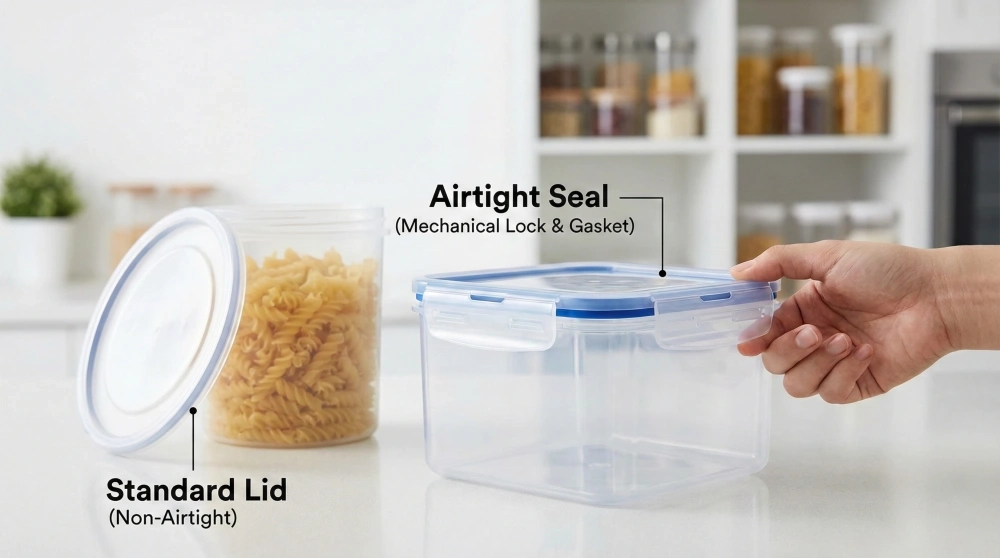
Seal integrity problems that allow:
- Moisture loss from fresh foods
- Oxygen exposure accelerating spoilage
- Leakage creating safety and presentation issues
- Cross-contamination between products
Structural weaknesses resulting in:
- Crushing or breakage during transport
- Punctures that compromise food safety
- Deformation affecting presentation
- Handling damage during service
Material performance limitations causing:
- Inadequate barrier properties against moisture or oxygen
- Poor temperature resistance affecting hot or cold foods
- Incompatibility with certain food ingredients
- Accelerated degradation during storage
These failures directly impact your bottom line through:
- Increased food waste from premature spoilage or damage
- Replacement costs for returned or rejected products
- Labor expenses for handling damaged items
- Lost sales opportunities when products become unsellable
| Food Type | Typical Waste Rate with Standard Containers | Waste Rate with Low-Quality Containers | Potential Annual Impact* |
|---|---|---|---|
| Fresh produce | 4-7% | 8-12% | $5,000-15,000 |
| Prepared salads | 5-8% | 10-15% | $8,000-20,000 |
| Hot prepared foods | 3-6% | 7-12% | $7,000-18,000 |
| Delicate bakery items | 6-10% | 12-18% | $10,000-25,000 |
The above data is for reference only
*Based on a medium-sized operation with $500,000 annual food sales
The financial impact extends beyond the direct cost of wasted food. Additional considerations include:
- Environmental disposal costs for wasted food
- Inventory management complications
- Supply chain inefficiencies from replacement orders
- Potential health department concerns from compromised packaging
Reliancepak’s premium containers feature enhanced seal integrity, superior structural design, and optimized material selection to minimize these food protection failures, significantly reducing associated waste and replacement costs.

Operational Efficiency Impacts
Low-quality plastic clamshell containers can significantly impact operational efficiency throughout your food service business, creating hidden labor costs and workflow disruptions that affect your bottom line.
The primary operational challenges created by substandard containers include:
Inconsistent dimensions and tolerances leading to:
- Difficult or unpredictable closure
- Stacking instability
- Inefficient use of storage space
- Problems with automated equipment
Handling and assembly issues causing:
- Increased time for container preparation
- Higher labor costs for packaging
- Employee frustration and reduced productivity
- Potential workplace injuries from sharp edges or excessive force
Storage and inventory complications such as:
- Increased storage space requirements due to poor nesting
- Higher inventory carrying costs
- More frequent stockouts due to waste
- Additional administrative time for managing problems
Service and delivery disruptions including:
- Delays from packaging failures
- Additional cleanup from leaks or spills
- Customer service time addressing packaging issues
- Repackaging requirements before service
These operational inefficiencies create measurable labor and time costs:
| Operational Factor | Impact with Standard Containers | Impact with Low-Quality Containers | Estimated Annual Labor Cost* |
|---|---|---|---|
| Packaging time | 20-25 seconds per unit | 30-40 seconds per unit | $3,000-7,000 |
| Problem resolution | 1-2% of units | 5-10% of units | $2,000-5,000 |
| Storage efficiency | 90-95% space utilization | 70-80% space utilization | $1,000-3,000 |
| Delivery issues | 0.5-1% of orders | 3-7% of orders | $2,500-6,000 |
The above data is for reference only
*Based on operation packaging 500 units daily with $15/hour labor cost
Beyond these quantifiable costs, operational disruptions create cascading effects:
- Reduced throughput during peak periods
- Employee dissatisfaction and potential turnover
- Training time for handling problematic packaging
- Management attention diverted to packaging issues
Reliancepak’s precision-manufactured containers feature consistent dimensions, optimized handling characteristics, and efficient nesting designs that enhance operational efficiency throughout your workflow, from storage to service.
Customer Experience and Satisfaction Costs
Perhaps the most significant hidden costs of low-quality plastic clamshell containers come from their impact on customer experience and satisfaction. These effects can influence repeat business, word-of-mouth recommendations, and long-term revenue.
The primary customer experience issues with substandard containers include:
Presentation problems that affect perceived quality:
- Poor clarity obscuring food visibility
- Inconsistent closure creating unprofessional appearance
- Warping or deformation affecting display
- Condensation or fogging obscuring contents
Functionality failures that frustrate customers:
- Difficult opening requiring excessive force
- Unreliable reclosing for leftover storage
- Leakage during transport
- Breakage or damage before consumption
Safety concerns that damage trust:
- Sharp edges from poor manufacturing
- Unstable stacking leading to spills
- Inadequate temperature performance
- Potential for contamination from seal failures
Sustainability perceptions affecting brand image:
- Excessive material use suggesting wastefulness
- Poor recycling compatibility
- Absence of environmental messaging
- Visibly low-quality material suggesting disposable mentality
These experience issues directly impact customer behavior:
- Reduced repeat business from dissatisfied customers
- Negative reviews mentioning packaging problems
- Decreased order frequency due to reliability concerns
- Lower average order values from hesitancy to order certain items
Research indicates that packaging problems significantly influence customer decisions:
| Customer Behavior | Impact of Packaging Problems | Potential Annual Revenue Impact* |
|---|---|---|
| Customer retention | 5-15% reduction | $25,000-75,000 |
| Order frequency | 10-20% reduction | $15,000-40,000 |
| Average order value | 5-10% reduction | $10,000-30,000 |
| New customer referrals | 15-30% reduction | $20,000-50,000 |
The above data is for reference only
*Based on operation with $500,000 annual revenue and 60% repeat customers
The long-term revenue impact of these customer experience issues typically far exceeds the initial savings from lower-cost packaging. A customer lost due to packaging problems represents not just one lost sale but potentially years of future revenue.
Reliancepak’s premium containers are designed with customer experience as a primary consideration, featuring intuitive opening, reliable reclosing, excellent clarity, and professional appearance that enhance satisfaction and support repeat business.
Brand Reputation and Perception Costs
The packaging you choose makes a powerful statement about your brand values and quality standards. Low-quality plastic clamshell containers can significantly damage brand perception, creating long-term costs that far exceed any initial savings.
The primary brand impact areas of substandard packaging include:
Quality perception transfer occurs when customers subconsciously associate packaging quality with food quality. Research shows that 72% of consumers believe packaging reflects the quality of the product inside, making low-quality containers a direct threat to food quality perception regardless of actual food excellence.
Brand value alignment becomes problematic when packaging contradicts stated brand values. For brands emphasizing quality, freshness, or premium positioning, visibly low-quality packaging creates cognitive dissonance that undermines brand credibility.
Social media risk increases with substandard packaging, as packaging failures are highly “shareable” content. A leaking container or broken packaging is far more likely to be photographed and posted than a successful packaging experience, creating disproportionate negative exposure.
Competitive differentiation is compromised when packaging fails to support brand positioning. In competitive markets, packaging often serves as a key differentiator; when containers appear generic or low-quality, this opportunity is lost.
The financial implications of these brand impacts include:
- Price sensitivity increases as perceived value decreases
- Premium positioning becomes unsustainable without supporting packaging
- Marketing effectiveness decreases when packaging contradicts messaging
- Customer acquisition costs rise as word-of-mouth recommendations decline
Research on packaging’s brand impact reveals significant effects:
| Brand Factor | Standard Packaging Impact | Low-Quality Packaging Impact | Business Implication |
|---|---|---|---|
| Perceived quality rating | 7-9/10 | 4-6/10 | Reduced price tolerance |
| Brand recall | 65-75% | 40-55% | Lower marketing ROI |
| Premium positioning viability | Supported | Undermined | Pricing pressure |
| Word-of-mouth sentiment | 70-80% positive | 30-50% positive | Higher acquisition costs |
The above data is for reference only
For businesses investing in other brand-building activities like interior design, website development, or marketing campaigns, low-quality packaging creates a disconnection that undermines these investments. The jarring contrast between professional marketing and substandard packaging can actually highlight packaging inadequacies rather than mask them.
Reliancepak’s premium packaging solutions are designed to reinforce and enhance your brand positioning, with options for customization, consistent quality cues, and professional appearance that support rather than detract from your brand investments.
Regulatory Compliance and Liability Risks
Low-quality plastic clamshell containers may create increased regulatory compliance challenges and liability exposure, representing another category of hidden costs that can significantly impact your business.
The primary regulatory and liability concerns include:
Food safety compliance issues arising from:
- Inadequate barrier properties allowing contamination
- Non-compliant materials or additives
- Inconsistent manufacturing quality
- Poor traceability and documentation
FDA and health department requirements that may be compromised:
- Food contact material regulations
- Temperature performance standards
- Proper labeling and usage instructions
- Manufacturing practice documentation
Allergen management challenges created by:
- Cross-contamination through packaging failures
- Inadequate sealing for allergen isolation
- Poor labeling visibility or durability
- Material incompatibility with certain allergens
Liability exposure increased through:
- Foodborne illness risk from packaging failures
- Physical injury from sharp edges or breakage
- Inadequate warning labels or instructions
- Insufficient documentation for defense
The financial implications of these risks can be substantial:
- Regulatory fines and penalties from compliance failures
- Increased insurance premiums due to claims history
- Legal defense costs even for successfully defended claims
- Business interruption from regulatory actions
While major incidents are relatively rare, their impact can be severe:
| Risk Category | Potential Financial Impact | Probability with Low-Quality Packaging | Risk Mitigation Value |
|---|---|---|---|
| Health code violations | $500-10,000 per incident | 3-5x higher | $1,500-15,000 annually |
| Product recall | $10,000-100,000+ | 2-4x higher | $5,000-40,000 annually |
| Liability claim | $25,000-1,000,000+ | 2-3x higher | $10,000-50,000 annually |
| Regulatory action | $5,000-50,000 | 2-4x higher | $2,500-25,000 annually |
The above data is for reference only
Beyond direct financial impacts, these incidents create significant indirect costs:
- Management time diverted to incident response
- Reputation damage from public incidents
- Operational disruption during investigations
- Stress and morale impacts on staff
Reliancepak’s commitment to regulatory compliance includes comprehensive documentation, consistent manufacturing quality, appropriate material selection, and traceability systems that help protect your business from these compliance and liability risks.
Environmental Compliance and Sustainability Costs
The environmental aspects of packaging choices increasingly affect both regulatory compliance and customer expectations. Low-quality plastic clamshell containers often create hidden environmental costs that impact both financial performance and brand perception.
The primary environmental challenges with substandard containers include:
Waste management compliance issues stemming from:
- Non-recyclable material combinations
- Poor labeling of material types
- Contamination from food residue
- Excessive material use
Extended Producer Responsibility (EPR) implications as more jurisdictions implement programs that:
- Charge fees based on packaging recyclability
- Require documentation of recycled content
- Mandate take-back programs
- Impose taxes on virgin plastic use
Consumer sustainability expectations that affect purchasing decisions:
- Increasing preference for environmentally responsible packaging
- Growing awareness of greenwashing
- Social media amplification of environmental concerns
- Willingness to switch brands based on packaging sustainability
Corporate sustainability goals that may be compromised:
- Carbon footprint reduction targets
- Zero waste initiatives
- Circular economy commitments
- Supply chain sustainability requirements
The financial implications of these environmental factors include:
- Increasing disposal costs as landfill fees rise
- New compliance expenses from emerging regulations
- Lost business from environmentally conscious customers
- Missed contract opportunities with sustainability requirements
Environmental costs are rapidly evolving as regulations expand:
| Environmental Factor | Current Impact | Projected 5-Year Impact | Business Implication |
|---|---|---|---|
| Disposal costs | $50-150/ton | $100-300/ton | Rising operational expenses |
| EPR fees | $0-100/ton | $100-500/ton | New compliance costs |
| Plastic taxes | Limited jurisdictions | Widespread implementation | Increasing packaging costs |
| Customer preference impact | 15-25% of customers | 30-50% of customers | Growing revenue risk |
The above data is for reference only
The environmental cost landscape is changing particularly quickly, with new regulations emerging at local, state, and federal levels. Businesses using low-quality packaging that cannot meet these evolving requirements face increasing compliance challenges and potential market access limitations.
Reliancepak’s sustainable packaging options include:
- Designs optimized for material reduction
- Recyclable formulations with clear labeling
- Options with post-consumer recycled content
- Documentation supporting environmental claims
These solutions help businesses navigate the complex and evolving environmental landscape while meeting both regulatory requirements and customer expectations.
Supply Chain Reliability and Disruption Costs
Low-quality plastic clamshell containers often come with hidden supply chain vulnerabilities that can create significant business disruption costs when problems arise. These reliability issues represent another category of concealed expenses beyond purchase price.
The primary supply chain challenges with substandard containers include:
Inconsistent availability resulting from:
- Limited production capacity
- Single-source manufacturing
- Poor inventory management
- Quality control rejections
Quality variability between shipments:
- Dimensional inconsistencies
- Material property fluctuations
- Appearance variations
- Performance inconsistencies
Delivery reliability problems:
- Missed delivery windows
- Incomplete shipments
- Poor communication about delays
- Limited expediting options
Forecasting and planning challenges:
- Minimum order quantity constraints
- Long and unpredictable lead times
- Limited flexibility for demand changes
- Poor visibility into supplier operations
These supply chain vulnerabilities create business continuity risks and operational costs:
- Emergency sourcing expenses when supplies fail
- Production downtime waiting for packaging
- Expedited shipping costs to address shortages
- Safety stock carrying costs to buffer unreliability
The financial impact of these supply chain issues can be substantial:
| Supply Chain Factor | Impact with Standard Suppliers | Impact with Low-Quality Suppliers | Annual Cost Implication* |
|---|---|---|---|
| Stock-out frequency | 0-2 times annually | 4-8 times annually | $2,000-10,000 |
| Emergency sourcing | Rarely needed | 2-4 times annually | $3,000-15,000 |
| Expedited freight | 1-3% of shipments | 10-20% of shipments | $1,500-8,000 |
| Safety stock requirements | 2-3 weeks | 4-8 weeks | $2,000-7,000 |
The above data is for reference only
*Based on business using 250,000 containers annually
Beyond these quantifiable costs, supply chain disruptions create significant operational challenges:
- Menu or offering limitations when packaging is unavailable
- Customer disappointment from inconsistent presentation
- Staff stress from working around packaging problems
- Management distraction addressing supply issues
Reliancepak’s supply chain advantages include:
- Multiple production facilities ensuring continuity
- Robust inventory management systems
- Consistent quality control processes
- Transparent communication and forecasting tools
These capabilities provide the reliability and consistency that help businesses avoid the hidden costs of supply chain disruptions.
Quality Control and Consistency Issues
Low-quality plastic clamshell containers typically suffer from significant quality control and consistency problems that create hidden costs throughout your operation. These issues affect everything from operational efficiency to customer experience.
The primary quality control challenges include:
Dimensional inconsistencies affecting:
- Closure reliability
- Stacking stability
- Storage efficiency
- Compatibility with equipment or displays
Material property variations impacting:
- Clarity and appearance
- Flexibility and handling
- Temperature performance
- Durability and breakage rates
Appearance inconsistencies creating:
- Unprofessional presentation
- Customer confusion
- Brand image problems
- Perceived quality issues
Performance variability leading to:
- Unpredictable seal integrity
- Inconsistent food protection
- Variable customer experience
- Unreliable operational performance
These quality control issues create both direct costs and operational challenges:
- Increased inspection requirements to catch problems
- Higher rejection rates for substandard containers
- Inconsistent customer experiences affecting satisfaction
- Operational adaptations to accommodate variability
The financial impact of these quality inconsistencies includes:
| Quality Factor | Standard Container Impact | Low-Quality Container Impact | Business Implication |
|---|---|---|---|
| Rejection rate | 0.5-2% | 5-15% | Increased effective unit cost |
| Inspection time | Minimal/sampling | Extensive/continuous | Additional labor expense |
| Performance predictability | Consistent | Highly variable | Operational uncertainty |
| Customer experience consistency | 90-95% | 60-80% | Satisfaction variability |
The above data is for reference only
Quality inconsistencies create particularly challenging operational conditions because they introduce unpredictability. Staff must constantly adapt to changing container characteristics rather than developing consistent handling procedures, creating inefficiency and frustration.
For food businesses, this unpredictability extends to food presentation and protection. The same packaging process may produce different results from day to day, making quality control of the final product more difficult and time-consuming.
Reliancepak’s manufacturing processes include:
- Statistical process control methodologies
- Comprehensive quality management systems
- Consistent raw material specifications
- Regular testing and verification
These systems ensure the consistent quality and performance that allow your operation to function efficiently and deliver reliable customer experiences.
Long-Term Business Growth Limitations
Perhaps the most significant hidden cost of low-quality plastic clamshell containers lies in how they can constrain your business growth potential. These limitations affect expansion opportunities, market positioning, and long-term business value.
The primary growth limitations created by substandard packaging include:
Market expansion constraints affecting:
- Ability to enter premium market segments
- Viability for retail or wholesale distribution
- Geographical expansion requiring transportation
- New menu or product offerings with specific packaging needs
Brand evolution limitations impacting:
- Upmarket repositioning efforts
- Brand refresh initiatives
- Consistency across growing locations
- Professional perception with strategic partners
Operational scaling challenges such as:
- Inconsistent execution across multiple locations
- Training complexity with problematic packaging
- Quality control across expanded operations
- Efficiency at higher production volumes
Strategic partnership barriers including:
- Compatibility with major distribution systems
- Meeting chain or institutional requirements
- Alignment with partner brand standards
- Compliance with formal vendor specifications
These growth limitations create opportunity costs that often far exceed the apparent savings from lower-priced packaging:
| Growth Opportunity | Impact of Low-Quality Packaging | Potential Revenue Opportunity* | Opportunity Cost |
|---|---|---|---|
| Premium market segments | Significant barrier | $50,000-250,000 annually | $40,000-200,000 |
| Retail/wholesale expansion | Often prohibitive | $100,000-500,000 annually | $80,000-400,000 |
| Chain/institutional contracts | Typically disqualifying | $200,000-1,000,000+ | $150,000-800,000 |
| Geographic expansion | Increased complexity | Varies by market | 20-40% success reduction |
The above data is for reference only
*Based on typical mid-sized food business growth opportunities
Beyond these quantifiable opportunity costs, substandard packaging creates strategic limitations that affect long-term business value:
- Reduced acquisition attractiveness
- Limited premium positioning options
- Constrained menu or offering development
- Competitive vulnerability to better-packaged alternatives
Reliancepak’s premium packaging solutions are designed to support rather than constrain business growth, with options that:
- Meet or exceed requirements for major distribution channels
- Support premium market positioning
- Provide consistency for multi-location operations
- Offer the quality and performance needed for strategic partnerships
This growth-enabling approach helps ensure that your packaging choices support rather than limit your long-term business potential.
Making the Right Investment: Value vs. Cost
Understanding the full spectrum of hidden costs associated with low-quality plastic clamshell containers allows for a more accurate assessment of the true value proposition of premium packaging options. This comprehensive perspective transforms packaging from a pure expense to a strategic investment.
The value-based approach to packaging decisions includes:
Total cost of ownership analysis that considers:
- Direct purchase costs
- Operational efficiency impacts
- Food waste and replacement expenses
- Customer experience effects
- Brand and reputation implications
- Regulatory and environmental factors
Return on investment calculation examining:
- Initial price premium for quality packaging
- Quantifiable cost savings across categories
- Revenue enhancement opportunities
- Risk reduction benefits
- Payback period for premium investment
Strategic alignment assessment evaluating how packaging choices:
- Support or detract from brand positioning
- Enable or constrain growth opportunities
- Enhance or limit customer experience
- Reinforce or undermine quality perception
Competitive differentiation potential through:
- Superior presentation and appearance
- Enhanced functionality and performance
- Sustainability leadership
- Consistent quality execution
For most food businesses, the investment in premium packaging typically delivers compelling returns:
| Business Type | Typical Premium Container Cost Increase | Typical Total Value Benefit* | ROI Range | Payback Period |
|---|---|---|---|---|
| Quick-service restaurant | $0.03-0.08 per unit | $0.15-0.40 per unit | 200-500% | 1-3 months |
| Prepared foods retailer | $0.04-0.10 per unit | $0.20-0.50 per unit | 250-600% | 1-2 months |
| Catering operation | $0.05-0.12 per unit | $0.25-0.60 per unit | 300-700% | 2-4 weeks |
| Meal delivery service | $0.06-0.15 per unit | $0.30-0.80 per unit | 350-800% | 2-3 weeks |
The above data is for reference only
*Includes quantifiable cost savings and revenue benefits
This value-based perspective reveals that what initially appears as “savings” from lower-priced packaging often represents a false economy that actually increases total costs while limiting revenue potential.
Reliancepak’s consultative approach helps businesses understand their specific value equation, with customized analysis that quantifies the total cost impact of packaging choices in their particular operational context.
Conclusion
The true cost of plastic clamshell containers extends far beyond the purchase price shown on an invoice. Low-quality options create a cascade of hidden costs that impact operational efficiency, customer satisfaction, brand perception, and growth potential.
Key takeaways from this comprehensive analysis include:
- Food protection failures from substandard containers create significant waste and replacement costs
- Operational inefficiencies from inconsistent quality increase labor expenses and create workflow disruptions
- Customer experience suffers with low-quality packaging, affecting repeat business and word-of-mouth
- Brand reputation and perception are directly influenced by packaging quality
- Regulatory compliance and liability risks increase with substandard containers
- Environmental costs and sustainability challenges grow with lower-quality options
- Supply chain reliability becomes more problematic with less reputable suppliers
- Quality inconsistencies create unpredictability throughout your operation
- Long-term business growth can be constrained by inadequate packaging
For most food businesses, the investment in premium packaging delivers returns that far exceed the initial price difference. When all factors are considered, quality packaging typically represents one of the highest-ROI investments available to food service operations.
Reliancepak’s commitment to quality and value extends beyond simply providing superior containers. Our consultative approach helps businesses understand their specific packaging economics, identifying the options that deliver optimal total value for their particular needs and priorities.
We invite you to contact our team for a personalized assessment of how premium plastic clamshell containers can reduce your total costs while enhancing customer experience, operational efficiency, and growth potential.