
Food safety is a universal concern, impacting consumers, businesses, and public health authorities worldwide. In the complex journey from production to consumption, maintaining the integrity of food products is paramount. Tamper-evident containers have emerged as an indispensable tool in this endeavor, providing a critical layer of protection against contamination, adulteration, and unauthorized access. For food manufacturers, distributors, and retailers, understanding the nuances of these containers is not just about compliance; it’s about building unwavering consumer trust and safeguarding brand reputation. This ultimate guide will delve deep into the world of tamper-evident containers, exploring their vital role in food safety1, the various types available, key considerations for selection, and how they contribute to a secure and transparent food supply chain.
Why Tamper-Evident Containers are Essential for Food Safety
Food safety is a complex ecosystem, and tamper-evident containers serve as a critical component in safeguarding public health and maintaining consumer confidence. Their importance cannot be overstated, especially in today’s interconnected global food supply chain.
Preventing Intentional and Unintentional Contamination
The primary role of tamper-evident containers is to act as a visible barrier against contamination. This includes both intentional adulteration, such as malicious tampering, and unintentional contamination that can occur during handling, transport, or storage. A broken or compromised tamper-evident seal immediately signals that the product’s integrity may have been breached, allowing for its removal from the supply chain before it reaches consumers. This proactive approach significantly reduces the risk of foodborne illnesses and protects public health.
Building and Maintaining Consumer Trust
In an age where food recalls and safety scares can quickly erode public confidence, tamper-evident packaging provides tangible reassurance to consumers. When a consumer sees an intact tamper-evident seal, they gain immediate peace of mind, knowing that the product has not been opened or altered since it left the manufacturer. This transparency fosters trust in the brand and the entire food supply chain, leading to increased consumer loyalty and repeat purchases. For food businesses, this trust is an invaluable asset.
Ensuring Regulatory Compliance
Many countries and regions have stringent regulations mandating the use of tamper-evident packaging for certain food products, particularly those considered high-risk or susceptible to tampering. These regulations are designed to protect consumers and ensure market integrity. By utilizing appropriate tamper-evident containers, food manufacturers and distributors can ensure compliance with these legal requirements, avoiding penalties, product recalls, and reputational damage. Adherence to standards like those from the FDA or EU food safety authorities is crucial for market access and global trade.
Protecting Brand Reputation and Financial Stability
A single incident of product tampering or contamination can have devastating consequences for a food business, leading to massive financial losses from recalls, lawsuits, and plummeting sales. Beyond the immediate financial impact, a damaged brand reputation can take years to rebuild. Tamper-evident containers act as a vital defense mechanism, mitigating these risks by providing clear evidence of tampering. This not only protects the consumer but also safeguards the brand’s integrity and long-term financial stability.
Extending Shelf Life and Preserving Quality
Beyond security, many tamper-evident containers also contribute to maintaining the freshness and quality of food products. By creating a secure, often hermetic, seal, they protect the contents from exposure to air, moisture, and other environmental factors that can lead to spoilage. This extended shelf life reduces food waste and ensures that the product retains its intended taste, texture, and nutritional value until it reaches the consumer. It’s a dual benefit: security and preservation.
Here’s a table summarizing why tamper-evident containers are essential for food safety:
| Aspect of Food Safety | Contribution of Tamper-Evident Containers |
|---|---|
| Contamination Prevention | Visible barrier against intentional/unintentional contamination. |
| Consumer Trust | Provides immediate peace of mind, fostering brand loyalty. |
| Regulatory Compliance | Helps meet mandatory food safety packaging standards (e.g., FDA, EU). |
| Brand Protection | Mitigates risks of recalls, lawsuits, and reputational damage. |
| Quality Preservation | Extends shelf life by protecting against spoilage factors. |
Understanding the Core Principles of Tamper-Evident Design
Effective tamper-evident containers are not merely about adding a seal; they are built upon fundamental design principles that ensure any unauthorized access is immediately and unmistakably apparent. These principles are crucial for safeguarding food products.
Principle 1: Irreversible Evidence of Entry
The most critical principle of tamper-evident design is that any attempt to open or alter the container must leave irreversible evidence. This means that once the tamper-evident feature is broken, torn, or otherwise compromised, it cannot be restored to its original, intact state without clear signs of damage. For food packaging, this could be a torn tear strip on a carton, a broken plastic ring on a bottle cap, or a detached induction seal. The goal is to make it impossible for someone to tamper with the product and then reseal it to appear untouched.
Principle 2: Clear and Unambiguous Indication
The evidence of tampering must be clear, unambiguous, and easily noticeable to the average consumer without requiring special tools or knowledge. The visual cue should be intuitive, signaling immediately that the product’s integrity may have been compromised. For example, a bright color change, a prominent ‘VOID’ message appearing, or a visibly broken component are all effective indicators. Ambiguous signs can lead to confusion and undermine the purpose of the tamper-evident feature.
Principle 3: Integration with Packaging
Ideally, the tamper-evident feature should be an integral part of the container’s design, rather than a separate, easily removable or replaceable component. When the security feature is built into the structure of the packaging itself, it becomes much harder to bypass or counterfeit. This principle is exemplified by custom-molded plastic containers with integrated tear-away strips or paperboard cartons with unique interlocking mechanisms that break upon first opening. This integration enhances the overall security and reliability of the packaging.
Principle 4: Resistance to Circumvention
While no packaging is truly tamper-proof, effective tamper-evident designs are resistant to common methods of circumvention. This means they are designed to make it difficult for someone to open the package, tamper with the contents, and then reseal it without leaving evidence. This often involves using specialized materials, complex designs, or unique application methods that are challenging to replicate outside of a controlled manufacturing environment. Continuous innovation in this area is vital to stay ahead of potential threats.
Principle 5: Ease of Use for Legitimate Consumers
Finally, while security is paramount, the tamper-evident feature must also be reasonably easy for legitimate consumers to open and access the product. A design that is too difficult to open can lead to consumer frustration and negative brand perception. The balance between robust security and user-friendliness is delicate. Clear instructions on how to open the package and how to identify a compromised seal can significantly enhance the consumer experience while maintaining safety.
Here’s a table summarizing the core principles of tamper-evident design:
| Principle | Description | Importance for Food Safety |
|---|---|---|
| Irreversible Evidence | Once broken, cannot be restored without visible damage. | Prevents re-sealing of tampered products, clear warning. |
| Clear Indication | Easily noticeable and unambiguous signs of tampering. | Enables quick identification by consumers and retailers. |
| Integration | Feature is an intrinsic part of the packaging structure. | Harder to bypass or counterfeit, enhances overall security. |
| Resistance to Circumvention | Difficult to open, tamper, and reseal without evidence. | Deters malicious acts, protects product integrity. |
| Ease of Use | Simple for legitimate consumers to open. | Positive consumer experience, encourages proper use. |
Common Types of Tamper-Evident Containers for Food
The food industry utilizes a wide array of tamper-evident containers, each designed to offer specific levels of protection and suit various product types. Understanding these common types is crucial for businesses seeking to optimize their food safety protocols.
1. Hinged-Lid Containers with Breakaway Tabs
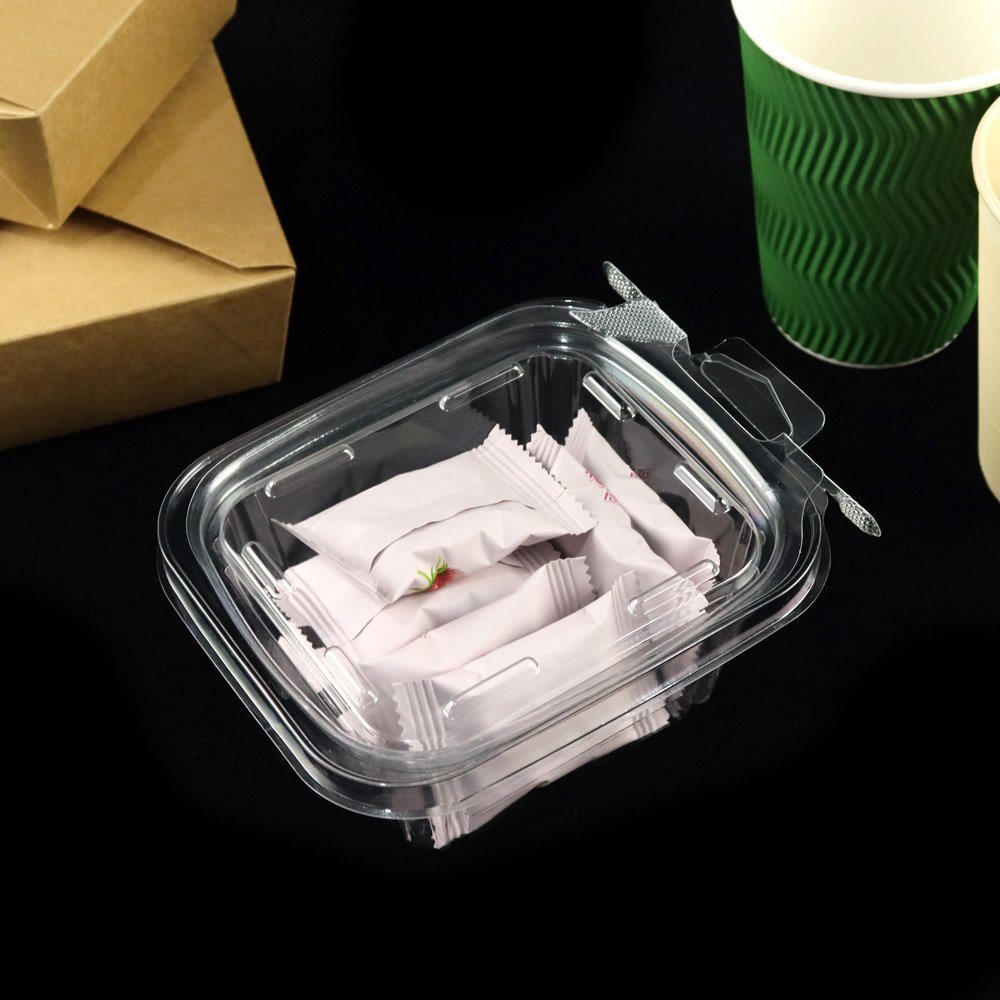
These are ubiquitous in the deli and prepared food sections of supermarkets. Typically made from clear PET or PP plastic, they feature a hinged lid that snaps securely onto the base. The tamper-evident mechanism is usually a series of small plastic tabs or a continuous band that connects the lid to the base. When the container is opened for the first time, these tabs or the band break, providing clear, irreversible evidence of entry. They are popular for salads, sandwiches, baked goods, and other ready-to-eat items.
2. Induction-Sealed Jars and Bottles
Induction sealing is a highly effective method for liquid and semi-liquid food products. A foil liner is placed inside the cap, and after the cap is screwed on, the container passes through an electromagnetic field. This heats the foil, bonding it to the container rim, creating an airtight and tamper-evident seal. When the cap is removed, the foil seal is visibly torn or detached. This method is widely used for sauces, jams, condiments, juices, and dairy products, offering both tamper evidence and extended shelf life.
3. Shrink-Banded Containers
Shrink bands are plastic films that are heat-shrunk around the cap and neck of a container. For food products, these are often used on beverage bottles, spice jars, and some dairy containers. If the product has been opened, the shrink band will be broken or removed, making tampering immediately obvious. They provide a simple yet effective visual deterrent and indicator of integrity.
4. Tear-Strip Cartons and Boxes
Common for dry food products like cereals, snacks, and frozen foods, tear-strip cartons feature a perforated line or an integrated tear strip that must be broken to open the package. Once torn, it cannot be reattached without visible damage, signaling that the product has been accessed. This design is often integrated into the paperboard structure, making it a cost-effective and sustainable option.
5. Vacuum-Sealed Jars with Pop-Up Lids
Glass jars used for preserves, pickles, and baby food often employ a vacuum seal. The lid typically has a small button or a slightly raised center that is pulled down by the vacuum inside the jar. If the vacuum seal is broken, this button or center pops up, providing an audible and visual indication of tampering. This also helps maintain freshness and prevent spoilage.
6. Single-Serve Pouches with Integrated Seals
For single-serving portions of snacks, sauces, or condiments, flexible pouches often incorporate integrated tamper-evident features. This can include heat-sealed edges that tear irreversibly upon opening, or specialized spouts with breakaway seals. These ensure that each individual portion remains secure until consumed.
Here’s a table summarizing common types of tamper-evident containers for food:
| Container Type | Description | Common Food Applications | Tamper-Evident Mechanism |
|---|---|---|---|
| Hinged-Lid Containers | Clear plastic containers with hinged lids. | Salads, sandwiches, baked goods, deli items | Breakaway tabs or bands on the lid/base |
| Induction-Sealed Jars/Bottles | Glass or plastic containers with foil liners under caps. | Sauces, jams, juices, dairy, condiments | Torn or detached foil seal |
| Shrink-Banded Containers | Containers with heat-shrunk plastic film around closure. | Beverages, spice jars, some dairy | Broken or removed shrink band |
| Tear-Strip Cartons/Boxes | Paperboard cartons with perforated lines or tear strips. | Cereals, snacks, frozen foods | Torn or removed tear strip/perforation |
| Vacuum-Sealed Jars | Glass jars with lids that indicate vacuum loss. | Preserves, pickles, baby food | Pop-up button/center on lid |
| Single-Serve Pouches | Flexible pouches for individual portions. | Snacks, sauces, condiments | Irreversible tear of heat-sealed edges, breakaway spouts |
The Role of Materials in Food-Safe Tamper-Evident Containers
The choice of material for tamper-evident food containers is critical, as it directly impacts not only the effectiveness of the tamper-evident feature but also the safety, freshness, and shelf life of the food product. Different materials offer distinct advantages and are selected based on the food type, processing methods, and desired shelf stability.
Plastics (PET, PP, HDPE)
Plastics like PET (Polyethylene Terephthalate), PP (Polypropylene), and HDPE (High-Density Polyethylene) are widely used for tamper-evident food containers due to their versatility, durability, and cost-effectiveness. They are lightweight, shatter-resistant, and can be easily molded into various shapes, allowing for integrated tamper-evident features like breakaway tabs and hinged lids. Many plastics are transparent, enabling consumers to visually inspect the product. Crucially, food-grade plastics are inert, meaning they do not react with food or leach harmful chemicals, ensuring product safety. They also provide excellent barrier properties against moisture and oxygen, extending the shelf life of many food items.
Glass
Glass is a traditional material for food packaging, especially for products requiring long shelf life or high-temperature processing (like canning). It is impermeable, chemically inert, and provides an excellent barrier against gases and moisture, preserving the food’s flavor and freshness. For tamper evidence, glass containers often rely on vacuum seals with pop-up buttons on the lid, or external shrink bands and induction seals. While heavier and more fragile than plastic, glass offers a premium perception and is infinitely recyclable, appealing to environmentally conscious brands and consumers.
Paperboard and Fiber-Based Materials
Paperboard and other fiber-based materials are gaining traction for their sustainability credentials. When used for tamper-evident food containers, they often incorporate integrated tear strips, perforated openings, or unique folding designs that show clear evidence of tampering. To make them suitable for food contact and to provide barrier properties, paperboard containers are often coated with food-grade polymers or laminates. They are ideal for dry goods, baked products, and some chilled foods. Their printability also allows for strong branding and clear communication of tamper-evident features.
Aluminum and Metal
Aluminum and other metals are primarily used for cans and foil seals. Aluminum cans offer excellent barrier properties against light, oxygen, and moisture, making them suitable for beverages and canned foods with long shelf lives. Tamper evidence is typically provided by the can’s pull-tab opening, which cannot be re-sealed once opened. Aluminum foil is a key component in induction seals, providing the crucial barrier and tamper-evident function for jars and bottles. Metals are highly recyclable and provide robust protection against physical damage.
Multi-Layered and Composite Materials
For products requiring advanced barrier properties or specific functionalities, multi-layered or composite materials are often employed. These combine different materials (e.g., plastic, foil, paper) to leverage their individual strengths, creating a superior barrier against gases, moisture, and light. Tamper-evident features are integrated into these layers, ensuring that any breach compromises the entire structure, providing clear evidence. These are common for aseptic packaging, retort pouches, and some high-barrier flexible packaging for food.
Here’s a table summarizing the role of materials in food-safe tamper-evident containers:
| Material Type | Key Properties for Food Safety & Tamper Evidence | Common Food Applications |
|---|---|---|
| Plastics (PET, PP, HDPE) | Lightweight, durable, shatter-resistant, good barrier, moldable for integrated TE features. | Deli containers, yogurt cups, beverage bottles, ready meals |
| Glass | Inert, impermeable, excellent barrier, premium feel, infinitely recyclable. | Jams, sauces, baby food, pickles, beverages |
| Paperboard/Fiber-Based | Sustainable, printable, integrated tear features. Often coated for barrier. | Cereal boxes, snack cartons, bakery items, some chilled foods |
| Aluminum/Metal | Excellent barrier (light, oxygen, moisture), robust, highly recyclable. | Canned goods, beverages, foil induction seals |
| Multi-Layered/Composite | Combines properties for superior barrier, integrated TE features across layers. | Aseptic packaging, retort pouches, high-barrier flexible food packaging |
Regulatory Compliance and Food Safety Standards
For any business involved in the food industry, adherence to regulatory compliance and food safety standards is not merely a recommendation; it is a legal and ethical imperative. Tamper-evident containers play a crucial role in meeting these stringent requirements, ensuring product safety and market access.
Global and Regional Regulations
Food safety regulations vary significantly across different countries and regions, but a common thread among them is the emphasis on product integrity and consumer protection. Key regulatory bodies like the U.S. Food and Drug Administration (FDA), the European Food Safety Authority (EFSA), and national food safety agencies in other countries (e.g., China’s SAMR) establish guidelines and mandates for food packaging. These often include specific requirements for tamper-evident features, especially for products deemed high-risk or those susceptible to intentional adulteration.
For instance, in the United States, the Food, Drug, and Cosmetic Act, along with subsequent amendments like the Food Safety Modernization Act (FSMA), places a strong emphasis on preventive controls, which includes secure packaging. Similarly, the European Union has comprehensive regulations (e.g., EU Regulation 1935/2004 on materials and articles intended to come into contact with food) that ensure food contact materials do not endanger human health or bring about an unacceptable change in the composition of the food. Tamper-evident features are often a practical means to demonstrate compliance with these overarching principles.
Importance of Certifications
Beyond general regulations, specific certifications are often required or highly recommended for food packaging materials and processes. These include:
- ISO 22000: An international standard for food safety management systems, covering the entire food chain.
- BRCGS Packaging Materials: A global standard for packaging and packaging materials, ensuring product safety, legality, and quality.
- FSSC 22000: A Global Food Safety Initiative (GFSI) recognized scheme that provides a complete certification scheme for food safety management systems.
- HACCP (Hazard Analysis and Critical Control Points): A systematic preventive approach to food safety from biological, chemical, and physical hazards in production processes.
Tamper-evident container manufacturers must ensure their products and manufacturing processes comply with these certifications. For B2B clients, choosing a supplier whose products meet these standards provides assurance of quality, safety, and regulatory adherence, simplifying their own compliance efforts.
Due Diligence and Traceability
Regulatory bodies increasingly require businesses to demonstrate due diligence in ensuring product safety. This includes having robust systems for traceability and recall. Tamper-evident packaging contributes to traceability by ensuring that if a product is compromised, the breach is immediately identifiable, allowing for targeted recalls and investigations. This helps businesses fulfill their responsibility to protect consumers and maintain transparency within the supply chain.
The Role of Tamper-Evident Features in Risk Mitigation
From a regulatory perspective, tamper-evident features are a key risk mitigation strategy. They act as a deterrent to tampering and provide an early warning system, significantly reducing the likelihood of contaminated products reaching consumers. This proactive approach aligns with modern food safety philosophies that prioritize prevention over reaction, ultimately leading to safer food systems and greater public trust.
Here’s a table summarizing key regulatory aspects and the role of tamper-evident containers:
| Regulatory Aspect | How Tamper-Evident Containers Contribute |
|---|---|
| Global/Regional Regulations | Meet mandates for product integrity and consumer protection (e.g., FDA, EU). |
| Certifications (ISO, BRCGS, HACCP) | Compliance with international food safety management and material standards. |
| Due Diligence & Traceability | Provide visible evidence of breach, enabling targeted recalls and investigations. |
| Risk Mitigation | Deter tampering, act as early warning system, prioritize prevention. |
| Market Access | Essential for selling products in regulated markets. |
Implementing Tamper-Evident Solutions in Food Production
Integrating tamper-evident containers into a food production line requires careful planning and execution. It’s not just about choosing the right container; it’s about optimizing the entire packaging process to ensure maximum security and efficiency.
1. Assessing Product and Packaging Compatibility
The first step in implementation is a thorough assessment of your food product and its compatibility with various tamper-evident packaging solutions. Consider the product’s physical state (liquid, solid, viscous), its temperature requirements (hot-fill, cold-fill, frozen), and its shelf life. For example, a hot-fill product might require a plastic container that can withstand high temperatures and an induction seal that forms a strong bond under those conditions. Conversely, a delicate bakery item might need a paperboard container with an integrated tear strip that is easy for consumers to open without damaging the product.
2. Integrating with Existing Production Lines
Seamless integration of tamper-evident packaging into your existing production line is crucial for maintaining efficiency and minimizing downtime. This may involve upgrading or acquiring new machinery for sealing, capping, or labeling. For instance, adding an induction sealing machine for jars or bottles, or a shrink-wrapping tunnel for shrink bands. Work closely with packaging machinery suppliers and your chosen container provider to ensure compatibility and optimal performance. The goal is to achieve high-speed, consistent application of the tamper-evident feature without compromising product quality.
3. Quality Control and Testing Protocols
Robust quality control and testing protocols are essential to verify the effectiveness of your tamper-evident solutions. This includes:
- Visual Inspections: Regular checks for intact seals, proper alignment of labels, and absence of visible damage.
- Destructive Testing: Periodically opening sealed containers to ensure the tamper-evident feature breaks as intended and leaves clear evidence.
- Leak Testing: For liquid products, testing for leaks to ensure the seal maintains product integrity.
- Environmental Testing: Simulating various environmental conditions (temperature, humidity, vibration) to ensure the tamper-evident feature remains effective throughout the supply chain.
These tests help identify any potential weaknesses in the packaging or sealing process, allowing for timely corrective actions.
4. Employee Training and Awareness
Even the most advanced tamper-evident packaging can be compromised if employees are not properly trained. All personnel involved in the packaging process, from line operators to quality assurance staff, must understand the importance of tamper-evident features and how to identify and report any anomalies. Regular training sessions on proper handling, sealing techniques, and quality checks are vital to maintaining the integrity of the packaging.
5. Clear Consumer Communication
Finally, effective implementation extends to clear communication with consumers. Educate your customers on how to identify an intact tamper-evident seal and what to look for if they suspect tampering. This can be done through clear labeling on the package, website information, or social media campaigns. Empowering consumers to be the final line of defense strengthens the overall security chain.
Here’s a table outlining key steps for implementing tamper-evident solutions:
| Step | Description | Key Considerations |
|---|---|---|
| 1. Assessment | Evaluate product characteristics and packaging needs. | Product type, temperature, shelf life, desired protection level. |
| 2. Integration | Adapt production lines for new sealing/packaging equipment. | Machine compatibility, speed, efficiency, supplier collaboration. |
| 3. Quality Control | Implement rigorous testing (visual, destructive, leak, environmental). | Regular checks, data analysis, corrective actions. |
| 4. Training | Educate employees on importance and proper handling. | All relevant personnel, ongoing training, anomaly reporting. |
| 5. Communication | Inform consumers on how to identify and verify seals. | Clear labeling, website info, social media, consumer empowerment. |
Benefits Beyond Security: Freshness and Shelf Life
While the primary function of tamper-evident containers is to signal unauthorized access, their benefits for food products extend far beyond mere security. Many tamper-evident features inherently contribute to maintaining product freshness and significantly extending shelf life, offering a dual advantage for food manufacturers and consumers alike.
Creating a Protective Barrier
Many tamper-evident sealing mechanisms, such as induction seals, hermetic seals, and some types of breakaway caps, create a robust barrier between the food product and the external environment. This barrier is crucial for protecting food from common spoilage factors:
- Oxygen: Exposure to oxygen can lead to oxidation, causing food to lose flavor, color, and nutritional value. It also promotes the growth of aerobic microorganisms. Secure seals minimize oxygen ingress.
- Moisture: Both loss and gain of moisture can degrade food quality. Secure seals prevent dehydration of dry goods and prevent moisture absorption in crispy products, while also keeping liquid products from leaking or evaporating.
- Light: UV light can degrade vitamins, fats, and colors in food. Opaque packaging or seals can offer protection.
- Microorganisms: A tight seal prevents the entry of bacteria, yeasts, and molds, which are primary causes of food spoilage.
By effectively blocking these elements, tamper-evident containers help preserve the sensory qualities (taste, aroma, texture) and nutritional integrity of the food product.
Extending Product Shelf Life
The ability to control the internal environment of the package directly translates to an extended shelf life for food products. For example, vacuum-sealed jars with pop-up lids not only indicate tampering but also maintain a vacuum that inhibits microbial growth and oxidation, keeping preserves and pickles fresh for longer. Similarly, induction-sealed containers for dairy products or juices prevent spoilage by creating an airtight barrier. This extended shelf life offers several commercial advantages:
- Reduced Waste: Less spoilage means less product waste for manufacturers, distributors, and consumers.
- Wider Distribution: Products can be shipped over longer distances and stored for longer periods, opening up new markets.
- Improved Inventory Management: Businesses can manage inventory more efficiently with less concern about rapid product degradation.
Preserving Nutritional Value
Many vitamins and nutrients in food are sensitive to exposure to light, air, and moisture. By providing a superior barrier, tamper-evident containers help to preserve these delicate components. This ensures that consumers receive food products that are not only safe but also retain their intended nutritional benefits, contributing to overall public health.
Enhancing Consumer Satisfaction
When consumers open a product and find it as fresh and flavorful as intended, it significantly enhances their satisfaction. The combination of visible security and preserved quality reinforces their trust in the brand. This positive experience encourages repeat purchases and strengthens brand loyalty, making tamper-evident containers a valuable investment beyond their security function.
Here’s a table illustrating how tamper-evident containers benefit freshness and shelf life:
| Benefit Area | How Tamper-Evident Containers Contribute |
|---|---|
| Protection from Oxygen | Secure seals minimize oxygen ingress, preventing oxidation and microbial growth. |
| Moisture Control | Prevents dehydration or moisture absorption, maintaining product texture and quality. |
| Light Protection | Opaque seals/packaging can shield light-sensitive nutrients and colors. |
| Microbial Barrier | Prevents entry of bacteria, yeasts, and molds, reducing spoilage. |
| Extended Shelf Life | Combined protective effects lead to longer product viability. |
| Nutritional Preservation | Helps retain vitamins and sensitive nutrients. |
| Enhanced Flavor/Aroma | Maintains original sensory qualities by preventing degradation. |
Consumer Perception and Trust in Secure Food Packaging
In the competitive food market, consumer perception and trust are invaluable assets. Tamper-evident containers play a pivotal role in shaping these perceptions, acting as a silent guardian that reassures consumers about the safety and authenticity of their food purchases.
The Psychological Impact of Visible Security
For consumers, the presence of a clear, intact tamper-evident seal provides immediate psychological reassurance. It signals that the manufacturer has taken proactive steps to protect the product from interference. This visible commitment to safety alleviates concerns about contamination, adulteration, or product tampering, which are increasingly prevalent in public discourse. When consumers see that a product is securely sealed, it fosters a sense of confidence and peace of mind, making them more likely to choose that product over an unsealed alternative.
Building Brand Loyalty Through Reliability
Consistent delivery of safe and untampered food products builds strong brand loyalty. When consumers repeatedly encounter products with reliable tamper-evident features, their trust in the brand deepens. This reliability translates into a perception of quality and care, encouraging repeat purchases and positive word-of-mouth recommendations. In essence, tamper-evident packaging becomes a tangible representation of a brand’s dedication to consumer well-being, distinguishing it in a crowded marketplace.
Empowering Informed Purchasing Decisions
Tamper-evident containers empower consumers to be the final checkpoint in the food safety chain. By providing clear visual cues, they enable consumers to quickly and easily assess the integrity of a product before purchase or consumption. If a seal is broken or shows signs of tampering, consumers can make an informed decision not to buy or consume the product. This ability to self-verify product safety is a powerful tool that enhances consumer autonomy and protection.
The Negative Impact of Compromised Packaging
Conversely, a compromised tamper-evident seal can have a profoundly negative impact on consumer perception. Even if the product inside is ultimately safe, a broken seal immediately triggers alarm bells. It can lead to distrust, product returns, and a significant loss of confidence in the brand. In the age of social media, a single incident of perceived tampering can quickly go viral, causing widespread reputational damage that is difficult and costly to repair. This underscores the critical importance of robust and clearly visible tamper-evident features.
Transparency and Accountability
Tamper-evident packaging promotes transparency and accountability throughout the food supply chain. Manufacturers demonstrate their commitment to safety, and consumers are given the tools to verify that commitment. This shared responsibility fosters a more secure and trustworthy environment for food products, benefiting all stakeholders from producers to end-users.
Here’s a table illustrating the impact of tamper-evident containers on consumer perception and trust:
| Aspect of Perception/Trust | How Tamper-Evident Containers Contribute |
|---|---|
| Psychological Reassurance | Visible security alleviates concerns about tampering and contamination. |
| Brand Loyalty | Consistent reliability builds trust and encourages repeat purchases. |
| Informed Decisions | Clear cues empower consumers to verify product integrity. |
| Reputation Protection | Prevents negative perceptions from compromised packaging. |
| Transparency & Accountability | Demonstrates manufacturer commitment and enables consumer verification. |
Future Trends in Tamper-Evident Food Packaging
The landscape of food packaging is constantly evolving, driven by technological advancements, changing consumer demands, and increasing regulatory pressures. Tamper-evident containers are at the forefront of this innovation, with several key trends shaping their future development.
1. Smart Packaging and Digital Integration
The integration of smart technologies is perhaps the most significant trend. This includes:
- QR Codes and NFC Tags: These can be scanned by consumers to access product information, verify authenticity, and check for tampering alerts in real-time. If a seal is broken, the digital record can be updated, and consumers can be notified.
- Sensors: Embedded sensors can monitor conditions like temperature, humidity, and gas levels within the package. Any deviation from safe parameters could trigger a visual or digital alert, indicating potential spoilage or tampering.
- Blockchain Technology: This provides an immutable, transparent ledger of a product’s journey through the supply chain. Each step, from production to distribution, is recorded, making it nearly impossible to alter records without detection. This adds a powerful layer of digital tamper evidence and traceability.
These innovations move beyond passive indicators to active, data-driven security solutions, offering unprecedented levels of transparency and control.
2. Enhanced Sustainability and Circular Economy Focus
As environmental concerns intensify, the demand for sustainable packaging will continue to drive innovation in tamper-evident solutions. Future trends include:
- Biodegradable and Compostable Materials: Development of plant-based plastics and coatings that offer barrier properties and tamper evidence while being fully biodegradable or compostable.
- Increased Recycled Content: Greater use of post-consumer recycled (PCR) materials in both plastic and paper-based tamper-evident containers.
- Design for Recyclability: Packaging designs that simplify the recycling process, ensuring that tamper-evident features do not hinder the recyclability of the entire package.
- Reusable and Refillable Systems: While challenging for tamper evidence, innovations will focus on secure, verifiable sealing mechanisms for reusable food containers.
3. Advanced Material Science and Nanotechnology
Material science will continue to yield more sophisticated tamper-evident features:
- Self-Healing Materials: Though still largely in research, materials that can detect and self-repair minor breaches could evolve to provide advanced tamper indication.
- Nanotechnology: Nanoparticles could be used to create ultra-sensitive sensors that detect minute changes in the package environment or to develop coatings that change color or structure upon tampering.
- Invisible Security Features: Features that are invisible to the naked eye but become apparent under specific light (e.g., UV) or with special devices, making them harder to counterfeit.
4. Personalization and Customization
With advancements in digital printing and manufacturing, tamper-evident features will become more customizable. This could include personalized security codes, unique patterns, or even consumer-specific messages that appear upon opening, enhancing both security and brand engagement.
5. Integration of Anti-Counterfeiting Measures
Tamper-evident features will increasingly be combined with anti-counterfeiting technologies to provide a multi-layered defense against illicit activities. This includes advanced holograms, unique serial numbers, and forensic markers that are difficult to replicate, ensuring both product integrity and authenticity.
Here’s a table summarizing future trends in tamper-evident food packaging:
| Trend | Description | Impact on Food Safety |
|---|---|---|
| Smart Packaging | QR/NFC, sensors, blockchain for real-time data & traceability. | Active monitoring, immediate alerts, enhanced supply chain transparency. |
| Sustainability Focus | Biodegradable materials, recycled content, design for recyclability. | Reduced environmental impact, aligns with consumer values. |
| Advanced Materials | Self-healing, nanotechnology, invisible security features. | More robust and harder-to-circumvent tamper evidence. |
| Personalization | Customizable security codes, unique patterns. | Enhanced brand engagement, unique product identification. |
| Anti-Counterfeiting | Integration with holograms, serial numbers, forensic markers. | Dual protection against tampering and illicit trade. |
Partnering with Reliancepak for Your Food Safety Packaging Needs
Ensuring food safety through robust tamper-evident containers is a complex endeavor that requires a knowledgeable and reliable packaging partner. Reliancepak, a leading B2B wholesale packaging provider from China, is uniquely positioned to meet the diverse and stringent demands of the food industry, offering solutions that combine security, quality, and sustainability.
Your Integrated Manufacturing and Supply Chain Partner
Reliancepak operates as both a trading company and a factory, equipped with nine advanced production lines. This integrated model provides unparalleled control over the entire manufacturing process, ensuring consistent quality, efficient production, and fast delivery. For large company buyers, disposable product distributors, packaging distributors, food factories, and fruit and vegetable farm owners, this means a streamlined procurement process and the ability to source a wide array of packaging products, including specialized tamper-evident food containers, from a single, reliable partner.
Unwavering Commitment to Food Safety and Quality
At Reliancepak, food safety is paramount. Our tamper-evident containers are manufactured using environmentally friendly materials and adhere to the highest international food-grade standards, including EU and FDA certifications. We understand the critical importance of preventing contamination and ensuring product integrity. Our rigorous quality control processes ensure that every container provides reliable tamper evidence, giving you and your consumers peace of mind. We are confident in our quality, which is why we offer free samples for you to evaluate before making a bulk purchase.
Professional Customization for Your Unique Products
Every food product has unique packaging requirements. Reliancepak excels in professional customization, working closely with our B2B clients to design and produce tamper-evident containers that perfectly fit their specific needs. Whether you require custom shapes, sizes, integrated tamper-evident features, or specialized printing for branding, our team of experts can bring your vision to life. This bespoke approach ensures that your packaging not only meets safety standards but also enhances your brand appeal and operational efficiency.
Global Reach and Seamless Service
With a strong export presence in countries like Malaysia, Peru, Austria, Spain, France, Netherlands, Saudi Arabia, the United States, South America, and Tanzania, Reliancepak has extensive experience in navigating international logistics and trade regulations. Our global reach ensures that your tamper-evident food containers are delivered efficiently and reliably, wherever your operations are located. Partner with Reliancepak to secure your food products with high-quality, compliant, customized, and environmentally responsible tamper-evident packaging solutions, and build lasting trust with your consumers.
- This resource will provide insights into the significance of food safety, helping you grasp its impact on health and business success. ↩︎