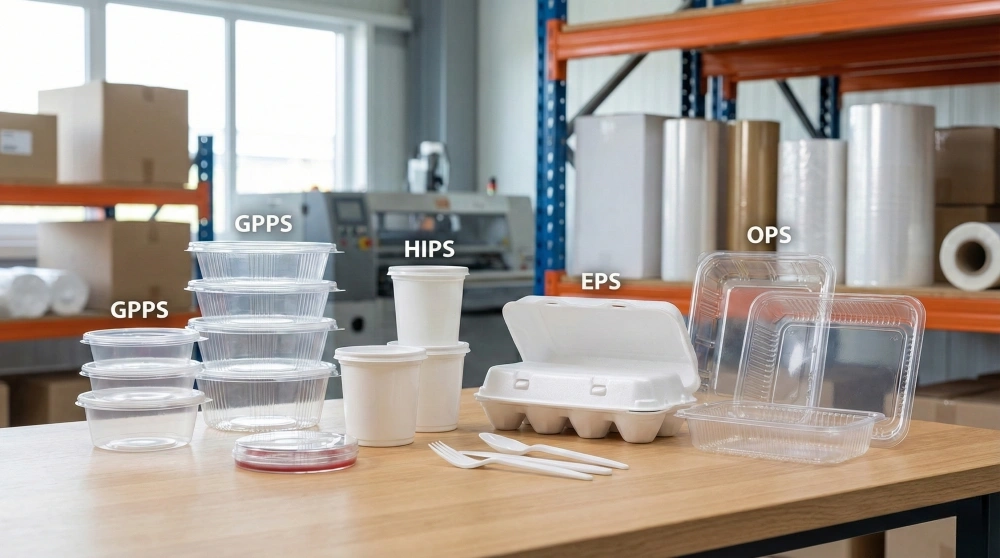
Polystyrene, or ps plastic, is a synthetic aromatic polymer available in several distinct forms including General Purpose (GPPS), High Impact (HIPS), Expanded (EPS), and Oriented (OPS) to serve specific industrial packaging needs. This versatile material is widely used for its clarity, rigidity, and cost-effectiveness in sectors ranging from food service to medical diagnostics.
Procurement officers in the food processing and distribution sectors often face the challenge of selecting a material that balances visual clarity with structural strength. Using an incorrect material grade can lead to brittle packaging that cracks during transport or fails to meet specific hygiene standards for delicate food items. This guide identifies the different variations of ps plastic and provides practical examples of their industrial applications to help you refine your supply chain decisions.
What Are the Primary Types of PS Plastic Used in Manufacturing?
PS plastic is classified into four major categories—GPPS, HIPS, EPS, and OPS—each offering unique physical properties for different production methods. These variations of ps plastic allow manufacturers to choose between glass-like transparency for retail displays or high-impact resistance for heavy-duty storage containers.
General Purpose Polystyrene (GPPS)
Here is the deal: GPPS is the most basic form of the polymer, known for being completely transparent and quite rigid. It is often referred to as crystal polystyrene because of its optical clarity, making it a standard choice for items where visibility is the main priority.
- Provides excellent dimensional stability during the injection molding process.
- Resists moisture absorption, which keeps the contents dry and protected.
- Offers a high-gloss finish that enhances the premium look of retail products.
High Impact Polystyrene (HIPS)
Look at this: HIPS is created by adding butadiene rubber to the polystyrene mix, which significantly improves the toughness of the material. While it loses the transparency of GPPS, it gains the ability to withstand physical stress without cracking or shattering.
- Displays high impact strength, making it suitable for shipping and handling.
- Works well for deep-draw thermoforming into complex shapes like yogurt tubs.
- Maintains a matte or opaque appearance that can be easily colored for branding.
Expanded Polystyrene (EPS)
Think about this: EPS is the foamed version of the material, consisting of small beads that are expanded to create a lightweight, insulating structure. It is the preferred choice for protective packaging and temperature-sensitive transport.
- Acts as a superior thermal insulator for hot or cold food items.
- Provides high shock absorption to protect electronics during transit.
- Consists mostly of air, which minimizes the weight of the overall package.
Oriented Polystyrene (OPS)
Consider the facts: OPS is produced by stretching GPPS film in two directions, which increases the strength of the material while maintaining its high level of clarity. This process allows for thinner walls in packaging without sacrificing the protective qualities required for food lids.
- Offers the highest level of clarity for viewing fresh food products.
- Increases the tensile strength of the plastic compared to standard GPPS.
- Reduces the total amount of resin needed, lowering the weight per unit.
| Type | Physical Property | Common Industrial Use |
| GPPS | Crystal Clear / Brittle | Medical trays, jewelry cases |
| HIPS | Opaque / Impact Resistant | Refrigerator liners, dairy cups |
| EPS | Foamed / Insulating | Protective blocks, egg cartons |
| OPS | Clear / High Strength | Deli lids, bakery containers |
The variety of available grades ensures that every specific mechanical requirement in a B2B environment can be met with a tailored solution.
Key Takeaway: Identifying the specific grade of ps plastic is the first step in ensuring your packaging meets both aesthetic and functional performance standards.
Why Does the Food Industry Rely on PS Plastic for Protective Packaging?
The food industry utilizes ps plastic because it creates a reliable moisture barrier that preserves the freshness and structural form of perishable items. This material ensures that delicate food products remain protected from external pressure while maintaining high visual appeal for retail consumers.
Visual Merchandising and Consumer Trust
The truth is: transparency directly correlates with consumer confidence in the food service industry. Using clear ps plastic allows buyers to inspect the quality of salads, fruits, and deli meats before purchase, which helps move inventory faster in a retail setting.
- Eliminates the need for customers to open packaging to check freshness.
- Provides a professional appearance that mimics glass without the weight or breakage risk.
- Supports high-quality printing for branding and nutritional information.
Structural Integrity for Safe Distribution
You should know: ps plastic provides the rigidity necessary to stack containers multiple levels high without the bottom layers collapsing. This structural strength is a major factor in reducing product loss during long-distance shipping and warehouse storage.
- Prevents the crushing of soft food items like pastries or leafy greens.
- Ensures that lids remain securely attached even when containers are moved frequently.
- Resists warping in high-humidity environments like refrigerated display cases.
| Feature | Performance Detail | Buyer Value |
| Clarity | Over 90% light transmission | Enhances retail presentation |
| Stiffness | High flexural modulus | Supports heavy stacking |
| Barrier | Hydrophobic nature | Prevents leaks and sogginess |
The combination of visibility and strength makes this material a standard choice for high-volume food distribution.
Key Takeaway: PS plastic offers a balance of display quality and physical protection that few other cost-effective polymers can match in the food sector.
What Are Common Industrial Examples of PS Plastic Applications?
PS plastic applications range from everyday food service items to complex components in the medical and electronics sectors. Beyond simple storage, ps plastic serves as a foundation for high-precision diagnostic tools and heavy-duty protective equipment.
Retail and Food Service Inventory
Let’s get specific: if you look at the inventory of a major catering supplier, a large portion of the single-use items are made from various forms of ps plastic. Its low production cost and hygienic nature make it the primary choice for disposable goods.
- Disposable cutlery like spoons, forks, and knives used in fast-food chains.
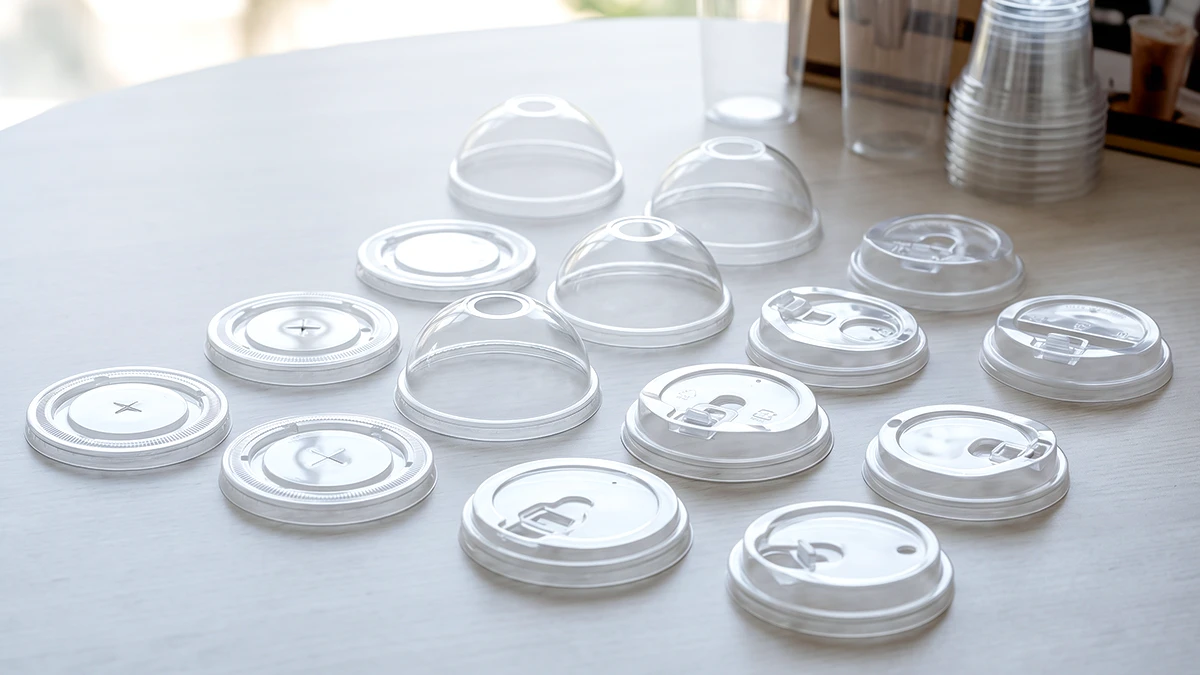
- Clear lids for cold beverage cups and salad containers.
- Foamed poultry trays and egg cartons that provide cushioning.
Laboratory and Medical Grade Equipment
That is not all: the medical industry relies on the purity and clarity of high-grade ps plastic for diagnostic procedures. Since the material can be molded with high precision, it is ideal for laboratory tools that require exact measurements and visual monitoring.
- Petri dishes used for cell cultures where transparency is mandatory.
- Test tubes and diagnostic kits that require chemical stability for accurate results.
- Sterilized medical trays used to hold surgical instruments in hospitals.
| Sector | Example Application | Why PS is Chosen |
| Catering | Plastic cutlery | Low cost and high rigidity |
| Agriculture | Egg cartons | Cushioning and impact protection |
| Science | Culture plates | Optical clarity and sterilization |
These applications show that the material is versatile enough to handle both low-cost disposables and high-precision technical equipment.
Key Takeaway: From the cafeteria to the laboratory, ps plastic provides a reliable and sterile solution for diverse professional needs.
How Do You Select the Right Grade of PS Plastic for Your Business?
Selecting the right grade of ps plastic involves evaluating the balance between material stiffness, clarity requirements, and the specific temperature environment of your supply chain. Identifying the correct ps plastic specification prevents mechanical failure during transit and ensures compliance with international safety standards.
Assessing Physical Stress and Stacking
It comes down to this: you must determine how much physical pressure your packaging will face during its lifecycle. If your containers are stacked in tall pallets for sea freight, the high rigidity of a ps plastic variant is necessary to prevent the bottom units from buckling.
- Evaluate the weight of the contents to choose between GPPS and HIPS.
- Consider the impact risk if the product is likely to be dropped during handling.
- Test the lid fit to ensure that vibration during transport does not cause leaks.
Verifying Regulatory Compliance
Make no mistake: for B2B buyers in the US and Europe, certification is the most important part of the selection process. Ensuring that your supplier provides food-grade ps plastic that meets FDA or EU standards is necessary to avoid legal issues and product recalls.
- Request batch-specific testing reports from independent laboratories.
- Confirm that the material is BPA-free for all food-contact applications.
- Verify the heat distortion temperature to ensure the plastic matches the intended use.
| Selection Factor | Requirement | Impact on Business |
| Durability | High Impact Resistance | Reduces shipping damage |
| Compliance | Food-Grade Certification | Ensures market access |
| Cost | Large Volume Efficiency | Improves profit margins |
Proper selection minimizes waste and ensures that your brand reputation remains intact through consistent product quality.
Key Takeaway: Technical specifications and safety certifications should drive your procurement decisions to ensure long-term reliability.
To learn more about the broader context of this material, you can refer to our guide on What Is PS (Polystyrene) Plastic?
At Reliancepak, we understand the complexities of sourcing the right materials for the food and packaging industries. Our production lines are designed to deliver high-quality ps plastic solutions that meet international safety standards while remaining cost-competitive for wholesale buyers. Whether you require clear lids for a distribution network or rigid trays for a food processing plant, our team is ready to provide professional support and free samples to verify our quality.
Our vision is to support the global supply chain with packaging materials that prioritize safety, clarity, and industrial efficiency.
FAQ
Can I use ps plastic for microwave heating?
No. Standard ps plastic has a low heat resistance and can soften or melt when exposed to the high temperatures found in a microwave. It is best used for cold or ambient temperature food storage.
Is ps plastic the same as Styrofoam?
Yes, in a specific context. Styrofoam is a trademarked brand of expanded polystyrene (EPS) used primarily for insulation and craft applications, though the term is often used generally to describe many foamed ps plastic products.
How do I tell the difference between GPPS and HIPS?
Yes, you can look at the clarity and flexibility. GPPS is crystal clear and brittle, while HIPS is usually opaque or translucent and has much higher flexibility and impact strength.
Does ps plastic react with acidic foods?
No. Polystyrene is chemically stable and does not react with common food acids like those found in citrus or vinegar, making it safe for a wide variety of food types.
Is ps plastic a good choice for freezer storage?
Yes. While some plastics become very brittle in the cold, specific grades of ps plastic are designed to maintain their structural integrity in refrigerated and freezer environments.