
Disposable cups. They’re everywhere. From your morning coffee ritual to office water coolers, picnics in the park, and fast-food meals, their convenience is undeniable. Billions upon billions are used globally every single year. But have you ever stopped mid-sip and wondered, “What happens to this cup when I’m done?” Can it be recycled? Is it compostable? Or is it destined for the landfill?
The answers, unfortunately, aren’t always straightforward. The journey of a disposable cup after its brief moment of utility is complex, depending heavily on what it’s made of, the available waste management infrastructure in your area, and even how clean it is when you toss it.
In this comprehensive guide, we’ll dive deep into the world of disposable cups. We’ll unravel the materials they’re made from, explore the nuances of recycling and composting, tackle common misconceptions, and discuss the roles consumers, industry players like Reliancepak, and infrastructure play in determining their ultimate fate. Let’s get started.
What Are Disposable Cups Actually Made Of?
Before we can talk about recycling or composting, we need to understand the materials involved. The term “disposable cup” covers a surprisingly wide range of products.
The Ubiquitous Paper Cup
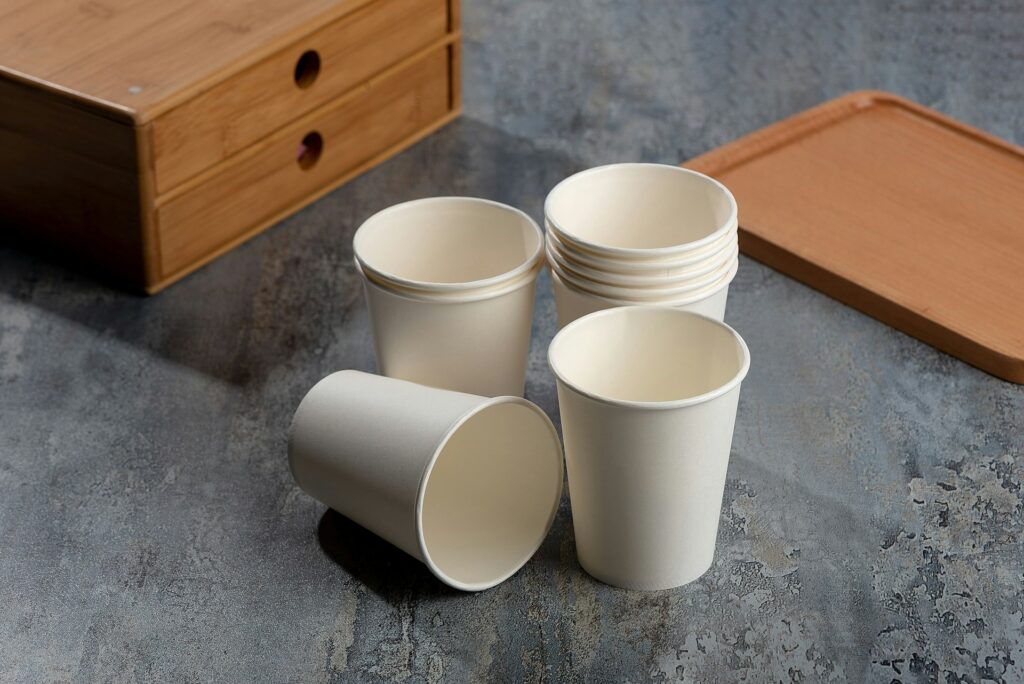
You might think “paper cup” means just paper. However, to hold liquids without turning into a soggy mess, most paper cups need a lining. Traditionally, this lining is:
- Polyethylene (PE) Plastic: This thin plastic coating makes the cup waterproof but also creates a major headache for recycling. It’s essentially a composite material – paper fused with plastic – making separation difficult and costly. This is the most common type of “paper” cup you’ll encounter for hot beverages.
In recent years, alternatives have emerged:
- Polylactic Acid (PLA) Lining: PLA is a bioplastic derived from plant resources like corn starch or sugarcane. It serves the same waterproofing purpose as PE but is designed to be compostable under specific industrial conditions. Cups with PLA linings are often marketed as a more eco-friendly alternative.
The Versatile Plastic Cup
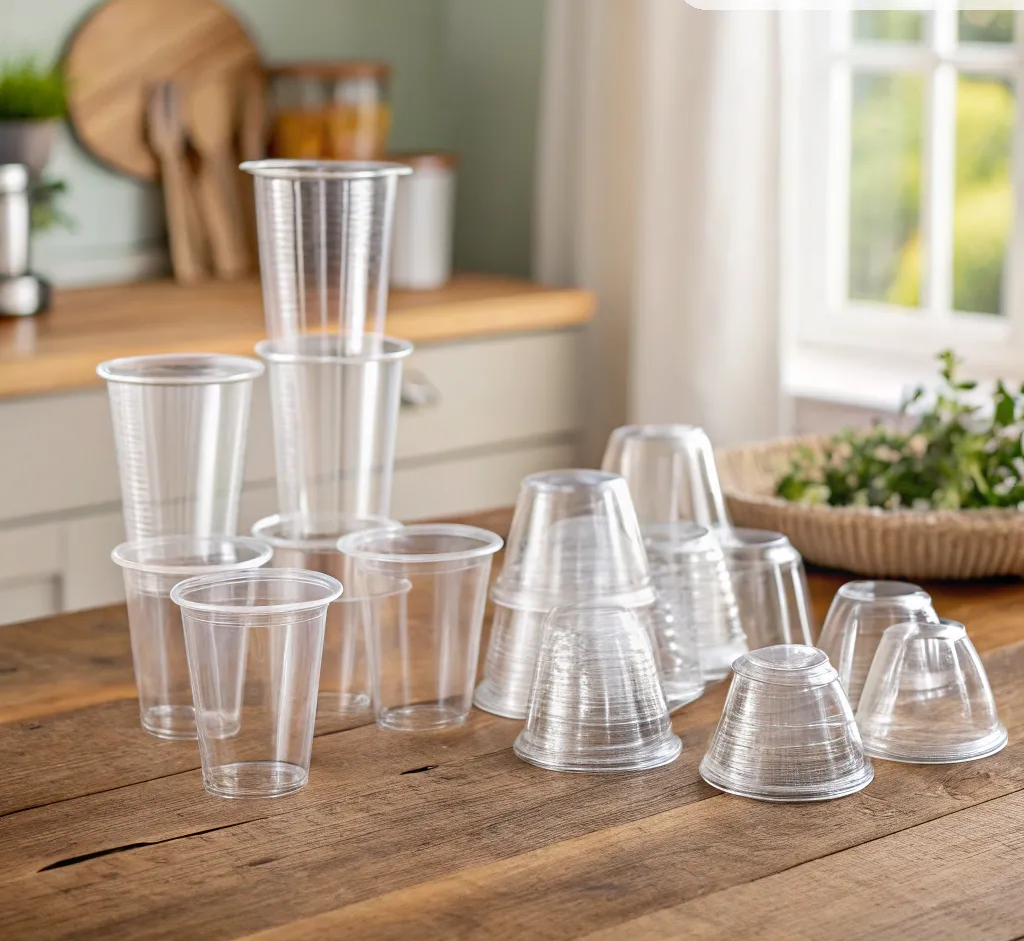
Clear or colored plastic cups, often used for cold drinks, smoothies, or iced coffee, are typically made from one of several types of plastic:
- Polypropylene (PP – #5): Often used for translucent or opaque cups (like the classic red party cup). It has a higher melting point, making it suitable for warm liquids too, sometimes. PP is recyclable in many areas, but acceptance varies.
- Polystyrene (PS – #6): Can be rigid (like some clear, brittle cups) or foamed (see below). Rigid PS recycling is less common than PP or PET.
- Polyethylene Terephthalate (PET or PETE – #1): The same plastic used for most water and soda bottles. Clear, strong, and widely recycled. Many clear cold-drink cups are made from PET.
- Polylactic Acid (PLA – #7 or often marked “PLA”): As mentioned earlier, this bioplastic can also be used to make entire cups, not just linings. These look and feel very similar to traditional plastic cups but are intended for industrial composting, not recycling with conventional plastics.
Foam Cups (Expanded Polystyrene – EPS)
Once incredibly common, especially for hot drinks due to their insulating properties, foam cups (often mistakenly called Styrofoam™, a brand name for building insulation) are made from Expanded Polystyrene (PS – #6). These are lightweight and cheap but pose significant environmental challenges. They are bulky, break easily into small pieces (microplastics), and are very rarely accepted for recycling due to contamination issues and low market value. Many cities and countries have banned or restricted their use.
Emerging Materials: Beyond Paper and Plastic
Driven by consumer demand and regulatory pressure, manufacturers are exploring alternative materials:
- Bagasse: A fibrous residue left over after sugarcane stalks are crushed to extract their juice. Bagasse can be molded into cups and containers. It’s typically certified compostable (industrially).
- Bamboo: A fast-growing grass that can be processed into fibers for cup production. Often combined with PLA or other binders, their end-of-life depends on the specific composition (usually compostable).
- Other Plant Fibers: Various other plant-based materials are being tested and used.
Understanding these material differences is crucial because it dictates whether a cup can potentially be recycled or composted.
The Big Question: Are Paper Disposable Cups Recyclable?
This is where things get tricky, primarily because of that plastic lining we discussed.
The Plastic Lining Problem Explained
Standard paper recycling relies on mixing paper with water to create a pulp slurry. The paper fibers readily break down in water, but the PE plastic lining1 does not. It contaminates the paper pulp, making it difficult to produce high-quality recycled paper products. Furthermore, the machinery at standard paper mills isn’t designed to separate this fused plastic layer from the paper fiber effectively.
Imagine trying to recycle a piece of paper that has plastic tape stuck firmly all over it – it’s a similar challenge, but integrated throughout the cup’s structure.
How Can Paper Cups Be Recycled?
While challenging, recycling PE-lined paper cups isn’t impossible. It requires specialized recycling facilities2 equipped with technology that can:
- Pulping: Vigorously mix the cups in water to separate the paper fibers.
- Screening/Separation: Filter out the plastic lining fragments from the paper pulp slurry.
- Processing: Clean and process the recovered paper fibers for use in new paper products (often lower-grade items like cardboard or tissue). The separated plastic lining might be sent to landfill, incinerated for energy recovery, or potentially recycled separately if volumes and markets allow (which is rare).
Cups lined with PLA instead of PE present a different challenge. They shouldn’t go into the standard paper recycling stream or the standard plastic recycling stream. They are designed for composting.
The Reality Check: Is Recycling Widely Available?
Here’s the crucial point: The existence of technology to recycle paper cups does not mean that recycling is readily available everywhere.
- Infrastructure Gap: Only a limited number of recycling facilities worldwide have invested in the specialized equipment needed to handle PE-lined paper cups. Most standard Materials Recovery Facilities (MRFs) are not equipped for this.
- Collection Issues: Even if a specialized facility exists regionally, your local curbside recycling program or public bin collection might not accept paper cups. They often get sorted out as contaminants.
- Contamination: Cups often contain liquid residue, lids, straws, and sleeves, which further complicate the recycling process. Consumers need to ensure cups are empty and ideally clean(ish) and dry, and follow local sorting guidelines precisely.
In summary: While technically possible in some locations with the right infrastructure, most PE-lined paper cups placed in typical recycling bins do not end up being recycled. They often contaminate the paper stream or are sorted out and sent to landfill or incineration. Always check your local council or waste management provider’s specific guidelines.
What About Plastic Disposable Cups and Recycling?
Plastic cups seem simpler – plastic is recyclable, right? Again, it depends on the type of plastic and local capabilities.
Identifying Recyclable Plastics
The key is the Resin Identification Code (RIC) – the number inside the chasing arrows symbol, usually found on the bottom of the cup.
| Resin Code | Plastic Type | Common Cup Use | General Recyclability |
|---|---|---|---|
| #1 PET/PETE | Polyethylene Terephthalate | Clear cold drink cups | Widely recycled |
| #2 HDPE | High-Density Polyethylene | (Rarely used for cups) | Widely recycled |
| #3 PVC | Polyvinyl Chloride | (Rarely used for cups) | Rarely recycled |
| #4 LDPE | Low-Density Polyethylene | (Lids, rarely cups) | Sometimes recycled (often via store drop-off) |
| #5 PP | Polypropylene | Translucent/colored cups, lids | Increasingly recycled, but check locally |
| #6 PS | Polystyrene | Rigid clear/colored cups, foam | Rarely recycled (especially foam) |
| #7 OTHER | Includes PLA, other plastics | PLA compostable cups, others | Generally not recycled curbside |
General Rule: Cups made from #1 PET and sometimes #5 PP have the best chance of being recycled if your local program accepts them.
Challenges in Plastic Cup Recycling
Even for accepted plastic types, challenges remain:
- Sorting: Cups can be lightweight and flat, sometimes getting mis-sorted into the paper stream at MRFs. Optical sorters used to identify plastic types might struggle with certain colors or shapes.
- Contamination: Liquid residue, straws (often made from non-recyclable plastic like PP or PLA), and lids (potentially different plastic types) are major contaminants.
- Market Value: The economics of recycling depend on demand for the recovered materials. Some plastics, like mixed #3-#7 or contaminated batches, have low or unstable market value, making recycling less viable.
- PLA Confusion: PLA cups (#7 or marked PLA) look very similar to PET (#1) or PS (#6) cups. If PLA cups enter the conventional plastic recycling stream, they can contaminate the batch, reducing the quality and value of the recycled PET or PS. They belong in an industrial composting stream.
Tips for Recycling Plastic Cups
- Check the Number: Identify the RIC code.
- Check Local Rules: Confirm your local recycling program accepts that specific number and shape (some programs accept bottles but not tubs or cups of the same plastic type).
- Empty, Clean, and Dry: Remove all liquids and residue. A quick rinse is often recommended. Make sure it’s dry.
- Remove Straws and Lids (Usually): Straws are generally not recyclable. Lids might be a different plastic type. Check local guidance – some prefer lids on, some off, some accept lids separately if they meet size requirements.
- Don’t Bag Recyclables: Unless specifically instructed otherwise, put items loose in the bin.
Diving into Compostability: Can Disposable Cups Break Down Naturally?
Compostable cups sound like the perfect eco-solution – use it, toss it, and it returns to the earth. But “compostable” has specific requirements.
What Does “Compostable” Really Mean?
Compostable doesn’t just mean “will eventually break down.” It means an item can break down into natural elements (carbon dioxide, water, inorganic compounds, and biomass) within a specific timeframe (usually 90-180 days) under specific conditions, leaving behind no toxic residue. Key distinctions:
- Industrial vs. Home Composting: Most “compostable” cups require the high temperatures (55-70°C or 131-158°F), moisture levels, and microbial activity found in industrial or commercial composting facilities. They will not break down readily in a typical backyard compost bin or pile, which operates at lower temperatures.
- Certifications: Look for certifications from reputable third-party organizations that verify compostability claims according to established standards (like ASTM D6400 in the US or EN 13432 in Europe). Common certifications include:
- BPI (Biodegradable Products Institute) – Primarily North America
- TÜV Austria OK compost INDUSTRIAL / OK compost HOME / OK biodegradable SOIL/WATER
- Seedling logo (European Bioplastics) – Linked to EN 13432
| Standard/Logo | Environment | Key Requirement | Common Materials Certified |
|---|---|---|---|
| BPI Certified | Industrial Composting | Meets ASTM D6400/D6868; disintegrates, biodegrades | PLA, Bagasse, PLA-lined paper |
| TÜV OK compost INDUS | Industrial Composting | Meets EN 13432; similar to BPI | PLA, Bagasse, PLA-lined paper |
| TÜV OK compost HOME | Home Composting | Meets specific lower-temp requirements | Certain modified bioplastics, some paper (rare for cups) |
| Seedling Logo | Industrial Composting | Meets EN 13432; European standard | PLA, Bagasse, PLA-lined paper |
Which Cups Might Be Compostable?
Cups explicitly designed and certified for composting typically include:
- PLA-lined Paper Cups: The paper fiber and PLA lining break down under industrial composting conditions.
- PLA Plastic Cups: Solid cups made entirely from PLA bioplastic.
- Bagasse Cups: Made from sugarcane fiber, generally certified for industrial composting.
- Other Plant-Fiber Cups: Depending on binders used, often certified compostable.
Crucially: A cup is only truly beneficial as “compostable” if it actually reaches an industrial composting facility that accepts food packaging.
The Catch: Industrial Composting Facilities Required
Similar to specialized paper cup recycling, access to industrial composting facilities that accept packaging is often limited.
- Availability: Many municipalities lack commercial composting infrastructure, or existing facilities may only accept yard waste and food scraps, not packaging (even if certified compostable).
- Collection Systems: Separate collection streams for compostable packaging are uncommon outside of closed systems like corporate campuses, events, or specific city programs.
- Contamination Risk: Conventional plastics mistakenly placed in compost bins can ruin the final compost product. Compost facilities need clean streams of acceptable materials.
If a certified compostable cup ends up in landfill, it may not break down properly. Landfills are often anaerobic (lacking oxygen), hindering the composting process and potentially leading to methane (a potent greenhouse gas) production, especially from biodegradable materials. If it ends up in recycling, it acts as a contaminant.
Misconceptions: Biodegradable vs. Compostable
These terms are often used interchangeably, but they mean different things:
- Biodegradable: Simply means a material can be broken down by microorganisms over time. It doesn’t specify the timeframe, conditions, or the quality/toxicity of the end product. A chunk of untreated wood is biodegradable, but it takes years. Some plastics marketed as “biodegradable” might contain additives that cause them to break into smaller plastic fragments (microplastics) faster, which isn’t necessarily environmentally beneficial.
- Compostable: Meets specific standards (like ASTM D6400 or EN 13432) for breaking down into non-toxic compost within a set timeframe under controlled (usually industrial) conditions. All compostable items are biodegradable, but not all biodegradable items are compostable.
Look for “compostable” certification, not just “biodegradable” claims, especially for packaging.
Recyclable vs. Compostable: What’s the Difference and Which is Better?
Both recycling and composting aim to divert waste from landfills, but they achieve it differently.
- Recycling: Re-processes materials into new raw materials to manufacture new products. It focuses on reclaiming the material itself (e.g., plastic pellets, paper pulp). It primarily deals with non-organic materials like plastics, glass, metals, and some paper.
- Pros: Conserves virgin resources, saves energy compared to raw material extraction/processing, reduces landfill volume.
- Cons: Requires specific infrastructure, can be energy-intensive, subject to market fluctuations, contamination issues, materials can often only be downcycled (into lower quality products).
- Composting: Decomposes organic materials (food scraps, yard waste, certified compostable packaging) into nutrient-rich soil amendment (compost). It focuses on returning organic matter to the soil.
- Pros: Creates valuable soil conditioner, reduces landfill volume and methane emissions from organic waste, returns nutrients to the soil.
- Cons: Requires specific (often industrial) infrastructure for packaging, limited availability, potential for contamination, doesn’t recover the material structure in the same way recycling does.
Which is “better” for a disposable cup?
- If a cup is made from widely recycled plastic (#1 PET, sometimes #5 PP) AND reliable recycling collection and processing infrastructure exists: Recycling might be preferable as it directly recovers the plastic material.
- If a cup is certified compostable (PLA-lined, bagasse) AND reliable industrial composting collection and processing infrastructure exists that accepts packaging: Composting is the intended and likely best route.
- If a PE-lined paper cup can access specialized paper cup recycling: That’s its best bet.
- If none of the above infrastructure is reliably accessible: Neither option is effectively utilized, and the cup likely ends up in landfill or incineration regardless of its potential recyclability or compostability. In this common scenario, the focus shifts towards reduction (reusables) or cups designed with minimal environmental impact even if landfilled (though this is less ideal).
The “best” end-of-life pathway is highly dependent on local context and infrastructure.
The Hurdles: Why Isn’t Disposable Cup End-of-Life Easier?
Several interconnected factors make managing disposable cup waste so challenging:
Lack of Infrastructure
This is arguably the biggest bottleneck.
- Insufficient Specialized Recycling: Not enough facilities can handle PE-lined paper cups.
- Limited Industrial Composting: Few facilities exist, and even fewer accept packaging alongside food/yard waste.
- Collection Gaps: Lack of convenient public or curbside bins specifically for paper cups or compostable packaging.
Consumer Confusion & Contamination
- Unclear Labeling: It’s often hard to tell if a cup is PE-lined, PLA-lined, or made of recyclable/compostable plastic without close inspection (or if labels are missing/misleading).
- “Wishcycling”: Consumers hopefully tossing items into recycling or compost bins without confirming acceptability, leading to contamination.
- Food Residue: Liquids, ice, food scraps left in cups contaminate both recycling and composting streams.
Economic Viability
- High Costs: Collecting, sorting, and processing mixed materials or specialized items like paper cups is expensive.
- Low Market Value: Recovered materials (especially mixed plastics or lower-grade paper fibers) may not fetch high prices, making the economics of recycling challenging without subsidies or mandates.
- Competition with Virgin Materials: If virgin plastic or paper pulp is cheap, there’s less economic incentive to use recycled content.
Design Complexity
- Mixed Materials: Cups are often made of multiple components (cup body, lining, lid, straw) from different materials, complicating sorting and processing.
- Adhesives and Inks: Glues and printing inks can sometimes interfere with recycling or composting processes.
Exploring Greener Alternatives: Beyond Traditional Cups
Given the challenges with traditional disposable cups, what are the alternatives?
Reusable Cups: The Gold Standard?
Undeniably, the most sustainable option is to avoid single-use cups altogether.
- Bring Your Own (BYO): Carrying a reusable coffee cup or water bottle significantly reduces waste. Many cafes offer discounts for customers who bring their own cups.
- Reusable Systems: Some cafes, events, or campuses implement reusable cup programs where customers borrow a cup and return it for washing and reuse.
- Considerations: Requires an initial investment, needs regular washing, and relies on habit change. However, lifecycle analyses consistently show reusable cups have a lower environmental impact than single-use cups after just a handful of uses.
Truly Recyclable Single-Use Options
If single-use is necessary, choosing cups made from materials that are actually widely recycled in practice is key:
- PET (#1) Cups: Often the best bet for cold drinks, as PET is commonly accepted.
- PP (#5) Cups: Acceptance is growing, but check locally.
Certified Compostable Options
For situations where composting infrastructure is available (e.g., closed-loop systems at events, specific municipal programs):
- PLA-lined Paper Cups: An alternative to PE-lined cups for hot beverages.
- Bagasse Cups: A good option made from agricultural byproduct.
- PLA Cold Cups: An alternative to PET/PP/PS where industrial composting is the intended disposal pathway.
Companies like Reliancepak, operating from China and supplying markets across Southeast Asia, Europe, and Central Asia, often specialize in providing these types of eco-friendlier packaging solutions, including certified compostable options made from materials like PLA and bagasse, catering to growing global demand for sustainable alternatives.
Innovative Materials on the Horizon
Research continues into new materials and designs:
- Aqueous Linings: Water-based coatings for paper cups designed to be more easily recyclable in standard paper streams.
- Fiber-Based Solutions: Cups made entirely from molded plant fibers without plastic linings.
- Edible Cups: Cups made from wafer or other edible materials (more niche, but innovative!).
How Can Consumers Make More Sustainable Choices?
While system-level changes are crucial, individual choices still matter.
Reduce First: Bring Your Own Cup!
This remains the most impactful action. Make carrying a reusable cup a habit.
Choose Wisely: Look for Clear Labels
If buying disposable, try to choose based on your local disposal options:
- Recycling Available? Opt for #1 PET or #5 PP plastic cups if accepted locally. Check paper cups for any indication of recyclability (though often misleading without infrastructure).
- Industrial Composting Available? Look for certified compostable cups (BPI, TÜV OK compost INDUSTRIAL) if you have access to a collection program that accepts them.
Dispose Correctly: Know Your Local Rules
This is critical. Check your local municipality or waste hauler’s website for specific guidelines on what types of cups (paper, plastic #s, compostable) are accepted in which bins. When in doubt, throw it out (in the trash bin) to avoid contaminating recycling or compost streams. Ensure cups are:
- Empty: No liquids.
- Clean(ish): Minimal residue.
- Dry: For recycling.
- Sorted: Follow local rules about lids, straws, sleeves.
Advocate for Change
Support businesses that use reusable options or verifiably recyclable/compostable packaging. Encourage your local government to improve recycling and composting infrastructure.
The Role of Industry and Companies like Reliancepak
The packaging industry plays a vital role in addressing the disposable cup problem.
Driving Innovation in Materials
Manufacturers and suppliers are key to developing and scaling up alternatives to conventional PE-lined paper and hard-to-recycle plastics. This includes investing in R&D for materials like PLA, bagasse, aqueous coatings, and other plant-based solutions. Companies like Reliancepak are part of this shift, producing and exporting packaging made from these more sustainable feedstocks.
Improving Design for Recyclability/Compostability
Industry can design cups made from single materials (mono-materials), use easily separable components, and choose inks and adhesives that don’t hinder end-of-life processing. Clear and accurate labeling is also essential.
Clear Labeling and Consumer Education
Brands and manufacturers need to provide unambiguous information on cups about their material composition and correct disposal pathway (recyclable, compostable in industrial facilities, etc.), including relevant certification logos. Supporting consumer education campaigns can reduce confusion and contamination. Reliancepak, in its role supplying diverse international markets, can contribute by ensuring its products feature clear, standardized labeling suitable for regions like Europe (with EN 13432) or North America (with BPI).
Supporting Infrastructure Development
While not direct builders of MRFs or compost plants, the packaging industry can collaborate with waste management stakeholders, invest in pilot programs, and advocate for policies (like Extended Producer Responsibility – EPR) that help fund the necessary infrastructure upgrades. Providing a steady supply of recyclable or compostable materials creates the feedstock needed for these facilities to be viable.
Navigating Global Markets and Regulations
Companies operating internationally, such as Reliancepak targeting Southeast Asia, Europe, and Central Asia, must navigate a complex web of varying regulations, consumer preferences, and infrastructure levels. Europe, for instance, has stringent rules under the Single-Use Plastics Directive, pushing demand for alternatives that Reliancepak can supply. Southeast Asian nations are rapidly developing waste management strategies, creating opportunities for sustainable packaging solutions. Adapting product offerings and ensuring compliance across these diverse markets is crucial.
Global Trends and Regulations Shaping the Future
The landscape for disposable cups is rapidly evolving due to several factors:
H3: Single-Use Plastic Bans and Restrictions
Many countries, regions, and cities are implementing bans or restrictions on certain single-use plastic items, including foam cups and sometimes other plastic types. The EU’s Single-Use Plastics Directive is a prime example, driving member states to reduce consumption of items like beverage cups and promote reusable alternatives.
H3: Extended Producer Responsibility (EPR) Schemes
EPR laws require producers (manufacturers, importers, brands) to take financial or physical responsibility for the end-of-life management of their products. This can involve funding collection and recycling programs, which helps shift the cost burden from municipalities and taxpayers and incentivizes producers to design more sustainable packaging. EPR schemes are becoming more common globally.
H3: Growing Demand for Sustainable Packaging
Consumers and businesses (especially large corporations with sustainability goals) are increasingly demanding packaging with lower environmental impact. This market pull encourages innovation and investment in reusable systems, easily recyclable materials, and certified compostable options, benefiting suppliers like Reliancepak who focus on these areas.
Conclusion: The Path Forward for Disposable Cups
So, are disposable cups recyclable or compostable? The answer is a frustrating “it depends.”
- Traditional PE-lined paper cups: Generally not recyclable in standard systems, requiring specialized facilities that are not widely available.
- Plastic cups: Recyclability depends on the plastic type (#1 PET and #5 PP are best bets) and local program acceptance. Foam (#6 PS) is rarely recycled.
- PLA-lined paper or PLA/Bagasse cups: Often certified compostable, but only in industrial composting facilities that accept packaging, which are also not universally available. They contaminate recycling streams.
The convenience of the disposable cup comes at a significant environmental cost when end-of-life management fails. While innovations in materials and design offer potential improvements, the most significant barriers remain the lack of widespread, accessible, and reliable collection and processing infrastructure for both specialized recycling and industrial composting.
The path forward requires a multi-pronged approach:
- Reduce: Prioritize reusable cups whenever possible. This is the most effective way to minimize impact.
- Improve Design: Industry must continue innovating towards cups made from widely recyclable mono-materials or verifiably compostable materials (with clear labeling).
- Invest in Infrastructure: Governments, potentially funded through EPR schemes, need to invest significantly in upgrading recycling facilities and building out industrial composting capacity that accepts packaging.
- Educate Consumers: Clear communication about how to identify different cup types and dispose of them correctly according to local capabilities is essential.
- Systemic Change: Embrace circular economy principles, including deposit-return schemes or standardized reusable cup systems for cafes and events.
The future of the disposable cup hinges on moving beyond a linear “take-make-dispose” model towards one where materials are effectively recovered and reused, or returned safely to the biosphere. While companies like Reliancepak play a crucial role in providing better material options for global markets, achieving true sustainability requires collective action from consumers, industry, and governments alike. Next time you reach for a disposable cup, consider its journey – and perhaps reach for your reusable one instead.