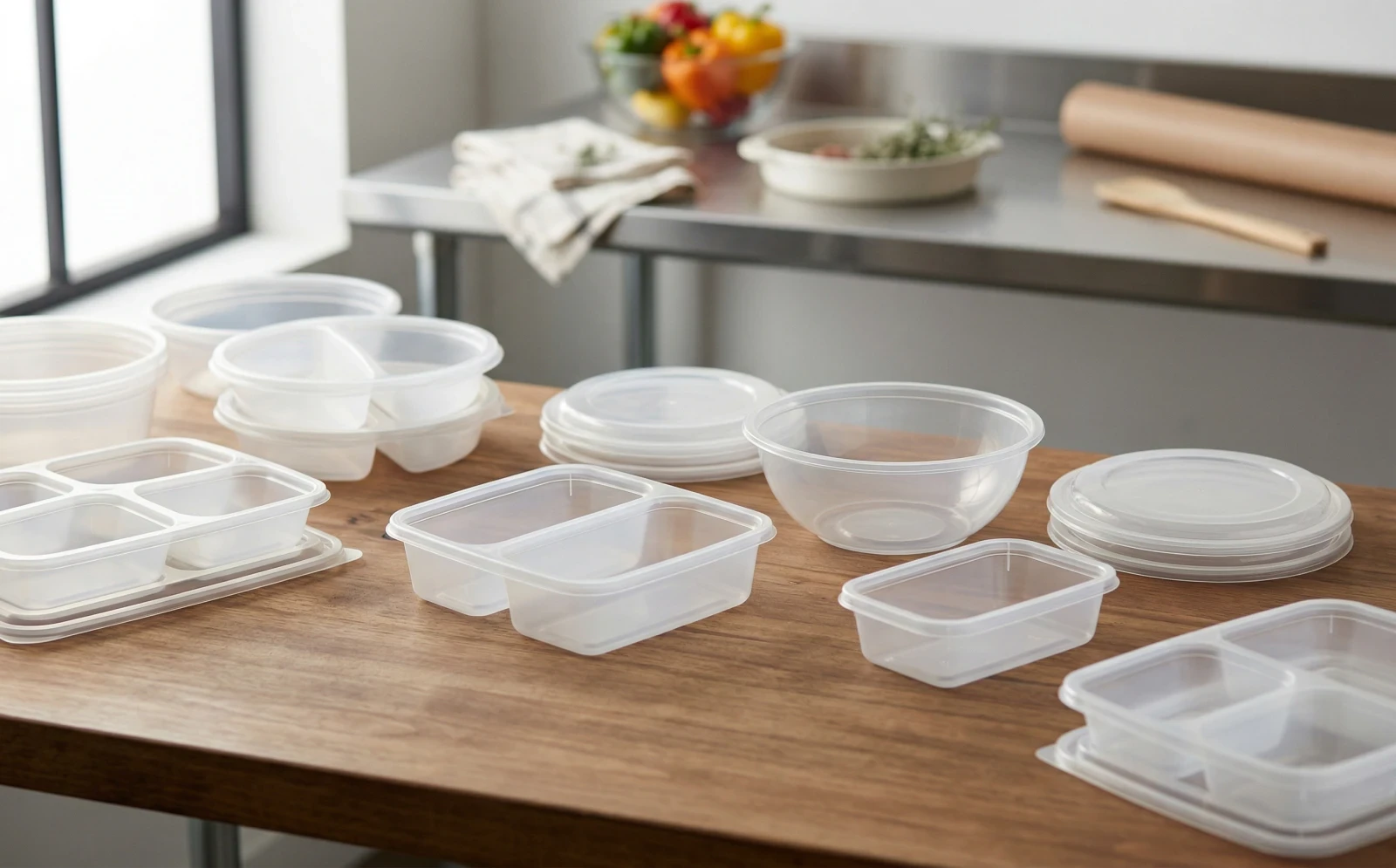
Selecting the specific dimensions and layout for food container bulk procurement requires a technical assessment of portion volume versus shipping density to minimize logistical overhead while maintaining food integrity. Choosing the wrong size leads to wasted material costs, while an inefficient shape increases your shipping expenses by reducing the number of units that fit into a standard 40HQ container.
You might notice that your current packaging takes up too much space on delivery trucks or that customers complain about food shifting during transit. Using mismatched sizes leads to unstable stacking and higher damage rates, which directly eats into your profit margins and damages your reputation with distribution partners. This guide provides the technical framework for optimizing your inventory through strategic selection of sizes, shapes, and compartment configurations. By refining these specifications, you ensure that every food container bulk shipment contributes to a more efficient and profitable supply chain.
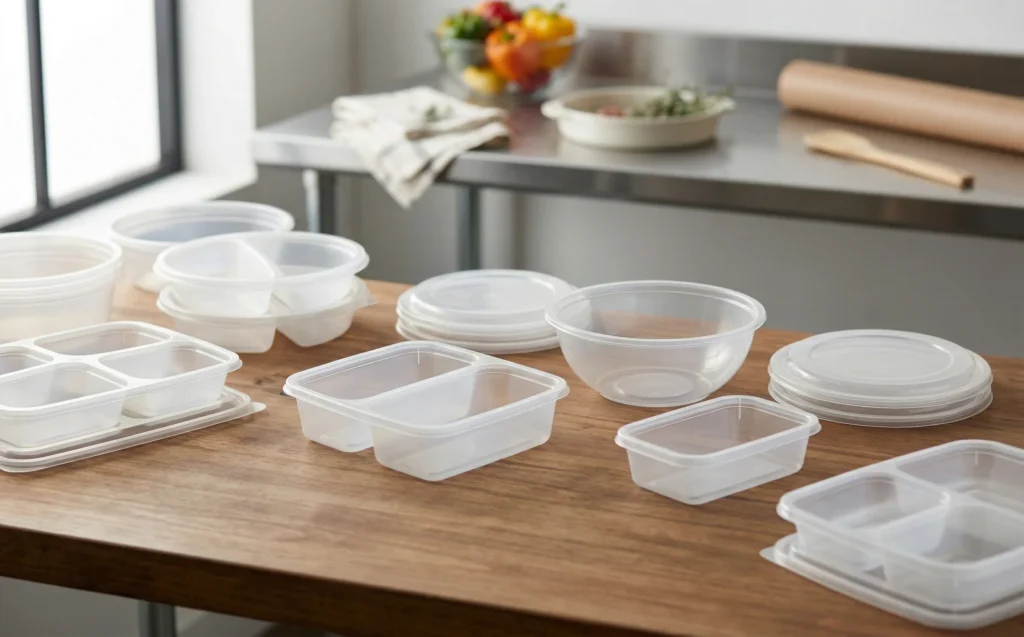
Why does portion volume determine food container bulk specifications?
Portion volume serves as the primary metric for sizing decisions because it dictates the internal capacity required to prevent food from overflowing or appearing undersized. Standardizing your food container bulk inventory based on fluid ounces or milliliters allows you to cater to specific industry segments such as side dishes, main courses, or family-sized catering platters.
Standardizing volumes across your inventory
Matching the container capacity to the weight of the food prevents movement that causes leaks or aesthetic degradation.
The truth is.
- 16 oz units are preferred for side salads and appetizers.
- 24 oz to 32 oz containers serve as the standard for individual main meals.
- 48 oz and larger options are reserved for bulk food processing or family sharing.
- Custom capacities can be manufactured to meet unique regional portion requirements.
Impact on retail shelf presence
Correct sizing ensures that the product looks full and appealing when displayed in a retail refrigerator or heating cabinet.
Here is the deal.
- Minimal headspace prevents oxidation and keeps food looking fresh longer.
- Consistent heights across different volumes allow for uniform shelving.
- Compact designs allow retailers to fit more units on their displays.
- Tight lid seals maintain the internal atmosphere of the packaging.
| Standard Capacity | Internal Volume (ml) | Target Food Sector | Market Popularity |
| Small | 450 – 500 | Deli & Sides | High |
| Medium | 700 – 850 | Meal Prep & Lunch | Very High |
| Large | 1000 – 1200 | Family Meals | Moderate |
Proper volume selection reduces the cost of raw materials by ensuring you are not paying for unused resin or fiber in every piece.
Key Takeaway: Aligning container capacity with specific portion sizes prevents food waste and optimizes the visual appeal for the end-user.
How does container shape affect logistics and storage efficiency?
Container shape directly impacts the nesting ratio, which is the number of units that can be stacked within a specific carton height. Optimizing the geometry of your food container bulk items allows you to fit more product into a single warehouse pallet, effectively lowering your storage cost per unit.
Benefits of rectangular vs round designs
Rectangular containers are generally more efficient for storage because they eliminate the dead space found between round bowls.
Think about this.
- Rectangular shapes maximize the use of space in shipping cartons and delivery bags.
- Round bowls are superior for structural strength and resisting vertical pressure.
- Oval designs provide a premium aesthetic for high-end catering clients.
- Square containers offer a modern look while remaining space-efficient.
Understanding nesting ratios and stackability
A higher nesting ratio means containers sit deeper within each other, reducing the volume of the outer shipping box.
Let’s look at the facts.
- Precision-engineered draft angles allow for easier separation on production lines.
- Consistent wall thickness prevents containers from sticking together when nested.
- Reinforced rims provide the strength needed to support high stacks without collapsing.
- Anti-slip features on the base improve stability during high-speed delivery.
| Shape Type | Space Efficiency | Structural Integrity | Nesting Density |
| Rectangular | Highest | Moderate | High |
| Round | Low | Highest | Moderate |
| Square | High | High | High |
Choosing a shape that allows for high nesting density can reduce the total number of shipping containers required for a large wholesale order.
Key Takeaway: Selecting the right geometric shape is the most effective way to lower your per-unit shipping and storage costs.
When should you opt for multi-compartment designs?
Multi-compartment designs are necessary when the food product consists of multiple components that must remain separate to prevent flavor migration or textural changes. These configurations are highly sought after by meal prep companies and high-volume food processors who require organized presentation for their customers.
Preventing flavor migration and sogginess
Compartment walls act as a physical barrier that prevents sauces or moisture from reaching dry components like rice or salad.
You should know.
- Two-compartment trays are ideal for a protein and a single side dish.
- Three-compartment designs are the industry standard for balanced nutritional meals.
- Deep dividers are required to prevent liquid crossover during rough transport.
- Individual lid seals for each compartment provide the highest level of security.
Enhancing perceived value for meal prep
Organized food presentation through multiple compartments increases the perceived value of the meal, allowing for higher retail pricing.
Here is the truth.
- Clean separation suggests a professional and hygienic food preparation process.
- Compartments help with portion control, which is a key selling point for health-conscious buyers.
- Visual variety in a single container encourages consumers to choose pre-packaged options.
- Dedicated sauce wells reduce the need for extra condiment cups.
| Compartment Count | Typical Layout | Primary Application | User Benefit |
| 1-Comp | Open Basin | Salads & Rice Bowls | Versatility |
| 2-Comp | 70/30 Split | Meat & Vegetables | Portioning |
| 3-Comp | 50/25/25 Split | Full Course Meal | Organization |
Multi-compartment containers are more complex to manufacture and often require higher precision in the molding process to ensure lid fit.
Key Takeaway: Compartment designs are essential for preserving food quality and improving the professional presentation of complex meals.
Conclusion
Reliancepak offers a stable supply of food-grade packaging with the speed and professional service your business requires. With 9 production lines and a focus on international certifications, we help you secure your food container bulk needs with confidence. Contact us today to discuss how our integrated manufacturing and trading services can support your wholesale goals.
We believe that reliable, safe, and sustainable packaging is the foundation of a successful global food supply chain.
FAQ
Can I customize the depth of a standard container shape?
Yes. Most manufacturers can adjust the height of a container by modifying the mold inserts, though this usually requires a specific minimum order quantity to justify the tooling change.
How do I know if a lid will stay secure on a 3-compartment tray?
Yes, you can verify this by performing a snap-test on physical samples to ensure the lid grooves match the tray rim precisely across all dividers.
Can I mix different compartment styles in one shipment?
Yes. Integrated suppliers often allow you to combine different container configurations in a single 40HQ container as long as the total volume meets the factory’s production batch requirements.
Do rectangular containers break more easily than round ones?
No. While round shapes naturally distribute pressure better, modern rectangular containers use reinforced corners and ribbed walls to achieve similar levels of durability.
Is there a specific shape that is better for microwave heating?
Yes. Round or oval shapes are typically better for microwave use because they allow for more even heat distribution compared to rectangular shapes where corners can overheat.