
TL;DR Buying directly from a factory offers lower unit costs but often comes with high MOQs and communication barriers. Trading companies provide better service and variety but at a higher price. The ideal partner often uses a “hybrid” model—manufacturing core products like aluminum packaging while sourcing complementary items for you.
Quick Guide: Factory vs. Trading Company
If you are sourcing aluminum packaging from China, the choice depends on your priorities:
- Factory Direct: Best for extremely high volumes (container loads of a single item) where unit price is the only metric. Expect higher Minimum Order Quantities (MOQs) and potential language barriers.
- Trading Company: Best for smaller businesses needing variety. They offer lower MOQs and better service but add a markup to the price.
- The Hybrid Model (Recommended): A manufacturer that also has a trading license. This gives you factory-direct pricing on core items (like foil trays) and the flexibility to consolidate other goods (like lids or cutlery) in one shipment.
Are you tired of choosing between a cheap price and a headache, or good service and a high markup? Read on to discover why the old “factory vs. trading company” debate is outdated and how a hybrid approach can optimize your supply chain.
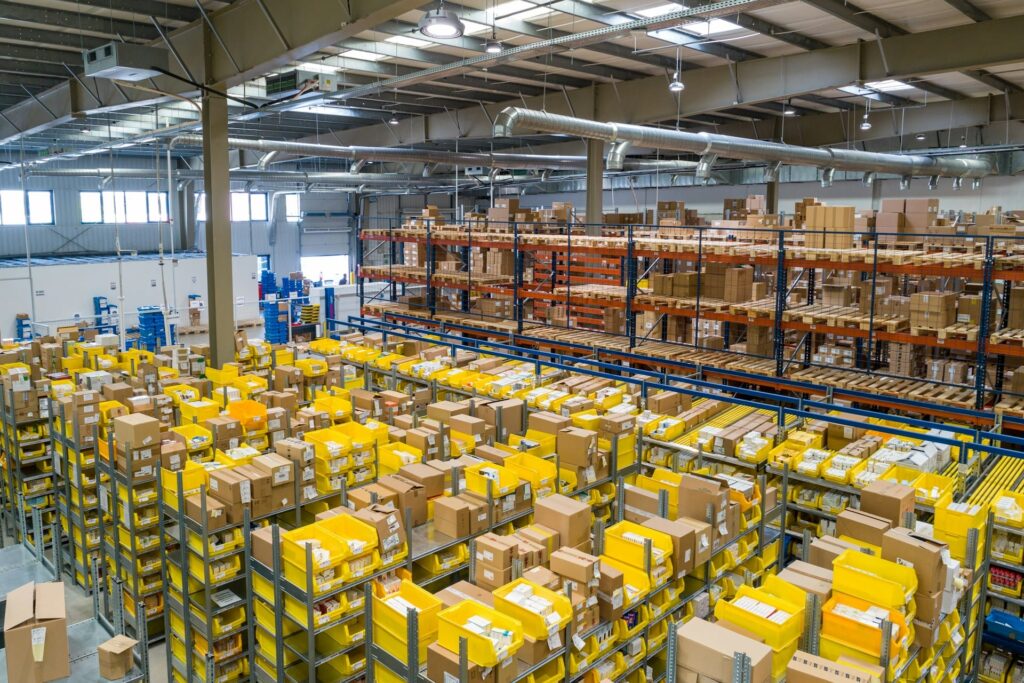
The Old Debate: Price vs. Convenience
For decades, the golden rule of international procurement was simple: “Cut out the middleman.” The assumption was that buying directly from the manufacturer would always yield the lowest price. While this is mathematically true, the hidden costs of working with a pure factory can be substantial.
The Reality of “Factory Direct”
When you work with a traditional factory, their focus is production efficiency, not customer service.
- Rigid MOQs: They need to keep machines running. If you want 50,000 aluminum trays, they might demand you buy 200,000.
- Limited Scope: A factory that makes aluminum foil likely does not make paper lids or plastic covers. You will have to find separate suppliers for each component.
- Communication Gaps: Sales teams at pure factories are often less fluent in English or less responsive to the nuances of Western business requirements.
The Role of the Trading Company
Trading companies fill the service gap. They speak your language, understand your market, and can source anything. However, they do not own the machines. This means they have less control over production schedules and quality consistency. Plus, their margin is added on top of the factory price.
The Strategic Advantage of the Hybrid Model
In recent years, a new type of supplier has emerged in China: the Hybrid Manufacturer. This is where Reliancepak fits into the market.
We operate as a factory with 9 production lines dedicated to manufacturing, but we also function as a trading entity1. This dual identity solves the biggest pain points for global buyers.
1. Control Over Customization (Factory Benefit)
Because we own the production lines, we have direct control over the manufacturing process. If you need a custom mold for a specific aluminum packaging shape—perhaps for a unique bakery item or a branded airline meal tray—we can execute that internally. We offer professional customization and can adjust production schedules to meet urgent delivery timelines.
2. One-Stop Sourcing (Trading Benefit)
Most food distributors do not just buy aluminum trays. You likely need paper boxes, plastic cups, or hygiene kits to go with them. A pure factory would tell you “we don’t make those.”
As a hybrid partner, we source these complementary products for you. We allow you to combine plastic packaging trays, disposable food containers, paper bags, and cups all in a single shipment3. This consolidation significantly reduces your shipping and logistics costs.
Sourcing Checklist: Is Your Supplier Truly Capable?
Whether you choose a factory or a trader, you need to verify their capabilities. Here is what you should look for to ensure your supply chain is secure.
Check Their Market Experience
Does the supplier understand the regulations in your country? Different markets have different standards. At Reliancepak, we export to diverse markets including Malaysia, Peru, Austria, Spain, France, the Netherlands, and the United States. This global footprint means we are already familiar with the documentation and quality standards required for EU and FDA compliance.
Ask About Material Safety
Never compromise on food safety. Your partner must be able to provide valid certificates. We ensure our materials are environmentally friendly and hold necessary Food Grade Certificates.
Evaluate Their Sample Policy
A confident supplier should be willing to prove their quality. Before you commit to a full container, ask for physical samples. We offer free samples to our B2B clients because we believe the product quality speaks for itself.
Conclusion
The choice is no longer just “Factory vs. Trading Company.” It is about finding a partner who can offer the pricing of a manufacturer with the flexibility of a trader.
By choosing a hybrid partner like Reliancepak, you get the best of both worlds: the ability to create custom aluminum packaging molds at factory prices, and the convenience of consolidating your entire disposable inventory into one smooth shipment.
Frequently Asked Questions (FAQ)
Q: Why is the “Hybrid Model” better for food distributors?
A: It allows you to buy core products (like aluminum trays) at factory-direct prices while still being able to source and consolidate other items (like paper cups) in the same container.
Q: Does Reliancepak manufacture its own products?
A: Yes, we are a factory with 9 production lines, ensuring direct control over quality and scheduling8.
Q: Can I mix different types of packaging in one order?
A: Absolutely. This is one of our key strengths. We can load aluminum, plastic, and paper products into one container to save you freight costs9.
Q: What if I need a custom size that isn’t in your catalog?
A: As a manufacturer, we offer professional customization and can open new molds to meet your specific size or branding requirements10.
Q: Do you sell to individuals or just businesses?
A: Reliancepak operates on a B2B model, serving large company buyers, distributors, and food factories. We do not sell to individuals.