
In the competitive bakery industry, packaging plays a crucial role that extends far beyond simply holding products. For professional bakeries, the right plastic cake containers can significantly impact business success by enhancing product presentation, ensuring protection during transport, and ultimately improving profitability. This comprehensive guide explores how strategic packaging choices can become a competitive advantage for bakeries of all sizes.
The Impact of Packaging on Bakery Business Success
The containers that hold your carefully crafted cakes and pastries represent one of the most underappreciated yet influential aspects of bakery operations, affecting everything from customer perception to operational efficiency.
First Impressions and Brand Perception
In the bakery business, visual appeal drives purchasing decisions, making packaging a critical marketing tool rather than merely a functional necessity. The moment a customer sees your cake in its container, they begin forming impressions about your brand’s quality, attention to detail, and value proposition.
High-clarity plastic cake containers create what marketing psychologists call the “showcase effect,” allowing your creations to serve as their own advertisements. Premium transparent packaging communicates confidence in your product quality, essentially saying, “Our cakes look so good, we want you to see them clearly before purchasing.” This transparency builds trust with customers who appreciate being able to fully inspect what they’re buying.
The structural design of your containers also communicates powerful subliminal messages about your brand positioning. Clean lines and minimalist designs often signal contemporary sophistication, while more ornate or decorative containers might reinforce traditional craftsmanship values. These design elements should align with your overall brand identity to create consistent messaging across all customer touchpoints.
For special occasion cakes that often represent significant emotional and financial investments for customers, packaging quality serves as a tangible reassurance of care. When a customer spends hundreds of dollars on a wedding or anniversary cake, seeing it presented in flimsy or generic packaging can create immediate cognitive dissonance and uncertainty about their purchase decision.
Protection Throughout the Distribution Chain
Beyond aesthetics, the fundamental purpose of cake packaging is protection, with failure in this area having immediate and costly consequences for bakery operations.
The journey from production to consumption involves numerous handling points and physical stresses that can damage delicate cake structures and decorations. Each transfer between surfaces, vehicle vibration during transport, and temperature fluctuation represents a potential threat to product integrity that proper packaging must mitigate.
Structural damage to cakes typically occurs in predictable patterns that can be specifically addressed through packaging design. Lateral shifting during transport can cause decorations to contact container walls, vertical compression can flatten delicate piping work, and sudden movements can disrupt layered components. Quality containers incorporate features specifically engineered to prevent these common failure modes.
Temperature and humidity control represents another critical protective function, particularly for cakes with temperature-sensitive components like buttercream, mousse, or chocolate decorations. The microenvironment within the container must buffer against external conditions to maintain optimal product characteristics throughout the distribution chain.
For bakeries offering delivery services, packaging protection directly impacts customer satisfaction and redelivery costs. Industry data indicates that cake damage during delivery is among the top three reasons for customer complaints and replacement requests, with each incident typically costing 2-3 times the original production expense when accounting for materials, labor, and delivery costs.
Operational Efficiency and Cost Management
Beyond customer-facing benefits, thoughtfully selected plastic cake containers deliver significant operational advantages that directly impact a bakery’s bottom line.
Standardization across packaging types simplifies inventory management, reduces training requirements, and minimizes errors in packaging selection. When staff work with consistent packaging mechanics across different product sizes, they develop procedural efficiency that increases packaging speed while reducing mistakes that waste both materials and labor time.
Storage efficiency through nesting and stacking features can dramatically reduce the space required for packaging inventory, an important consideration for bakeries where production space carries premium costs. Some advanced container designs reduce storage volume by up to 70% compared to non-nesting alternatives, effectively converting expensive storage space into productive operational area.
Labor optimization represents another significant operational benefit, with well-designed containers reducing the time required to package products securely. Quick-lock mechanisms, intuitive alignment features, and ergonomic handling characteristics can reduce packaging time by 15-30% compared to more cumbersome alternatives, directly impacting labor costs for high-volume operations.
For bakeries with wholesale distribution, packaging compatibility with standard shipping containers and delivery vehicles ensures maximum space utilization during transport. This compatibility translates to more efficient delivery routes and lower per-unit shipping costs, particularly important as fuel and transportation expenses continue to rise.
Selecting the Right Containers for Different Bakery Products
Different cake styles and formats present unique packaging requirements that must be addressed through specific container characteristics and features.
Layer Cakes and Celebration Cakes
Traditional layer cakes and special occasion celebration cakes represent signature products for many bakeries, with their complex structures and decorative elements requiring particularly thoughtful packaging solutions.
Height clearance represents the most immediate concern for elaborately decorated cakes, with sufficient dome height needed to accommodate tall decorations without contact. Professional-grade containers typically offer tiered height options within each diameter category, allowing bakeries to select appropriate clearance for different decoration styles without excessive empty space that could permit damaging movement.
Structural support for heavier cakes requires reinforced base designs that prevent flexing or bowing during lifting and transport. Quality containers incorporate load-distribution features like radial reinforcement patterns or thickened perimeter sections that maintain a level surface even when supporting substantial weight.
Condensation management becomes particularly important for refrigerated cakes that will experience temperature changes before serving. Advanced containers address this challenge through anti-fog treatments that prevent water droplets from forming on interior surfaces and potentially damaging decorations or creating an unappealing appearance.
For tiered celebration cakes, modular stacking systems allow separate packaging of individual tiers with secure stacking for transport followed by easy separation for final assembly. This approach protects delicate components during transit while simplifying handling of what would otherwise be unwieldy large structures.
Cupcakes and Individual Servings
Individual-sized desserts present different packaging challenges, with multiple small items requiring secure positioning to prevent movement and damage during handling and transport.
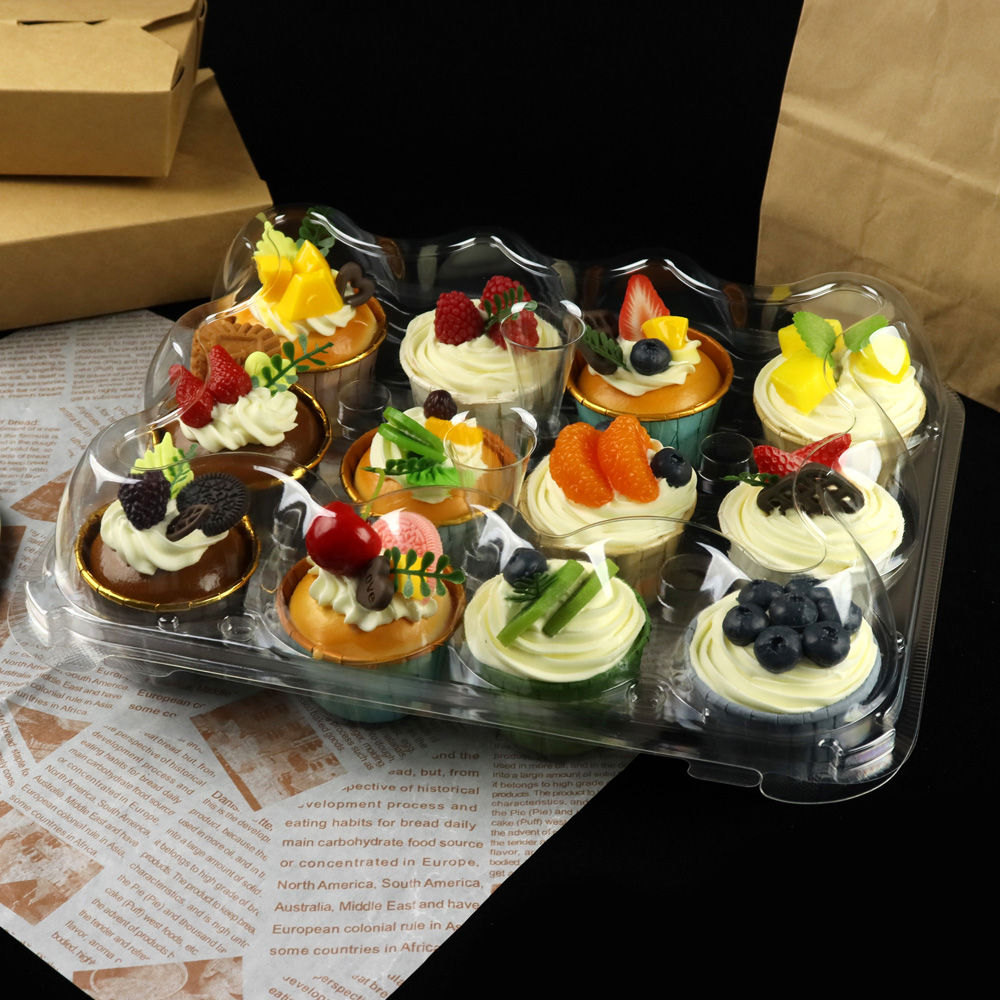
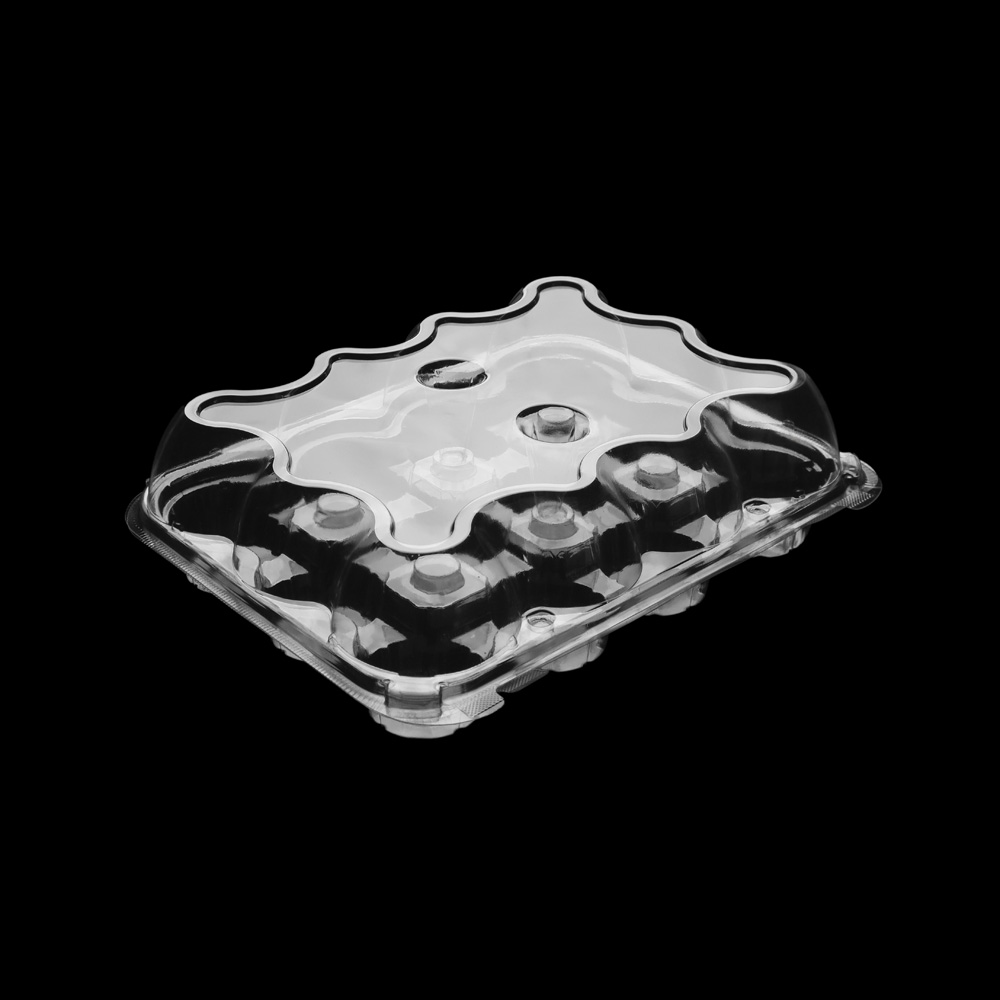
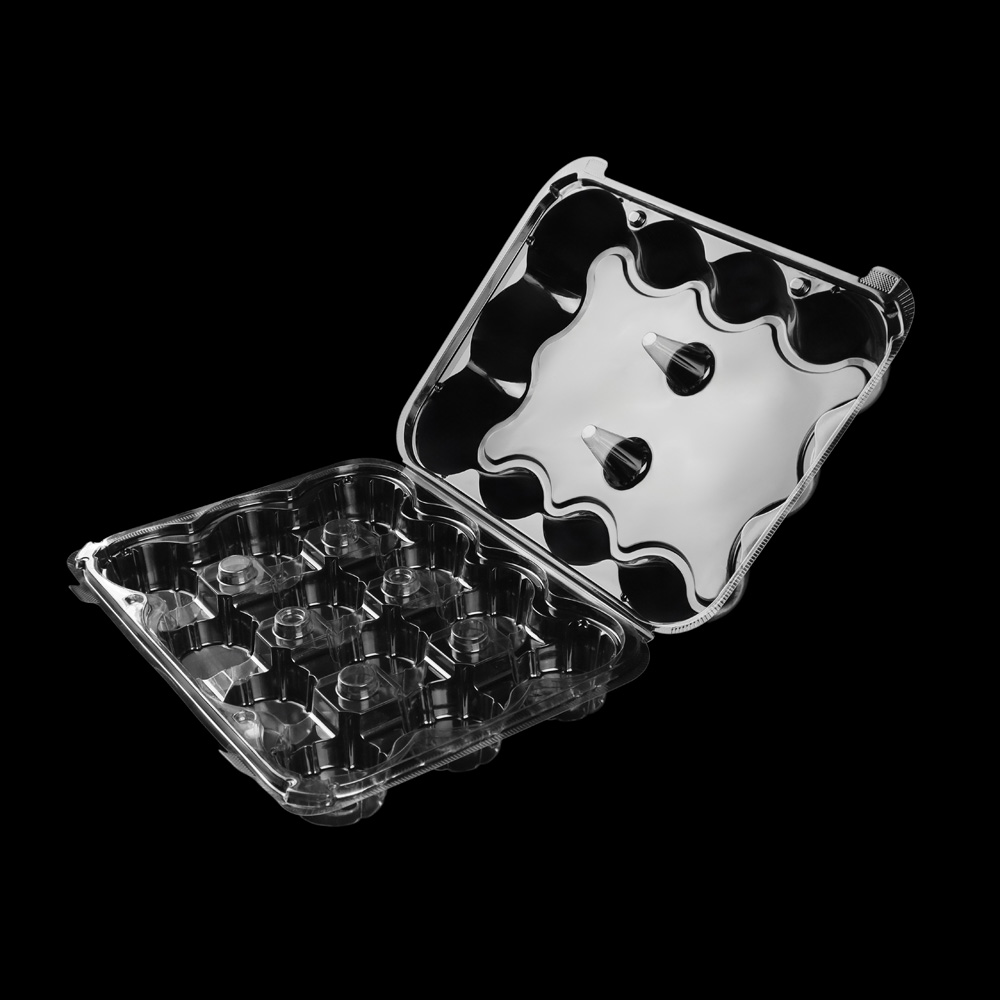
Compartmentalized designs with dedicated cavities for each item prevent shifting and contact between products, particularly important for cupcakes with tall frosting or delicate decorative elements. These compartments effectively isolate each item in its own protective space while maintaining the presentation benefits of a unified container.
Insert flexibility allows bakeries to adapt standard container sizes to different product counts or combinations through removable dividers or modular components. This adaptability reduces the need to stock numerous specialized container sizes, simplifying inventory management while maintaining appropriate protection for various product assortments.
Removal accessibility ensures that customers can easily extract individual items without damaging others in the container. Well-designed individual serving packaging incorporates features like finger recesses, stepped compartments, or lift-out mechanisms that facilitate clean removal of the first and subsequent items.
For bakeries offering variety packs or assortments, clear product identification becomes an important packaging consideration. Some specialized containers include label areas for each compartment or transparent lids with printed overlay options that help customers identify different flavors or varieties without opening the package.
Pies and Tarts
Circular baked goods with open tops or delicate crusts present unique packaging requirements that differ significantly from those of traditional cakes.
Edge protection is particularly critical for pies and tarts with exposed crusts that can easily chip or break during handling. Specialized containers incorporate raised barriers or recessed platforms that keep these vulnerable edges from contacting the lid or sides during transport and display.
Moisture balance represents another key consideration, as these products can suffer from either excessive moisture retention leading to soggy crusts or excessive moisture loss leading to drying. Ventilation features in some specialized containers allow controlled airflow that maintains optimal moisture levels for different product types.
Serving accessibility influences customer satisfaction with pie and tart packaging, with some premium containers incorporating features that facilitate easy first-slice removal. These design elements might include slightly tapered sides, textured base surfaces that reduce sticking, or even integrated cutting guides that help customers achieve clean, consistent slices.
For bakeries offering both room-temperature and refrigerated pies, temperature transition management becomes an important packaging consideration. Containers designed for these applications often feature condensation channels or absorption elements that prevent moisture from collecting on product surfaces when moving between temperature environments.
Cheesecakes and Delicate Desserts
Particularly delicate desserts with mousse components, soft fillings, or temperature-sensitive characteristics require specialized packaging considerations to maintain their integrity from bakery to consumer.
Temperature stability is essential for cheesecakes and similar products that must remain chilled for both food safety and textural quality. Insulative properties in packaging materials can provide temporary temperature buffering during transport, particularly important for customer pickup where products might experience temperature abuse before reaching home refrigeration.
Surface protection for desserts with delicate toppings or decorations often requires increased clearance combined with stabilizing features that prevent the product from shifting and contacting the lid. Some specialized containers incorporate central support elements or perimeter bracing that maintains position without contacting decorated surfaces.
Cutting guidance becomes particularly valuable for products like cheesecakes that can be challenging for consumers to portion cleanly. Integrated cutting guides, either molded into container bases or printed on removable inserts, help customers achieve professional-looking slices that maintain the product’s visual appeal through serving.
For bakeries offering premium desserts with multiple components or layers, packaging that maintains visual stratification during transport preserves the chef’s intended presentation. Clear containers with exceptional transparency allow these visual elements to remain visible and appealing at the point of purchase.
Leveraging Smart Packaging to Improve Bakery Operations
Beyond basic protection and presentation, advanced packaging technologies offer opportunities to enhance operational efficiency, customer experience, and brand differentiation.
QR Codes and Digital Integration
The integration of digital elements with physical packaging creates new possibilities for customer engagement and operational improvements in bakery businesses.
Product information delivery through QR codes allows bakeries to extend the informational capacity of packaging without cluttering the physical container with text. When scanned, these codes can provide detailed ingredient lists, allergen information, nutritional data, and serving suggestions that enhance the customer experience while meeting regulatory requirements.
Storytelling opportunities emerge when packaging connects to digital content about your bakery’s history, the inspiration behind specific cake designs, or the sourcing of special ingredients. This connection transforms packaging from a purely functional element into a gateway for deeper brand engagement and relationship building.
Reordering simplification represents a practical application that directly impacts sales, with QR codes linking to easy reorder pages for specific products. This functionality is particularly valuable for business clients who regularly order for meetings or events, streamlining the procurement process and encouraging repeat business.
Feedback collection integrated into packaging through QR-linked surveys provides valuable quality control data while demonstrating customer-centricity. This direct feedback channel can identify potential product or service issues before they generate negative reviews on public platforms.
For bakeries serving diverse customer bases, language accessibility through digital integration allows packaging to remain visually clean while providing information in multiple languages via digital access. This capability is particularly valuable in multilingual markets or tourist areas where customers may speak various languages.
Temperature Indicators for Quality Assurance
For temperature-sensitive cake products, integrated monitoring technologies provide quality assurance throughout the distribution chain.
Time-temperature indicators (TTIs) change color or appearance when products have experienced temperature abuse beyond safe thresholds. These simple visual indicators provide immediate feedback to both staff and customers about product quality and safety without requiring special equipment or training to interpret.
Cold chain verification becomes particularly important for wholesale bakeries supplying retail partners, with temperature monitoring providing documentation of proper handling throughout distribution. This verification can be critical for quality dispute resolution and compliance with food safety regulations.
For premium or highly temperature-sensitive products, active temperature logging systems record detailed temperature history that can be downloaded or transmitted for analysis. While more costly than simple indicators, these systems provide comprehensive documentation that can identify specific points of temperature abuse within complex distribution chains.
Customer confidence increases with visible quality assurance measures, with research indicating that transparent monitoring increases perceived value and trust. For special occasion cakes representing significant emotional and financial investments, this assurance can be particularly meaningful to customers.
Some advanced systems now incorporate smartphone-readable elements that provide detailed temperature history to customers through simple app interfaces. This technology transforms quality assurance from a back-of-house concern to a customer-facing value proposition that differentiates quality-focused bakeries.
Tamper-Evident Features for Security
Security features that provide visible evidence of package opening address both safety concerns and quality assurance for bakery products.
Seal integrity indicators provide immediate visual confirmation that packages have remained closed since leaving the bakery, addressing both food safety concerns and assuring customers that products haven’t been handled or tampered with during distribution. These features typically include perforated bands, color-changing adhesives, or breakaway components that cannot be restored once disturbed.
For wedding cakes and other high-value special occasion products, security features provide peace of mind that the cake remains exactly as designed and approved. This assurance is particularly meaningful for events where cake presentation represents a significant moment and any tampering would be immediately visible to guests.
Delivery verification through tamper-evident features provides documentation that products arrived intact, particularly valuable for bakeries offering delivery services where questions might arise about handling after leaving the bakery. These features create clear accountability throughout the distribution chain.
For bakeries with wholesale distribution through retail partners, tamper-evident packaging helps maintain brand integrity by ensuring products reach consumers exactly as intended. This protection prevents unauthorized modification or repackaging that could compromise product quality or safety.
The most effective tamper-evident features balance security with user experience, ensuring that legitimate access isn’t frustratingly difficult while still providing clear evidence of tampering. This balance requires thoughtful design that considers both security requirements and customer convenience.
Cost-Benefit Analysis of Premium Plastic Cake Containers
Investing in quality packaging requires understanding the complete value equation beyond simple unit pricing, with premium containers delivering returns across multiple business dimensions.
Direct Cost Comparisons
A comprehensive cost analysis of packaging options must consider multiple factors beyond the initial purchase price to accurately reflect true operational impact.
Unit pricing typically shows premium containers costing 15-40% more than basic alternatives, representing the most visible and immediate cost difference. This price gap has narrowed in recent years as manufacturing efficiencies have improved for higher-quality options, but remains significant enough to influence purchasing decisions.
Volume discounts can substantially reduce this premium, with tiered pricing typically offering 5-15% reductions at volume thresholds. Bakeries should evaluate minimum order quantities against storage capabilities and usage rates to optimize ordering patterns without creating excessive inventory costs.
Shipping and storage costs often favor premium containers with nesting capabilities that reduce volume by 50-70% compared to non-nesting alternatives. This space efficiency translates to lower shipping costs per unit and reduced storage space requirements that may offset higher unit prices, particularly for bakeries in locations with premium real estate costs.
Durability differences between basic and premium containers impact replacement rates and waste costs, with higher-quality options typically offering greater resistance to cracking, warping, and closure failures. This durability difference becomes particularly significant for containers that experience temperature transitions or mechanical stress during distribution.
When analyzed comprehensively, the total cost difference between basic and premium containers often narrows considerably from the apparent gap in unit pricing alone. This more complete analysis provides a more accurate foundation for value comparisons.
Indirect Benefits and Revenue Impacts
Beyond direct costs, premium packaging delivers significant benefits that directly impact revenue generation and customer relationships.
Perceived value enhancement through quality packaging allows bakeries to command higher prices for identical products, with market research indicating that premium packaging can support price increases of 10-15% without affecting purchase intent in specialty bakery categories. This pricing impact directly improves profit margins when packaging upgrades cost less than the supported price increase.
Customer satisfaction improvements stem from better product protection and presentation, with industry surveys showing packaging quality among the top five factors influencing repeat purchase decisions for specialty baked goods. This satisfaction translates to higher customer retention rates that significantly impact long-term revenue.
Social media visibility increases with photogenic packaging, as customers are more likely to share images of attractively packaged products. This organic marketing generates valuable exposure, with each social share typically reaching 300-500 potential new customers at zero additional marketing cost.
For bakeries serving business clients, professional presentation through premium packaging strengthens corporate relationships and supports higher contract values. Corporate customers typically place higher emphasis on consistent quality and presentation than price sensitivity, making packaging an important element in business-to-business sales strategies.
Gift market access expands with premium packaging, opening higher-margin sales opportunities in celebration and corporate gifting categories. The gift market typically supports price points 25-40% higher than identical products sold for personal consumption, with packaging quality a critical factor in gift-worthiness perception.
Case Studies: Return on Investment
Real-world examples demonstrate how strategic packaging investments deliver measurable business returns for different bakery business models.
A mid-sized urban bakery specializing in celebration cakes upgraded their packaging from basic to premium containers, increasing materials costs by approximately $0.75 per unit. This investment supported a $3.50 price increase per cake (justified by enhanced presentation and protection), generating additional profit of $2.75 per unit after accounting for packaging costs. With weekly volume of 200 specialty cakes, this change increased annual profit by approximately $28,600 while also reducing remake costs from damage during customer transport.
A wholesale bakery supplying cupcakes to coffee shops and retailers invested in compartmentalized premium packaging that increased unit costs by $0.22 but reduced product damage during distribution by 64%. This damage reduction saved approximately $34,000 annually in replacement costs and delivery expenses while strengthening retailer relationships through more consistent product quality upon arrival. The packaging upgrade effectively paid for itself through damage reduction alone, with improved retailer satisfaction generating additional account growth as a secondary benefit.
A boutique bakery introduced premium packaging with QR-linked reordering for their corporate client program, increasing packaging costs by 28% but reducing the administrative time required for reorders by approximately 5 hours weekly. This efficiency improvement allowed the bakery to serve more corporate clients without additional administrative staffing while also increasing reorder frequency by making the process more convenient for busy corporate customers. The program saw a 34% increase in corporate sales within six months of implementation, far outweighing the incremental packaging investment.
These case studies demonstrate that packaging investments should be evaluated as strategic business decisions rather than simply supply expenses, with potential returns extending far beyond the immediate packaging function.
Conclusion: Packaging as a Strategic Business Asset
For professional bakeries, plastic cake containers represent far more than utilitarian necessities—they are strategic tools that influence customer perception, product quality, operational efficiency, and ultimately, business success. By understanding the multifaceted role packaging plays throughout the value chain, bakery owners and managers can make informed choices that enhance both immediate presentation and long-term profitability.
The most successful bakeries view packaging not as a cost to be minimized but as an investment that delivers returns across multiple aspects of their operations. This perspective shift transforms packaging decisions from purely operational considerations to strategic choices that directly support business growth objectives and brand positioning.
As competition in the bakery sector continues to intensify, the role of quality packaging as a differentiator will only increase in importance. Businesses that recognize and leverage this opportunity position themselves for sustained success in markets where every aspect of the customer experience influences purchasing decisions and brand loyalty.
- Bakery and Snacks – Packaging Innovation News
- National Restaurant Association – Food Packaging Guidelines
- Food Safety Magazine – Temperature Control in Food Packaging
- Packaging Strategies – Bakery Packaging Trends Report
- American Bakery Association – Packaging Best Practices