
Selecting the wrong cup for your beverage menu leads directly to burned fingers, soggy sidewalls, and leaking delivery orders. Drink temperature, condensation, and transit duration place completely different physical stresses on packaging materials.
Matching specific cup constructions—such as double-wall paper, injection-molded PP, or clear PET—to each drink on your menu protects product quality and keeps your unit packaging costs predictable.
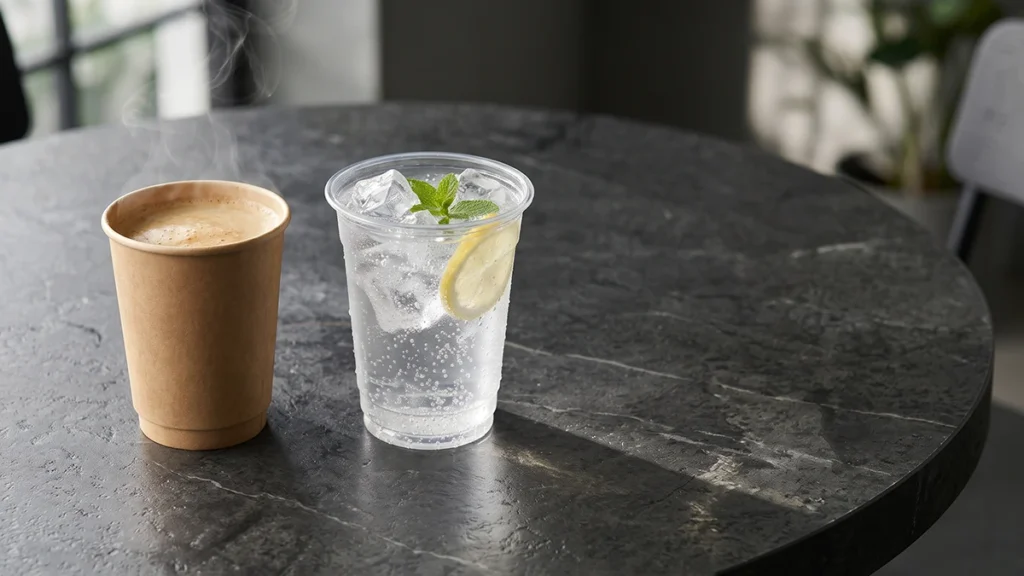
Core Performance Requirements for Hot vs. Cold Beverages
Beverage temperature dictates both structural integrity and customer handling comfort. Before comparing resin types or paperboard weights, evaluate what each drink category demands during service and delivery.
- Thermal resistance and heat insulation: Hot coffee, tea, and steamed milk typically serve between 85°C and 95°C. Cups must hold their shape without softening at the rim while keeping exterior surface temperatures safe to hold.
- Condensation barrier protection: Iced drinks generate moisture on the outside of the cup as cold liquid meets warm ambient air. Uncoated or poorly sealed paperboard absorbs this condensation, losing rigidity within minutes.
- Impact strength and visual clarity: Cold beverages like smoothies, fruit teas, and iced lattes rely heavily on visual appeal. Cold cups need high optical clarity and crack resistance when packed with ice.
Matching Cup Types and Materials to Your Beverage Menu
Different materials perform best when engineered into specific cup structures. Rather than sourcing a single generic cup, align your inventory with how each cup type behaves under real operating conditions.
Paper Cups: Single-Wall, Double-Wall, and Ripple-Wall
Paperboard remains the standard for hot beverage programs, though wall construction determines whether a cup can handle boiling liquids on its own.
- Single-wall PE or PLA coated paper cups: Built with one layer of food-grade paperboard and an inner moisture barrier, these cups work well for warm drinks, drip coffee, or short-distance service. For hot beverages above 80°C, pair them with a corrugated kraft sleeve to prevent hand discomfort.
- Double-wall paper cups: Constructed with two layers of paperboard separated by a thin insulating air pocket, double-wall cups eliminate the need for separate sleeves. They keep hot americanos and lattes warm longer while maintaining a firm, comfortable grip.
- Ripple-wall paper cups: Featuring an S-shaped corrugated outer wrap bonded to an inner cup, ripple-wall designs offer maximum thermal insulation and slip resistance. They are well suited for extra-hot beverages and busy takeout counters looking to reduce SKU count by skipping sleeves.
Polypropylene (PP) Cups: Injection-Molded and Thermoformed
Polypropylene offers a wide operating temperature range, typically handling liquids from -10°C up to 110°C without warping or leaching.
- Injection-molded frosted PP cups: Thick-walled, rigid, and reusable-feeling, these cups handle both steaming fruit teas and iced milk teas. Their sturdy rims also withstand heat-sealing film machines, making them a staple for bubble tea shops and delivery-heavy beverage brands.
- Thermoformed U-shaped PP cups: Lightweight and economical, U-shaped PP cups feature a rounded base that showcases layered iced drinks and toppings while still tolerating warm liquids.
Clear PET Cold Cups
Polyethylene terephthalate (PET) is engineered specifically for cold service. With a typical heat tolerance ceiling around 60°C, PET cups will warp if filled with hot water or fresh espresso.
- Crystal-clear PET cold cups: These cups deliver glass-like transparency, high crack resistance, and strong sidewall stiffness. They are the preferred option for iced coffee, cold brew, smoothies, juices, and parfaits where visual presentation drives impulse sales.
Compostable PLA Cups and Linings
Polylactic acid (PLA) is derived from renewable plant starches and designed for commercial composting facilities where local infrastructure supports organic waste recovery.
- Clear PLA cold cups: Visually similar to PET, pure PLA cold cups provide strong clarity for iced beverages. However, PLA has a low heat deflection threshold (typically around 45°C), so keep these cups strictly away from hot drinks or warm storage areas.
- PLA-lined paper hot cups: To serve hot coffee in compostable packaging, pair standard paperboard with a heat-resistant PLA inner lining instead of conventional polyethylene. Double-wall or ripple-wall PLA-lined paper cups handle hot liquids reliably while supporting sustainability goals.
Quick Comparison: Cup Types, Temperature Limits, and Best Applications
Use the table below to match your core menu items with the right cup structure and temperature rating.
| Specific Cup Type | Material | Typical Temperature Range | Key Advantage | Recommended Beverages |
| Single-Wall Coated Paper Cup | Paperboard + PE/PLA | Up to 85°C (use sleeve) | Cost-effective, compact storage | Drip coffee, warm tea, water |
| Double-Wall Paper Cup | Dual-layer Paperboard | Up to 95°C | Built-in air insulation, smooth print surface | Hot lattes, cappuccinos, hot chocolate |
| Ripple-Wall Paper Cup | Corrugated Paperboard | Up to 95°C+ | Maximum heat protection, textured non-slip grip | Extra-hot tea, Americano, takeout coffee |
| Injection-Molded Frosted Cup | PP (Polypropylene) | -10°C to 110°C | Dual hot/cold use, compatible with heat-seal films | Bubble tea, hot fruit tea, delivery drinks |
| Crystal-Clear Cold Cup | PET | -20°C to 60°C | High optical clarity, crack-resistant rigidity | Iced coffee, smoothies, cold-pressed juice |
| Clear Compostable Cold Cup | PLA | Up to 45°C | Plant-based resin, commercially compostable | Iced tea, lemonade, cold specialty drinks |
Choosing Compatible Lids to Prevent Leaks
A cup only performs as well as its lid seal. Mismatched rim diameters or improper venting cause spills during transit and create negative customer experiences.
- Hot drink sip and reclosable lids: Usually made from heat-resistant PP or crystallized PLA (CPLA), hot lids include a small pinhole vent to equalize internal steam pressure. Reclosable plug lids add extra security for delivery drivers and commuters.
- Cold drink flat and dome lids: Clear PET or PLA flat lids with X-slots accommodate standard and boba straws for iced teas and sodas. Dome lids provide extra headroom for whipped cream, cold foam, or blended smoothie toppings, while strawless sipper lids offer a modern cold-foam drinking experience.
When sourcing wholesale disposable cups and matching lids, standardize your menu around shared rim diameters—such as 80mm, 89mm, 90mm, or 98mm—so one lid SKU fits multiple cup sizes across your counter.
Frequently Asked Questions
Can clear PET cups be used for warm or hot beverages?
No, PET cups should only be used for cold or room-temperature drinks. PET begins to soften and deform around 60°C, which can cause the cup to collapse and compromise the lid seal when filled with hot coffee or tea.
Is it better to buy single-wall paper cups with sleeves or double-wall paper cups?
Double-wall paper cups are typically more efficient for high-volume coffee shops because they eliminate the labor of sliding on sleeves and reduce storage space for separate accessories. Single-wall cups with sleeves make sense if your menu mixes warm and hot drinks and you only need extra insulation on select orders.
Why do paper cups sometimes get soggy when used for iced drinks?
Standard hot paper cups only have a moisture barrier on the inside wall. When filled with ice, condensation forms on the unlined outer paper surface, softening the fibers; if you serve cold drinks in paper, specify double-sided coated paper cups.
What is the difference between standard PLA and CPLA for hot cup lids?
Standard PLA softens around 45°C and is strictly for cold cups and cold lids. CPLA undergoes a crystallization process with chalk or mineral additives, raising its heat tolerance above 85°C so it can safely be used for hot beverage lids.