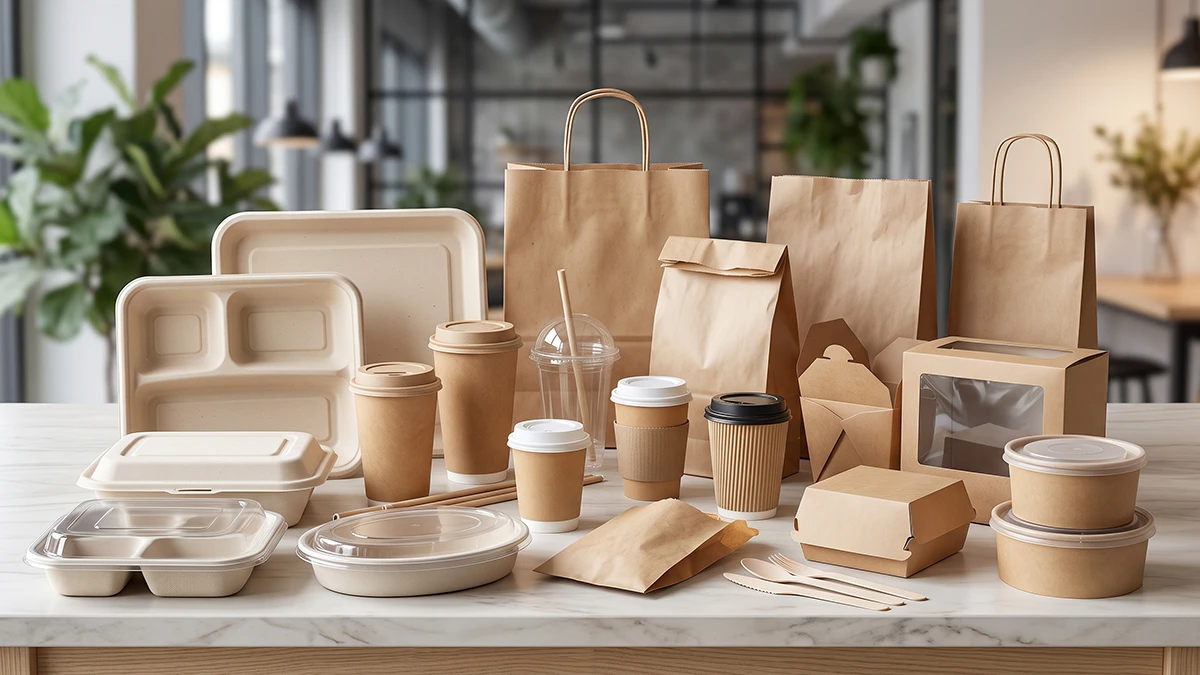
As environmental awareness grows, food service businesses seek sustainable plastic food containers with lids that balance eco-friendliness with functionality. This guide explores eco-friendly packaging options, offering insights to help businesses make informed choices.
The Demand for Sustainable Food Packaging
The global sustainable packaging market is projected to reach $470.3 billion by 2027, growing at a 10.3% CAGR from 2020. Consumer preferences drive this shift, with 73% willing to pay more for sustainable packaging and 78% favoring brands with eco-friendly practices. Corporate sustainability commitments and regulations, such as single-use plastic bans and extended producer responsibility laws, further accelerate adoption. Businesses adopting sustainable packaging gain competitive advantages as regulations tighten and consumer expectations evolve.
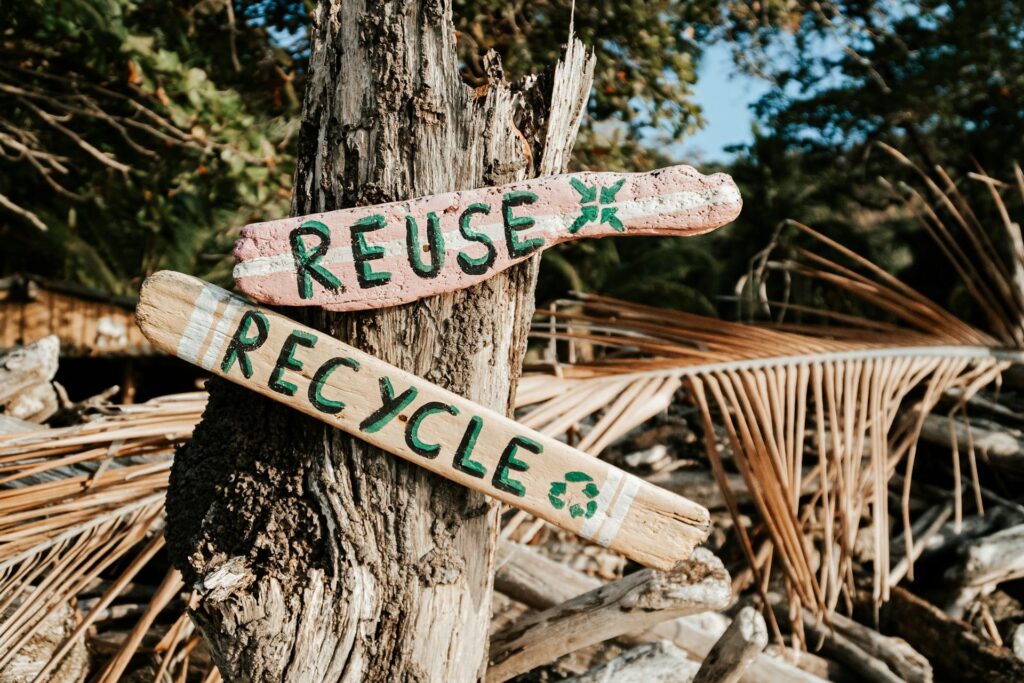
Defining “Eco-Friendly” in Plastic Containers
“Eco-friendly”1 encompasses raw material sourcing, production impacts, usage, and end-of-life management. Key categories include:
- Biodegradable materials: Decompose naturally, though conditions vary.
- Compostable packaging: Breaks down in composting facilities, ideally leaving no toxins.
- Recyclable containers: Reprocessed into new products, depending on local infrastructure.
- Reduced-impact plastics: Use lighter designs or greener production methods.
Certifications ensure credibility:
- BPI Certification: Verifies industrial compostability (ASTM D6400/D6868).
- TÜV Austria OK Compost: Meets EN 13432 standards.
- How2Recycle: Guides recyclability based on infrastructure.
- FSC Certification: Ensures sustainable paper components.
Greenwashing, such as vague “eco-friendly” claims without certifications, is a concern. Businesses should prioritize verified claims to avoid misleading marketing.
Eco-Friendly Material Options
Biobased Plastics
- Polylactic Acid (PLA): Derived from corn, cassava, or sugarcane, PLA is renewable, with 80% lower emissions than conventional plastics. It’s compostable in industrial facilities (90-180 days) and ideal for cold foods but softens at 60°C, limiting hot food use.
- Polyhydroxyalkanoates (PHA): Produced via bacterial fermentation, PHA is marine-biodegradable and home-compostable, with heat resistance up to 180°C. High costs and limited availability are challenges.
Recycled Plastics
- Recycled PET (rPET): Made from post-consumer bottles, rPET reduces virgin plastic use by 60% and matches PET’s clarity. It’s widely recyclable and suitable for cold foods.
- Recycled Polypropylene (rPP): Heat-resistant up to 120°C, rPP suits hot foods and microwave use, with growing recycling infrastructure.
Plant Fiber Composites
Composites like bagasse, bamboo, or wheat straw reduce plastic content, offering rigidity and heat resistance (up to 100°C). They require industrial composting for full degradation.
| Material | Source | Compostability | Heat Resistance | Moisture Resistance | Clarity | Cost |
|---|---|---|---|---|---|---|
| PLA | Plant Starch | Industrial | Low (60°C) | Moderate | Excellent | Moderate-High |
| PHA | Bacterial | Home/Industrial | High (180°C) | Good | Fair | High |
| rPET | Recycled Bottles | No | Moderate (70°C) | Excellent | Excellent | Moderate |
| rPP | Recycled Plastics | No | High (120°C) | Excellent | Fair | Moderate |
| Bagasse | Sugarcane | Industrial | High (100°C) | Moderate | None | Moderate |
Data for reference only.
PLA Containers: Benefits and Limitations
Production and Sourcing
PLA production involves starch extraction, fermentation into lactic acid, and polymerization, using 65% less energy than conventional plastics. However, agricultural impacts (land and water use) must be considered.
Applications and Safety
PLA meets FDA and EU food safety standards, excelling in:
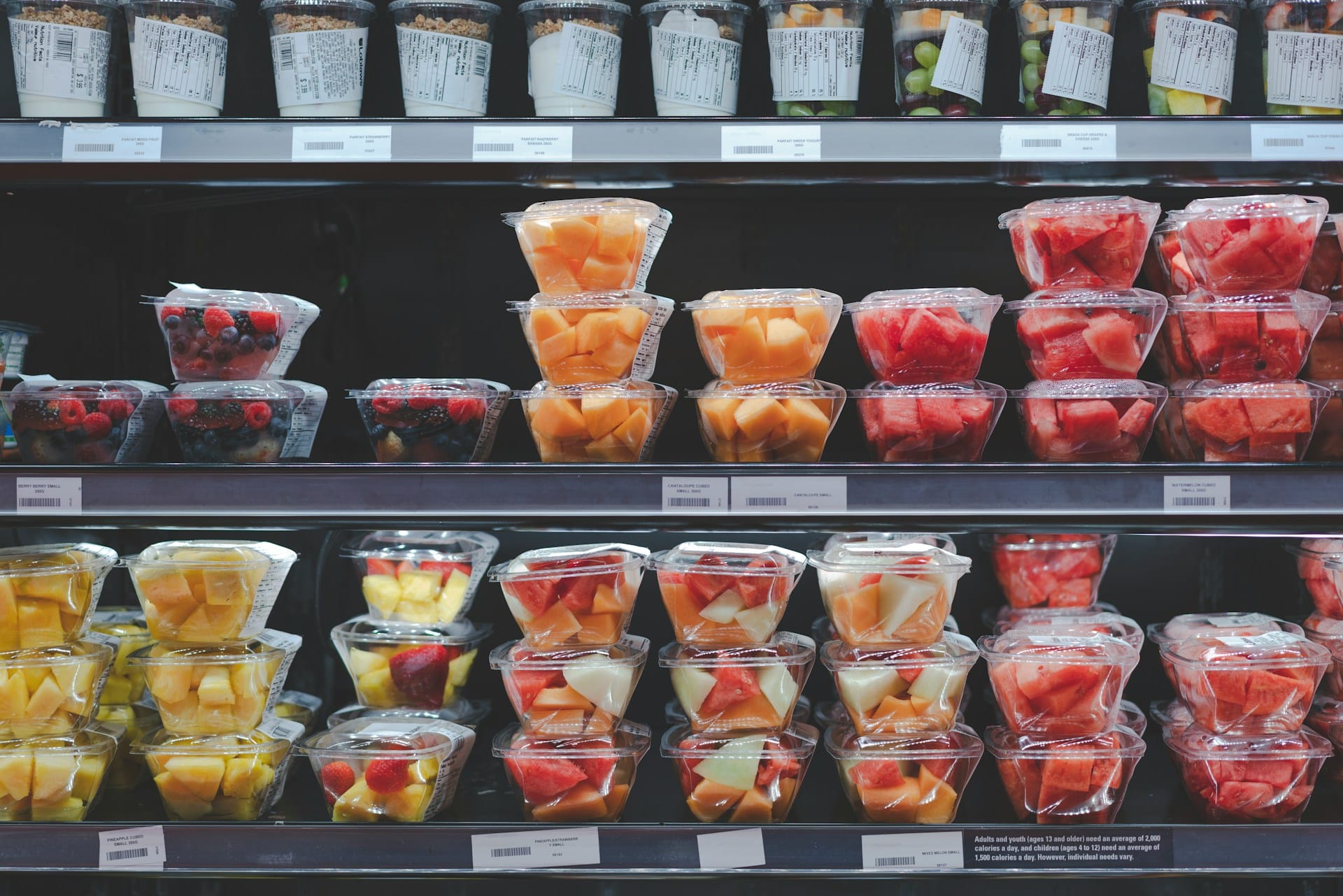
- Cold foods (salads, deli items)
- Short-term storage (<30 days)
- Retail displays (due to clarity)
It’s unsuitable for hot foods due to low heat resistance.
Degradation
PLA degrades in 90-180 days in industrial composting facilities (58°C, controlled humidity). In landfills or home composting, degradation is slow, and PLA can contaminate PET recycling streams.
Cost-Benefit Analysis
PLA costs 20-30% more than conventional plastics but offers marketing value and regulatory compliance benefits. Reliancepak’s PLA containers include moisture barriers, expanding their use.

Recycled Plastic Containers
Applications
- rPET: Used for salads, fruits, and cold meals.
- rPP: Ideal for hot foods and microwaveable containers.
- Hybrids: Combine recycled and virgin materials for balanced performance.
Safety Standards
rPET and rPP meet FDA/EFSA food safety requirements through rigorous cleaning processes, ensuring no contaminant migration.
Performance
rPET matches virgin PET’s clarity and strength, while rPP supports hot food applications. Both maintain robust barrier properties.
Reliancepak’s Offerings
Reliancepak provides rPET (30-100% recycled content) and rPP (25% recycled content) containers, with third-party verification for transparency.
Biodegradable Additives and Composites
Additives
Additives like oxo-degradable or enzyme-mediated compounds aim to enhance degradation but often produce microplastics, leading to EU bans on some types.
Composites
Combining plastics with fibers (e.g., bagasse, bamboo), composites reduce petroleum use but require specific disposal conditions.
Environmental Impact
Many additives show inconsistent degradation, and composites need industrial composting. Businesses should prioritize certified materials to avoid greenwashing.
Performance Comparison
| Aspect | Conventional PP | PLA | rPET | rPP | Plant Fiber |
|---|---|---|---|---|---|
| Leak Resistance | Excellent | Good | Very Good | Very Good | Fair |
| Hot Food Compatibility | Excellent | Poor | Fair | Excellent | Good |
| Moisture Barrier | Excellent | Fair | Very Good | Very Good | Poor |
| Clarity | Good | Excellent | Very Good | Good | None |
| Microwaveability | Excellent | Poor | Poor | Excellent | Fair |
Eco-friendly options may have limitations (e.g., PLA’s heat sensitivity), but strategic designs like Reliancepak’s enhanced rims improve performance.
Cost Considerations
Initial vs. Long-Term Costs
Sustainable containers cost 10-50% more:
- PLA: 20-40% higher
- rPET: 10-25% higher
- rPP: 15-30% higher
- Composites: 25-50% higher
Long-term benefits include brand enhancement, customer loyalty, and regulatory compliance. 73% of consumers support sustainable packaging, enabling premium pricing.
Economies of Scale
Increased production and competition are narrowing cost gaps. Reliancepak offers competitive pricing for orders above 10,000 units.
Total Cost of Ownership (TCO)
TCO includes material costs, brand value, and regulatory savings. Sustainable packaging often proves cost-competitive over time.
Regulatory Landscape
Global Regulations
- EU: Single-Use Plastics Directive mandates recycled content.
- U.S.: State laws (e.g., California’s SB 54) set recycled content targets.
- Others: China, Canada, and Australia enforce bans and recycling goals.
Compliance and Labeling
Certifications (BPI, TÜV Austria) and clear labeling prevent greenwashing. Reliancepak provides compliance documentation.
Future Trends
Expect stricter recycled content rules, carbon taxes, and PFAS restrictions.
Case Studies
- Restaurant Chain: Switched to PLA and rPP, reducing carbon footprint by 22% and gaining 15% more positive social media mentions.
- Meal Delivery Service: Adopted recycled and composite packaging, cutting virgin plastic use by 40% and boosting retention by 28%.
- Reliancepak Clients: Achieved 18-35% sustainability gains and up to 22% sales increases.
Balancing Sustainability and Functionality
Food Safety
Sustainable materials must meet FDA/EFSA standards, ensuring no contamination or migration.
Functionality
Match materials to needs:
- rPP for hot foods
- PLA/rPET for cold foods
- Composites for specific applications
Decision Framework
- Define performance needs.
- Assess sustainable options.
- Evaluate TCO.
- Align with goals.
- Plan phased implementation.
Reliancepak supports gradual transitions with tailored roadmaps.
Reliancepak’s Solutions
Products
- GreenChoice™ PLA: Compostable, for cold foods.
- EcoBlend™: 30-100% recycled content containers.
- NatureFiber™: Plant-based composites.
- HybridSeal™: Combines sustainability and sealing performance.
Certifications
Products carry BPI, FDA, and ISO 14001 certifications.
Customization
Offers size adjustments, eco-friendly printing, and branding. MOQs: 1,000 (standard), 5,000-25,000 (custom).
Support
Includes testing, training, and sustainability reporting.
Future Trends
- Materials: Mycelium, seaweed, and carbon-negative options.
- Circular Economy: Closed-loop recycling and reusable systems.
- Smart Packaging: QR codes and RFID for disposal guidance.
- Collaboration: Industry partnerships for innovation.
Practical Transition Guide
- Assess Impact: Inventory packaging and calculate footprint.
- Set Goals: Define measurable targets (e.g., 30% recycled content by 2024).
- Select Suppliers: Choose certified partners like Reliancepak.
- Communicate: Train staff and inform customers via signage and social media.
Conclusion
Eco-friendly plastic food containers—PLA, rPET, rPP, and composites—offer sustainable solutions. Businesses must align material choices with application needs, local infrastructure, and regulations. Partnerships with suppliers like Reliancepak and phased transitions ensure sustainability enhances environmental and business outcomes.
- What Does “Eco-Friendly” Actually Mean? ↩︎