
In the competitive meal prep industry, the right packaging can make or break your business. Plastic food containers with lids are the workhorses of meal prep operations, directly impacting food quality, customer satisfaction, and operational efficiency. With countless options available, identifying truly optimal containers for your specific business needs can be challenging.
At Reliancepak, we’ve partnered with meal prep businesses of all sizes to develop packaging solutions that enhance their operations. This guide will help you navigate the complex landscape of plastic food containers with lids to find the perfect match for your meal prep business.
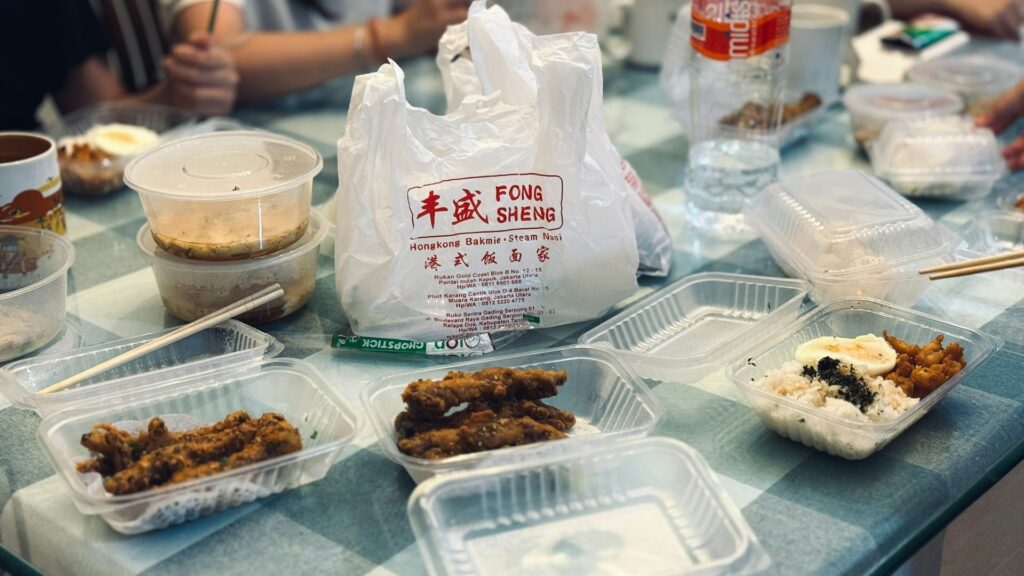
Understanding Meal Prep Business Requirements
Before diving into specific container recommendations, it’s essential to understand the unique demands that meal prep businesses place on their packaging.
The Meal Prep Distribution Chain
Meal prep containers face a more complex journey than typical food packaging:
- Filling at production facility (often with hot or warm foods)
- Cooling/freezing period
- Stacking and storage (potentially for several days)
- Transportation (sometimes through multiple temperature zones)
- Customer storage (refrigeration or freezing)
- Reheating (microwave, oven, or stovetop depending on container)
- Consumption (potentially over multiple sittings)
Each stage presents specific challenges that your containers must address.
Critical Performance Factors
For meal prep businesses, containers must excel in several key areas:
- Leak resistance: Prevents messy spills during transport and storage
- Temperature tolerance1: Withstands freezing, refrigeration, and often reheating
- Stackability2: Maximizes storage efficiency in production and delivery
- Portion control: Maintains consistent serving sizes and food costs
- Durability: Resists cracking, warping, and lid popping during handling
- Presentation: Showcases food attractively upon delivery
- Reusability: Provides additional value to customers when appropriate
Business Model Considerations
Different meal prep business models have distinct packaging priorities:
- Subscription services prioritize consistent delivery experience and brand reinforcement
- Retail-focused operations need strong shelf appeal and visibility
- Direct-to-consumer models may emphasize premium unboxing experiences
- Healthcare or institutional providers typically prioritize function and cost-efficiency
Your specific business model should significantly influence your container selection.
Top Container Styles for Different Meal Types
Various meal prep offerings require different container configurations for optimal results.
Single-Compartment Containers
These versatile containers work well for:
- One-dish meals like pasta, stir-fries, or grain bowls
- Soups and stews (with appropriate leak resistance)
- Larger portion sizes or family-style offerings
Key features to look for:
- Secure corner sealing to prevent leaks
- Textured bottoms to prevent sliding during transport
- Stackability features for efficient storage
- Clear lids for content visibility
Multi-Compartment Options
These containers excel for:
- Meals with distinct components that should remain separated
- Portion-controlled diets with specific macronutrient ratios
- Meals combining hot and cold elements to be consumed together
Key features to look for:
- Properly sized compartments for your specific menu items
- Adequate depth in each section for appropriate portions
- Leak-resistant barriers between compartments
- Uniform overall dimensions for consistent stacking
Bento-Style Configurations
These specialized containers work well for:
- Visually appealing presentations with multiple small components
- Meals with both main dishes and sides
- Diets requiring precise portion control of multiple food groups
Key features to look for:
- Appropriately sized sections for your specific menu items
- Secure internal dividers that prevent cross-contamination
- Consistent overall footprint for efficient storage
- Attractive presentation that enhances perceived value
| Container Style | Best For | Typical Capacity Range | Relative Cost | Storage Efficiency |
|---|---|---|---|---|
| Single-Compartment | One-dish meals, soups, larger portions | 16-32 oz | Low to Medium | Excellent |
| 2-Compartment | Simple meals with separate sides | 20-28 oz | Medium | Very Good |
| 3-Compartment | Complete meals with distinct components | 24-32 oz | Medium to High | Good |
| Bento-Style | Multiple small components, premium presentation | 20-30 oz | High | Moderate |
The above data is for reference only

Material Considerations for Meal Prep Success
The material of your containers significantly impacts performance, cost, and customer perception.
Polypropylene (PP) Advantages
PP containers offer several benefits for meal prep operations:
- Excellent temperature range: Typically safe from freezer to microwave (-20°F to 250°F)
- Good durability: Resists cracking and maintains flexibility when cold
- Moderate clarity: Allows reasonable visibility of contents
- Cost-effective: Generally less expensive than alternatives
- Microwave-safe: Reheats well without warping in most cases
- Dishwasher-safe: Can be cleaned and reused by customers
PP is often the default choice for meal prep businesses due to its balanced performance and cost profile.
Polyethylene Terephthalate (PET) Benefits
PET containers offer different advantages:
- Superior clarity: Provides excellent food visibility and presentation
- Good rigidity: Maintains shape well under weight and pressure
- Recyclability: Widely accepted in recycling programs
- Crack resistance: Less prone to cracking than PP in some conditions
- Premium appearance: Often perceived as higher quality by customers
PET works well for cold applications and businesses emphasizing visual presentation, though it typically costs more than PP and has more limited temperature range.
Specialized Materials for Specific Needs
Some meal prep businesses may benefit from specialized materials:
- CPET (Crystallized PET): Combines clarity with oven-safety up to 400°F
- Polylactic Acid (PLA): Plant-based material for eco-conscious brands
- Tritan™: Premium clarity and durability for high-end reusable containers
- Silicone components: Flexible, heat-resistant elements for specialized lids
These materials typically command premium prices but may align with specific business positioning or menu requirements.
Material Performance Comparison
| Material | Temperature Range | Clarity | Durability | Relative Cost | Best Applications |
|---|---|---|---|---|---|
| PP | -20°F to 250°F | Moderate | Very Good | Low to Medium | All-purpose, hot foods, reheating |
| PET | 32°F to 120°F | Excellent | Good | Medium | Cold foods, premium presentation |
| CPET | -40°F to 400°F | Good | Excellent | High | Oven-reheatable meals |
| PLA | 32°F to 105°F | Good | Moderate | High | Eco-focused cold applications |
| Tritan™ | -40°F to 210°F | Excellent | Excellent | Very High | Premium reusable programs |
The above data is for reference only

Lid Technologies That Enhance Meal Prep Quality
The lid is perhaps the most critical component of meal prep containers, directly impacting food quality and customer experience.
Sealing Mechanisms for Leak Prevention
Various sealing technologies offer different benefits:
- Snap-fit seals: Basic functionality with easy opening and closing
- Channel locks: Enhanced leak resistance through perimeter channel design
- Silicone gaskets: Premium sealing for maximum leak prevention
- Hinged attachments: Prevent lid loss but may compromise seal integrity
- Tamper-evident seals: Show if containers have been opened during delivery
The optimal sealing mechanism depends on your specific menu items, delivery method, and price point.
Venting Options for Steam Release
For hot foods or microwave reheating, proper venting is essential:
- Manual vents: Customer-operated openings for controlled steam release
- Self-venting designs: Automatically release pressure during heating
- Partial venting lids: Allow limited steam escape while retaining moisture
- Removable center sections: Provide maximum ventilation when needed
Appropriate venting prevents lid warping, food splatters, and excessive moisture accumulation during reheating.
Anti-Fog Technologies
Clear visibility of food enhances customer perception:
- Anti-fog coatings: Prevent condensation from obscuring food view
- Textured lid surfaces: Reduce visible condensation droplets
- Venting patterns: Minimize condensation through controlled airflow
- Material formulations: Some premium materials naturally resist fogging
For visually appealing meals, anti-fog features significantly enhance presentation upon delivery.
Customization and Branding Opportunities
Lids provide valuable branding real estate:
- Embossed logos: Subtle, permanent branding without additional costs
- Printed designs: Full-color branding opportunities (minimum volumes apply)
- Label application areas: Designated flat spaces for variable information
- Color options: Brand-matching possibilities for enhanced recognition
Reliancepak offers various customization options to reinforce your brand identity through packaging.
Volume-Based Solutions for Different Business Scales
Your business volume significantly impacts the most appropriate container solutions.
Startup-Friendly Options
For businesses producing under 500 meals weekly:
- Stock containers: Standard sizes and configurations available with no minimums
- Mixed inventory: Flexibility to use different containers for different meals
- Print-ready labels: Custom branding through labels rather than custom containers
- Distributor partnerships: Access to lower minimums through aggregated purchasing
- Sample programs: Test multiple options before committing to larger purchases
These approaches allow new businesses to access quality packaging without prohibitive minimum orders.
Mid-Volume Business Solutions
For operations producing 500-2,500 meals weekly:
- Semi-custom options: Standard containers with custom labeling or color options
- Program standardization: Consistent container families across menu items
- Volume discounting: Leveraging growing volume for better pricing
- Just-in-time inventory: Supplier-managed inventory programs to optimize cash flow
- Limited custom development: Potential for modified standard items to better fit needs
At this scale, businesses can begin optimizing their packaging systems while managing costs effectively.
Enterprise-Level Standardization
For operations exceeding 2,500 meals weekly:
- Fully custom solutions: Containers designed specifically for your operation
- Automated filling compatibility: Designs optimized for production efficiency
- Multi-location consistency: Standardized packaging across production facilities
- Supply chain integration: Coordinated delivery scheduling with production needs
- Comprehensive branding: Fully integrated packaging identity systems
Large-scale operations benefit from packaging systems designed around their specific production workflows and brand requirements.
Operational Efficiency Considerations
The right containers can significantly impact your production efficiency and bottom line.
Storage Space Optimization
Efficient container storage preserves valuable space:
- Nesting designs: Containers that stack compactly when empty
- Uniform footprints: Consistent dimensions across different container styles
- Space-efficient cases: Packaging that maximizes containers per square foot
- Just-in-time delivery: Inventory management that minimizes storage requirements
- Collapsible options: Specialized containers that reduce empty storage volume
For operations with limited storage space, these features can significantly increase effective capacity.
Assembly Time Reduction
Container design directly impacts labor efficiency:
- Easy-snap lids: Reduce application time and repetitive stress
- Alignment features: Help lids seat correctly on first attempt
- Bulk packaging: Optimized case configurations for production line access
- Consistent designs: Reduce training time and errors across container types
- Ergonomic features: Reduce staff fatigue during high-volume production
Even small efficiency improvements multiply significantly across thousands of meals.
Filling Line Compatibility
Container design affects production throughput:
- Stability during filling: Containers that stand securely on conveyor systems
- Consistent dimensions: Uniform sizes that work with automated equipment
- Heat tolerance: Materials that withstand hot-fill processes without warping
- Standardized footprints: Compatibility with existing production equipment
- Smooth transitions: Designs that move efficiently through production lines
Containers designed for production efficiency can significantly increase throughput without additional labor.
Customer Experience Optimization
The container significantly impacts how customers perceive your meal prep service.
Unboxing Experience Considerations
First impressions matter in meal delivery:
- Intuitive opening: Containers that open easily without frustration
- Visual appeal: Clear visibility of attractive meal presentation
- Perceived quality: Container sturdiness that conveys food quality
- Brand reinforcement: Consistent visual elements that strengthen recognition
- Information accessibility: Clear labeling for ingredients, heating instructions, etc.
A thoughtfully designed unboxing experience enhances perceived value and customer satisfaction.
Reheating Instruction Clarity
Proper reheating significantly impacts food quality:
- Imprinted instructions: Permanent guidance for proper reheating
- Temperature indicators: Visual cues for reheating completion
- Material-appropriate guidance: Clear direction on microwave, oven, or other methods
- Venting directions: Specific instructions for steam management
- QR codes: Links to detailed online reheating instructions for different methods
Clear, container-specific reheating instructions ensure customers enjoy your meals at their best quality.
Reusability as a Customer Benefit
Many customers value containers they can repurpose:
- Dishwasher-safe construction: Withstands repeated cleaning
- Stain and odor resistance: Maintains appearance through multiple uses
- Standardized sizes: Fits well in home storage systems
- Freezer-safe materials: Supports customer meal planning
- Attractive design: Encourages reuse rather than disposal
Promoting container reusability can enhance perceived value and environmental positioning.
Cost-Benefit Analysis for Different Options
Making informed container decisions requires understanding the complete economic picture.
Initial Purchase Price Considerations
Direct container costs include:
- Base container cost: The per-unit price for containers and lids
- Customization premiums: Additional costs for branding, custom features, etc.
- Shipping and logistics: Delivery costs to your facility
- Minimum order quantities: Cash flow impact of required purchase volumes
- Storage costs: Space requirements for inventory
While important, these direct costs represent only part of the total economic equation.
Total Cost of Ownership Calculation
A comprehensive analysis includes:
- Labor efficiency impact: Production time savings from optimized containers
- Food waste reduction: Benefits from better food preservation
- Customer satisfaction effects: Retention improvements from better experience
- Brand perception value: Premium positioning enabled by quality packaging
- Replacement/refund reduction: Fewer issues from leaks or damage
For most meal prep businesses, the lowest-priced containers rarely deliver the lowest total cost of ownership.
Return on Investment Examples
| Container Upgrade | Additional Cost | Potential Benefits | Typical ROI Timeframe |
|---|---|---|---|
| Standard PP to Enhanced Seal PP | $0.03-0.05/unit | 80% reduction in leak complaints, 5% reduction in replacements | 1-2 months |
| Basic to Anti-fog Lid | $0.02-0.04/unit | Improved presentation, 3-8% increase in reorder rates | 2-3 months |
| Single to Multi-compartment | $0.08-0.15/unit | Menu expansion, 10-15% price premium opportunity | 3-4 months |
| Stock to Custom Branded | $0.10-0.25/unit | Brand recognition, 7-12% increase in social sharing | 4-6 months |
The above data is for reference only
Conclusion
Selecting the best plastic food containers with lids for your meal prep business requires balancing multiple factors including food type, business model, operational requirements, and customer expectations. While no single container solution works perfectly for every business, understanding the key considerations outlined in this guide will help you make informed decisions that enhance both customer satisfaction and operational efficiency.
For most meal prep businesses, a thoughtfully selected container system represents one of the highest-ROI investments you can make. The right containers not only protect your food and streamline your operations but also serve as tangible ambassadors of your brand quality with every meal delivered.
Reliancepak specializes in helping meal prep businesses identify and implement the optimal container solutions for their specific needs. Our consultative approach considers your unique menu, operational constraints, growth plans, and brand positioning to recommend packaging systems that deliver measurable business benefits.
Remember that packaging selection is an evolving process. As your business grows and menu changes, regularly reassessing your container needs ensures you maintain the optimal balance of performance, customer experience, and cost-effectiveness.