
Selecting the right plastic food containers with lids for your catering business is more than just a packaging decision—it’s a strategic choice that impacts food quality, customer satisfaction, and operational efficiency. This comprehensive guide will walk you through everything you need to know to make informed decisions about catering packaging that meets your specific business needs.
Understanding the Unique Needs of Catering Services
Catering services face distinct packaging challenges1 that set them apart from restaurants or standard food delivery operations. The nature of catering—preparing food in advance, transporting in bulk, and serving in various environments—creates specific demands on food containers.
Different types of catering events require tailored packaging solutions. For instance, corporate lunch deliveries typically need stackable, portion-controlled containers that maintain food integrity during transport. Wedding receptions might require more elegant presentation-focused options. Outdoor events demand containers with superior sealing and insulation properties to protect against environmental factors.
Several key factors influence container selection for catering businesses. Food type compatibility is paramount—saucy dishes require leak-proof designs, while crispy items need ventilation to prevent sogginess. Transport duration and conditions significantly impact container requirements, with longer journeys necessitating more robust packaging. Temperature maintenance becomes critical when food must remain hot or cold for extended periods before serving.
Catering operations also face unique logistical considerations. Containers must stack efficiently to maximize vehicle space during transport. They should be easy for staff to pack and unpack quickly during setup. Additionally, they must align with your service style—whether you’re transferring food to serving dishes or providing meals in the original containers.
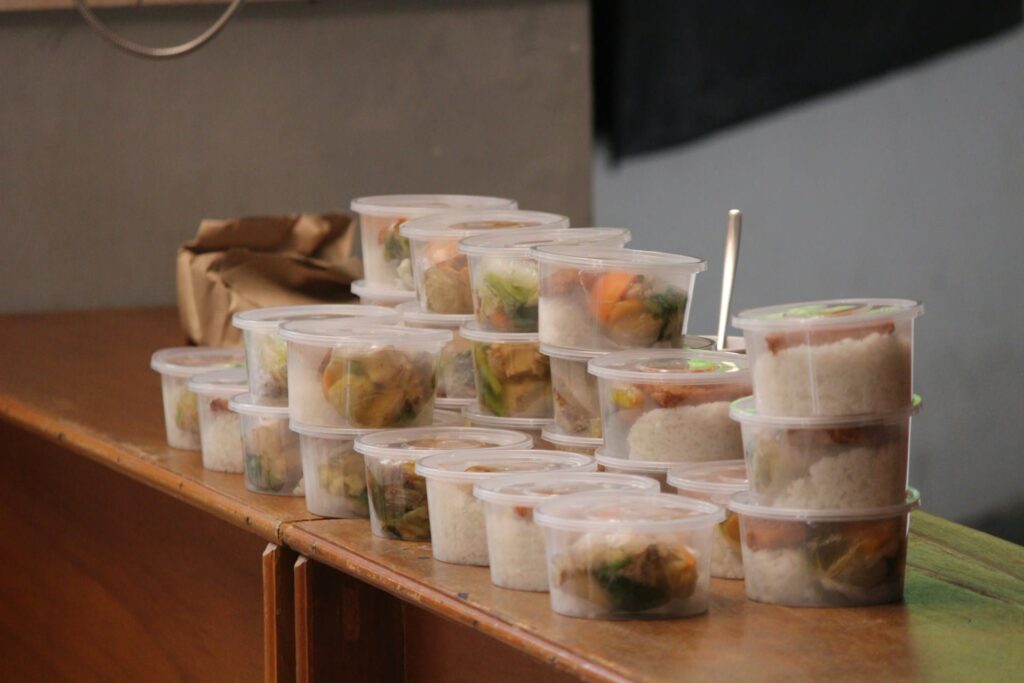
Essential Qualities of Catering Food Containers
Durability and Load-Bearing Capacity
Catering containers must withstand significantly more handling than standard takeout packaging. Look for containers with:
- Reinforced corners that resist crushing when stacked
- Uniform wall thickness that distributes weight evenly
- Structural ribbing that enhances load-bearing capacity
- Impact-resistant materials that prevent cracking during transport
The ability to stack containers safely is particularly important for catering operations. Premium containers feature interlocking designs or stability features that prevent sliding during transport. Reliancepak’s catering line includes containers specifically engineered with reinforced bases that support up to 30% more weight than standard options.
Sealing Performance and Leak Prevention
For catering services, leak prevention is non-negotiable. Superior containers incorporate:
- Multi-point locking systems that create secure seals
- Silicone or TPE gaskets that prevent liquid seepage
- Channel designs that capture any potential overflow
- Uniform pressure distribution around container perimeters
These features work together to maintain seal integrity even when containers are stacked, tilted, or subjected to movement during transport—common scenarios in catering operations.
Temperature Retention and Freshness
Maintaining food temperature and freshness is particularly challenging in catering, where food may be prepared hours before serving. Quality containers address this through:
- Insulative properties that slow temperature change
- Materials that resist moisture transfer
- Designs that minimize air circulation
- Optional insulation layers for premium temperature control
Reliancepak offers specialized catering containers with thermal barrier technology that extends temperature maintenance by up to 45 minutes compared to standard containers—a critical advantage for off-site catering.
Portability and Stacking Design
Efficient transport is essential for catering operations. The best containers feature:
- Uniform dimensions that maximize vehicle space utilization
- Interlocking features that create stable stacks
- Ergonomic design elements that facilitate handling
- Compatibility with standard catering transport equipment
These design elements significantly impact operational efficiency, allowing for more organized packing, safer transport, and faster setup at event locations.
Material Considerations for Catering Containers
Food-Grade Plastic Safety Standards
When selecting materials for catering containers, food safety must be the primary consideration. Look for containers that meet:
- FDA food contact approval standards
- EU food contact material regulations
- BPA-free certification
- Migration testing documentation
These standards ensure that no harmful chemicals will leach into food, even under varying temperature conditions or with extended contact times—both common scenarios in catering operations.
Comparing Different Plastic Materials
Various plastic materials offer distinct advantages for catering applications:
Polypropylene (PP) has become the industry standard for hot food catering due to its excellent temperature resistance (up to 120°C/248°F), good flexibility that enhances seal performance, and superior resistance to oils and acids commonly found in prepared foods. PP containers maintain structural integrity through temperature fluctuations, making them ideal for foods that will be reheated.
Polyethylene Terephthalate (PET) offers exceptional clarity that showcases food presentation—particularly valuable for cold appetizers, salads, and desserts. PET provides good rigidity and crack resistance, though its temperature ceiling (typically 70°C/158°F) makes it less suitable for hot foods.
Polystyrene (PS) offers cost advantages but has limitations in temperature resistance and environmental impact. Its rigidity can be beneficial for certain applications, but it’s generally not recommended for premium catering operations.
Material Properties Comparison Table
| Material | Temperature Range | Clarity | Durability | Oil Resistance | Stackability | Environmental Impact | Cost |
|---|---|---|---|---|---|---|---|
| PP | -20°C to 120°C | Good | Excellent | Excellent | Very Good | Recyclable | Moderate |
| PET | -20°C to 70°C | Excellent | Good | Good | Good | Highly Recyclable | Moderate |
| PS | -10°C to 70°C | Very Good | Fair | Poor | Good | Difficult to Recycle | Lower |
| CPET | -40°C to 220°C | Fair | Very Good | Very Good | Very Good | Recyclable | Higher |
| PP/PET Blend | -20°C to 100°C | Very Good | Very Good | Very Good | Excellent | Recyclable | Higher |
The above data is for reference only
Reliancepak’s Premium Material Options
Reliancepak offers specialized material formulations designed specifically for catering applications:
- Enhanced PP with superior flexibility for better sealing
- High-clarity PET with reinforced corners for improved durability
- Hybrid materials that combine the benefits of multiple plastic types
- Eco-friendly options with recycled content that maintain performance
These premium materials address the specific challenges faced by catering operations while providing options that align with various sustainability goals.
Size and Capacity Planning for Different Events
Small Gatherings vs. Large Events
Event scale significantly impacts container requirements. Small gatherings (under 50 guests) typically benefit from versatile, medium-sized containers that accommodate various food types. Large events (100+ guests) often require more specialized containers sized for specific menu items, enabling more efficient preparation and service.
The service style also influences container selection. Buffet-style service may require larger, family-sized containers, while plated service needs individual portion containers. Cocktail receptions call for smaller, appetizer-sized options.
Standard Sizes vs. Custom Options
While standard container sizes offer cost advantages and reliable availability, custom sizing can provide significant operational benefits for catering businesses with consistent needs:
- Exact portion control that reduces food waste
- Optimized stacking for your specific transport equipment
- Dimensions tailored to your menu items
- Sizes that align with your serving equipment
Reliancepak offers both standard sizes and custom options, with custom sizing becoming economically viable at order quantities of 10,000+ units—a threshold many established catering operations can easily meet.
Single vs. Multi-Compartment Designs
Container compartmentalization offers distinct advantages for certain catering applications:
- Keeping components separate until serving (sauces, dressings)
- Maintaining temperature zones (hot and cold elements)
- Preserving textures (crispy and moist elements)
- Enhancing presentation for premium offerings
Multi-compartment containers require careful design to ensure all sections seal properly. Reliancepak’s divided containers feature independent sealing technology that prevents cross-contamination between compartments.
Event Type and Container Size Recommendation Table
| Event Type | Recommended Container Sizes | Compartment Style | Quantity Planning | Special Considerations |
|---|---|---|---|---|
| Corporate Lunch | Individual meal (24-32 oz) | 2-3 compartments | 1.1 containers per person | Stackability, reheating compatibility |
| Wedding Reception | Family style (64-96 oz) | Single compartment | 1 container per 4-6 guests | Elegant presentation, temperature retention |
| Outdoor Events | Medium (32-48 oz) | Single or dual | 1 container per 2-3 guests | Extra leak protection, insulation |
| Cocktail Parties | Small (8-16 oz) | Single compartment | 2-3 containers per person | Easy handling, presentation quality |
| Multi-Day Events | Individual meal (24-32 oz) | 2-3 compartments | 1.2 containers per person per meal | Extended freshness, reheating capability |
The above data is for reference only
Temperature Resistance Requirements
Hot Food Service Considerations
Hot food presents specific challenges for catering containers. Quality containers for hot applications should:
- Withstand temperatures up to 120°C (standard hot food) or 220°C (oven applications)
- Resist warping that can compromise seals
- Maintain structural integrity when filled with hot contents
- Provide sufficient insulation to maintain food temperature
For catering operations regularly handling hot foods, CPET (Crystallized Polyethylene Terephthalate)2 or high-grade PP containers represent the best options, with CPET offering superior oven compatibility for reheating.
Cold Food and Frozen Item Requirements
Cold and frozen foods require containers that:
- Remain flexible and resist cracking at low temperatures (down to -20°C)
- Prevent moisture migration that can cause freezer burn
- Resist condensation that can compromise food quality
- Maintain seal integrity during thawing
PP and PET both perform well for refrigerated items, while PP generally offers superior performance for frozen applications due to its maintained flexibility at low temperatures.
Microwave Heating Safety Considerations
For catering clients who may reheat food, microwave safety is essential. Look for:
- Microwave-safe materials (primarily PP)
- Venting options to release steam during heating
- Heat distribution features that prevent hot spots
- Clear reheating instructions that can be provided to end-users
Reliancepak’s catering containers include optional venting technology that allows steam release while maintaining seal integrity during microwave heating.
Temperature Effects on Container Performance
Temperature fluctuations can significantly impact container performance. Premium containers are designed to:
- Maintain dimensional stability through temperature changes
- Prevent warping that can compromise seals
- Resist brittleness at low temperatures
- Maintain flexibility and seal integrity when heated
These properties are particularly important for catering operations, where food may move through multiple temperature environments before serving.

Aesthetic and Branding Considerations
Transparency and Food Presentation
Container clarity significantly impacts food presentation and perceived quality. Consider:
- Full transparency for showcasing colorful, fresh items
- Partial transparency that highlights specific elements
- Strategic opacity that conceals less visually appealing items
- Clarity consistency across your container program
PET offers superior clarity, while PP provides good transparency with additional benefits in temperature resistance and durability.
Brand Printing and Customization Options
Branded containers create marketing opportunities and enhance professional presentation:
- Logo placement options (lid, sides, or base)
- Color matching capabilities for brand consistency
- Print quality and durability considerations
- Minimum order quantities for custom printing
Reliancepak offers advanced printing technologies that maintain quality even with complex designs, with minimum order quantities starting at 5,000 units for custom-printed catering containers.
Professional Appearance Impact on Client Perception
Packaging quality directly influences client perception of food quality. Research indicates that:
- 72% of clients associate packaging quality with food quality
- 64% of event planners consider packaging when selecting caterers
- 83% of guests notice and remember distinctive packaging
Investing in professional-looking containers can significantly enhance brand perception and lead to increased referrals and repeat business.
Reliancepak’s Custom Printing Services
Reliancepak offers comprehensive customization options:
- Up to 6-color printing capability
- Embossing options for premium presentation
- Food-safe, fade-resistant inks
- Design assistance services for optimal results
These services enable catering businesses to extend their branding consistently through their packaging program.
Cost-Effectiveness and Bulk Purchasing Strategies
Unit Price vs. Bulk Purchase Economics
Container costs vary significantly based on order volume. Understanding the relationship between quantity and unit price helps optimize purchasing:
- Small orders (under 1,000 units): Highest per-unit cost
- Medium orders (1,000-5,000 units): Moderate savings (typically 15-25%)
- Large orders (5,000+ units): Significant savings (typically 30-40%)
- Custom production runs (10,000+ units): Maximum savings plus customization options
Strategic ordering based on projected needs can substantially reduce packaging costs over time.
Balancing Quality and Price Considerations
When evaluating container options, consider the total value rather than just the purchase price:
- Higher-quality containers reduce replacement frequency
- Superior sealing prevents costly food waste
- Durable containers minimize damage during transport
- Premium presentation may justify higher menu pricing
A comprehensive cost analysis should include these factors rather than focusing solely on the initial purchase price.
Long-Term Supplier Relationships and Supply Chain Management
Developing strategic supplier relationships offers significant advantages:
- Consistent availability of your preferred containers
- Priority production scheduling during high-demand periods
- Potential for negotiated pricing improvements over time
- Collaborative development of custom solutions
Reliancepak offers partnership programs for catering businesses, including inventory management services that ensure container availability while minimizing storage requirements.
Strategies for Reducing Overall Packaging Costs
Beyond bulk purchasing, consider these approaches to optimize packaging expenses:
- Standardizing container sizes across menu items where possible
- Implementing just-in-time ordering to reduce storage costs
- Selecting multi-purpose containers that serve various needs
- Evaluating the true cost of quality issues with cheaper alternatives
These strategies can help catering operations balance quality requirements with budget constraints.
Compliance with Food Safety Regulations
Industry Standards and Certification Requirements
Food contact packaging must meet specific regulatory standards:
- FDA compliance for food contact materials
- EU Regulation 10/2011 for plastic food contact materials
- BPA-free certification requirements
- HACCP compatibility for food safety systems
Reputable suppliers provide documentation confirming compliance with these standards. Reliancepak maintains comprehensive certification records available to customers upon request.
International Food Contact Material Regulations
For catering operations serving international clients or operating across borders, understanding varying regulations is essential:
- Different migration limit requirements by region
- Specific banned substances that vary by country
- Labeling and certification differences
- Documentation requirements for import/export
Working with suppliers experienced in international compliance simplifies navigation of these complex requirements.
Importance of Compliant Packaging for Business
Regulatory compliance is not merely a legal obligation but a business necessity:
- Protection against liability claims
- Maintenance of business licenses and certifications
- Alignment with client expectations and requirements
- Compatibility with food safety management systems
Non-compliant packaging can result in significant business disruption, financial penalties, and reputational damage.
Reliancepak’s Compliance Certifications
Reliancepak maintains comprehensive certifications:
- FDA food contact approval
- EU food contact material compliance
- ISO 9001 quality management certification
- BPA-free verification
- Migration testing documentation
These certifications provide catering businesses with confidence in the safety and compliance of their packaging choices.
Practical Tips for Evaluating Container Quality
Sample Testing Methodologies
Before committing to large orders, implement these testing procedures:
- Temperature resistance test: Fill with hot water (85°C) and evaluate for warping or leakage
- Drop test: Fill with water, seal, and drop from 30cm to assess durability
- Stacking test: Fill multiple containers and stack to evaluate stability
- Seal integrity test: Fill with colored water, seal, and invert for 30 minutes
- Microwave test: Heat food in the container to evaluate performance
These practical tests provide real-world performance data beyond manufacturer specifications.
Supplier Evaluation Criteria
When selecting a container supplier, evaluate:
- Manufacturing capabilities and quality control processes
- Compliance documentation and certification status
- Minimum order quantities and lead times
- Customer service responsiveness and problem resolution
- Financial stability and business longevity
A thorough supplier evaluation prevents quality issues and supply disruptions that can impact your catering operations.
Collecting and Analyzing User Feedback
Systematic feedback collection provides valuable insights:
- Staff feedback on handling and operational efficiency
- Client comments on presentation and functionality
- End-user experiences with reheating or storage
- Comparative analysis against previous packaging solutions
This feedback loop enables continuous improvement in packaging selection and application.
Avoiding Common Selection Mistakes
Catering businesses often make these preventable errors:
- Prioritizing price over performance for short-term savings
- Selecting containers based solely on appearance without testing functionality
- Failing to consider the full range of foods and serving conditions
- Underestimating the impact of packaging on food quality and presentation
Avoiding these pitfalls leads to more successful packaging programs and improved operational efficiency.
Conclusion: Making the Right Choice for Your Catering Business
Comprehensive Selection Process Recommendations
A systematic approach to container selection includes:
- Analyzing your specific menu and service requirements
- Identifying critical performance factors for your operation
- Testing samples under actual operating conditions
- Evaluating total cost of ownership beyond purchase price
- Considering scalability as your business grows
This methodical process leads to packaging choices that truly support your business objectives.
Scale-Based Recommendations
Different business scales have distinct packaging needs:
- Small operations (under 50 events annually): Focus on versatility and moderate inventory
- Medium businesses (50-200 events annually): Implement food-specific container solutions
- Large operations (200+ events annually): Develop custom solutions optimized for your specific needs
Tailoring your approach to your business scale maximizes both performance and cost-efficiency.
Value of Long-Term Supplier Partnerships
Strategic supplier relationships deliver significant benefits:
- Consistent quality and availability
- Collaborative problem-solving for unique challenges
- Priority access during supply constraints
- Potential for co-developed custom solutions
Reliancepak offers partnership programs specifically designed for catering businesses, with dedicated account management and priority production scheduling.