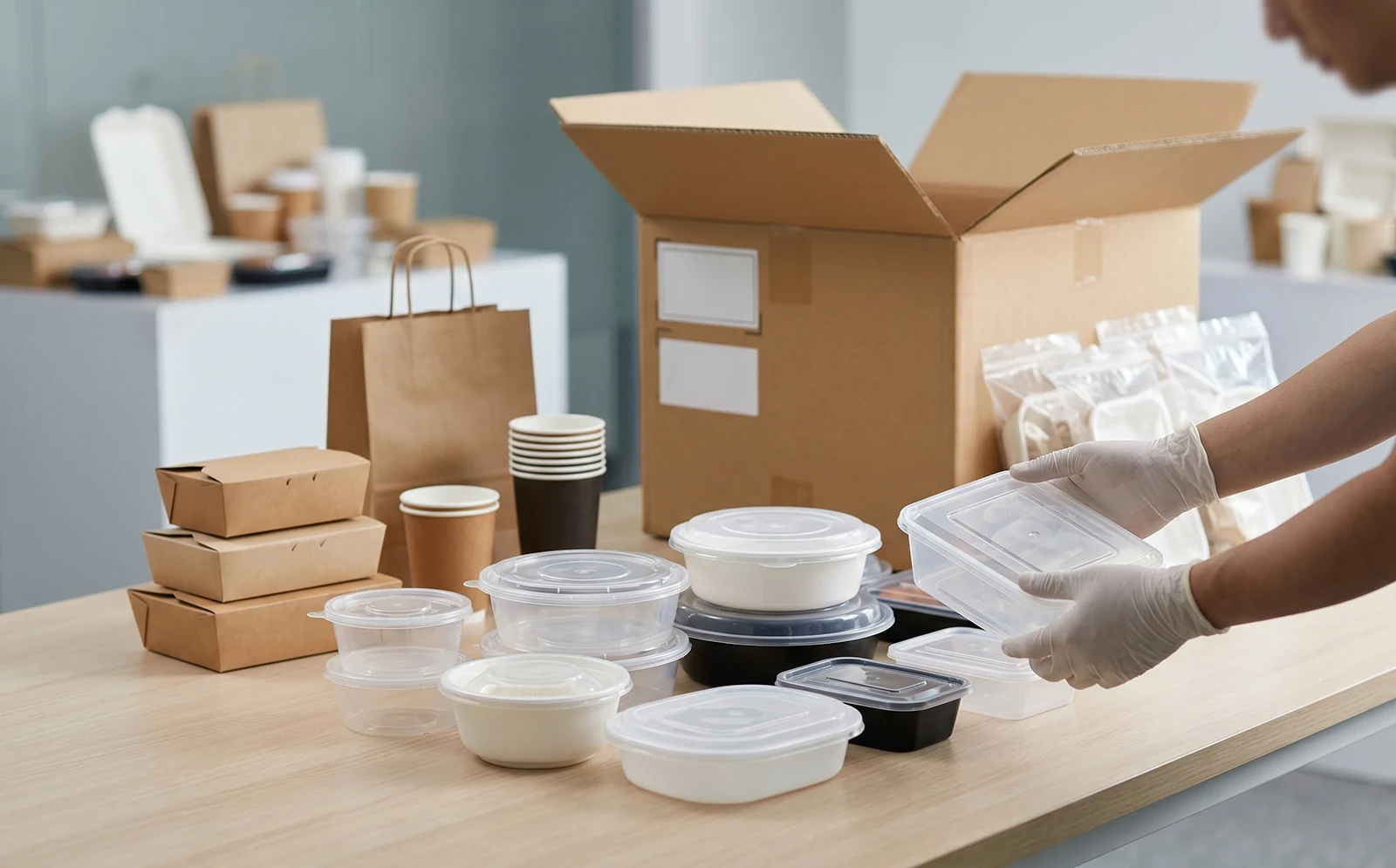
Requesting samples for a food container bulk order is the formal procedure of obtaining physical units to evaluate structural integrity, material safety, and functional performance prior to finalizing a high-volume purchase agreement. This step acts as a technical audit that confirms whether a manufacturer’s production capabilities align with your specific procurement standards.
Every procurement manager understands the risk associated with receiving a shipping container filled with thousands of defective units. A minor oversight in lid tension or material brittleness can lead to significant financial loss and a damaged reputation among your B2B distribution clients. This guide provides a systematic protocol for requesting and testing prototypes, allowing you to secure your inventory with technical certainty. By following these verification steps, you ensure that your large-scale investment results in a product that performs reliably in real-world food service environments.
Why is sample testing a necessary step for wholesale procurement?
Sample testing serves as the ultimate verification that a manufacturer’s digital specifications translate into a physical product that meets your operational needs. It eliminates the ambiguity of digital mockups and provides a tangible baseline for quality control.
Preventing Large Scale Financial Waste
Here is the deal.
- Physical samples reveal the actual tactile quality and “hand-feel” of the material.
- You can verify that the nesting ratio is efficient for your storage requirements.
- Testing allows you to confirm that the lids fit securely across different production batches.
- It identifies potential flaws in the mold that might cause leaks or cracking.
| Comparison Point | Digital Quote Information | Physical Sample Verification |
| Material Strength | Resin type listed (e.g., PP) | Resistance to bending and impact |
| Lid Security | “Leak-proof” claim | Actual fluid retention during movement |
| Transparency | “Clear” or “Translucent” | Visual clarity under retail lighting |
Technical specifications on paper rarely capture the nuances of structural performance under pressure.
Key Takeaway: Physical verification is the only way to guarantee that a food container bulk order will perform correctly in high-stress food service environments.
How do you structure a professional sample request for bulk containers?
A professional request must include specific gram weights, resin types, and the exact intended application to ensure the supplier provides prototypes that reflect the final product. Vague requests often result in receiving generic stock items that do not match the quality of the intended mass production run.
Specifying Material and Weight Requirements
Think about this.
- Request the exact gram weight to ensure the container wall thickness meets your durability needs.
- Ask for the specific resin code, such as PP 5 or PET 1, to confirm food safety and recyclability.
- Specify the color and clarity requirements to avoid receiving mismatched batches.
- Request samples from the actual mold that will be used for your specific order.
| Sample Request Checklist | Technical Requirement | Importance Level |
| Gram Weight | Specific weight in grams | High (Durability) |
| Resin Grade | Virgin vs. Recycled content | Critical (Food Safety) |
| Lid Fit | Interchangeable or specific | High (Operational) |
Providing precise technical data in your sample request forces the supplier to demonstrate their manufacturing accuracy.
Key Takeaway: Precision in your initial request reduces the time spent on multiple rounds of sampling and accelerates your procurement timeline.
What physical tests should you perform on food container samples?
You should conduct leak-proof, microwave stability, and stacking strength tests to simulate the rigorous conditions the containers will face during transport and end-user consumption. Laboratory certifications are vital, but internal physical stress tests provide immediate proof of functional reliability.
Executing the Seal Integrity Test
You should know.
- Fill the container with water, secure the lid, and place it upside down for several hours.
- Perform a “shake test” to simulate the vibrations of a delivery vehicle or motorbike.
- Check the “snap-on” sound of the lid to ensure a consistent and audible seal.
- Verify that the tabs are durable enough to be opened and closed multiple times without snapping.
Assessing Thermal Performance
Let’s look at the facts.
- For Polypropylene (PP) items, perform a microwave test at high heat for three minutes.
- Place samples in a commercial freezer to check if the material becomes brittle or cracks easily.
- Pour boiling water or hot oil into the container to observe any warping or chemical odors.
- Stack five filled containers on top of each other to test the vertical load-bearing capacity.
| Test Type | Objective | Pass Criteria |
| Leak Test | Check seal quality | No fluid escape under pressure |
| Heat Test | Check safety | No warping or deformation at 100°C |
| Load Test | Check stackability | Bottom container remains structural |
Simulating the worst-case scenarios for your packaging ensures that your clients will not experience failures in the field.
Key Takeaway: Rigorous physical testing removes the guesswork from international sourcing and protects your brand reputation.
How do you bridge the gap from sample approval to mass production?
Keep “Golden Samples” as a physical benchmark to compare against the final delivery during the pre-shipment inspection. Managing a food container bulk order effectively requires constant vigilance from the prototype stage through to the final arrival at your warehouse.
Establishing the Quality Standard
Here is the truth.
- Store one approved sample in a sealed bag to prevent dust or light from altering its appearance.
- Use this sample to compare the gram weight of the mass-produced units during QC audits.
- Ensure the supplier signs and stamps the approved sample to acknowledge the agreed quality level.
- Use the approved prototype as the reference for any color matching or printing requirements.
| Quality Step | Action | Business Impact |
| Archiving | Seal golden sample | Legal reference point |
| Weight Check | Compare batch weight | Prevents material thinning |
| QC Audit | Random batch testing | Ensures consistency |
A golden sample acts as a technical and legal reference point throughout the entire manufacturing cycle.
Key Takeaway: Maintaining a physical benchmark prevents “quality fade” and ensures the factory adheres to the original agreed-upon standards.
Conclusion
Reliancepak provides a stable supply of food-grade packaging with the speed and professional service your business requires. We offer free samples so you can verify our 9 production lines’ quality and fit before committing to a large-scale purchase. Contact us today to discuss how our integrated manufacturing and trading services can support your wholesale goals.
We believe that reliable, safe, and sustainable packaging is the foundation of a successful global food supply chain.
FAQ
Can I get free samples of bulk food containers?
Yes. Most professional manufacturers provide free samples of their standard products, though you might be expected to cover the international courier costs for the delivery.
How many samples should I request for a test?
Yes, you should request at least 5 to 10 units of each style to ensure you can perform multiple destructive tests, such as microwave and freezing trials.
Is it possible to request custom-branded samples?
Yes, but this often requires a tooling or setup fee for the printing plates. For initial quality checks, it is more efficient to test a plain sample of the same material and weight.
Does a sample pass guarantee a mass production pass?
No. You must still perform a pre-shipment inspection to ensure the factory did not change the resin grade or reduce the gram weight during the full production run.
How long does it take to receive samples?
Yes, standard stock samples are usually dispatched within 2 to 3 days, but custom-molded prototypes can take 15 to 30 days depending on the complexity of the design.