
PS plastic, or polystyrene, remains a primary choice for food packaging because of its superior optical clarity and structural rigidity, providing a glass-like presentation for cold and ambient food products. While polypropylene (PP) offers higher heat resistance and polyethylene terephthalate (PET) provides an excellent gas barrier, ps plastic stands out for its specific ability to balance cost-efficiency with high-impact protection in the global supply chain.
Procurement managers often struggle to navigate the technical trade-offs between different polymer types, leading to packaging failures like melting in microwaves or cracking during cold chain transport. Selecting the wrong material can result in product loss, safety compliance issues, and diminished brand value. This comparison clarifies the mechanical differences between PS, PP, and PET to ensure your business selects the most suitable plastic for your specific distribution needs.
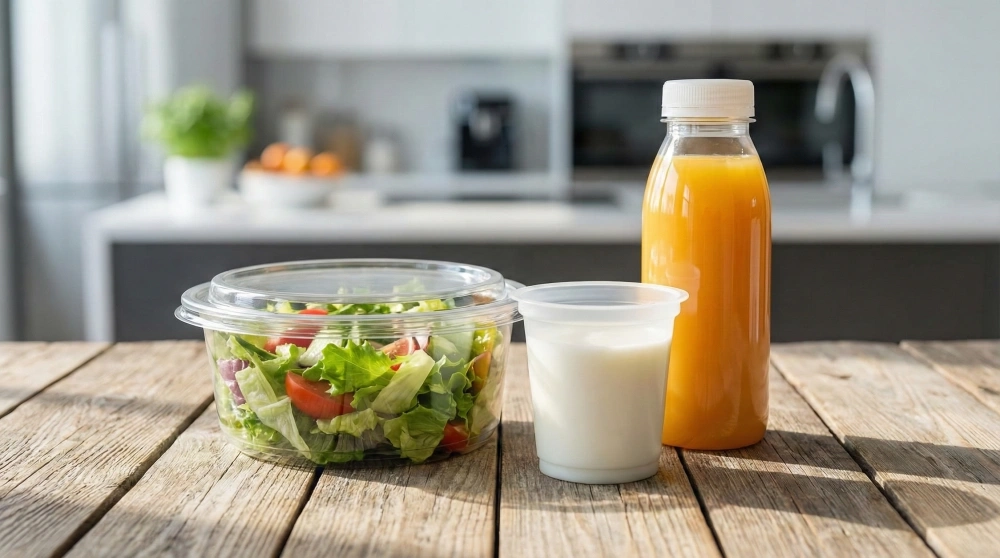
How Does PS Plastic Compare to PP and PET in Food Applications?
The performance of ps plastic in food service is defined by its hydrophobic nature and high flexural modulus, which makes it stiffer than most other common polymers. Unlike PP, which is flexible and semi-translucent, or PET, which is strong but sensitive to heat during molding, ps plastic offers a unique set of characteristics that favor retail display and structural integrity.
Thermal Resistance and Microwave Safety
One of the most frequent points of comparison is how these materials handle heat. PP is the industry standard for microwave-safe containers because it can withstand temperatures up to 120°C (248°F) without warping. In contrast, ps plastic has a lower heat distortion temperature, typically around 80°C to 90°C.
- PP: Best for hot soups, microwaveable meals, and dishwasher-safe containers.
- PS plastic: Ideal for cold salads, dairy products, and room-temperature bakery items.
- PET: Commonly used for cold-fill beverages but loses its shape if exposed to boiling liquids.
Optical Clarity and Product Visibility
When it comes to retail presentation, the choice between materials often depends on how clearly the consumer can see the product. This is where ps plastic and PET outperform PP.
- PS plastic: Offers exceptional “crystal” clarity that enhances the vibrant colors of fresh fruits and vegetables.
- PET: Provides high gloss and transparency, though it can sometimes have a slight blue or yellow tint depending on the recycling content.
- PP: Naturally milky or hazy in its standard form, which can obscure the details of the food inside.
Barrier Properties and Shelf Life
The chemical structure of the polymer determines how well it keeps oxygen out and moisture in. While ps plastic is an excellent moisture barrier, PET is the leader in gas barrier technology, which is why it is used for carbonated soft drinks.
| Material | Moisture Barrier | Gas (Oxygen) Barrier | Clarity Level |
| PS Plastic | High | Low | Excellent |
| PP | Very High | Low | Low to Medium |
| PET | Medium | High | High |
Key Takeaway: While PP handles heat and PET handles carbonation, ps plastic is the preferred material for high-visibility cold food storage where structural stiffness is required.
Why Do Professional Buyers Choose PS Plastic Over Other Polymers?
Business-to-business procurement decisions are rarely based on a single factor; they require a holistic view of the production cycle, shipping costs, and final application. PS plastic remains a staple in the inventory of wholesale distributors because it provides a predictable performance profile that minimizes waste in high-volume environments.
Cost-Efficiency in High-Volume Production
For large-scale operations, the lower density of certain ps plastic variants allows for more parts to be produced from the same weight of resin compared to PET. This translates to a lower cost per unit, which is a decisive factor for disposable catering supplies like cutlery and lids.
- Reduces the total expenditure on raw materials for single-use items.
- Lowers shipping costs due to the lightweight nature of the finished containers.
- Requires less energy during the injection molding process compared to high-melting-point plastics.
Predictable Molding and Dimensional Stability
The manufacturing process for ps plastic is highly stable, meaning the material shrinks very little as it cools. This allows for the creation of precision-engineered lids that snap securely onto containers, preventing leaks during delivery—a common failure point for softer PP lids.
- Ensures a consistent “snap-fit” for food-to-go packaging.
- Minimizes the rejection rate during the quality control phase of manufacturing.
- Supports high-speed automated packing lines without jamming.
For a deeper understanding of these technical attributes and how they apply to your supply chain, you should check our comprehensive overview: What Is PS Plastic? Properties & Food Packaging Applications.
Key Takeaway: The combination of lower material costs and manufacturing precision makes ps plastic a highly competitive option for mass-market food distribution.
What Are the Specific Use Cases for Each Plastic Type?
Matching the material to the application is necessary to prevent product damage and ensure food safety. Each plastic has a “sweet spot” in the market where its properties provide the highest value to the end-user.
When to Use PS Plastic
PS plastic is best utilized when the primary goals are visibility and protection against crushing.
- Bakery Containers: Keeping delicate pastries visible and intact.
- Dairy Tubs: Providing a rigid structure for yogurt and sour cream.
- Laboratory Supplies: Ensuring sterile and clear views for petri dishes and test tubes.
When to Use PP (Polypropylene)
PP should be the choice when heat or flexibility is a requirement.
- Soup Bowls: Safe for piping hot liquids.
- Reusable Containers: Durable enough to survive multiple wash cycles.
- Living Hinges: Used in containers where the lid and base are connected by a flexible plastic joint.
When to Use PET (Polyethylene Terephthalate)
PET is the standard for liquids and long-shelf-life retail goods.
- Beverage Bottles: Managing internal pressure from carbonation.
- Pre-packaged Salads: Offering a high-end look with a good oxygen barrier.
- Peanut Butter Jars: Providing chemical resistance against oils and fats.
| Application Scenario | Recommended Material | Primary Reason |
| Microwaveable Meal | PP | High heat resistance |
| Clear Salad Bowl | PS Plastic | Optical clarity & rigidity |
| Carbonated Soda | PET | CO2 gas barrier |
| Disposable Spoon | PS Plastic | Stiffness & low cost |
Key Takeaway: Understanding these specific use cases allows procurement officers to optimize their inventory and reduce the risk of material failure in the field.
How Do Environmental Standards Impact the Choice of Plastic?
In the current global market, sustainability is a significant factor in B2B decision-making. While all three plastics are recyclable, the infrastructure for recycling varies by region, which might influence which material is better for your brand’s environmental image.
Recycling Infrastructure and Capabilities
PET currently has the most developed recycling infrastructure globally, particularly for bottles. However, ps plastic and PP are catching up with new chemical recycling technologies that allow these materials to be broken down and reused for food-grade applications multiple times.
- PET: Widely accepted in curbside recycling programs.
- PS Plastic: Often recycled into durable goods like picture frames and park benches, with food-grade recycling increasing in the US and EU.
- PP: Growing in recycling popularity for automotive parts and industrial pallets.
Reducing Carbon Footprint Through Material Choice
The carbon footprint of a package isn’t just about its end-of-life; it includes the energy used during production and the weight of the material during transport. Because ps plastic can be manufactured at lower temperatures and molded into very thin yet rigid walls, it often has a lower production energy requirement than PET.
- Lower processing temperatures reduce the factory’s energy consumption.
- Lightweight designs decrease the fuel required for distribution.
- Durable designs prevent food waste, which has a much higher environmental impact than the packaging itself.
Key Takeaway: Selecting a material involves a balance between the immediate functional needs of the food and the long-term sustainability goals of the organization.
At Reliancepak, we provide expert guidance to help you choose between PS, PP, and PET based on your specific food safety and budgetary requirements. Our manufacturing facilities are equipped to handle high-volume orders with a focus on consistent quality and international compliance. We offer free samples so you can test the durability and clarity of our materials within your own supply chain.
Our vision is to provide the global food industry with reliable, cost-effective packaging solutions that prioritize both product integrity and safety.
FAQ
Is ps plastic safer than PP for food contact?
Both materials are FDA and EU approved for food contact. The “safety” depends on the application; PP is safer for hot foods, while ps plastic is perfectly safe and effective for cold or room-temperature storage.
Why is PET more expensive than ps plastic?
PET often requires more complex manufacturing processes, such as stretch blow molding, and the resin itself can be subject to higher market price fluctuations compared to polystyrene.
Can I switch from PP to ps plastic to save money?
Yes, if your product does not require microwave heating or extreme flexibility. Many companies switch to ps plastic for lids and cold-storage trays to improve clarity and reduce costs.
Which plastic is best for long-term freezer storage?
Both PP and certain modified grades of ps plastic work well in freezers. However, standard GPPS can become brittle, so it is better to use HIPS (High Impact Polystyrene) or PP for deep-freeze applications.
Does ps plastic affect the taste of food?
No. PS plastic is chemically inert and non-reactive, ensuring that the flavor profile of the food remains unchanged during storage and transport.
Meta Description: Compare PS vs PP vs PET for food packaging. Learn why ps plastic is the top choice for clarity and rigidity in B2B procurement and distribution.