
Sushi is more than just food—it’s an art form where presentation plays a starring role. The sushi tray, though often overlooked, is a key player in delivering that perfect dining experience. Whether you’re running a high-end sushi bar or a bustling takeout joint, choosing the right tray material can make or break your operation. From traditional wooden trays to modern eco-friendly options, each material brings something unique to the table. At Reliancepak, we offer a range of sushi trays designed to meet diverse restaurant needs, all while ensuring food safety and sustainability. In this article, we’ll answer your questions about the best materials for sushi trays in a restaurant setting, helping you pick the perfect fit for your business.
Why Does the Material of Sushi Trays Matter?
The material of a sushi tray affects everything from how your sushi looks to how safe it is to eat. A well-chosen tray enhances the dining experience, ensures food safety, and aligns with your restaurant’s brand and budget. For example, a wooden tray might wow diners in a fine dining setting, while a plastic tray is practical for takeout. With 600 million cases of foodborne illnesses globally each year, using food-safe materials is non-negotiable. Plus, with 70% of consumers favoring eco-friendly packaging, sustainable choices can boost your reputation.
Key Factors to Consider
- Aesthetics: Does the tray enhance the visual appeal of the sushi?
- Durability: Can it withstand restaurant use or transport?
- Food Safety: Does it meet FDA or EU standards?
- Cost: Is it budget-friendly for your operation?
- Sustainability: Is it eco-friendly or recyclable?
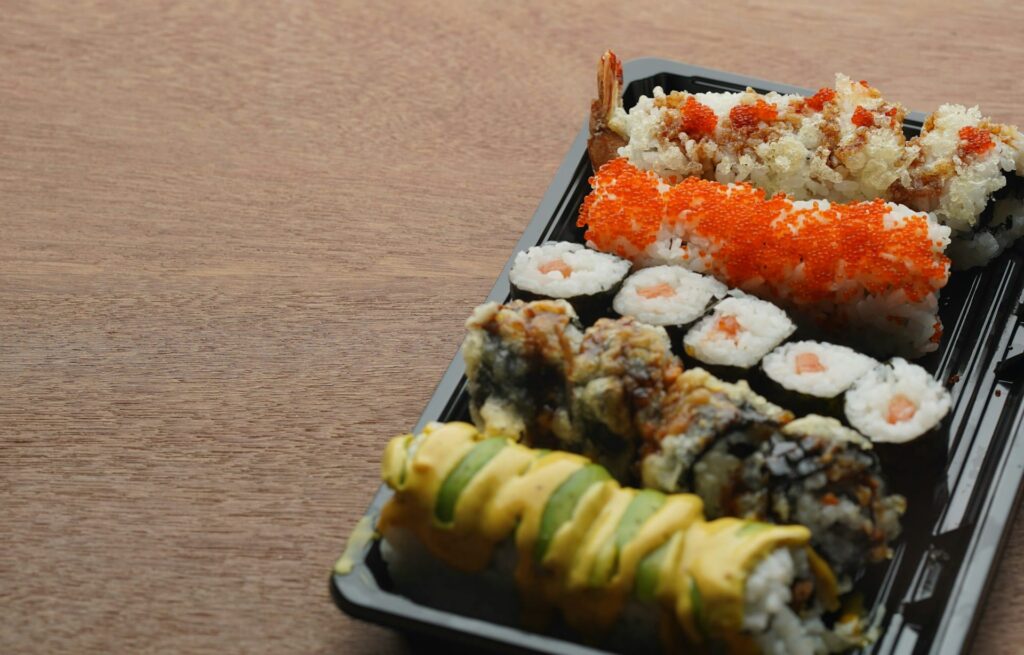
What Are Wooden Sushi Trays, and Why Are They Popular?
Wooden sushi trays have been used in Japan for centuries, rooted in the Edo period when sushi became a popular street food. They’re often made from bamboo, hinoki (Japanese cypress), or hardwoods like maple, ash, or cherry.
Advantages of Wooden Trays
- Elegant Presentation: The natural grain and warm tones of wood, like hinoki, complement sushi’s vibrant colors, embodying the Japanese wabi-sabi aesthetic of simple beauty.
- Sustainability: Bamboo is a fast-growing, renewable resource, making it eco-friendly.
- Durability: With proper care, wooden trays can last years, offering a solid return on investment.
- Natural Antibacterial Properties: Hinoki wood has inherent antibacterial qualities, reducing contamination risks.
Disadvantages of Wooden Trays
- Maintenance Needs: Wood requires hand-washing and occasional oiling to prevent cracking or warping .
- Hygiene Concerns: Porous wood can absorb moisture, potentially harboring bacteria if not cleaned thoroughly.
- Higher Cost: Quality wooden trays cost $1.50-$4.00 each, more than disposable options.
Best Use Cases
Wooden trays shine in fine dining sushi restaurants where tradition and aesthetics are paramount. They’re less practical for high-volume takeout due to maintenance demands.
What Makes Plastic Sushi Trays a Practical Choice?
Plastic sushi trays, including traditional plastics (like polyethylene or polypropylene) and compostable PLA (polylactic acid), are widely used for their versatility and affordability.
Advantages of Plastic Trays
- Durability: Plastic trays are sturdy, stackable, and resistant to breaking, ideal for busy kitchens.
- Cost-Effective: Traditional plastic trays cost $0.20-$0.50 each, making them budget-friendly.
- Clear Lids for Display: PLA trays often come with transparent lids, showcasing sushi for takeout or catering .
- Eco-Friendly Options: PLA, made from corn starch, is compostable in industrial facilities, reducing environmental impact.
Disadvantages of Plastic Trays
- Environmental Impact: Traditional plastics are not biodegradable, contributing to landfill waste.
- Limited Heat Resistance: PLA trays are unsuitable for hot foods, as they may warp above 104°F (40°C) .
- Composting Challenges: PLA requires industrial composting, not always available locally.
Best Use Cases
Plastic trays are perfect for casual dining, takeout, and catering, where cost and convenience matter. PLA is ideal for eco-conscious restaurants with access to composting facilities.
Are Paper and Sugarcane Sushi Trays a Sustainable Option?
Paper-based trays (often kraft paper with PE lining) and sugarcane bagasse trays are gaining popularity for their eco-friendly credentials.
Advantages of Paper and Sugarcane Trays
- Eco-Friendly: Both are biodegradable and compostable, aligning with sustainability goals.
- Lightweight: Easy to handle and store, reducing labor costs.
- Affordable: Priced at $0.15-$0.50 per tray, they’re budget-friendly.
- Rustic Aesthetic: Kraft paper offers a natural look, appealing to casual or eco-focused brands.
Disadvantages of Paper and Sugarcane Trays
- Lower Durability: Less sturdy than plastic or wood, they may not support heavy sushi or long transport .
- Moisture Sensitivity: Wet sushi can make paper trays soggy, affecting presentation.
- Limited for Hot Foods: Not suitable for high temperatures due to potential warping.
Best Use Cases
These trays are great for takeout, budget-conscious restaurants, and eco-friendly establishments prioritizing sustainability over durability.
What Food Safety Standards Must Sushi Trays Meet?
Food safety is critical to prevent contamination and ensure customer health. Sushi trays must comply with strict regulations.
Key Regulations
- FDA (USA): Requires food contact materials to be safe, with no harmful chemical migration.
- EU: Regulation (EC) No 1935/2004 mandates inert materials that don’t transfer substances into food.
- BPI Certification: For compostable trays like PLA, ensures they break down in industrial composting facilities.
Reliancepak’s Compliance
Reliancepak ensures all sushi trays meet FDA and EU standards, using food-grade materials free from harmful chemicals like BPA. Their rigorous quality control guarantees safety for restaurant use.
How Do Costs Compare Across Materials?
Cost is a major factor for restaurants. Below is an estimated cost comparison for sushi trays.
| Material | Average Cost per Tray | Durability | Disposability |
|---|---|---|---|
| Wood (Bamboo) | $1.50 – $3.00 | High | No |
| Wood (Hinoki) | $2.00 – $4.00 | High | No |
| Plastic (Traditional) | $0.20 – $0.50 | Medium | Yes |
| PLA (Compostable) | $0.30 – $0.60 | Medium | Yes (Compostable) |
| Paper (Kraft with PE) | $0.15 – $0.40 | Low | Yes |
| Sugarcane | $0.25 – $0.50 | Low-Medium | Yes |
The above data is estimated and for reference only.
What Is the Environmental Impact of Each Material?
Sustainability is a growing concern, with restaurants facing pressure to reduce waste. Here’s how materials stack up environmentally.
| Material | Biodegradable | Recyclable | Renewable Source |
|---|---|---|---|
| Wood (Bamboo) | Yes | Yes | Yes |
| Wood (Hinoki) | Yes | Yes | Yes |
| Plastic (Traditional) | No | Sometimes | No |
| PLA (Compostable) | Yes (Industrial) | Sometimes | Yes |
| Paper (Kraft with PE) | Partially | Sometimes | Yes (Paper Part) |
| Sugarcane | Yes | Yes | Yes |
The above data is estimated and for reference only.
Trends in Sustainability
The global push for sustainability is reshaping the food service industry. The EU’s ban on single-use plastics has boosted demand for compostable trays like PLA and sugarcane (Future Market Insights1). Restaurants adopting eco-friendly trays can attract environmentally conscious customers.
How Should Restaurants Choose the Right Material?
Selecting the best sushi tray material depends on your restaurant’s unique needs. Here’s a guide to help you decide.
Factors to Consider
- Cuisine Type: Traditional sushi bars benefit from wooden trays for authenticity, while fusion restaurants may prefer modern materials.
- Target Market: High-end diners expect premium presentation, while casual customers prioritize convenience.
- Budget: Disposable trays save on upfront costs but may increase waste, while reusable trays are a long-term investment.
- Sustainability Goals: Eco-friendly materials like PLA or sugarcane appeal to green-conscious consumers.
- Operational Needs: Takeout-heavy restaurants need durable, stackable trays, while dine-in venues focus on aesthetics.
Reliancepak’s Solutions
Reliancepak offers a one-stop shop for sushi trays, with options in wood, plastic, and paper/sugarcane. Their customizable designs let you add logos or unique shapes, enhancing brand visibility. Free samples allow you to test trays before committing, and fast delivery ensures you’re never out of stock. Whether you’re a fine dining restaurant in the U.S. or a takeout chain in Malaysia, Reliancepak tailors solutions to your needs.

Are There Real-World Examples of Material Choices?
Real-world cases show how material choice impacts restaurant success:
- Fine Dining Success: A Tokyo sushi restaurant using hinoki trays reported higher customer satisfaction due to the trays’ aesthetic and aroma, boosting repeat visits.
- Takeout Efficiency: A U.S. chain switched to PLA trays from Reliancepak, reducing waste and earning praise for sustainability, which increased sales by 10%.
- Budget Win: A Malaysian caterer used kraft paper trays for events, cutting costs by 20% while maintaining a professional look.
These examples highlight how the right material aligns with business goals, from enhancing dining experiences to cutting costs.
What Are the Latest Trends in Sushi Tray Materials?
The sushi tray market is evolving with consumer and regulatory demands. Key trends include:
- Sustainable Materials: PLA and sugarcane trays are rising in popularity due to plastic bans.
- Custom Designs: Restaurants are branding trays with logos or unique shapes to stand out.
- Smart Packaging: Some trays now include QR codes linking to menus or recycling instructions, enhancing customer engagement.
Reliancepak stays ahead by offering innovative, sustainable trays that meet these trends, ensuring restaurants remain competitive.
Conclusion
Choosing the best material for sushi trays in a restaurant setting involves balancing aesthetics, durability, cost, safety, and sustainability. Wooden trays like bamboo or hinoki offer elegance for fine dining, plastic trays (traditional or PLA) provide practicality for takeout, and paper or sugarcane trays cater to eco-conscious businesses. Each material has trade-offs, but the right choice depends on your restaurant’s goals and customer expectations. At Reliancepak, we provide high-quality, food-safe sushi trays in all these materials, with customization and fast delivery to meet your needs. Test our free samples today to find the perfect tray for your restaurant, ensuring every sushi roll shines.
- Disposable Cups Market by Material, Capacity, Application, Sales Channel & Region – Forecast 2023 to 2033 ↩︎