Selecting plastic containers for commercial storage goes far beyond comparing unit prices. For procurement teams at food manufacturers, distributors, and retail chains, the right container affects shelf life, logistics efficiency, regulatory compliance, and brand perception—all of which show up on your P&L.
This guide walks you through the material options, key specifications, and supplier evaluation criteria that matter in 2026. Whether you source containers for bakery products, fresh produce, or bulk ingredient storage, the framework below helps you make decisions grounded in operational reality rather than catalog descriptions.
What B2B Buyers Should Know About Plastic Container Materials
Material selection drives everything downstream—sealing performance, recyclability, food-contact compliance, and per-unit cost. Three resins dominate commercial storage applications:
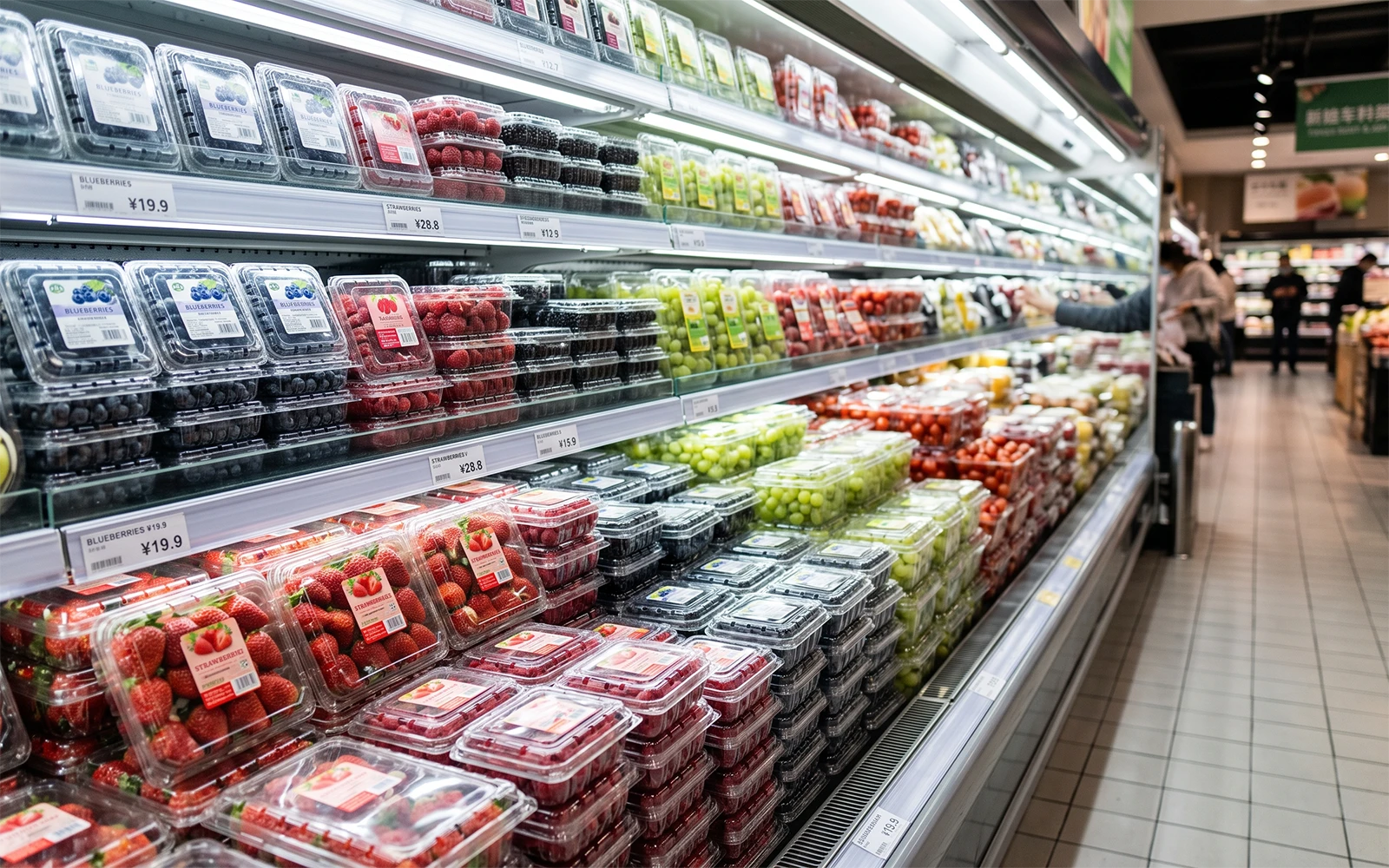
PET (Polyethylene Terephthalate) offers high clarity, FDA food-contact compliance, and broad recyclability. It suits bakery clamshells, fruit trays, and retail-ready packaging where product visibility influences purchase decisions.
PP (Polypropylene) handles higher temperatures and delivers better impact resistance. It works well for hot-fill applications, microwaveable containers, and warehouse storage bins that undergo repeated handling cycles.
HDPE (High-Density Polyethylene) provides excellent chemical resistance and moisture barrier properties. Industrial storage, bulk ingredient containers, and non-food applications frequently rely on HDPE for its durability.
| Resin | Clarity | Heat Tolerance | Recyclability | Typical B2B Application |
|---|---|---|---|---|
| PET | Excellent | Low (up to 60°C) | Widely recycled | Retail food packaging, bakery clamshells |
| PP | Good | High (up to 120°C) | Recyclable (limited streams) | Hot-fill containers, reusable storage |
| HDPE | Opaque | Moderate | Widely recycled | Bulk storage, industrial containers |
How Equipment Manufacturing Expertise Affects Container Quality
Here is a distinction many procurement teams overlook: the machinery that forms your containers determines their consistency, reject rate, and wall-thickness uniformity.
Suppliers who design and build their own thermoforming equipment—like Reliancepak—control tolerances at the mechanical level. When a forming station drifts by 0.1 mm, an equipment manufacturer catches it during calibration. A converter relying on third-party machines often discovers the problem only after a batch of rejects shows up at your dock.
This translates into measurable differences:
- Tighter wall-thickness tolerances mean fewer lid-fit failures and seal leaks
- Faster troubleshooting when specs shift, because the supplier understands the forming process end-to-end
- Shorter changeover times between container formats, which keeps your lead times predictable
When evaluating suppliers, ask whether they manufacture their own forming equipment or purchase it externally. The answer affects your quality ceiling.
Which Plastic Containers Fit Your Industry Application?
Storage requirements vary significantly by sector. A container that performs well in a bakery display case may fail in a cold-chain logistics environment. Here is how the main categories break down:
Bakery and Confectionery
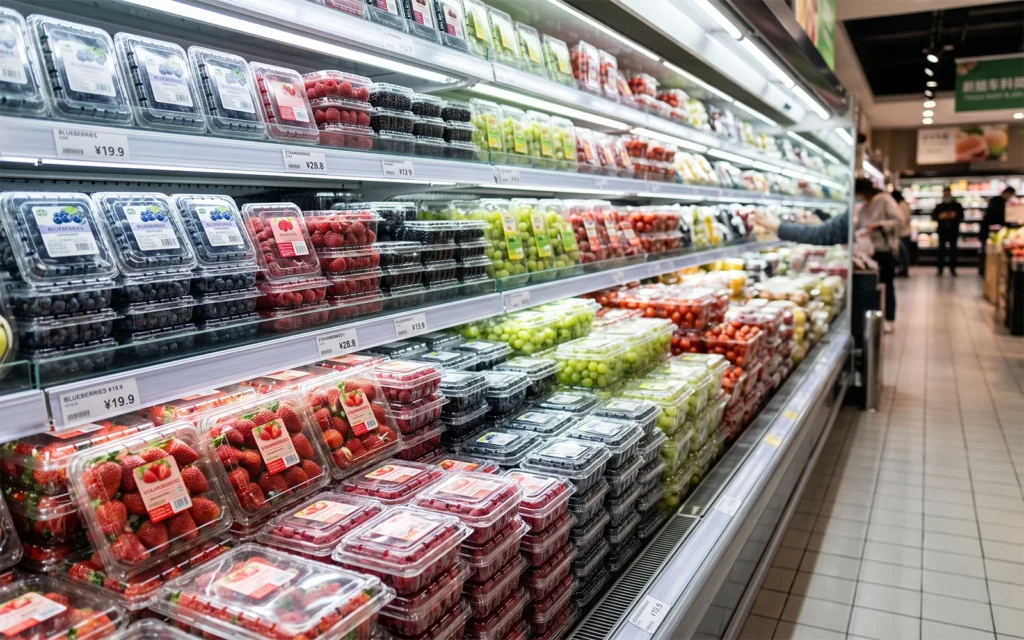
Clear PET clamshells with snap-fit lids dominate this segment. Buyers prioritize visibility, tamper-evidence, and stackability for retail shelf presentation. Wall thickness in the 0.3–0.5 mm range balances clarity with structural rigidity.
Fresh Produce and Agriculture
Ventilated PET or PP trays with drainage features prevent moisture accumulation. Farm-to-distribution applications need containers that withstand temperature fluctuations between field packing and cold storage.
Bulk Ingredient and Warehouse Storage
Heavy-duty PP or HDPE bins with reinforced corners handle repeated stacking and forklift handling. These containers typically feature interlocking lids and standardized footprints compatible with pallet systems.
Food Safety Compliance: What Certifications Actually Matter
For B2B buyers shipping into regulated markets, compliance documentation is not optional—it is a gate requirement.
FDA 21 CFR compliance covers food-contact materials destined for the US market. Your supplier should provide material declarations and migration test reports for every resin and colorant used.
EU Regulation 10/2011 applies to containers entering European markets. It sets specific migration limits for plastic materials in contact with food, and the testing requirements are more granular than FDA standards.
BRC Packaging certification signals that a supplier’s facility meets audit standards recognized by major UK and European retailers. If your end customers include supermarket chains, BRC certification often appears in their vendor qualification checklists.
Request actual certificates—not just claims. Verify that certifications cover the specific product lines you intend to source, not just the factory’s general scope.
Sustainability in 2026: What Procurement Teams Should Expect
Sustainability requirements have moved from “nice to have” to supplier qualification criteria. Three developments shape the current landscape:
Recyclability by design. Mono-material containers (single-resin construction) recyclable through existing streams carry more weight with waste management partners than multi-material alternatives, regardless of theoretical recyclability claims.
PCR content. Post-consumer recycled content in PET containers is increasingly available at 30–50% ratios without significant clarity loss. Buyers targeting corporate sustainability goals should specify PCR percentages in their RFQ documents.
Lightweighting. Reducing material usage per container—while maintaining performance specifications—lowers both unit cost and carbon footprint. Ask suppliers for weight-per-unit comparisons across equivalent container formats.
How to Evaluate Plastic Container Suppliers for B2B Sourcing
Price per unit tells you less than you think. Total landed cost includes factors that show up in operational budgets, not just purchase orders.
Consider these evaluation criteria:
- Minimum order quantities. Lower MOQs reduce inventory carrying costs but may increase per-unit pricing. Find the threshold where volume pricing flattens.
- Custom tooling capability. If your application needs a proprietary container shape or lid configuration, the supplier’s in-house tooling capacity determines how quickly you move from sample to production.
- Lead time consistency. A supplier who quotes 30 days but delivers in 45 disrupts your production schedule. Track actual delivery performance over multiple orders, not just the first one.
- Technical support. When a container fails a seal test or a lid warps in transit, you need a supplier who can diagnose root causes at the forming-equipment level—not one who simply offers to replace the batch.
Pricing Benchmarks for Commercial Plastic Containers
Pricing varies by resin, gauge, container geometry, and order volume. The ranges below reflect typical 2026 wholesale pricing for standard formats at 10,000+ unit volumes:
| Container Format | Resin | Unit Price Range (Bulk) | Typical Lead Time |
|---|---|---|---|
| Bakery clamshell (hinged lid) | PET | $0.06 – $0.14 | 15–25 days |
| Round deli container + lid | PP | $0.10 – $0.22 | 20–30 days |
| Fruit tray (4-cell, 6-cell) | PET | $0.04 – $0.09 | 15–20 days |
| Heavy-duty storage bin | HDPE | $0.25 – $0.55 | 25–35 days |
Custom colors, embossing, or proprietary shapes add tooling amortization costs. Factor in freight terms (FOB vs. CIF) and import duties when comparing quotes from different regions.
FAQ
What is the difference between a packaging equipment manufacturer and a converter?
An equipment manufacturer designs and builds the forming machines that produce containers, giving it direct control over tolerances, changeover speed, and troubleshooting. A converter purchases machines from third parties and operates them—the quality ceiling depends on the equipment supplier’s capabilities.
Can I request custom container shapes for my product line?
Yes. Most B2B packaging suppliers offer custom tooling services. Expect 4–8 weeks for mold fabrication and 2–3 rounds of sample approval before production begins. In-house tooling capability shortens this cycle.
What certifications should I require from a plastic container supplier?
For US markets, require FDA 21 CFR compliance documentation. For European markets, require EU Regulation 10/2011 declarations. For retail supply chains, BRC Packaging certification is standard. Always request certificates covering the specific product lines you plan to source.
How do I verify container quality before placing a large order?
Request production samples (not hand-made prototypes), conduct lid-fit and seal tests under your actual conditions, and ask for statistical data on wall-thickness variation across a sample run. A qualified supplier provides this data without hesitation.
What is a realistic minimum order quantity for custom PET containers?
Typical MOQs range from 5,000 to 10,000 units for custom formats. Standard catalog items may be available at lower minimums. Volume pricing usually improves noticeably above 50,000 units per order.