
TL;DR Kraft box coatings are essential functional layers applied to paperboard to provide resistance against grease and moisture. The choice of coating—from traditional polyethylene (PE) to modern water-based and compostable coating options—is a critical decision that balances performance, cost, and environmental impact for B2B packaging procurement.
Kraft box coatings are specialized food-safe coatings that transform porous paperboard into functional water-resistant packaging suitable for food service. The three main types are: Polyethylene (PE), which offers high moisture resistance but complicates recycling; Grease-Proof Coating (often clay or wax-based), which prevents oil penetration; and Compostable Coating (like PLA or water-based barriers), which provides performance while allowing the final product to be industrially composted. Selecting the right barrier-coated kraft paper requires a careful evaluation of the product’s needs (e.g., hot, greasy food) versus the company’s sustainability goals.
The natural, fibrous structure of kraft paper is its greatest strength—it’s renewable, recyclable, and aesthetically pleasing. However, this same structure is also its weakness when it comes to liquids and oils. Without protection, a hot, greasy burger or a moist pastry would quickly compromise the box’s integrity. This is where kraft box coatings come in.
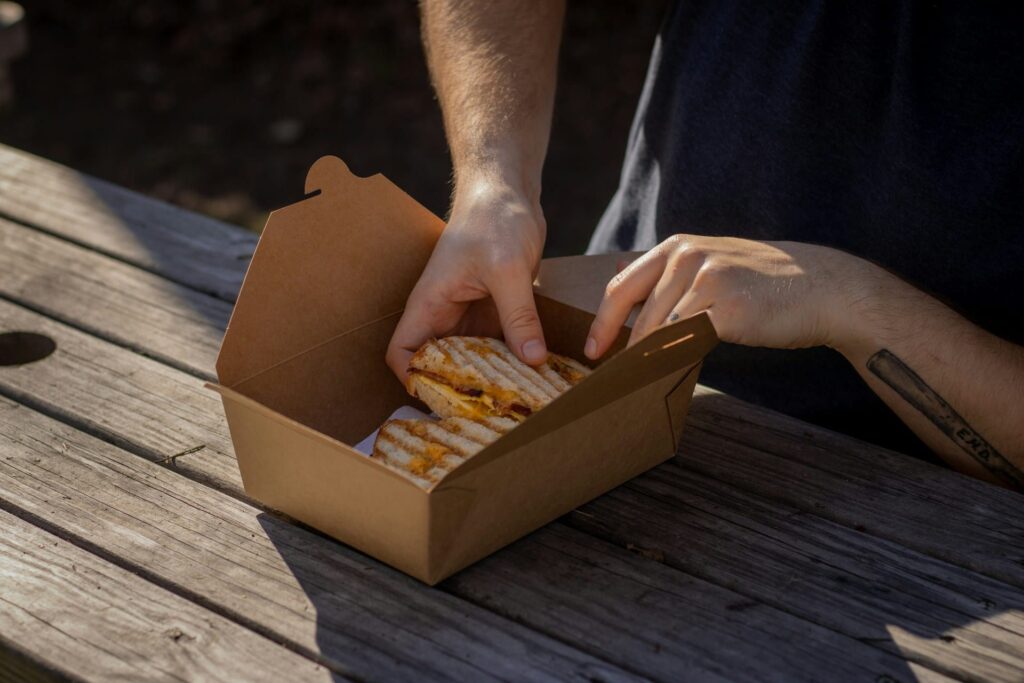
For B2B buyers, understanding the science behind these coatings is no longer optional; it is a necessity for ensuring product safety, maintaining brand image, and meeting increasingly strict environmental regulations. This guide breaks down the most common food-safe coatings and helps you choose the right barrier-coated kraft paper for your specific application.
1. Why Do Kraft Boxes Need a Barrier Coating?
Kraft paper is inherently absorbent. When used for food packaging, this porosity creates two major problems that a coating must solve:
1.1 Preventing Grease Migration
Hot, oily foods (like fries, fried chicken, or baked goods) can quickly soak through uncoated paper, leading to unsightly stains, weakening the box structure, and potentially soiling the consumer’s hands or surrounding surfaces. Greaseproof kraft boxes are designed specifically to stop this migration.
1.2 Ensuring Water and Moisture Resistance
Packaging for cold or hot beverages, salads, or high-moisture foods requires a water-resistant packaging solution. A proper coating prevents condensation or liquid from causing the paper fibers to swell and tear, maintaining the box’s structural integrity throughout its use.
2. The Traditional Workhorse: Polyethylene (PE) Coating
Polyethylene (PE) is the most traditional and widely used coating in the food packaging industry due to its superior performance and cost-effectiveness.
2.1 Performance and Application
PE is a thin layer of plastic film extruded onto the paperboard. It creates an excellent, seamless barrier against both moisture and grease. This makes it the go-to choice for:
- Liquid containers (e.g., milk cartons, paper cups).
- High-fat food packaging where maximum leak protection is required.
- Any application demanding a strong, heat-sealable barrier.
2.2 The Environmental Trade-Off
While PE is highly effective, it presents a significant challenge for recycling. The plastic layer must be separated from the paper fibers, a process that requires specialized equipment (often called “repulping”). If not properly separated, the PE-coated paper is typically diverted to landfills, making it a less desirable option for companies prioritizing circularity.
3. The Eco-Friendly Alternatives: Compostable and Water-Based Coatings
As sustainability becomes a core purchasing criterion, the demand for alternatives to PE has surged. These options allow for the creation of truly eco-friendly box production that aligns with global composting standards.
3.1 Water-Based and Clay Coatings (Grease-Proof Focus)
These coatings are often applied directly to the paper surface in a liquid form and then dried. They work by filling the microscopic pores in the paper, creating a physical barrier.
- Primary Function: Excellent for creating greaseproof kraft boxes for items like bakery boxes or fast-food wraps. They effectively block oil penetration.
- Environmental Profile: Since they are typically made from natural materials or water-soluble polymers, they do not interfere with the standard paper recycling process and are often considered repulpable.
3.2 PLA and Other Bioplastic Coatings (Compostable Focus)
Polylactic Acid (PLA) is a plant-based polymer that functions similarly to PE but is derived from renewable resources like corn starch or sugarcane.
- Performance: PLA provides a high level of moisture and grease resistance, making it a direct performance competitor to PE.
- Compostable Coating Status: PLA-coated paper is certified as a compostable coating under industrial composting conditions (e.g., BPI or EN 13432 standards). This means the packaging will break down into natural elements in a commercial composting facility, leaving no toxic residue.
It is crucial for B2B buyers to note the distinction: PLA is industrially compostable, not home compostable, and should not be placed in standard recycling bins.
4. Making the Procurement Decision: Function vs. Future
Choosing the right kraft box coatings is a strategic decision that impacts cost, performance, and brand reputation.
4.1 Evaluating Functional Needs
The first step in wholesale packaging procurement is to assess the product’s needs:
- Hot/Wet/Greasy: If the product is extremely hot and greasy (e.g., soup, heavy sauces), a high-performance barrier like PE or a robust PLA compostable coating may be necessary.
- Dry/Slightly Moist: For items like pastries, dry goods, or retail products, a simple water-based or clay-based greaseproof kraft boxes coating may suffice, offering a better environmental profile at a lower cost.
4.2 Cost and Compliance
Generally, traditional PE coatings are the most cost-effective option. Water-based and PLA coatings, while more sustainable, often come at a premium due to the specialized raw materials and processing required.
For a comprehensive guide on all aspects of procurement, including material selection, customization, and cost analysis, we encourage you to consult our main resource: [Your Guide to Kraft Box Procurement & Applications].
By carefully weighing the required barrier performance against your company’s sustainability commitments and budget, you can select the ideal barrier-coated kraft paper that protects your product and the planet.
FAQ
Q: Are all compostable coatings the same?
A: No. Most certified compostable coating options (like PLA) require industrial composting facilities to break down effectively. Buyers should verify the specific certification (e.g., BPI) and ensure local infrastructure supports industrial composting.
Q: What is the main difference between grease-proof and water-resistant coatings?
A: Grease-proof coatings primarily block oil and fat penetration, while water-resistant coatings primarily block liquid water and moisture. Many high-performance coatings, like PE and PLA, offer both properties.
Q: Can I recycle PE-coated kraft boxes?
A: Yes, but only in facilities equipped with specialized repulping technology that can effectively separate the plastic layer from the paper fibers. In many regions, these boxes are not accepted in standard curbside recycling programs.
Q: Are water-based coatings considered food-safe?
A: Yes, all coatings used for food packaging, including water-based barriers, must be food-safe coatings and comply with strict regulations like FDA or EU standards to ensure no harmful substances migrate into the food.
Q: Does a coating affect the print quality on the kraft box?
A: Yes. A coated surface generally provides a smoother, less absorbent base, which can result in sharper, more vibrant print quality compared to uncoated kraft paper.