
Biodegradable food containers are packaging solutions made from plant-based materials like bagasse, PLA, and paper pulp that decompose naturally after disposal, offering restaurants, meal prep companies, and food service distributors functional alternatives to conventional plastic containers for hot and cold food applications.
You source thousands of containers monthly for your food service clients, and the pressure keeps building. Regulations targeting single-use plastics are tightening across your markets. Your customers demand sustainable options that still protect food quality during delivery and reheating. Finding containers that check every box without doubling your costs or creating logistics headaches feels like chasing a moving target. This guide breaks down the biodegradable container options available for takeaway and meal prep applications, helping you match the right materials and designs to your specific operational requirements.
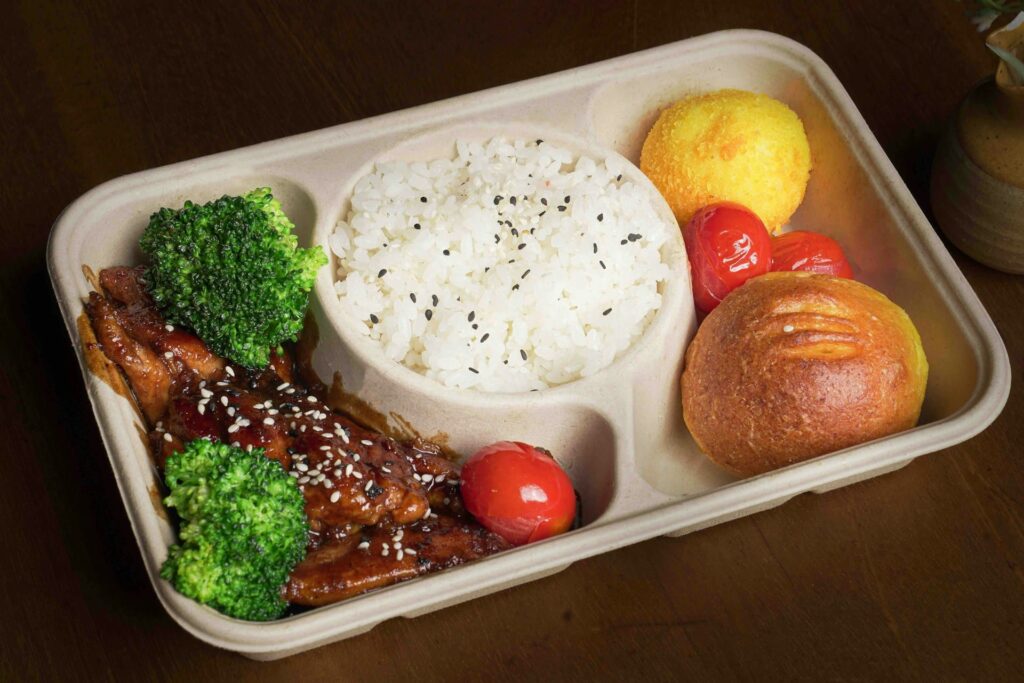
What Types of Biodegradable Containers Work Best for Takeaway Operations?
Bagasse clamshells and hinged containers dominate the takeaway segment due to their combination of heat resistance, structural strength, and competitive pricing at wholesale volumes. These containers handle hot foods directly from the kitchen, survive transport stacking, and maintain food presentation quality upon delivery.
The takeaway market demands containers that perform under stress. Food leaves the kitchen hot, travels in delivery bags where condensation builds, gets handled multiple times, and must still look appealing when opened. Here’s the deal: not every biodegradable material survives this journey equally well.
Which Materials Handle Hot Food Temperatures?
Bagasse leads the heat resistance category among biodegrade packaging materials, withstanding temperatures up to 100°C without structural compromise. This agricultural byproduct from sugarcane processing naturally resists heat because the fiber structure remains stable at temperatures that would soften or warp PLA alternatives.
Material temperature performance breakdown:
- Bagasse containers handle foods up to 100°C directly from cooking
- Molded fiber paper products tolerate temperatures up to 90°C with appropriate coatings
- Standard PLA begins softening around 50-55°C, limiting hot food applications
- CPLA (crystallized PLA) extends tolerance to approximately 85°C
For takeaway operations serving hot entrees, soups, and freshly cooked meals, bagasse provides the most reliable performance without requiring customer warnings about temperature limitations. Paper containers with aqueous or PLA coatings offer a middle ground for warm rather than hot applications.
What Closure Designs Prevent Leaks During Transport?
Secure closure mechanisms separate professional-grade containers from products that create delivery disasters. Hinged clamshell designs with positive-locking tabs provide the most reliable seal for transport, while separate lid containers require careful matching to ensure proper fit.
Closure features to evaluate:
- Tab lock systems that click audibly when closed
- Perimeter seal design that contacts evenly around the rim
- Hinge durability through multiple open-close cycles
- Stack pressure resistance that maintains seal integrity
- Venting options that release steam without allowing liquid escape
Leak-proof performance depends on both design and material. Bagasse containers with grease-resistant coatings maintain seal integrity even with oily foods, while uncoated versions may allow gradual oil migration at closure points during extended transport times.
How Do Container Shapes Affect Food Service Efficiency?
Kitchen workflow efficiency depends heavily on container standardization and stackability. Operations that stock multiple sizes and shapes create confusion during peak service, while streamlined container programs speed assembly and reduce errors.
Shape considerations for operational efficiency:
- Rectangular containers maximize storage space utilization
- Square containers offer balanced proportions for varied menu items
- Round containers suit specific applications like salads and bowls
- Multi-compartment designs eliminate need for separate sauce containers
- Consistent footprints across sizes enable uniform storage systems
| Container Type | Best Food Applications | Heat Limit | Typical MOQ |
|---|---|---|---|
| Bagasse Clamshell | Hot entrees, sandwiches | 100°C | 5,000-10,000 |
| Bagasse Rectangle | Meal combos, portions | 100°C | 5,000-15,000 |
| Paper Container | Warm foods, salads | 90°C | 10,000-25,000 |
| PLA Clear Container | Cold salads, desserts | 50°C | 10,000-50,000 |
| Multi-compartment | Meal prep, combo meals | 100°C | 8,000-20,000 |
Selecting two or three container formats that cover 90% of menu items simplifies training, reduces inventory complexity, and typically improves supplier pricing through volume concentration.
Key Takeaway: Takeaway operations should prioritize bagasse containers with secure closure mechanisms for hot food applications, standardizing on minimal shape variations to maximize operational efficiency and purchasing leverage.
What Makes Meal Prep Containers Different from Standard Takeaway Packaging?
Meal prep containers must survive refrigeration, freezing, microwave reheating, and potentially multiple transport cycles, demanding durability and temperature range performance that exceeds typical single-use takeaway requirements. The meal prep segment has driven significant innovation in biodegrade packaging design.
Meal prep businesses operate differently from restaurants. Containers leave the production facility, enter cold storage, ship to customers, sit in home refrigerators for days, and then get reheated. Each stage creates stress that standard takeaway containers never face.
Can Biodegradable Containers Handle Freezer-to-Microwave Cycles?
Bagasse containers offer the broadest temperature range among biodegradable options, handling both freezer storage and microwave reheating without cracking or warping. The natural fiber structure flexes slightly during temperature transitions rather than becoming brittle like some plastic alternatives.
Temperature cycle performance factors:
- Bagasse tolerates freezing down to -20°C without structural damage
- Microwave reheating works well up to 100°C for bagasse materials
- Moisture content changes during freezing affect some materials more than others
- Lid seal integrity after freezing varies by design and material combination
- Food contact during extended frozen storage may affect surface appearance
Paper-based containers with appropriate coatings also perform reasonably through freeze-reheat cycles, though lid seal reliability after freezing deserves testing before committing to large volumes. PLA containers should avoid freezer use, as the material becomes brittle at low temperatures.
What Barrier Properties Matter for Multi-Day Refrigerated Storage?
Food stored for multiple days requires containers that prevent moisture loss, resist grease penetration, and maintain seal integrity throughout the storage period. Barrier coatings and material density directly impact how well containers protect food quality over time.
Barrier considerations for meal prep applications:
- Grease resistance prevents oil migration through container walls
- Moisture retention keeps foods from drying during refrigerated storage
- Odor barriers prevent flavor transfer between stored items
- Condensation management avoids soggy container bases
- Seal maintenance ensures lids remain secure through temperature changes
Coated bagasse products offer superior barrier performance compared to uncoated versions, with coating options ranging from PLA to plant-based aqueous formulations. The coating choice affects both performance and end-of-life composting requirements, as some coatings require industrial composting while others break down in home compost systems.
How Do Portion Sizes Align with Meal Prep Service Models?
Meal prep portion standardization enables accurate nutritional labeling, consistent customer experience, and efficient production workflows. Container volume capacity must match portion specifications while accounting for food density variations across menu items.
Volume and portioning alignment:
- 500ml containers suit single-serving entrees with moderate side portions
- 750ml containers accommodate larger entrees or entree-plus-side combinations
- 1000ml containers serve family portions or multiple meal components
- Multi-compartment designs enable macro-balanced meal presentation
- Consistent depth across sizes simplifies portioning tool calibration
| Meal Prep Need | Container Feature Required | Recommended Material |
|---|---|---|
| 5-day refrigeration | Strong moisture barrier | Coated bagasse |
| Microwave reheating | High heat tolerance | Bagasse |
| Freezer storage | Low-temp flexibility | Bagasse |
| Portion control | Consistent volume calibration | Any standardized |
| Visual presentation | Clear lid option | Bagasse base/PLA lid |
| Multi-macro meals | Compartment divisions | Molded bagasse |
The meal prep market continues expanding, and container suppliers have responded with increasingly specialized products. Working with suppliers who understand meal prep operational requirements yields better product recommendations than general food service packaging vendors.
Key Takeaway: Meal prep applications demand containers with superior temperature range performance and barrier properties, making coated bagasse the leading material choice for operations requiring freezer storage and microwave reheating compatibility.
How Should Wholesale Buyers Evaluate Container Suppliers for These Applications?
Supplier evaluation for food containers requires assessment of manufacturing capabilities, material certifications, customization options, and service reliability. The container category carries higher quality risks than simpler products like napkins or straws because performance failures directly impact food safety and customer satisfaction.
Your container supplier becomes an extension of your quality system. When containers fail during service, your customers blame their suppliers, and you absorb the complaint handling costs and relationship damage. Selecting suppliers capable of consistent quality matters more in this category than finding the absolute lowest price.
What Certifications Should Container Suppliers Provide?
Food contact certifications verify that containers meet safety standards for direct food contact, while compostability certifications validate end-of-life biodegradation claims. Both certification categories require verification specific to the products being purchased.
Certification documentation to request:
- FDA compliance documentation for US market food contact
- EU 10/2011 compliance for European market applications
- EN 13432 or ASTM D6400 for compostability verification
- BPI or OK Compost certification marks and certificate numbers
- Material safety data sheets for complete composition disclosure
- Heavy metal testing results confirming limits compliance
Verify that certifications apply to finished products, not just raw materials. A certified raw material processed through non-certified manufacturing equipment or with non-certified additives may not yield a certified finished product.
What Quality Consistency Issues Occur with Biodegradable Containers?
Biodegradable container quality varies more than conventional plastic containers due to natural material variations and less mature manufacturing processes. Understanding common quality issues helps buyers establish appropriate inspection protocols.
Frequent quality concerns include:
- Wall thickness variations affecting structural strength
- Color inconsistency between production batches
- Closure fit tolerance causing lid adhesion problems
- Surface defects from molding process variations
- Coating coverage gaps creating grease penetration points
- Dimensional variations affecting lid-base compatibility
Establishing incoming inspection procedures with defined acceptance criteria prevents quality issues from reaching your customers. Retaining approved samples from initial orders provides reference standards for comparing subsequent shipments.
How Do Minimum Order Quantities Affect Purchasing Strategy?
Container MOQs typically range from 5,000 to 25,000 pieces depending on product type, customization level, and supplier policies. These quantities significantly exceed many other packaging categories, requiring careful demand forecasting and inventory management.
MOQ management strategies:
- Consolidate container orders across multiple customers to reach volume thresholds
- Stock standard products rather than custom versions where possible
- Negotiate sample quantities before committing to full MOQs
- Time orders to align with seasonal demand patterns
- Establish multiple supplier relationships for flexibility during demand spikes
| Supplier Factor | Questions to Ask | Acceptable Response |
|---|---|---|
| Manufacturing | Own factory or trading? | Factory or integrated trade+factory |
| Certifications | Product-specific food contact certs? | Current certificates with product IDs |
| Quality Control | Inspection process and frequency? | Documented QC at multiple stages |
| Customization | Printing and sizing options? | Clear capabilities and MOQs |
| Reliability | Lead time accuracy rate? | Track record data or references |
Key Takeaway: Container supplier selection deserves rigorous evaluation due to the direct food contact nature and performance criticality of these products, with certification verification and quality consistency assessment taking priority over price optimization.
Ready to Source Biodegradable Containers for Your Operations?
The biodegradable container market offers proven solutions for both takeaway and meal prep applications. Bagasse containers provide the temperature range and durability that demanding food service operations require, while ongoing material innovations continue expanding performance capabilities and narrowing cost premiums.
Making the transition to biodegradable containers positions your business ahead of regulatory requirements and aligns with customer sustainability expectations. The suppliers and products exist today to support this transition without sacrificing operational performance.
Reliancepak manufactures biodegradable containers across bagasse, paper, and PLA materials with food-grade certifications meeting EU and FDA requirements. Our integrated production capabilities across 9 lines enable both standard product availability and custom configuration for specific application requirements. Contact admin@bereliance.com to request samples and discuss your container requirements.
The food service industry’s sustainable packaging transition is accelerating. Distributors and operators who establish reliable supply relationships now build advantages that compound as market transformation continues.
Frequently Asked Questions
Can biodegradable containers hold liquids like soups without leaking?
Yes, with appropriate product selection. Bagasse containers with grease-resistant coatings handle soups and liquid-heavy foods effectively. Verify that containers are rated for liquid applications, as not all biodegradable containers include the coating necessary for liquid containment. Request samples for testing with your specific menu items before placing volume orders.
How long can food stay in biodegradable containers before the container degrades?
Biodegradable containers maintain structural integrity for 12-18 months under normal storage and use conditions. Degradation only begins when containers enter composting environments with appropriate moisture, temperature, and microbial conditions. Properly stored containers perform reliably throughout typical food service holding periods from production through customer consumption.
Are biodegradable food containers more expensive than plastic alternatives?
Biodegradable containers typically carry a 15-30% premium over comparable plastic options at wholesale volumes. The premium varies by product type, order quantity, and customization level. Volume commitments, specification standardization, and supplier relationship development can reduce effective premiums. Total cost analysis should include disposal costs and regulatory compliance factors beyond unit pricing.
Do biodegradable containers affect food taste or quality?
Quality biodegradable containers with appropriate food contact certifications do not transfer taste or affect food quality. Bagasse and paper materials are inherently neutral. Some lower-quality products may have slight natural fiber odors that dissipate quickly. Requesting samples for testing with your specific menu items before volume purchasing eliminates any taste concern risks.
What disposal instructions should accompany biodegradable containers?
Clear labeling indicating composting requirements helps end consumers dispose properly. Specify whether products require industrial composting facilities or can break down in home compost systems. Include local composting resource information where available. Recognizing that many consumers lack composting access, emphasizing that products will biodegrade even in landfill conditions, though more slowly, provides realistic expectations.