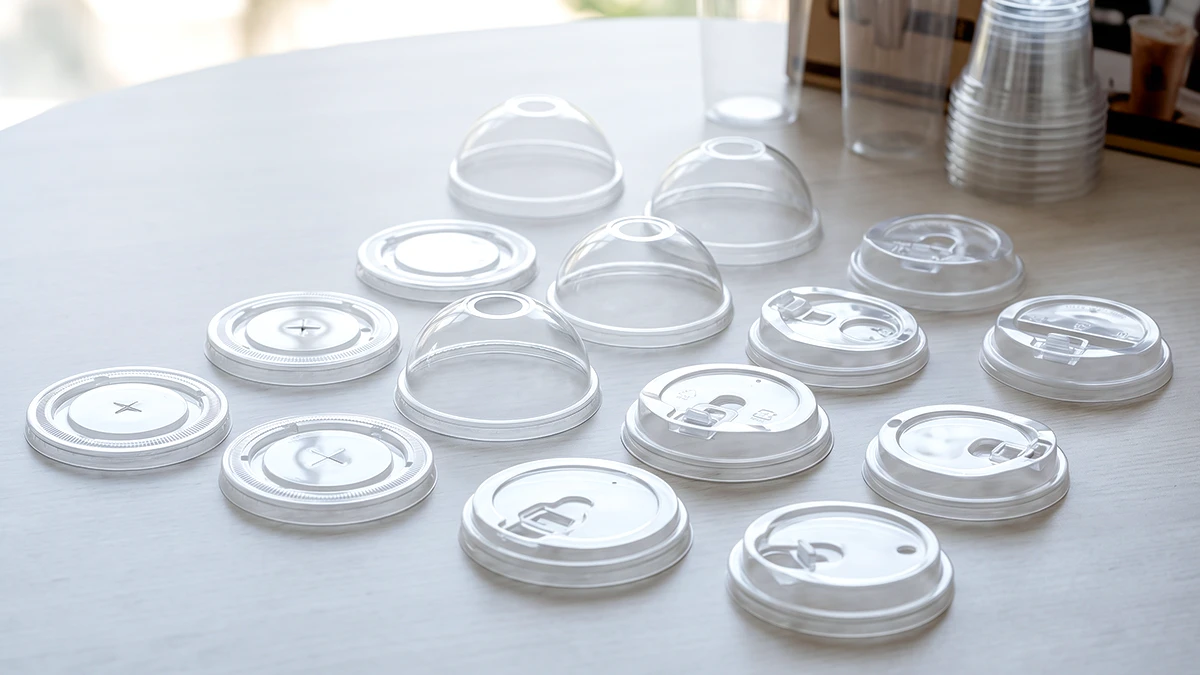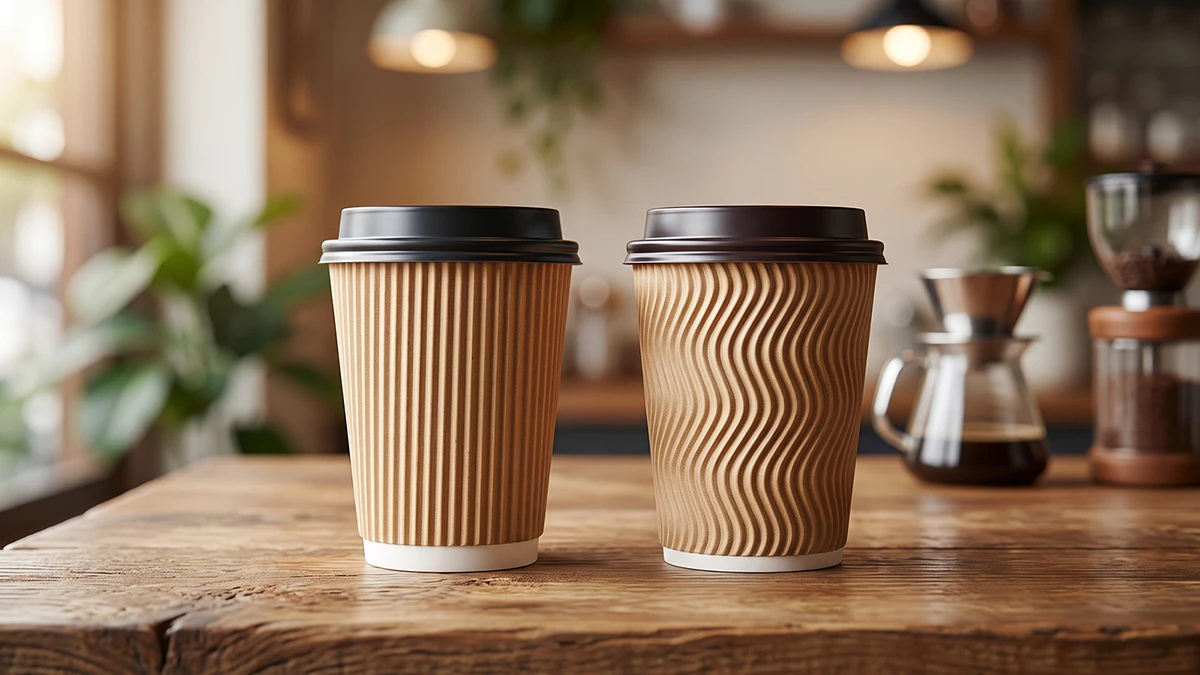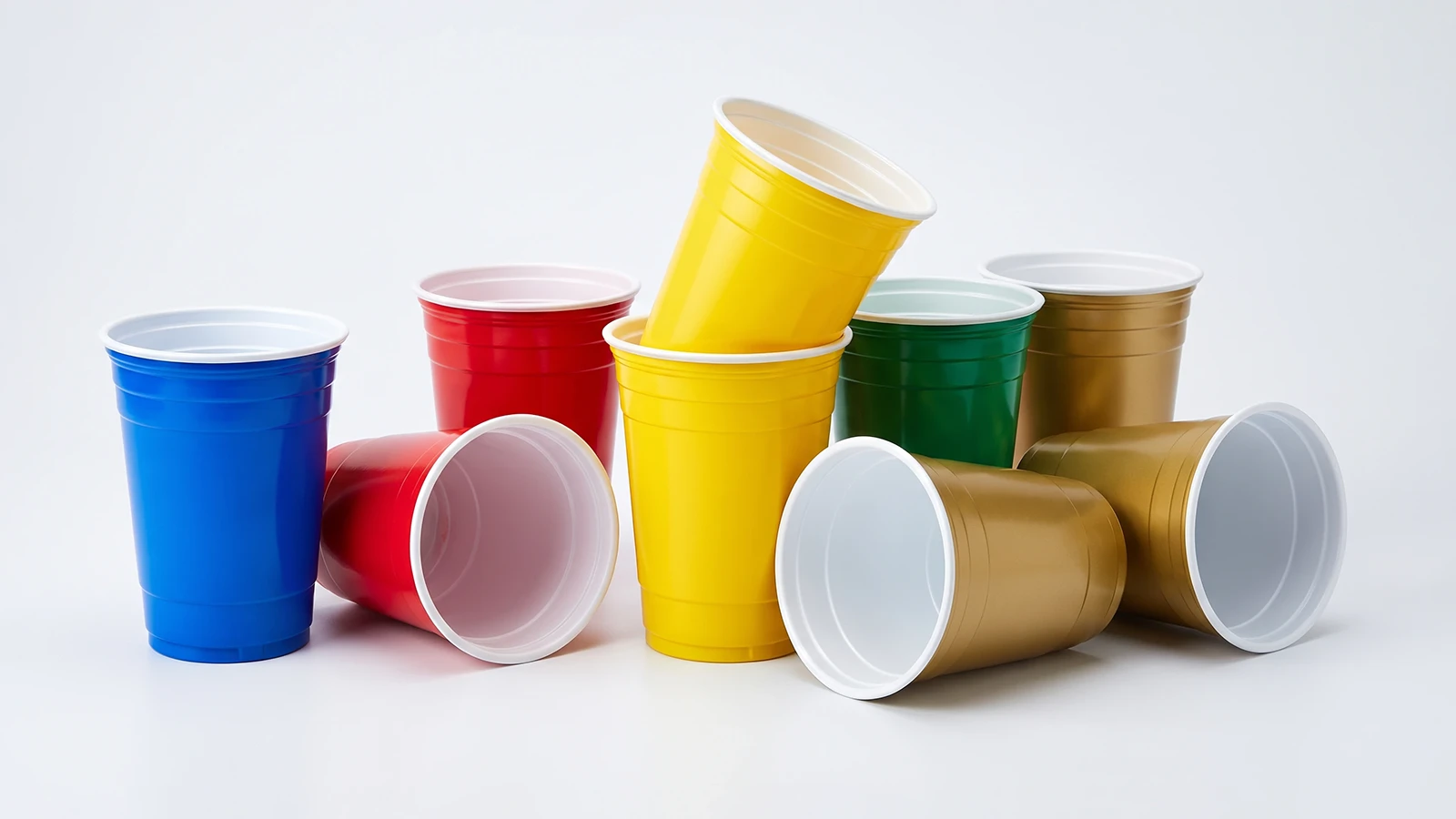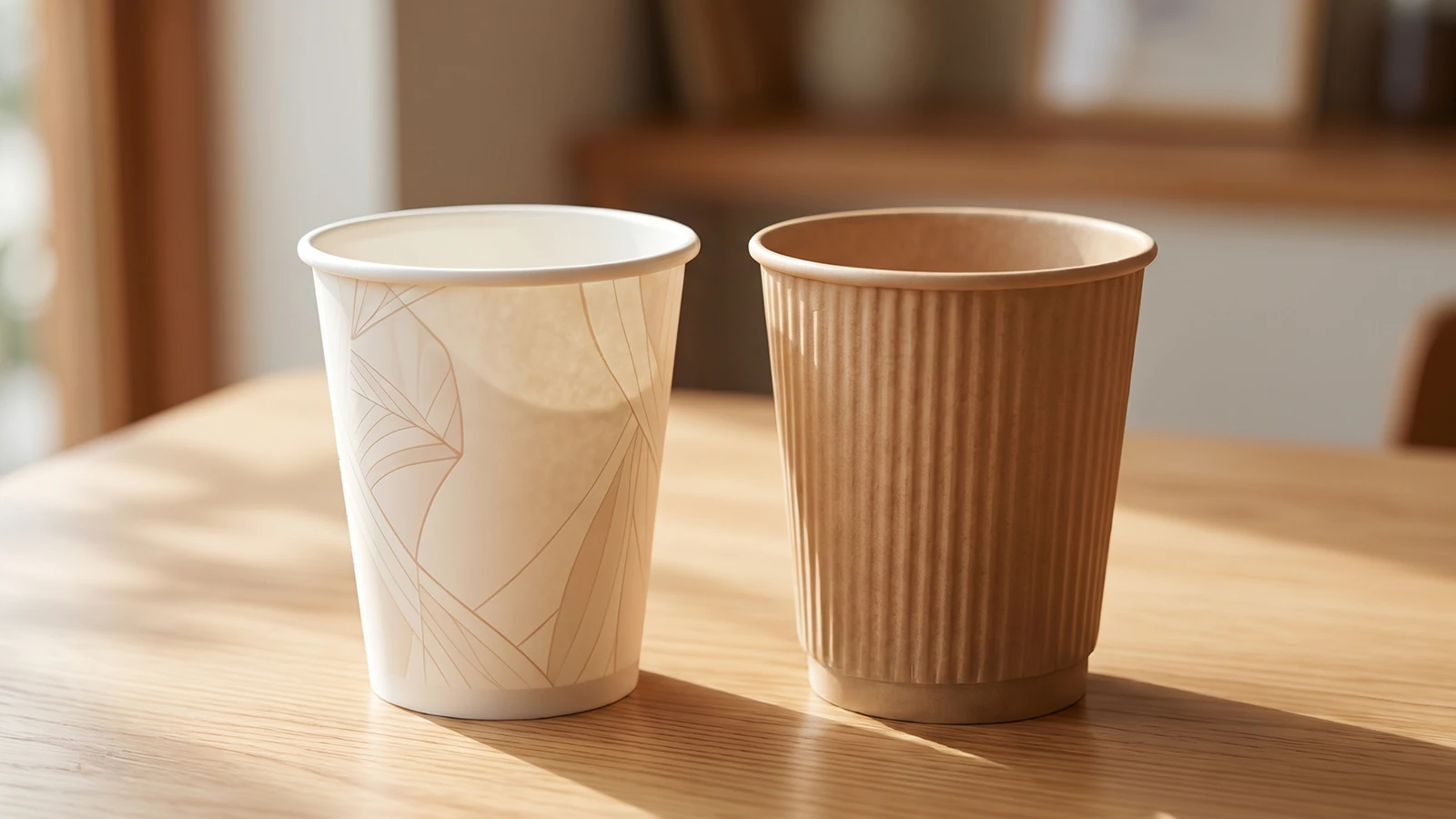
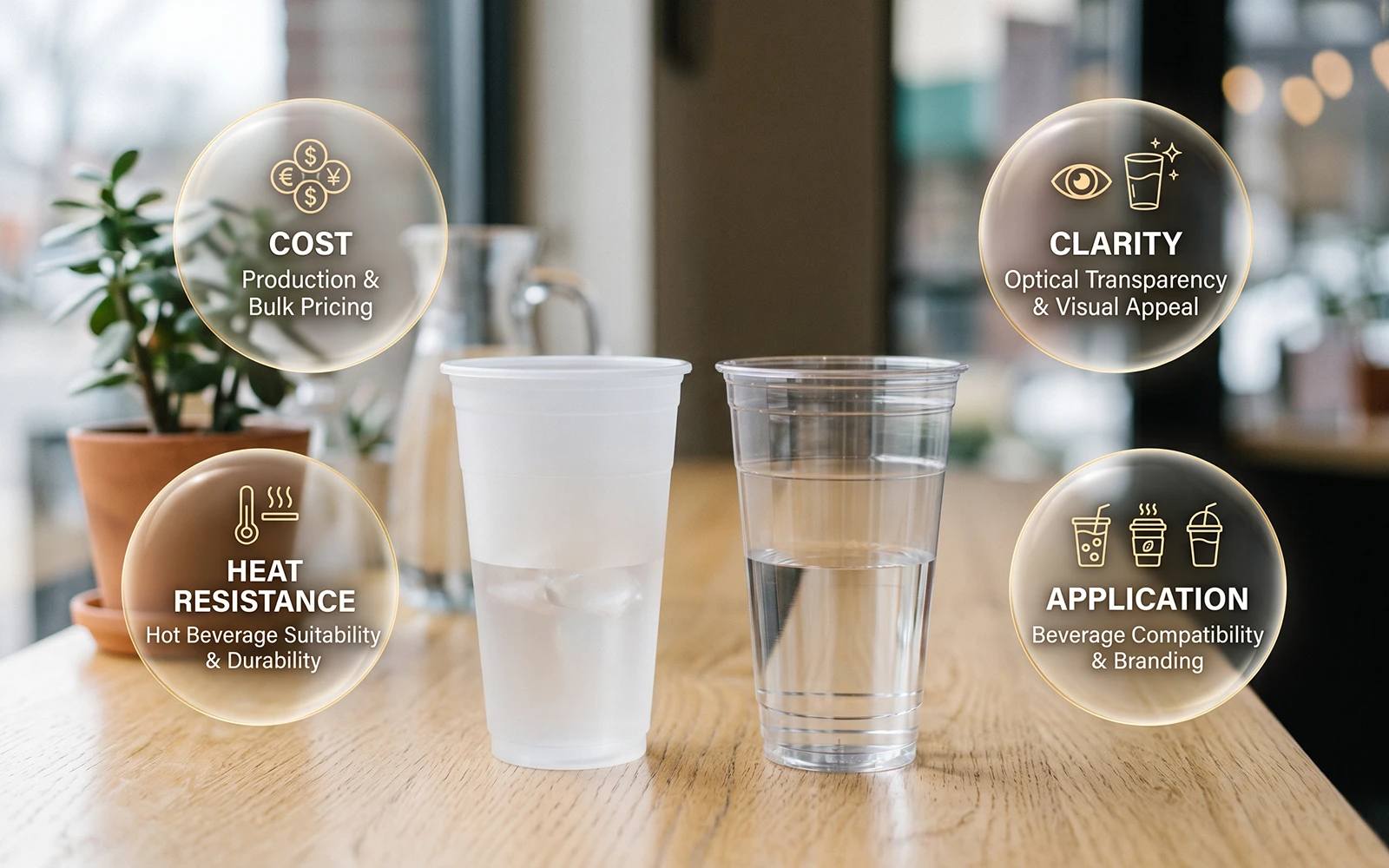
PET and PP are the two resins that dominate the disposable cup market. PET cups are crystal clear and suit cold beverages, while PP cups handle heat and usually cost less per unit.
For wholesale buyers, the real question is not which plastic is “better.” It is which resin matches your drink menu, your filling process, and your market’s recycling infrastructure. This guide breaks down the comparison the way a procurement team would evaluate it.
Material Basics: What PET and PP Actually Are
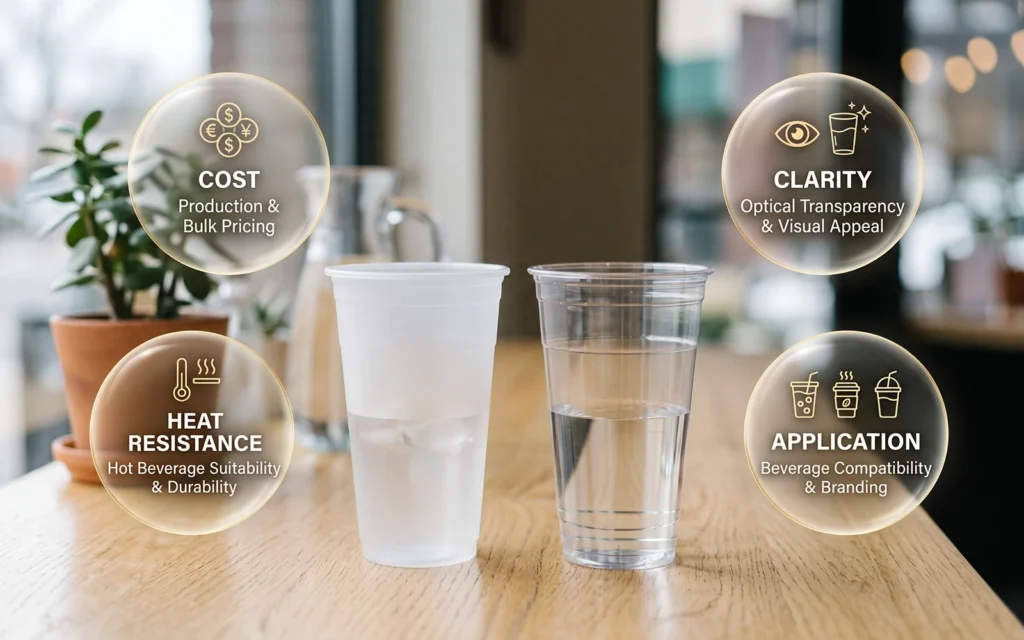
PET (polyethylene terephthalate) is a rigid polyester. It is the same resin used in bottled water, which is why consumers already associate it with food safety. PET cups offer glass-like clarity and a hard, scratch-resistant surface that prints and labels adhere to well.
PP (polypropylene) is a polyolefin. It is softer and more flexible than PET, and it tolerates high filling temperatures. Yogurt pots, hot soup containers, and coffee lids are typical PP applications, so the resin has a long track record in food service.
Both resins are food-grade by design, but that alone does not guarantee compliance. What matters is whether your supplier can document the grade — more on that in the compliance section below.
Clarity and Shelf Appeal
If your product is sold on appearance, PET wins. A PET cup displays the drink almost as clearly as glass, which is why juice bars, bubble tea chains, and dessert brands default to it.
PP cups are translucent at best and often opaque when colored. In many scenarios this works against you on the shelf. However, for products where appearance is not the selling point — hot soups, porridge, sauces — the clarity gap becomes irrelevant and the cost saving becomes the deciding factor.
One practical note from factory floor experience: PP cups accept pastel and solid-color printing well, and some brands use colored PP deliberately to hide contents and build a distinct look. So clarity is a marketing choice, not just a material property.
Heat Resistance: Where the Two Resins Part Ways
This is the hard constraint in most sourcing decisions. PET softens well below boiling point, so it is not suitable for hot-fill products or direct contact with freshly brewed coffee. In many cases a PET cup will deform, and the lid seal can fail.
PP tolerates boiling-water temperatures and is microwave-safe in most food-grade formulations. For hot drinks, hot-fill lines, and reheatable ready meals, PP is typically the only realistic option between the two.
A quick reference for buyers:
- Cold beverages, iced drinks, smoothies: PET, for clarity and rigidity.
- Hot coffee, tea, soup: PP, for heat tolerance.
- Lids: Many hot-drink programs use PP lids on PET-style formats, but confirm seal compatibility with your supplier before committing.
- Cold-chain or frozen applications: PET generally holds rigidity better in chilled display.
Application Fit by Business Type
Your business model narrows the choice faster than any material datasheet. Juice and bubble tea brands overwhelmingly choose PET because the drink is the visual product. Coffee shops and hot-food vendors choose PP because heat resistance is non-negotiable.
Distributors and wholesalers usually stock both. If you serve mixed retail accounts, carrying both resins lets you quote a full range instead of losing an order to a competitor who can. You can compare the full range on the plastic cup category page to see how the two resins sit side by side in a catalog.
Cost: Unit Price Is Only Part of the Story
On a per-unit basis, PP cups generally cost less than equivalent PET cups. Resin price, forming speed, and yield rates all favor PP at the commodity level.
But unit price is not landed cost. Consider these factors before comparing quotes:
- Minimum order quantities: PET cup tooling and stock programs vary by supplier; ask what the actual MOQ is per SKU, not per order.
- Shipping volume: PP cups can often be nested more efficiently, which may reduce freight per unit.
- Damage rates: PET is rigid but can crack under impact; PP is more forgiving in transit and handling.
- Printing and branding: Custom printing cost is usually similar for both, but confirm whether the printer’s ink system is rated for your resin.
For buyers comparing specific formats, the table below summarizes the sourcing-relevant differences.
Procurement Comparison Table
| Sourcing Factor | PET Cups | PP Cups |
| Clarity | Crystal clear, glass-like | Translucent to opaque |
| Heat tolerance | Not suitable for hot fill | Handles boiling-water temperatures |
| Flexibility | Rigid, can crack on impact | Flexible, impact-resistant |
| Typical unit cost | Higher | Lower |
| Common formats | Cold cups, dessert cups, deli containers | Hot cups, yogurt pots, soup containers |
| Resin identification code | #1 | #5 |
| Recycling infrastructure | Widely accepted in curbside programs | Accepted in some regions; varies locally |
| Food-contact documentation | FDA and EU grades available | FDA and EU grades available |
Treat the cost row as directional rather than fixed — resin markets move, and bulk pricing depends heavily on volume and season.
Recycling and Food-Contact Compliance
PET is resin code #1 and is accepted in most curbside recycling programs across North America and Europe. PP is resin code #5; acceptance varies by municipality, though PP recycling capacity has been expanding in several markets.
For a wholesale buyer, the compliance questions matter more than the recycling logo itself. Before signing a contract, ask the supplier for:
- Food-contact certification for the specific resin grade (FDA compliance for the US market, EU food-contact regulations for Europe).
- Migration test reports if your product is acidic, fatty, or hot-filled, since these conditions affect what can migrate from the plastic.
- Traceability documentation linking the cups you receive to the certified production batch.
A supplier who cannot produce these documents for a specific order is a risk, regardless of how competitive the quote looks.
How to Choose: A Practical Decision Path
The decision usually resolves in three questions. First, what temperature does your product touch? Above roughly warm-beverage range, PP is the answer. Second, does shelf visibility drive sales? If yes, accept the PET premium. Third, what does your market’s waste stream actually accept? If your customers or retail partners have packaging sustainability commitments, PET’s broader recycling acceptance may outweigh its higher price.
For hot-drink programs and cost-driven accounts, browse the PP cup range for formats that balance heat tolerance with printing options. For cold beverages where presentation sells the product, the PET cup range covers the clear formats most juice and tea brands spec.
If neither stock format fits, custom OEM/ODM tooling is worth discussing — minimum volumes are often lower than buyers expect.
FAQ
Can I use PET cups for hot coffee?
No. PET softens at temperatures well below those of freshly brewed beverages, which can deform the cup and compromise the lid seal. Use PP or paper-based hot cups for hot-fill applications.
Which is cheaper, PET or PP?
Generally, PP. Unit pricing for PP cups is typically lower at equivalent volumes. However, landed cost depends on MOQ, freight efficiency, and damage rates, so compare complete quotes rather than unit prices alone.
Are PET and PP cups both food-safe?
Yes, when produced from food-grade resin. The key is documentation: request FDA or EU food-contact compliance certificates for the specific grade and production batch, not just a general statement of food safety.
Which material recycles more easily?
PET is accepted in a broader range of curbside programs globally. PP recycling is growing but remains more dependent on local infrastructure. If your market has strict packaging recovery rules, confirm acceptance before ordering.
Can I get custom-printed cups in both materials?
Yes. Both PET and PP cups support offset, digital, and silk-screen printing. Ask the supplier to confirm the ink system is compatible with your resin and whether the print survives condensation on cold drinks.