
Food container bulk refers to the large-scale procurement of food-grade packaging units, including plastic trays, paper boxes, and bowls, purchased at wholesale volumes to reduce unit costs and ensure a steady supply for distribution or industrial food processing.
You might find that your current inventory levels are failing to meet the surge in demand from your restaurant clients or food processing plants. When a supplier delivers inconsistent quality or delays a shipment, your entire operation faces financial strain and lost trust with your buyers. This guide explains the technical and logistical aspects of securing reliable packaging that meets safety standards while maintaining your profit margins through effective wholesale strategies. Using a food container bulk approach allows you to stabilize your supply chain and provide your customers with the high-quality products they expect.
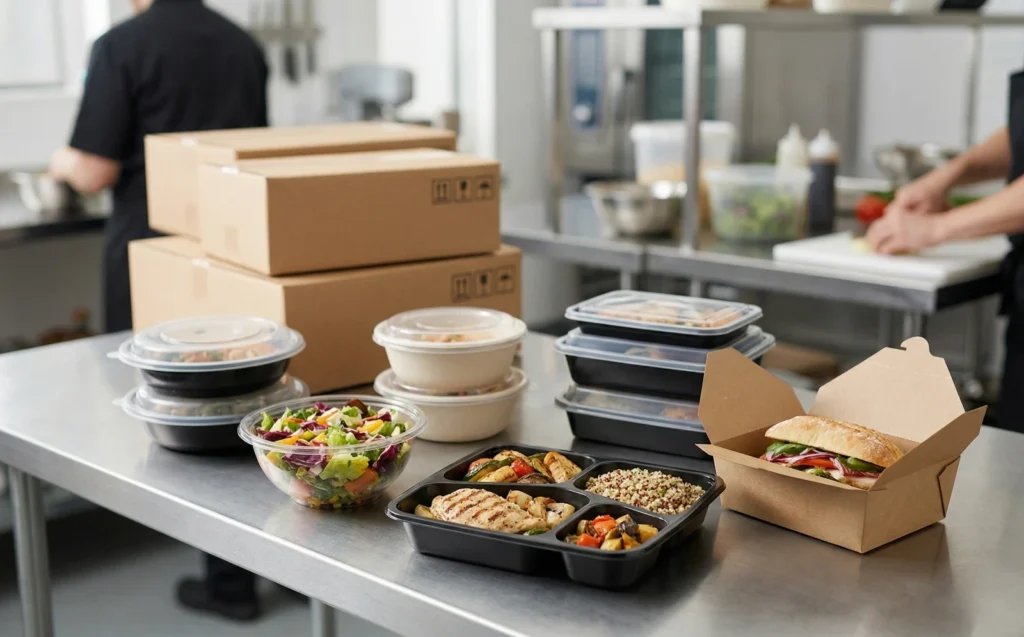
What Does Food Container Bulk Mean for Wholesale Buyers?
Food container bulk procurement is a strategic business model where buyers acquire high quantities of packaging materials directly from manufacturers or integrated suppliers to benefit from economies of scale.
This method is specifically designed for businesses that require thousands of units per order to satisfy the needs of large-scale food production or regional distribution. When you manage a food container bulk order, you are not just buying plastic or paper; you are securing the operational capacity to serve your market without interruption.
[Insert Link: What Does “Food Container Bulk” Mean for Wholesale Buyers?]
Here is the deal.
Strategic Advantages of High Volume Orders
- Lower cost per unit compared to small-batch purchases.
- Priority scheduling on production lines for long-term partners.
- Reduced shipping costs when calculated per individual item.
- Better control over material consistency across large inventories.
| Procurement Type | Typical Volume | Cost Efficiency | Supply Risk |
| Retail/Small Batch | < 1,000 units | Low | High |
| Wholesale/Bulk | > 10,000 units | High | Low |
The data shows that shifting to high-volume procurement can decrease your overhead by a large margin while protecting you from sudden market shortages.
Key Takeaway: Bulk procurement is the most effective way for distributors and large-scale food plants to manage costs and guarantee product availability.
Which Types of Food Containers Work for Bulk Purchasing?
Selecting the specific styles of food container bulk options depends on the temperature requirements, moisture content, and weight of the food being packaged.
Distributors often need a variety of shapes to satisfy different sectors, such as rectangular trays for meal prep or round bowls for salads and soups. Providing a versatile range within your food container bulk inventory allows you to serve as a primary source for multiple food service clients.
[Insert Link: Types of Food Containers for Bulk Purchase: Trays, Boxes, Bowls & More]
Think about this.
Common Wholesale Container Categories
- Plastic trays with multi-compartment designs for balanced meals.
- Paper boxes with grease-resistant coatings for fried foods.
- Clear PET bowls for cold storage and retail display visibility.
- Heavy-duty PP containers suitable for microwave heating.
| Container Style | Primary Material | Temperature Range | Best Use Case |
| Hinged Lid Box | PP Plastic | -20°C to 120°C | Takeout Meals |
| Salad Bowl | PET Plastic | -10°C to 60°C | Cold Salads |
| Kraft Paper Bag | Recycled Fiber | Room Temp | Bakery Items |
Matching the container style to the specific application prevents food spoilage and improves the end-user experience.
Key Takeaway: A diverse inventory of container types helps you capture more market share by meeting the needs of various food industry segments.
How to Choose the Right Material for Your Bulk Order?
Choosing the material for your food container bulk order involves evaluating the chemical properties of polymers and fibers to ensure they align with your clients’ safety and functional needs.
Polypropylene is often favored for its heat resistance, while paper-based solutions are increasingly popular due to their environmental profile. When you select a material for your food container bulk needs, you must consider the durability required for transport and the storage conditions of the final product.
[Insert Link: How to Choose the Right Material for Food Containers: PP vs PET vs Paper vs rPET]
You should know.
Technical Material Comparison
- Polypropylene (PP) offers high chemical resistance and is safe for microwave use.
- Polyethylene Terephthalate (PET) provides crystal clarity for cold food presentation.
- Kraft Paper is a renewable resource that appeals to eco-conscious consumers.
- Bagasse is made from sugarcane fiber and offers a compostable alternative.
| Material | Heat Resistance | Clarity | Recyclability |
| PP | High | Translucent | High |
| PET | Low | Excellent | High |
| Paper | Moderate | None | High |
| rPET | Low | Good | Excellent |
Selecting a material like PP ensures that your products can handle the rigors of hot food delivery without warping or leaking.
Key Takeaway: Material choice is the foundation of food safety and functional performance in wholesale packaging.
How to Select the Right Size and Shape for Packaging?
Optimizing the dimensions of your food container bulk items ensures that the packaging does not take up more space than necessary during transit or on the shelf.
Efficiency in shape allows for better nesting, which can drastically reduce the number of shipping containers needed for a large order. When you pick the size for a food container bulk shipment, you should also consider how the lids will fit and if they are interchangeable across different depths.
[Insert Link: How to Select the Right Size, Shape, and Compartment Design for Food Containers]
Let’s look at the facts.
Sizing Factors for Efficiency
- Internal volume should match standard portion sizes to avoid wasted space.
- Nesting ratios determine how many units fit into a single carton.
- Compartment dividers prevent cross-contamination of flavors in prepared meals.
- Stackability ensures that delivery drivers can transport multiple orders safely.
| Size (oz) | Dimensions (mm) | Pieces per Carton | Use Case |
| 16 oz | 150 x 120 x 45 | 500 | Side Dishes |
| 24 oz | 175 x 150 x 50 | 300 | Main Course |
| 32 oz | 200 x 180 x 60 | 150 | Family Meals |
Correct sizing reduces the physical footprint of your inventory and lowers your overall logistics expenditure.
Key Takeaway: Precision in sizing and shape selection directly impacts your shipping efficiency and storage costs.
How to Compare Bulk Prices Without Sacrificing Quality?
Comparing price quotes for a food container bulk order requires an analysis of the gram weight, resin quality, and the reliability of the manufacturing process.
A lower price might indicate a thinner wall or the use of fillers that compromise the strength of the container when stacked. When evaluating a food container bulk deal, look at the total value, including the speed of delivery and the stability of the supplier’s production lines.
[Insert Link: How to Compare Food Container Bulk Prices Without Sacrificing Quality]
Here is the truth.
Hidden Cost Factors in Wholesale
- Resin market fluctuations can change pricing between the quote and the order.
- Shipping terms like FOB vs. CIF affect the final landed cost.
- Gram weight per piece determines the durability and material cost.
- Lead times impact your capital turnover and storage fees.
| Feature | Low Cost Quote | High Quality Quote | Business Impact |
| Material | Recycled/Thin | Virgin/Food Grade | Safety & Strength |
| Weight | 15g | 22g | Stackability |
| Lead Time | 45+ Days | 15-20 Days | Cash Flow |
Price comparisons are only valid when you are comparing items with identical technical specifications and certifications.
Key Takeaway: Focusing on value rather than the lowest price prevents costly product failures and customer complaints.
What Certifications are Needed for Food Grade Bulk Orders?
Acquiring the correct certifications for your food container bulk products is a mandatory step to comply with international health regulations and import laws.
Certifications like FDA for the United States and EU 10/2011 for Europe confirm that the plastic or paper does not migrate harmful chemicals into the food. When you source a food container bulk order, you must verify that the factory’s documents are current and issued by recognized testing bodies like SGS or TUV.
[Insert Link: What Certifications Are Required for Food Grade Containers in Bulk Orders?]
Why is this?
Necessary Global Standards
- FDA compliance for food contact safety in North America.
- EU Food Grade certification for European market entry.
- ISO 9001 for consistent manufacturing quality management.
- BSCI or Sedex for ethical and social compliance in the factory.
| Market | Primary Certification | Key Testing Parameter |
| USA | FDA | Global Migration |
| Europe | EU 10/2011 | Specific Migration |
| Global | ISO 9001 | Quality Control |
Proper documentation protects your business from legal liabilities and ensures a smooth customs clearance process.
Key Takeaway: Compliance with food-grade standards is a non-negotiable requirement for any professional packaging distributor.
Which Supplier Type is Best for Large Volume Buying?
Choosing an integrated supplier that combines factory production with professional trading services often provides the best results for a food container bulk strategy.
An integrated partner manages the 9 production lines directly while providing the clear communication needed for international shipping and customization. When you work with this type of supplier for your food container bulk needs, you get the technical expertise of a manufacturer and the logistical support of an exporter.
[Insert Link: Factory vs Trading Company vs Integrated Supplier: Which Is Best for Bulk Buying?]
Let’s be honest.
Comparing Supplier Structures
- Factories provide the lowest prices but often lack flexible communication.
- Trading companies offer many products but have less control over quality.
- Integrated suppliers offer manufacturing control with dedicated service teams.
- Regional distributors provide fast local delivery but at higher prices.
| Supplier Type | Direct Control | Communication | Price Point |
| Factory | High | Low | Lowest |
| Integrated | High | High | Competitive |
| Trading | Low | High | Higher |
Integrated suppliers bridge the gap between production capacity and the professional service required by global buyers.
Key Takeaway: Partnering with an integrated supplier offers the best balance of manufacturing transparency and professional account management.
How to Request Samples to Verify Bulk Quality?
Requesting physical samples before finalizing a food container bulk order is the most reliable way to test the seal integrity and material thickness in a real-world setting.
Testing how a lid snaps onto a container or how well a paper bag holds moisture can prevent large-scale mistakes in your procurement. When you ask for samples for a food container bulk project, ensure you receive the exact gram weight and material grade that will be used in the final production.
[Insert Link: How to Request Samples and Verify Quality Before Bulk Food Container Orders]
Here is the deal.
Sample Testing Checklist
- Snap-on test to ensure lids are leak-proof and secure.
- Microwave test for PP items to check for deformation.
- Freezing test to verify that the material does not become brittle.
- Stacking test to see how many filled containers can be placed on top of each other.
| Test Type | Objective | Pass Criteria |
| Leak Test | Check Seal | No fluid escape |
| Heat Test | Check Safety | No warping at 100°C |
| Clarity Test | Visual Appeal | No cloudiness in PET |
Physical verification through sampling removes the uncertainty often associated with international sourcing.
Key Takeaway: Sample testing is a necessary safeguard that ensures the final product meets your performance expectations.
What Should You Check Before Shipping a Bulk Order?
Pre-shipment inspections for a food container bulk order must focus on packing robustness, label accuracy, and adherence to the agreed lead times.
Ensuring that the cartons are double-walled and properly palletized prevents damage during the long journey from the factory to your warehouse in Malaysia, Spain, or the USA. Before the food container bulk shipment leaves the facility, you should also verify that the production batch matches the approved samples.
[Insert Link: What to Check Before Shipping a Bulk Order (Lead Time, Packing & QC)]
Don’t forget this.
Final Inspection Points
- Carton strength to withstand high-pressure stacking in containers.
- Accurate count of units per bag and bags per carton.
- Proper labeling with barcodes and country of origin information.
- Shipping marks that match the Bill of Lading and packing list.
| Inspection Step | Focus Area | Risk if Missed |
| Visual Check | Color & Clarity | Customer Rejection |
| Quantity Verify | Count Accuracy | Inventory Shortage |
| Packing Audit | Carton Quality | Shipping Damage |
A thorough pre-shipment audit reduces the risk of receiving damaged goods or incorrect quantities that could disrupt your sales.
Key Takeaway: Rigorous pre-shipment checks are the final defense against quality issues and logistical errors.
How to Manage Custom Branding for Bulk Food Containers?
Customization allows you to turn a standard food container bulk order into a powerful marketing tool by adding logos, specific colors, or private labels.
Most manufacturers can provide offset or flexo printing, but this usually requires a higher minimum order quantity to offset the setup costs of the printing plates. When you plan a food container bulk customization, consider how the design will look when the containers are stacked in a retail environment.
[Insert Link: Custom Food Containers in Bulk: Printing, Branding & Private Label Guide]
Think about this.
Branding Options for B2B
- Embossed logos on plastic lids for a subtle, professional look.
- Full-color printing on paper sleeves and boxes for high visibility.
- Custom colors for plastic resins to match a brand’s identity.
- Private label packaging with specific barcodes for retail chains.
| Branding Method | Setup Cost | MOQ Requirement | Visual Impact |
| Printing | Moderate | High | High |
| Embossing | High (Tooling) | Very High | Subtle |
| Labeling | Low | Moderate | Moderate |
Customization adds value to your products and helps your clients differentiate themselves in a competitive food service market.
Key Takeaway: Branding your bulk containers strengthens customer loyalty and increases the perceived value of your packaging solutions.
What Sustainable Trends Influence Bulk Packaging Choices?
The transition toward eco-friendly materials is a major factor in modern food container bulk procurement, driven by new regulations and consumer demand for plastic-free options.
Using recycled PET or compostable bagasse helps businesses comply with plastic bans in regions like the European Union. When you choose a food container bulk supplier, look for those who are actively developing sustainable materials that do not sacrifice the performance of the packaging.
[Insert Link: Sustainable Food Container Bulk Trends: Eco Materials, Recycling & Regulations]
The truth is.
Emerging Green Materials
- rPET (Recycled Polyethylene Terephthalate) reduces the need for virgin plastic.
- PLA (Polylactic Acid) is a bio-based plastic derived from corn starch.
- FSC-certified paper ensures that fibers are sourced from responsibly managed forests.
- Mineral-filled PP reduces plastic content while maintaining heat resistance.
| Material | Eco-Benefit | Main Challenge | Future Outlook |
| rPET | Circularity | Supply Consistency | Growing |
| PLA | Compostable | Heat Sensitivity | Niche |
| Paper | Biodegradable | Moisture Barrier | Strong |
Adopting sustainable packaging options positions your business as a leader in environmental responsibility and prepares you for future regulatory changes.
Key Takeaway: Staying ahead of sustainability trends is necessary for long-term growth in the global packaging market.
Reliancepak provides a stable supply of food-grade packaging with the speed and professional service your business requires. With 9 production lines and a focus on international certifications, we help you secure your food container bulk needs with confidence. Contact us today to discuss how our integrated manufacturing and trading services can support your wholesale goals.
We believe that reliable, safe, and sustainable packaging is the foundation of a successful global food supply chain.
FAQ
Can I get free samples of bulk food containers?
Yes. Most professional manufacturers offer free samples so you can verify the material quality and fit before placing a large order, though you might need to cover the shipping costs.
How do I verify if a supplier is truly food-grade compliant?
Yes, you can verify this by requesting their latest SGS or TUV test reports and checking the certificate numbers against the issuing body’s online database to ensure they meet FDA or EU standards.
Can I order mixed items in a single bulk container?
Yes. Integrated suppliers often allow you to mix different types of products, such as plastic trays and paper bags, in one shipping container to help you manage your inventory more effectively.
Do bulk orders include insurance during shipping?
No. Standard FOB or CFR terms do not typically include insurance, so you should suggest adding marine insurance or using CIF terms to protect your investment during transit.
Is there a minimum order quantity for custom printing?
Yes. Because of the costs associated with creating printing plates and machine setup, most factories require a higher volume for custom-branded items compared to standard plain products.