
For food packaging buyers and procurement managers, selecting between blister trays and clamshell containers represents a critical decision that impacts product presentation, protection, operational efficiency, and sustainability. This comprehensive guide examines the key differences, advantages, and selection criteria to help food businesses make informed packaging choices.
Understanding Packaging Format Fundamentals
Before comparing these packaging options, it’s essential to understand their basic characteristics and structural differences.
Blister Tray Design and Structure1
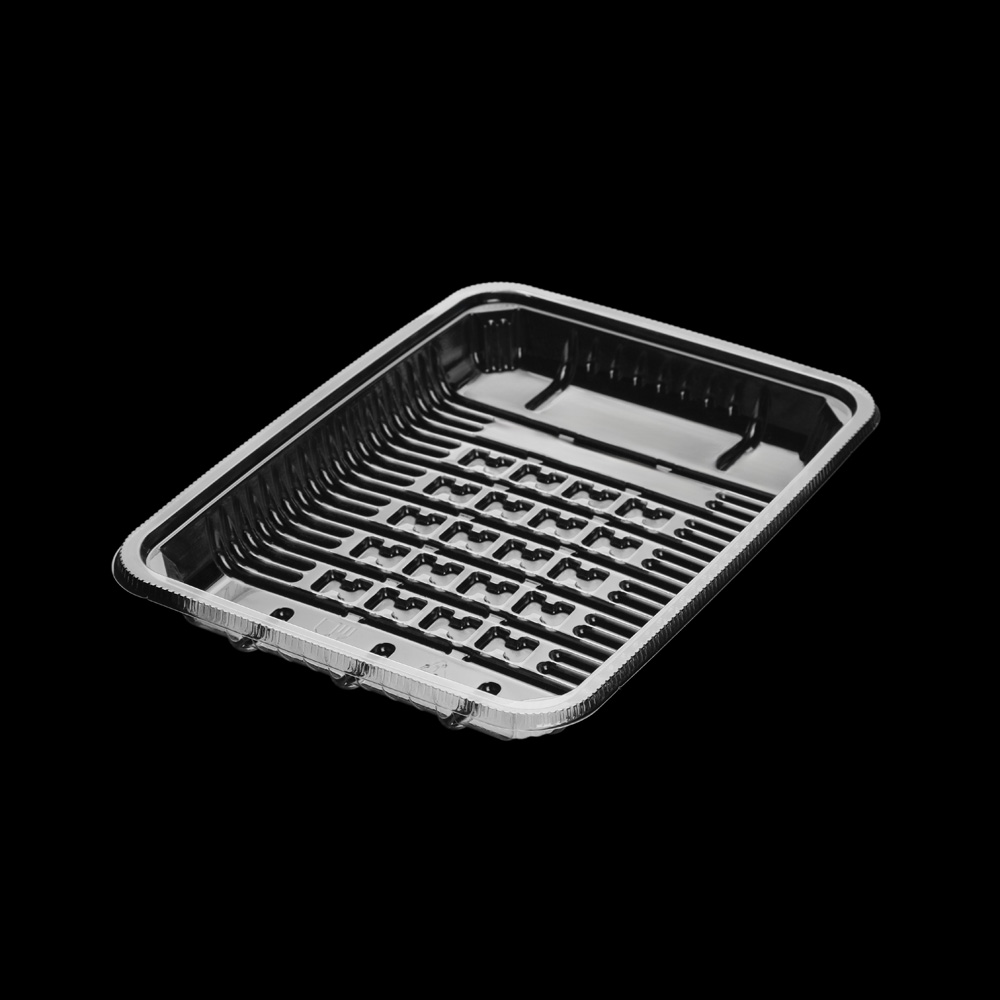
Blister trays feature a specific construction approach:
- Base Configuration: Typically a thermoformed tray with a flat or contoured bottom
- Product Containment: Recessed cavities designed to hold specific food items
- Closure Method: Separate lidding film or rigid lid sealed to the tray flange
- Opening Mechanism: Peelable seal or tear-away design
- Material Options: Commonly made from PET, PP, PETG, or PVC
This design creates a packaging format with distinct characteristics that influence its suitability for various food applications.
Clamshell Container Design and Structure
Clamshell containers utilize a different structural approach:
- Base Configuration: Single-piece design with a hinge connecting top and bottom portions
- Product Containment: Cavity in bottom portion with corresponding lid geometry
- Closure Method: Integrated snap features, friction fit, or locking mechanisms
- Opening Mechanism: Manual separation of top and bottom portions
- Material Options: Typically made from PET, PP, PS, or molded fiber materials
This unified design creates different performance characteristics and application advantages compared to blister trays.
Key Structural Differences
Several fundamental differences distinguish these packaging formats:
- Production Process: Blister trays typically require separate tray forming and lidding operations; clamshells are formed in a single operation
- Seal Integrity: Blister trays often provide hermetic seals; clamshells typically offer secure but non-hermetic closure
- Dimensional Flexibility: Blister trays allow independent optimization of tray and lid materials; clamshells require uniform material throughout
- Hinge Functionality: Clamshells feature an integrated hinge; blister trays have no connected components
- Resealability: Clamshells often provide inherent resealability; blister trays typically require specialized lidding for resealing
These structural differences create distinct advantages and limitations that influence their suitability for specific food applications.
Performance Comparison for Food Applications
Several key performance factors differentiate blister trays and clamshell containers in food packaging applications.
Product Protection Capabilities
Protection represents a primary packaging function with several important dimensions:
Physical Protection:
- Blister Trays: Typically provide excellent vertical compression resistance; moderate side impact protection
- Clamshells: Offer good all-around protection with unified structure; excellent for fragile items
Barrier Properties:
- Blister Trays: Can achieve high barrier properties with specialized lidding films
- Clamshells: Generally provide moderate barrier properties with limited customization options
Tamper Evidence:
- Blister Trays: Excellent tamper evidence through sealed lidding
- Clamshells: Moderate tamper evidence through visible closure disruption
Shelf Life Extension:
- Blister Trays: Superior shelf life potential through hermetic sealing and MAP capabilities
- Clamshells: Moderate shelf life extension through product isolation
The optimal choice depends on specific protection requirements, with blister trays generally excelling in barrier properties and shelf life extension, while clamshells offer superior physical protection for fragile items.
Product Presentation and Merchandising
Visual presentation significantly impacts consumer purchasing decisions:
Product Visibility:
- Blister Trays: Excellent top visibility; limited side visibility
- Clamshells: Excellent all-around visibility when using clear materials
Brand Communication:
- Blister Trays: Large, flat lidding surface ideal for branding and information
- Clamshells: Limited flat surfaces for branding; typically requires labels
Shelf Presence:
- Blister Trays: Efficient shelf space utilization; excellent for horizontal display
- Clamshells: Strong vertical presence; good for pegboard or vertical display
Premium Perception:
- Blister Trays: Can convey premium quality through specialized materials and printing
- Clamshells: Often perceived as convenient and practical rather than premium
These presentation differences make blister trays generally preferred for premium products with significant branding requirements, while clamshells excel in applications where all-around product visibility is paramount.
Operational Efficiency Factors
Packaging format significantly impacts production and handling efficiency:
Production Speed:
- Blister Trays: Typically require two-step process (forming and sealing)
- Clamshells: Single-step forming process with separate closing operation
Line Integration:
- Blister Trays: Require coordinated tray forming and sealing equipment
- Clamshells: Simpler production flow with fewer integration points
Storage Efficiency:
- Blister Trays: Excellent nesting capability for efficient storage
- Clamshells: Limited nesting capability due to hinged design
Filling Efficiency:
- Blister Trays: Open design allows efficient automated filling
- Clamshells: Hinged design can complicate automated filling
These operational factors often make blister trays more efficient for high-volume automated production, while clamshells may offer advantages for manual operations or smaller production runs.
Consumer Convenience Features
End-user experience significantly influences packaging format selection:
Ease of Opening:
- Blister Trays: Variable depending on lidding design; can range from easy-peel to difficult
- Clamshells: Generally consistent opening experience through snap features
Reclosability:
- Blister Trays: Limited unless specifically designed with reclosable lidding
- Clamshells: Inherently reclosable through integrated design
Portion Control:
- Blister Trays: Excellent for single-use portions with no reclosability needed
- Clamshells: Better for multi-use products requiring reclosure
Microwaveability:
- Blister Trays: Variable depending on materials; often require lid removal or venting
- Clamshells: Generally good microwave compatibility with appropriate venting
These convenience factors make clamshells generally preferred for products requiring consumer reclosure, while blister trays excel for single-use applications or where controlled opening is desired.

Application-Specific Selection Criteria
Different food categories present unique packaging requirements that influence format selection.
Fresh Produce Applications
For fruits and vegetables, several factors guide packaging format decisions:
Blister Tray Advantages for Produce:
- Better moisture management through controlled permeability lidding
- Superior presentation of premium or specialty items
- Excellent for portion control and multi-compartment options
- Better protection against crushing for delicate items
- Enhanced shelf life through modified atmosphere packaging
Clamshell Advantages for Produce:
- Better ventilation for respiring produce
- Easier consumer access for inspection and selection
- Superior protection during consumer transport
- Simplified merchandising in vertical displays
- Easier reuse for leftover storage
Blister trays typically excel for premium berries, prepared produce, and items requiring extended shelf life, while clamshells dominate in applications like lettuce, herbs, and items requiring significant airflow.
Bakery and Confectionery Products
Sweet goods and baked items present different packaging considerations:
Blister Tray Advantages for Bakery:
- Superior protection for delicate decorations
- Better moisture barrier for extended freshness
- Enhanced presentation for premium items
- Excellent for portion control and variety packs
- Superior protection against crushing
Clamshell Advantages for Bakery:
- Better for larger or taller items
- Easier consumer access and reclosure
- Superior protection during consumer transport
- Better for self-service environments
- Simplified merchandising in vertical displays
Blister trays typically excel for premium chocolates, petit fours, and delicate pastries, while clamshells are often preferred for cookies, muffins, and larger bakery items.
Prepared Foods and Deli Items
Ready-to-eat foods present unique packaging requirements:
Blister Tray Advantages for Prepared Foods:
- Superior leak resistance for saucy or liquid items
- Better for portion control and compartmentalization
- Enhanced shelf life through hermetic sealing
- Better for centralized production and distribution
- Superior for modified atmosphere packaging
Clamshell Advantages for Prepared Foods:
- Better for larger portion sizes
- Easier consumer reheating and consumption
- Superior for items consumed directly from package
- Better for in-store prepared items
- Simplified merchandising in refrigerated cases
Blister trays typically excel for factory-prepared meals with extended distribution, while clamshells often dominate in-store prepared foods and items intended for immediate consumption.

Cost Considerations and Economic Analysis
Beyond performance, economic factors significantly influence packaging format decisions.
Material and Production Costs
Several cost elements differ between these packaging formats:
Material Efficiency:
- Blister Trays: Often use less material due to separate lidding film
- Clamshells: Typically require more material due to unified construction
Production Equipment:
- Blister Trays: Require both forming and sealing equipment
- Clamshells: Require forming equipment with simpler closing systems
Production Speed:
- Blister Trays: Two-step process may limit throughput
- Clamshells: Single forming operation potentially faster
Labor Requirements:
- Blister Trays: Often more automated with less labor
- Clamshells: May require more labor for closing operations
These factors combine to create application-specific cost profiles, with blister trays often more economical for high-volume automated production and clamshells potentially advantageous for smaller runs or manual operations.
Supply Chain and Logistics Impact
Packaging format affects logistics costs throughout the supply chain:
Storage Efficiency:
- Blister Trays: Excellent nesting capability reduces storage space
- Clamshells: Limited nesting increases storage requirements
Transportation Efficiency:
- Blister Trays: More units per pallet due to efficient nesting
- Clamshells: Fewer units per pallet increases freight costs
Damage Rates:
- Blister Trays: May have higher damage rates without secondary packaging
- Clamshells: Often provide better protection without additional packaging
These logistics factors often favor blister trays for storage and transportation efficiency, while clamshells may reduce damage-related costs throughout the supply chain.
Sustainability Considerations
Environmental impact increasingly influences packaging format decisions.
Material Efficiency and Waste Reduction
Resource utilization differs between packaging formats:
Material Usage:
- Blister Trays: Often use less total material due to film lidding
- Clamshells: Typically require more material for equivalent protection
Material Reduction Potential:
- Blister Trays: Can be optimized through variable wall thickness
- Clamshells: Require more uniform material distribution
Food Waste Prevention:
- Blister Trays: Superior barrier properties may reduce food waste
- Clamshells: Reclosability features may extend in-home freshness
These efficiency factors typically favor blister trays from a material minimization perspective, though actual environmental impact depends on specific designs and applications.
Recycling and End-of-Life Considerations
Recyclability differs significantly between formats:
Material Separation:
- Blister Trays: May combine different materials requiring separation
- Clamshells: Typically mono-material construction aids recycling
Consumer Recycling Behavior:
- Blister Trays: May confuse consumers with multiple materials
- Clamshells: Simpler recycling instructions with single material
Recycling Infrastructure Compatibility:
- Blister Trays: Variable depending on materials used
- Clamshells: Generally good compatibility when using PET or PP
These recycling factors often favor clamshells from an end-of-life perspective, particularly when made from widely recycled materials like PET.
Reliancepak’s Packaging Solutions
As a leading supplier of food packaging solutions, Reliancepak offers comprehensive support for format selection and implementation.
Blister Tray Product Lines
Our blister tray offerings include several specialized product families:
- ClearSeal™ Series: Premium clarity trays with compatible lidding systems
- FreshLock™ Collection: Enhanced barrier systems for extended shelf life
- DividerTray™ System: Multi-compartment options for variety packs
- EcoBlister™ Line: Sustainable options with recycled and bio-based materials
- CustomForm™ Program: Proprietary designs for unique product requirements
These product lines address diverse application needs while offering consistent quality and performance.
Clamshell Container Product Lines
Our clamshell offerings include several specialized product families:
- SecureSnap™ Series: Enhanced closure systems for secure containment
- ClearView™ Collection: Maximum visibility options for premium presentation
- FreshVent™ System: Optimized ventilation for respiring produce
- EcoClamshell™ Line: Sustainable options including recycled content and bio-based materials
- CustomHinge™ Program: Proprietary designs for unique product requirements
These product lines provide solutions for diverse applications while maintaining consistent quality and performance.
Conclusion: Making the Optimal Format Choice
The choice between blister trays and clamshell containers ultimately depends on a careful analysis of specific product requirements, operational considerations, and market factors.
Summary of Key Considerations
When evaluating these packaging formats, remember these essential points:
- Blister trays excel in: Material efficiency, barrier properties, shelf life extension, automated production, and premium presentation
- Clamshells excel in: Physical protection, consumer reclosability, all-around visibility, simplified recycling, and distribution durability
- Operational factors: Production capabilities, filling requirements, and supply chain considerations significantly impact format suitability
- Sustainability considerations: Both formats offer sustainable options with different environmental tradeoffs
- Economic impact: Total cost analysis should consider the entire product lifecycle, not just packaging unit cost
There is rarely a universal “best” choice; rather, the optimal format depends on specific product requirements and business priorities.
Contact Reliancepak today to discuss your specific application requirements and discover whether blister trays or clamshell containers represent the optimal solution for your food packaging needs.
- Explore this link to understand how blister trays enhance product protection and presentation, making them ideal for various food applications. ↩︎