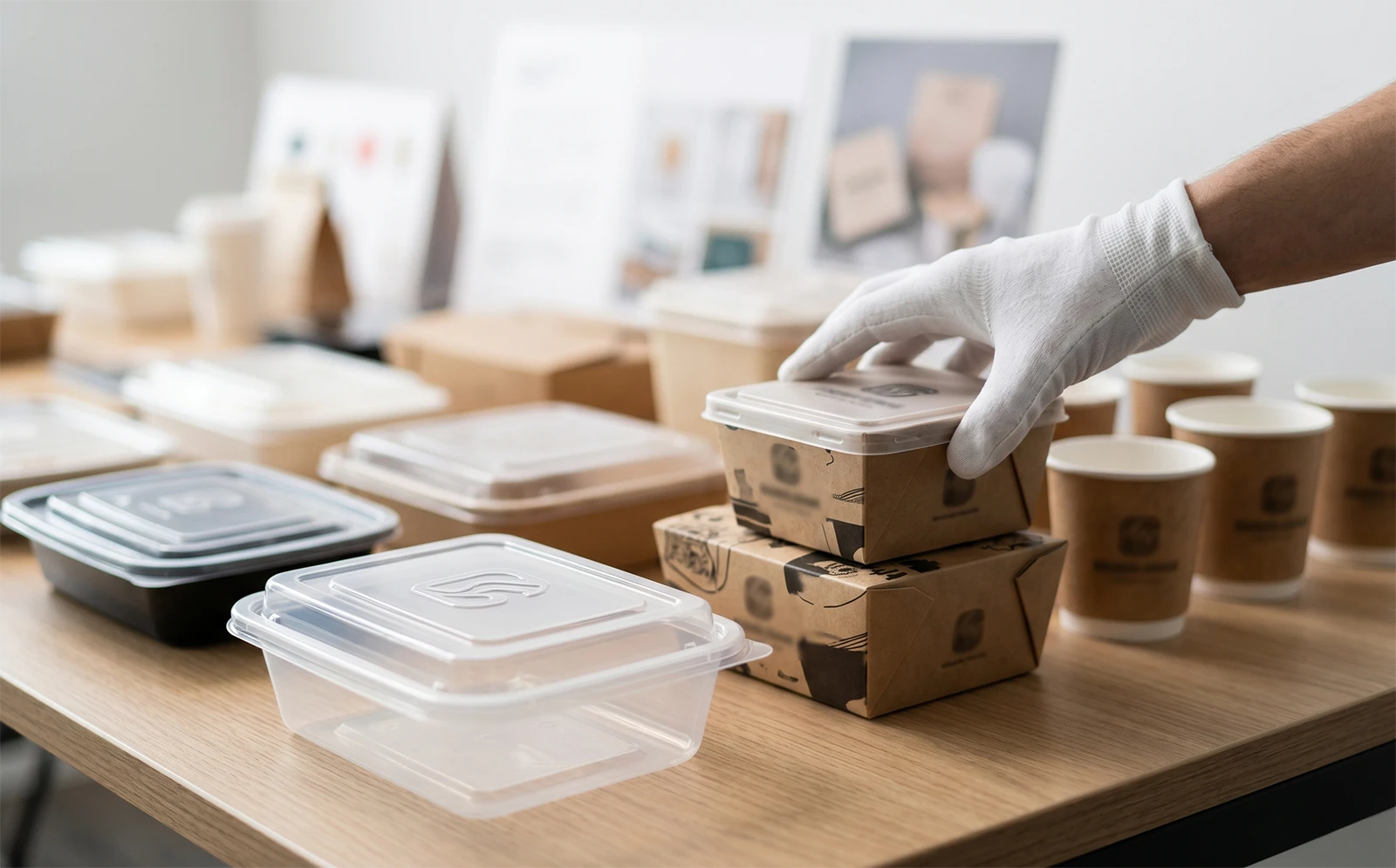
Customizing a food container bulk order is the technical process of integrating brand logos, custom colors, and unique label designs onto wholesale packaging units to transform functional containers into branded marketing assets. This specialized procurement step allows B2B buyers to move beyond generic inventory and establish a recognizable market presence through physical product differentiation.
Many distributors face the challenge of selling generic products that offer no brand recall once they reach the end-user. Relying on unbranded items often leads to price wars with competitors who offer the same visual appearance and technical specifications. This guide explains how to leverage branding within your food container bulk strategy to create a distinct market presence. By following these professional branding protocols, you ensure your packaging communicates quality and reliability to every restaurant and food processing client you serve.
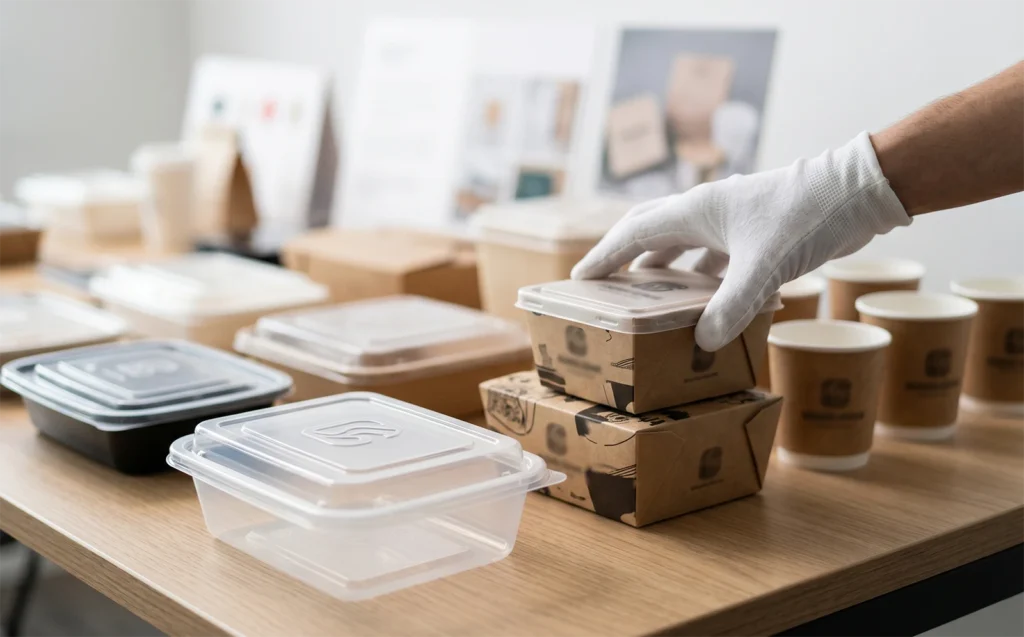
Why should you invest in branding for your food container bulk orders?
Branding differentiates your products from generic market offerings and builds a sense of professionalism that encourages repeat purchases from high-value B2B clients. In a competitive wholesale landscape, customized packaging acts as a silent salesperson that reinforces your brand identity at every point of the food delivery cycle.
Building Professional Brand Recognition
Here is the deal.
- Custom logos on lids or sidewalls ensure that the end-user associates a positive dining experience with your specific brand.
- Consistent color schemes across plastic trays and paper boxes create a unified product line that appeals to large-scale restaurant chains.
- Branded packaging signals to potential clients that your company is an established player with the capital to invest in custom tooling.
- Unique designs help prevent your products from being confused with lower-quality alternatives in a crowded warehouse environment.
Increasing Market Value and Loyalty
Think about this.
- Clients are often willing to pay a premium for packaging that helps their own food products look more professional and appetizing.
- Private labeling allows regional distributors to claim “exclusive” product lines, which reduces the risk of price shopping by their customers.
- Customized features, such as embossed recycling symbols or brand-specific compartment layouts, improve the functional value of the container.
- High-quality printing serves as an indicator of the overall quality of the material and manufacturing process.
| Branding Factor | Generic Packaging | Branded Packaging | Business Impact |
|---|---|---|---|
| Market Position | Price-driven | Value-driven | Higher Margins |
| Client Retention | Low | High | Stable Revenue |
| Recall Rate | Minimal | Excellent | Referral Growth |
Investing in customization shifts the conversation from unit price to brand value, securing your position as a preferred supplier.
Key Takeaway: Branding transforms a standard commodity into a proprietary asset, allowing for better price control and stronger customer loyalty.
What are the most effective printing methods for bulk containers?
Offset and flexographic printing are the primary methods used for high-volume customization, offering a balance between visual clarity and production speed for large-scale orders. The choice of method typically depends on the material type, the complexity of the artwork, and the total volume of the food container bulk shipment.
Offset and Flexographic Printing
Let’s look at the facts.
- Offset printing provides the highest image resolution, making it ideal for complex, multi-color logos on paper boxes and sleeves.
- Flexographic printing uses flexible relief plates and is highly efficient for high-speed production on plastic films and bags.
- Both methods require an initial setup cost for printing plates, which is why they are most cost-effective for large-scale wholesale volumes.
- Water-based or soy-based inks are often used to meet food safety standards and environmental regulations in the EU and USA.
Embossing and Technical Tooling
You should know.
- Embossing creates a raised logo directly in the plastic mold, providing a subtle and permanent branding solution that does not require ink.
- This method involves a one-time tooling fee for the mold modification but results in zero additional cost per unit during production.
- Embossed branding is highly durable and cannot be scratched or faded during transport or microwave heating.
- It is a preferred choice for lid branding where a clean, professional look is required without the use of vibrant colors.
| Printing Method | Best Material | Setup Cost | Detail Level |
|---|---|---|---|
| Offset | Paper/Cardboard | Moderate | Very High |
| Flexo | Plastic/Film | Moderate | High |
| Embossing | PP/PET Plastic | High (Tooling) | Subtle |
Selecting the right printing technology ensures that your brand image remains crisp and professional throughout the life of the product.
Key Takeaway: Technical printing choices impact both the visual appeal and the final landed cost of your customized inventory.
How do you manage the private label process with a manufacturer?
Managing a private label project requires providing high-resolution vector files and agreeing on minimum order quantities (MOQs) that allow the integrated supplier to offset the costs of machine calibration and plate creation. A successful food container bulk customization project relies on clear technical communication between your design team and the factory’s production engineers.
Establishing Design and Technical Files
Here is the truth.
- You must provide artwork in vector formats like AI or EPS to ensure the logo can be scaled without losing resolution.
- Specify exact Pantone color codes to maintain brand consistency across different material types and production batches.
- Request a digital or physical mock-up to verify the placement and sizing of the branding before the full production run begins.
- Ensure that mandatory regulatory information, such as the resin identification code, is integrated into the custom design.
Managing MOQs and Lead Times
You might also consider.
- Custom orders typically require a higher MOQ than standard plain items to cover the time spent on machine setup and ink mixing.
- Factor in an extra 7 to 14 days in the initial lead time for the creation and testing of printing plates or embossed molds.
- Consolidating multiple branded items into a single food container bulk shipment can help you meet the volume requirements for a dedicated production run.
- Work with an integrated supplier that can manage the 9 production lines to ensure that custom orders are prioritized alongside standard stock.
| Project Stage | Action Required | Typical Duration |
|---|---|---|
| Artwork Approval | Provide Vector Files | 2-3 Days |
| Plate/Mold Creation | Technical Setup | 7-10 Days |
| Mass Production | Printing & QC | 15-20 Days |
Clear project management reduces the risk of design errors and ensures that your branded inventory arrives according to your marketing schedule.
Key Takeaway: Strategic coordination of design files and volume requirements is essential for a smooth private label experience.
Conclusion
Reliancepak provides a stable supply of food-grade packaging with the speed and professional service your business requires. Our integrated manufacturing model allows us to offer comprehensive branding and private label services for your food container bulk needs, ensuring your logo is presented with precision on every unit. Contact us today to discuss how our professional customization services can help you build a stronger brand in the global food packaging market.
We believe that reliable, safe, and sustainable packaging is the foundation of a successful global food supply chain.
FAQ
Can I print my logo on any type of food container?
Yes. Most materials, including PP, PET, and various paper types, can be printed or embossed, though the specific technique will vary based on the surface texture.
What is the typical MOQ for a custom printed order?
Yes, most factories require a minimum of 30,000 to 50,000 units for custom printing to justify the costs of plate setup and machine downtime.
Do I need to pay for the printing plates for every order?
No. You usually only pay for the plates once. The manufacturer will store them for future orders of the same design, reducing the cost of repeat purchases.
Are the inks used for printing safe for food contact?
Yes. Professional manufacturers use food-grade inks that are tested for migration to ensure they do not contaminate the food inside the container.
Can I get a physical sample of my custom design first?
Yes, but this often involves a sampling fee to cover the cost of creating the plates and a small production run. A digital proof is a faster and more cost-effective first step.