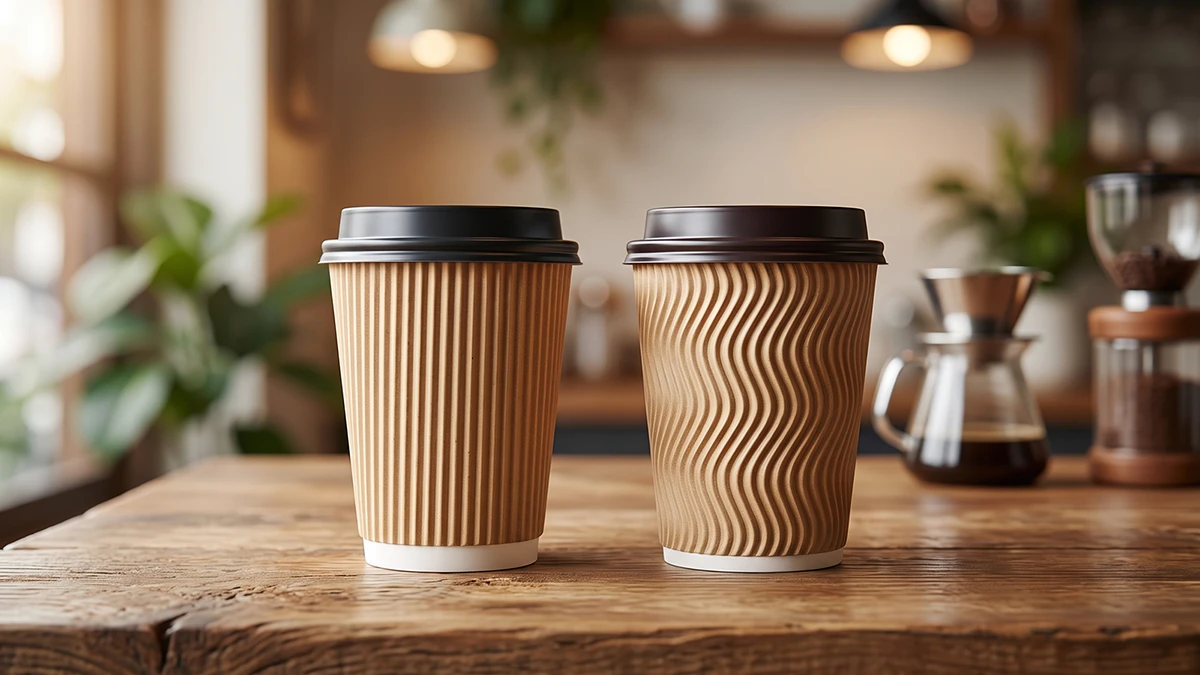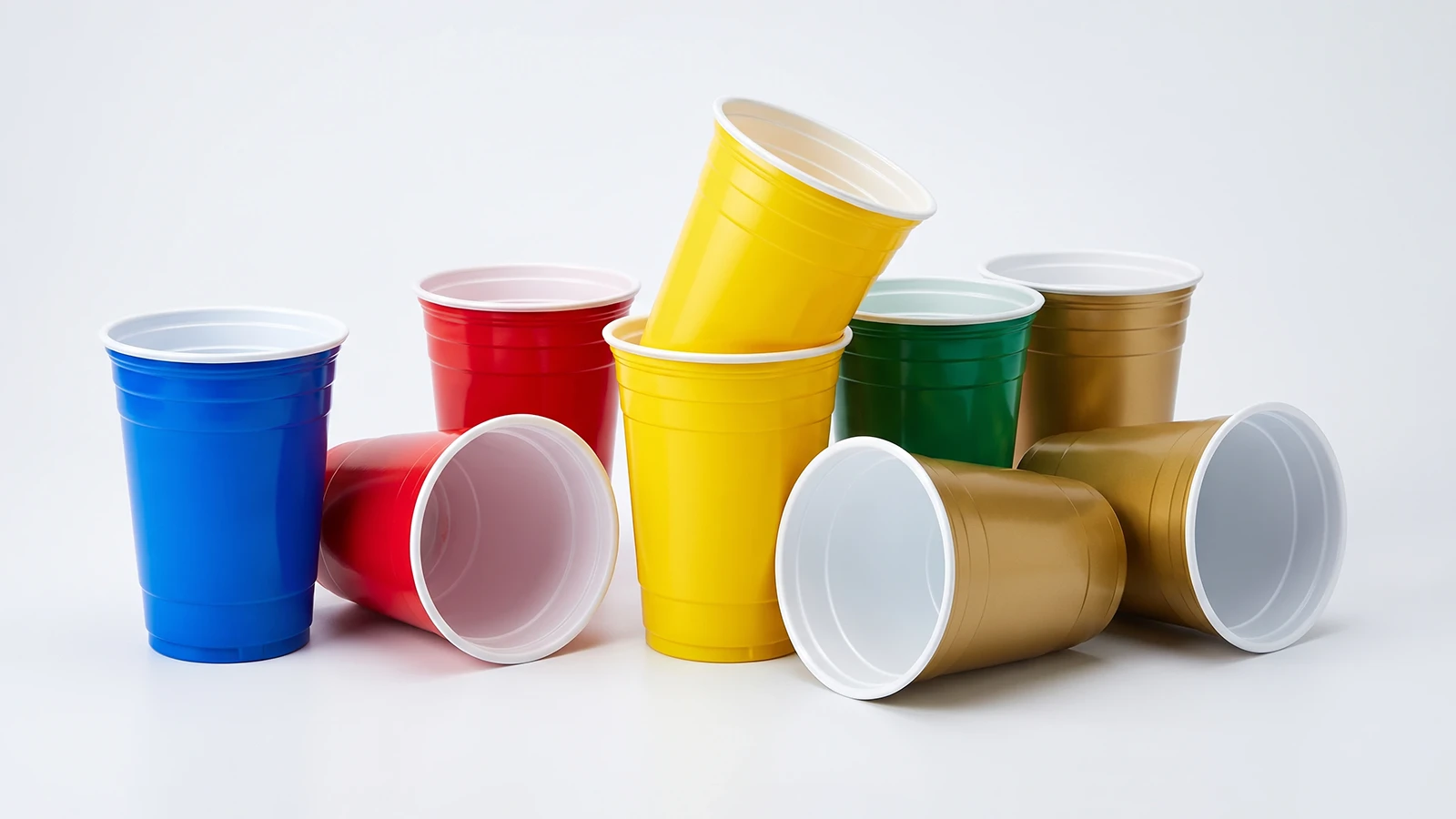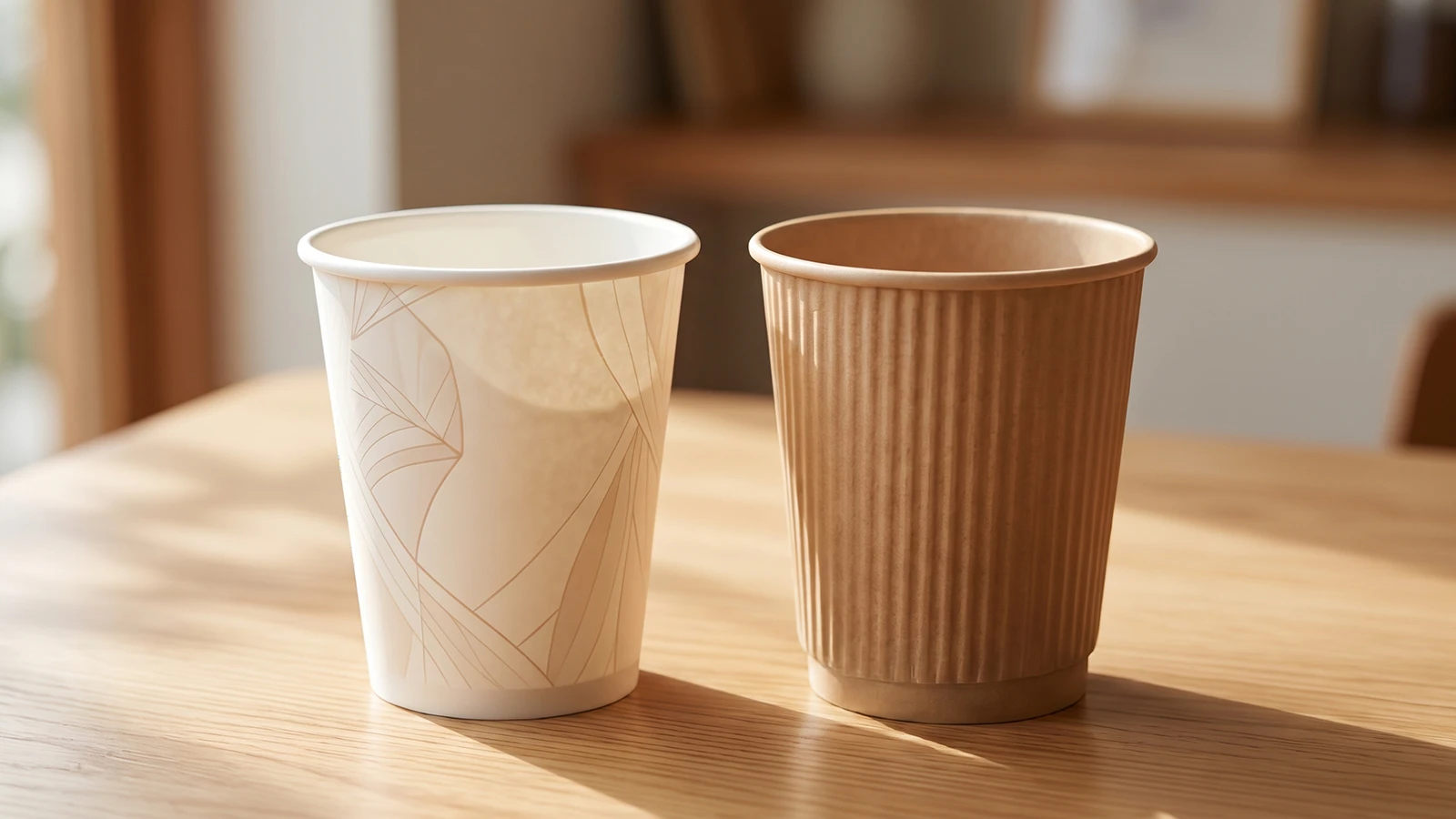
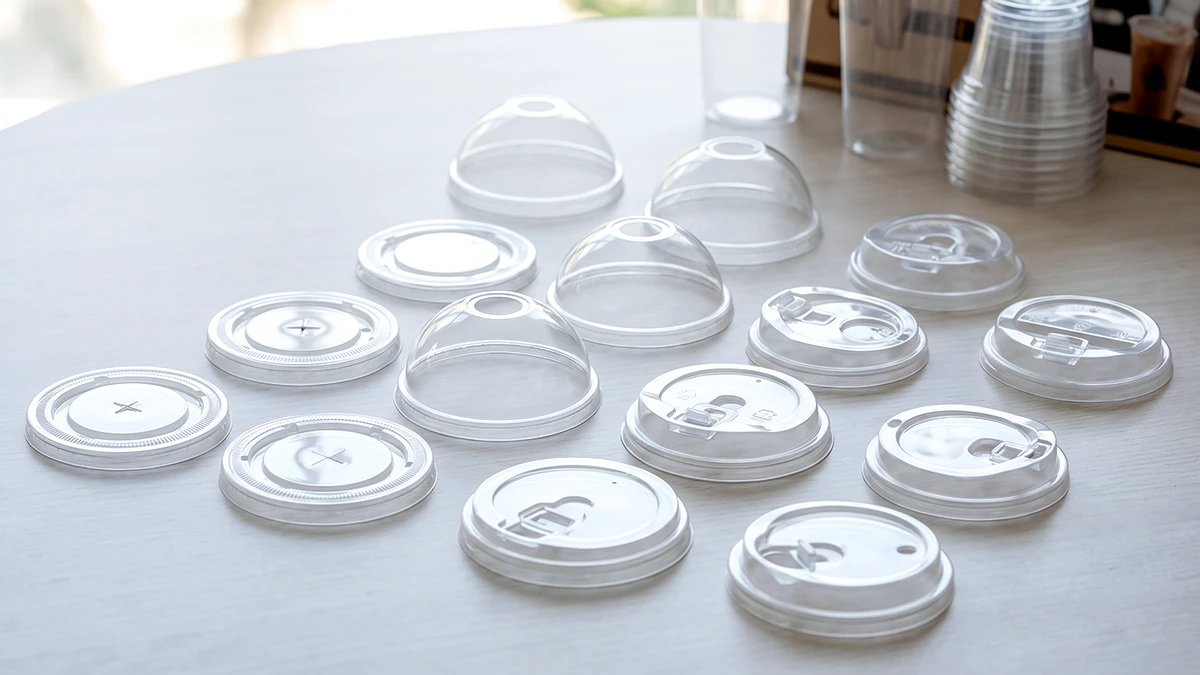
A cup lid looks like the smallest line item on a spec sheet, but it decides how a drink or dessert actually performs in the customer’s hand: whether it leaks in a delivery bag, whether a straw fits cleanly, whether the packaging feels worth the price. For wholesale buyers, understanding two basic dimensions—material and functional design—makes supplier conversations faster and prevents costly mismatch orders.
This guide breaks down the lid materials you will encounter most often in food packaging, the functional designs behind them, and how to match both to your product line.
Common Cup Lid Materials
Most cup lids on the market are made from five material families. Each has a clear comfort zone, and most sourcing problems start when a lid is pushed outside of it.
| Material | Heat Tolerance | Clarity | Typical Use | Key Notes |
| PP (polypropylene) | High; suitable for hot fill | Translucent to opaque | Hot coffee, milk tea, soups | Flexible, resists cracking during transport |
| PET | Low; not for hot fill | High transparency | Cold drinks, juices, chilled desserts | Widely accepted in recycling streams |
| PS (polystyrene) | Moderate | Clear or foam | Budget cold-cup programs | Rigid but more brittle than PP |
| PLA (bioplastic) | Low | Clear | Compostable cold-cup lines | Needs industrial composting infrastructure |
| Paper / fiber | Moderate | Opaque | Eco-oriented brands | Usually coated, which affects end-of-life claims |
Two materials dominate volume orders. PP remains the default for anything served hot, because it holds its shape where PET would deform. PET, on the other hand, offers glass-like clarity that presents fruit teas and layered desserts well, which is why most dessert-cup and cold-beverage lids you see on shelves are PET.
PLA is worth a separate note. It performs similarly to PET in appearance, but its compostability claim only holds where industrial composting facilities exist. If your market’s waste infrastructure does not process PLA, the premium you pay for it delivers limited practical value, so it depends on the specific application and region.
Functional Lid Designs
Material is only half of the decision. The lid’s functional design determines how the end user interacts with the cup, and each design suits a different service scenario.
Flat Lids
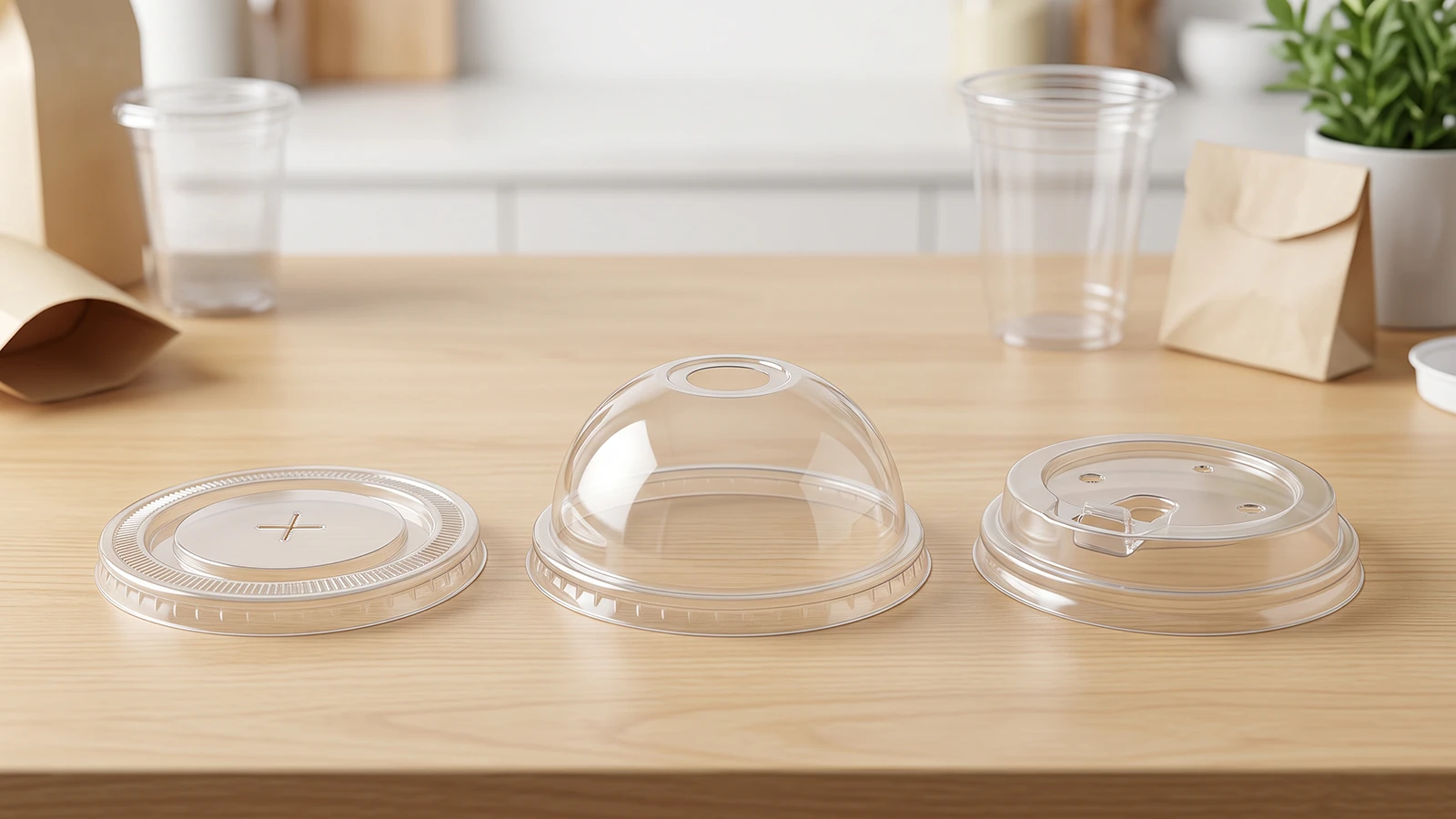
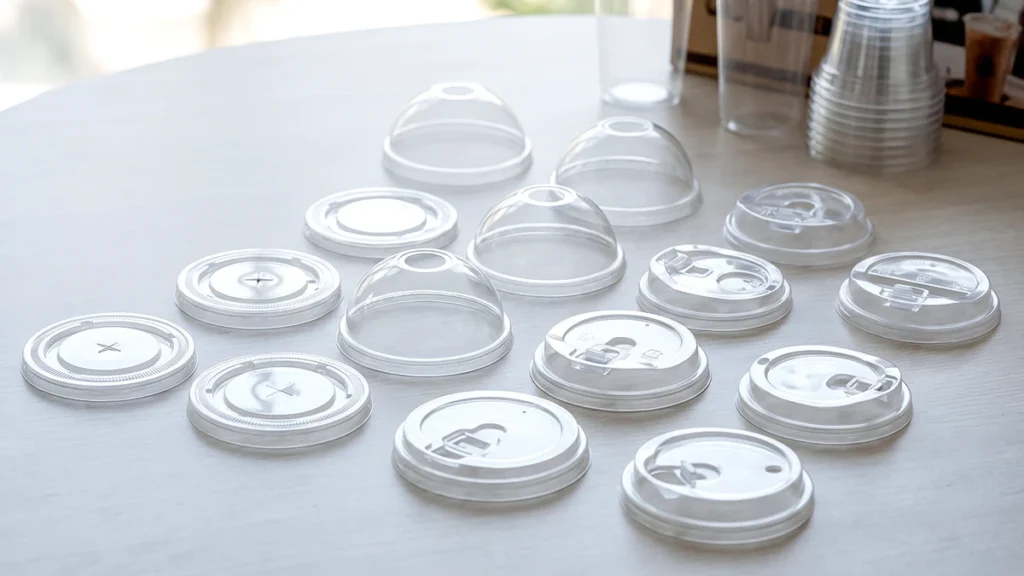
The flat lid is the workhorse of takeaway beverages. It stacks compactly, ships cheaply, and comes in two common variants: with a straw slot for cold drinks, or solid for food containers and short-trip use. If your priority is logistics efficiency across a high-volume drink program, this is usually the starting point.
Domed Lids
Domed lids add headroom above the rim. That extra space accommodates whipped cream, ice, or foam without the product pressing against the lid. The trade-offs are higher shipping volume and a slightly higher unit cost, so they are typically reserved for premium drinks where the presentation justifies it.
Sipper and Straw-Free Lids
These lids integrate a drinking spout directly into the structure, removing the need for a separate straw. In markets where single-use plastic straws face restrictions, sipper designs have become a practical compliance answer rather than a novelty. They also reduce component count in your packaging set, which simplifies inventory.
Sealed Film and Peel-Off Lids
For jelly cups, puddings, and portioned desserts, the lid is not snapped on but sealed or die-cut to peel away. This format gives you a tamper-evident closure and a clean peel for the consumer, which matters in retail and vending channels.
When you review a supplier’s catalog for this category, check whether the range covers more than one format. Reliancepak’s colorful PET plastic cup lid series, for example, spans jelly cup covers and several other lid designs in the same PET line, which simplifies sourcing when your product line mixes dessert cups with takeaway drinks and you want consistent material quality across formats.
Matching the Lid to Your Application
A few checks will filter out most wrong choices before you reach the quotation stage:
- Serving temperature: hot fill rules out PET and standard PLA; PP is the safe baseline.
- Sealing method: confirm whether the lid snaps onto the rim or works with a heat-seal machine, since the two are not interchangeable.
- Cup diameter and rim profile: lids are diameter-specific, and rim geometry varies between cup molds, so “close enough” is not close enough.
- Logistics profile: nested stacking height affects freight cost per unit more than most buyers expect on long routes.
Before committing to a bulk order, request samples and test them with your actual product—filled, at serving temperature, and through your real delivery conditions. Reputable manufacturers, including Reliancepak, typically provide free samples precisely because a snap-fit test on your own cups tells you more than any spec sheet.
Frequently Asked Questions
Can PET lids be used for hot beverages?
No. PET softens at elevated temperatures and will deform with hot fill. For hot drinks, use PP lids, which are engineered to hold their shape at serving temperatures.
Are PET lids recyclable?
Yes. PET is one of the most widely recycled plastics, and rigid PET lids are accepted in many municipal recycling programs. Confirm the requirements of your target market, since acceptance rules vary by region.
How do I know which lid size fits my cup?
Match the lid to the cup’s rim diameter, not the cup body. The practical process is: confirm the rim diameter with your cup supplier, request lid samples, then test the snap fit with a filled cup.
What is the difference between a straw-slot lid and a sipper lid?
A straw-slot lid has an opening for a separately supplied straw, while a sipper lid has a built-in spout the user drinks from directly. Sipper lids eliminate the straw component entirely.
Do suppliers require large minimum orders for custom-colored lids?
It depends on the supplier and the level of customization. Many factories offer OEM colors on existing standard molds at moderate order quantities, and samples are usually available before you commit to bulk production.