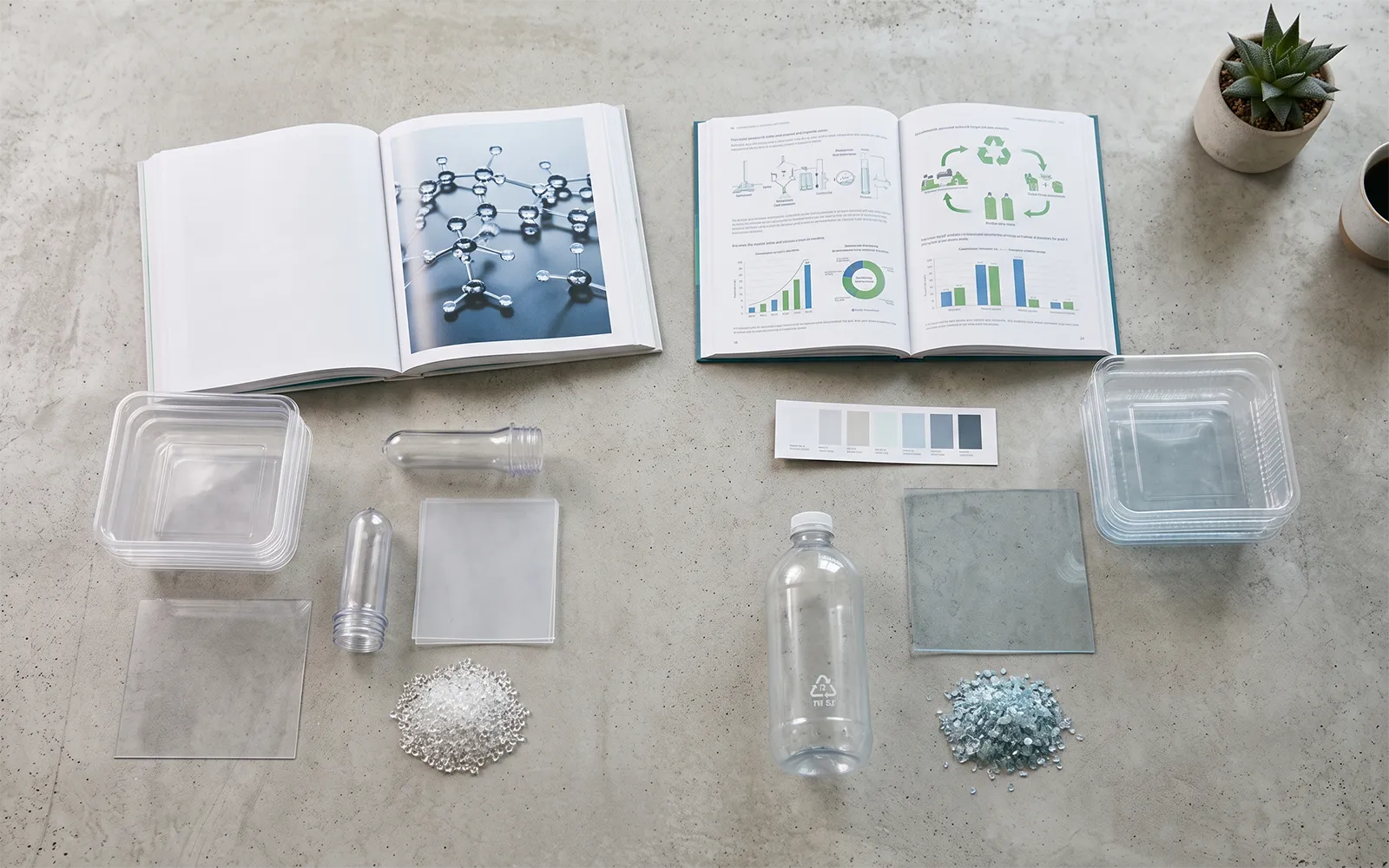
When a food brand decides to switch packaging materials, the conversation usually starts with one question: should we stay with virgin PET or move to rPET? The answer is rarely straightforward. Both materials carry distinct cost structures, performance trade-offs, and compliance implications that shift depending on the product type, target market, and regulatory environment you operate in.
This article breaks down the real-world differences between PET and rPET packaging solutions — not the marketing version, but the procurement-level reality that matters when you are sourcing at scale.
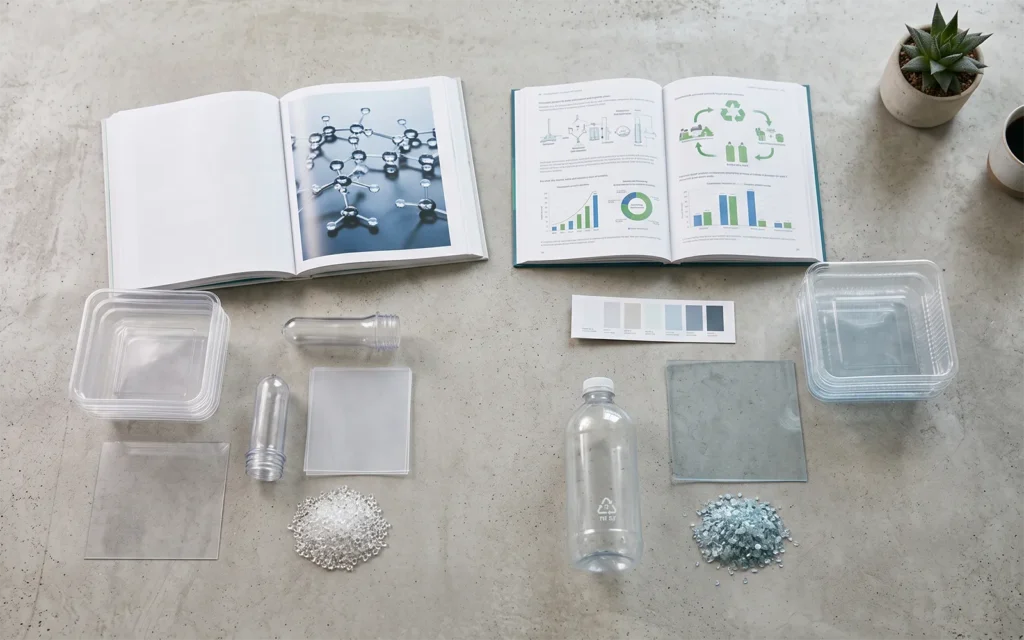
What Is PET and Why Does It Dominate Food Packaging?
PET — polyethylene terephthalate — has been the backbone of food-grade packaging for decades. Its dominance comes down to a practical combination: optical clarity, lightweight structure, decent barrier performance, and wide availability across global supply chains.
For B2B buyers, the appeal is operational. PET trays, containers, and cups run efficiently on most standard filling and sealing lines. Tooling costs are predictable. Lead times from established manufacturers tend to be stable.
Where PET Still Wins
PET remains the default choice in several scenarios:
- Fresh produce trays sold through retail chains with strict shelf-life requirements
- Ready-meal containers that need microwave compatibility
- Single-use food service items like cold cups and deli containers
- Markets where recycled content mandates do not yet apply
In these contexts, virgin PET delivers consistent performance without requiring buyers to requalify suppliers or adjust existing production setups.
What Is rPET and How Does It Compare?
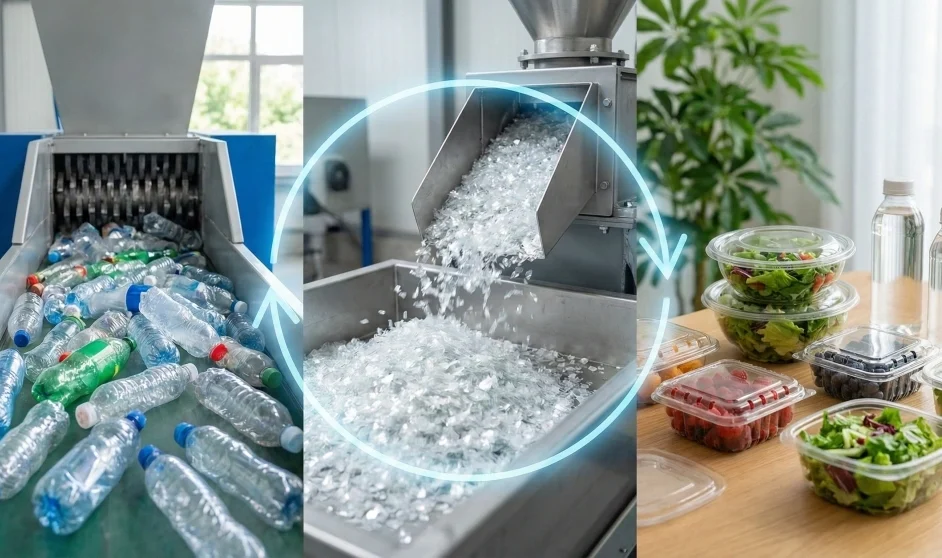
rPET — recycled PET — is made from post-consumer PET bottles and containers that have been collected, sorted, cleaned, and reprocessed into resin or sheet. The material is then thermoformed or injection-molded into new packaging products.
The key difference is not chemical. rPET and virgin PET share the same base polymer structure. The variation lies in processing history, contamination levels, and the consistency of feedstock supply.
The Performance Gap Is Real but Manageable
In many applications, rPET performs within an acceptable range of virgin PET. However, there are measurable differences:
- Tensile strength may vary slightly depending on the number of recycling cycles the material has undergone
- Color consistency can shift — rPET tends toward a faint amber tint unless colorants are added
- Barrier properties are comparable for short-shelf-life products but may fall short for items requiring extended freshness
For buyers managing high-volume SKUs, these differences matter less than you might expect. Most rPET packaging suppliers now blend recycled content with virgin resin to stabilize mechanical properties while still meeting recycled content thresholds.
Cost Comparison: Virgin PET vs rPET
The cost question is where procurement teams spend the most time. Here is a realistic breakdown:
| Factor | Virgin PET | rPET |
|---|---|---|
| Raw material cost | Stable, tied to oil prices | Volatile, depends on collection rates and feedstock availability |
| MOQ requirements | Typically lower thresholds | Often higher minimums due to batch processing |
| Tooling and setup | Standard across most suppliers | Same tooling usually works, but material behavior may require minor adjustments |
| Compliance testing | Straightforward | May require additional documentation for food-contact safety |
| Supply chain reliability | Mature global supply | Regional variation — availability depends on local recycling infrastructure |
In markets with established collection systems — Western Europe, parts of North America — rPET feedstock is abundant and pricing is competitive. In regions where recycling infrastructure is still developing, virgin PET may actually be the more economical choice.
The Hidden Cost: Compliance Documentation
Switching to rPET often triggers a documentation burden that virgin PET does not. If you export to the EU, you will need to demonstrate compliance with Regulation (EC) No 282/2008 and its updates. FDA clearance is required for the US market. These certifications are not optional — they are table stakes for food-contact packaging.
The additional compliance layer can add weeks to your procurement timeline and require closer coordination with your packaging supplier.
Sustainability Considerations Beyond the Label
“Sustainability” has become a loosely used term in packaging marketing. For B2B buyers making sourcing decisions, the practical sustainability picture looks more specific.
Carbon Footprint and Energy Use
rPET production typically uses 60 to 70 percent less energy than virgin PET manufacturing. The carbon footprint reduction is meaningful — but it depends heavily on the distance between your collection points, reprocessing facilities, and your manufacturing lines.
If your rPET supplier sources feedstock from overseas and ships finished packaging back across the Pacific, the transport emissions can offset a significant portion of the production savings.
Recyclability of rPET Products
rPET is theoretically recyclable, but the practical recycling rate drops with each cycle. Most industry analysts suggest that rPET can be mechanically recycled three to five times before the polymer degrades beyond food-grade usability.
For brands building long-term packaging strategies, this means rPET is not a closed-loop solution on its own. It works best as part of a broader material mix that includes both recycled and virgin content.
Brand and Regulatory Pressure
Regulatory mandates are accelerating the shift toward recycled content. The EU Single-Use Plastics Directive, California’s SB 54, and similar legislation in Canada and the UK all require minimum recycled content thresholds for plastic packaging.
If your primary markets include any of these regions, rPET is not a sustainability preference — it is a compliance requirement.
Choosing Between PET and rPET for Specific Applications
The right material depends on the product, the market, and the regulatory context. Here is a practical framework:
Fresh Produce and Bakery
rPET works well for short-shelf-life items like fruit trays, bread containers, and pastry shells. The reduced barrier performance is acceptable for products with naturally limited shelf life, and the sustainability messaging resonates with retail buyers in European markets.
Ready Meals and Hot-Fill Products
Virgin PET may be the safer choice here. Microwave compatibility, heat resistance, and extended shelf-life requirements push the performance envelope in ways that rPET may not consistently meet without significant blending or additive treatments.
Food Service and Takeaway
For disposable cups, bowls, and containers used in quick-service settings, rPET is increasingly the preferred option — especially in markets with active extended producer responsibility (EPR) schemes. The cost premium is modest, and the brand differentiation is real.
Custom and Premium Packaging
If you are designing custom trays or specialty containers for premium product lines, virgin PET offers more predictable aesthetic results. rPET can work, but color consistency and surface finish may require additional quality control steps.
How to Evaluate a PET or rPET Packaging Supplier
Selecting the right supplier goes beyond price. Consider these factors:
- Certification scope — Does the supplier hold food-grade certifications for both virgin and recycled materials? Look for EU and FDA compliance as a baseline.
- Feedstock transparency — For rPET, can the supplier document the origin and processing history of their recycled resin?
- Blending capability — Can they adjust virgin-to-recycled ratios to meet your specific content targets?
- Production capacity — A supplier running 9 production lines, for example, offers more flexibility for scaling orders compared to a single-line operation.
- Sample availability — Request physical samples before committing. Material behavior on your filling lines is the ultimate test.
Reliancepak operates with this kind of production infrastructure and supports both virgin and rPET food packaging solutions for global wholesale buyers. Their team can be reached at admin@bereliance.com or through www.reliancepak.com for sample requests and technical consultations.
Frequently Asked Questions
Can I mix PET and rPET in the same product line?
Yes. Many brands blend virgin and recycled PET to hit specific sustainability targets while maintaining consistent performance. The blending ratio can be adjusted based on your shelf-life and compliance requirements.
How do I verify that rPET meets food-safety standards?
Request documentation from your supplier showing compliance with relevant regulations — EU Regulation (EC) No 282/2008 for European markets, FDA letters of no objection for US distribution. Independent third-party testing adds another verification layer.
What affects rPET pricing the most?
Feedstock availability is the primary driver. Regions with robust bottle collection systems produce cheaper rPET resin. Global oil prices also influence virgin PET, which sets the baseline that rPET is measured against.
Is rPET suitable for products with a long shelf life?
It depends on the application. For items requiring 12 months or more of shelf life, virgin PET or a high-virgin-content blend typically performs more reliably. Shorter shelf-life products are generally well-suited to rPET.
How do I calculate the right recycled content target for my packaging?
Start with the regulatory minimums in your target markets, then factor in your brand sustainability goals and the performance requirements of your specific product. A packaging supplier with experience in both virgin and rPET can help you model the right balance.