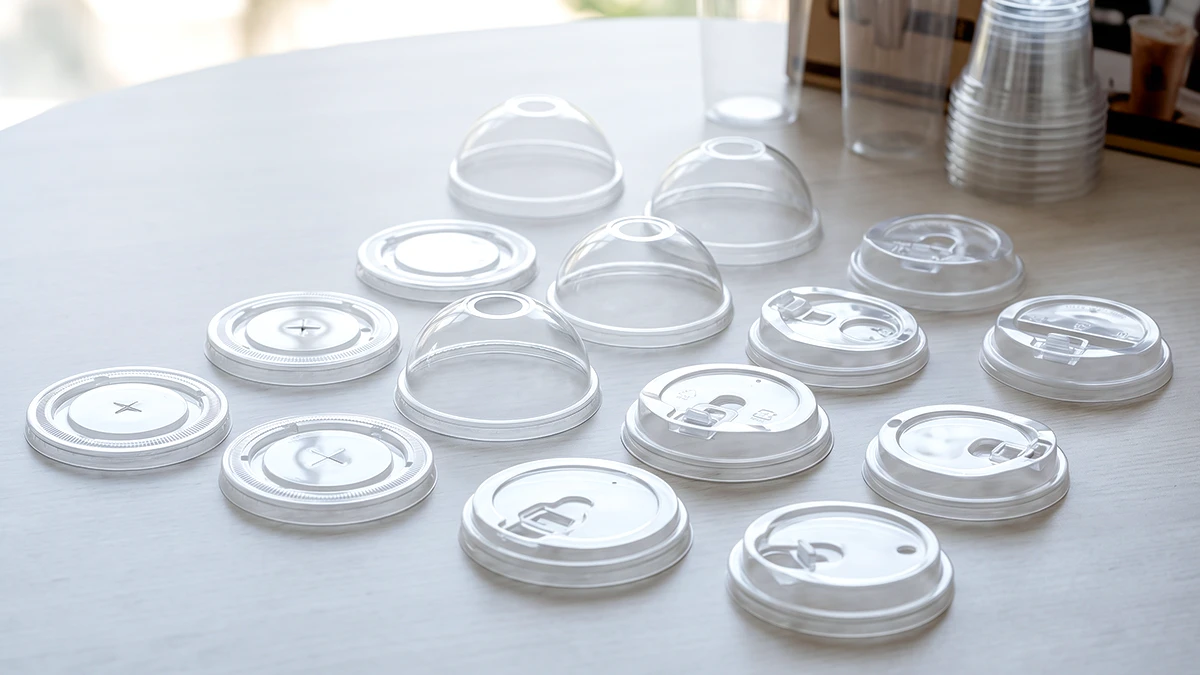

PET packaging solutions encompass the design, production, and supply of containers, trays, clamshells, and bottles made from polyethylene terephthalate (PET) or its recycled variant (rPET) — materials chosen for their clarity, durability, recyclability, and food-grade safety across the global packaging industry.
Every food brand faces a familiar tension: the need for packaging that protects product integrity, meets regulatory standards, and satisfies consumer expectations for sustainability — all while staying within budget. PET packaging addresses most of these demands, but the details matter. Material choices, manufacturing tolerances, and supplier capabilities vary widely, and the wrong decision at the procurement stage can create downstream problems in logistics, shelf appeal, or compliance audits.
This guide breaks down the practical realities of PET and rPET packaging solutions, from material science to application-specific design considerations, so you can make informed sourcing decisions rather than relying on marketing promises.
What Are PET Packaging Solutions? Applications, Benefits & Industries
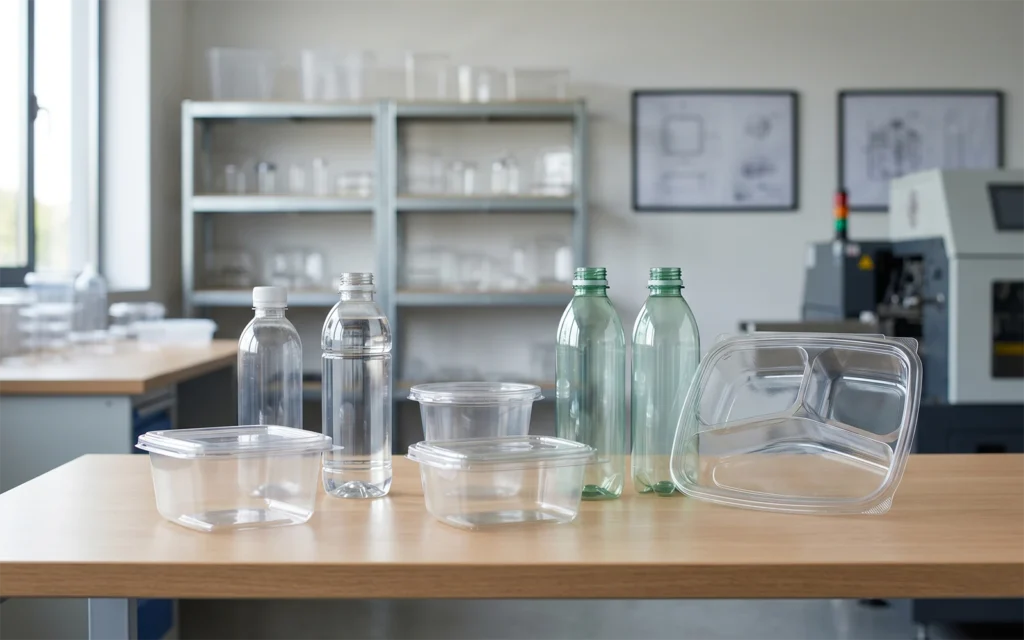
PET packaging solutions refer to any packaging product manufactured from polyethylene terephthalate — a thermoplastic polymer valued for its transparency, chemical resistance, and recyclability. In the food industry, PET is used to produce trays, containers, bottles, clamshells, and thermoformed packaging for products ranging from fresh produce to ready meals.
Why PET Dominates Modern Food Packaging
The material’s popularity isn’t accidental. PET offers a combination of properties that few alternatives can match at scale:
- Clarity and Presentation: PET produces crystal-clear packaging that allows consumers to see the product inside — a critical advantage for fresh food, bakery items, and produce where visual appeal drives purchasing decisions.
- Barrier Protection: PET provides effective oxygen and moisture barriers, extending shelf life without requiring secondary packaging layers that add cost and complexity.
- Structural Strength: Despite its lightweight nature, PET maintains rigidity under stacking loads, making it suitable for both retail display and long-distance shipping.
- Recyclability: PET is one of the most widely recycled plastics globally, with established collection and reprocessing infrastructure in most major markets.
Industries That Rely on PET Packaging
PET’s versatility extends beyond food. The material appears in pharmaceutical packaging, personal care containers, electronics packaging, and industrial applications. However, food-grade PET remains the largest segment, driven by regulatory frameworks like FDA (United States), EU Regulation 10/2011, and equivalent standards in other markets.
For food processors, distributors, and retail chains, PET packaging solutions offer a practical balance between cost, performance, and environmental responsibility — provided the supplier understands the specific requirements of each application.
Key Takeaway: PET packaging solutions cover a broad range of products and industries, but their value depends on matching material specifications to your specific application — not just choosing PET by default.
PET vs rPET Packaging Solutions: Cost, Performance & Sustainability
The choice between virgin PET and recycled PET (rPET) involves trade-offs across cost, performance, and sustainability positioning. Both materials are chemically identical at the molecular level, but the recycling process introduces variables that affect consistency and availability.
Understanding the Cost-Performance Balance
Virgin PET typically offers more predictable supply and pricing, since production relies on primary raw materials. rPET pricing fluctuates with collection rates, reprocessing capacity, and regional demand — factors that create volatility, especially when regulatory mandates suddenly increase rPET demand.
From a performance standpoint, food-grade rPET meets the same mechanical and barrier specifications as virgin PET when sourced from reputable reprocessors. The key difference lies in consistency: batch-to-batch variation in rPET can affect color, clarity, and processing behavior, which matters if your brand demands uniform appearance across large production runs.
Sustainability Claims and Market Positioning
Brands choosing rPET often do so to meet sustainability targets or respond to consumer preference for recycled content. However, the environmental benefit depends on how the rPET was sourced and reprocessed. Post-consumer recycled (PCR) content carries more credibility than pre-consumer industrial scrap, and claims need to be verifiable to avoid accusations of greenwashing.
| Factor | Virgin PET | rPET |
|---|---|---|
| Price stability | More predictable | Volatile, region-dependent |
| Color consistency | Uniform | May vary slightly |
| Supply availability | Stable | Dependent on collection infrastructure |
| Sustainability positioning | Standard | Enhanced with PCR content |
Key Takeaway: Neither material is universally superior — the right choice depends on your cost tolerance, brand positioning, and supply chain requirements.
Why PET Packaging Is Popular in the Food Industry
PET has become the default material for food packaging in many categories, and understanding why requires looking beyond material properties to operational realities.
Practical Advantages for Food Processors
Food manufacturers need packaging that integrates efficiently into existing production lines. PET thermoforming equipment is widely available, tooling costs are manageable compared to alternatives, and the material processes reliably at high speeds. For operations running thousands of units per hour, these factors matter more than any single performance specification.
PET also withstands the temperature ranges encountered in typical food supply chains — from cold storage through ambient distribution — without becoming brittle or losing dimensional stability.
Consumer and Retailer Expectations
Modern consumers expect food packaging to be clear, tamper-evident, and recyclable. PET delivers on all three counts, which is why major retailers increasingly specify PET or rPET as preferred materials for private-label packaging programs.
The material’s recyclability also matters for brands navigating extended producer responsibility (EPR) schemes, where packaging recyclability directly affects compliance costs.
Key Takeaway: PET’s dominance in food packaging reflects both material performance and the practical economics of high-speed food production environments.
Is rPET Safe for Food Packaging? Regulations, Testing & Compliance
Safety concerns around recycled plastic for food contact are legitimate and deserve careful evaluation. The short answer is that food-grade rPET is safe when properly reprocessed and tested — but “properly” involves specific regulatory requirements that not all suppliers meet.
Regulatory Frameworks Governing Food-Grade rPET
In the United States, the FDA evaluates rPET for food contact through a Letter of No Objection (LNO) process, which requires demonstration that the reprocessing method effectively removes contaminants. The European Union follows a similar approach under EU Regulation 10/2011, with additional requirements for overall migration limits and specific migration testing.
Other markets, including China, Japan, and various Southeast Asian countries, have their own food-contact material regulations, though many reference EU or FDA standards as benchmarks.
What Testing Actually Covers
Third-party testing typically evaluates:
- Migration limits: Ensuring that substances don’t transfer from packaging to food at levels exceeding regulatory thresholds
- Contaminant removal: Verifying that the washing and reprocessing steps effectively eliminate previous contents
- Mechanical integrity: Confirming that the material maintains its protective function throughout its intended shelf life
For buyers, the practical implication is that sourcing rPET from suppliers who cannot provide valid migration testing certificates or LNO documentation introduces real compliance risk.
Key Takeaway: Food-grade rPET is safe and regulated, but only when sourced from reprocessors who can demonstrate compliance through valid documentation — always request test certificates before committing to a supplier.
Custom PET & rPET Packaging Solutions for Food Brands
Off-the-shelf packaging rarely fits every brand’s requirements. Custom PET packaging involves modifying dimensions, color, closure mechanisms, or structural features to match specific product and branding needs — but the process involves practical trade-offs.
Design Considerations for Custom PET Packaging
Custom packaging design begins with understanding your product’s physical characteristics: weight, dimensions, moisture content, and required shelf life. These factors drive material thickness (gauge), structural design, and barrier requirements.
Branding requirements — including logo placement, color matching, and label compatibility — add another layer of complexity. PET accepts printing and labeling well, but certain finishes (matte, soft-touch, metallic effects) require specific production capabilities that not all manufacturers offer.
MOQ, Tooling, and Lead Time Realities
Custom PET packaging typically requires dedicated thermoforming tooling, which represents an upfront investment. Tooling costs vary based on complexity and size, but most projects fall within a range that makes sense for brands producing at scale.
Minimum order quantities (MOQs) for custom PET packaging are generally higher than for stock items, since each production run involves setup time and material waste during startup. For brands with uncertain demand, discussing MOQ flexibility early in the supplier selection process can prevent costly mistakes.
Key Takeaway: Custom PET packaging offers significant brand differentiation, but requires realistic planning around tooling investment, MOQ requirements, and production lead times.
PET & rPET Packaging for Fruits and Vegetables
Fresh produce presents unique packaging challenges: the packaging must protect fragile items, allow visibility for consumer selection, and often accommodate modified atmosphere packaging (MAP) to extend shelf life.
Structural Design for Produce Protection
Produce packaging must balance protection with ventilation. PET containers for fruits and vegetables typically incorporate perforations or ventilation slots to manage moisture and prevent premature spoilage — but the placement and size of these features require careful engineering to avoid compromising structural integrity.
Clamshell designs remain popular for berries, cherry tomatoes, and other delicate items because they provide visibility while protecting against handling damage during distribution.
Modified Atmosphere Compatibility
For longer shelf-life applications, PET containers can be engineered to work with MAP systems that control oxygen and CO2 levels inside the package. This requires precise sealing surfaces and consistent material thickness — specifications that demand manufacturing precision and quality control.
The economic case for MAP-compatible PET packaging is strongest for high-value produce items where extending shelf life by even a few days reduces waste and improves retail margins.
Key Takeaway: PET packaging for produce requires specialized design considerations around ventilation, protection, and atmosphere control that go beyond standard container specifications.
PET Packaging for Bakery Containers & Clamshells
Bakery products demand packaging that maintains freshness, provides visibility, and withstands the handling conditions typical of retail bakery environments.
Freshness and Moisture Management
Bakery packaging must balance two competing needs: preventing moisture loss (which makes bread and pastries stale) and allowing enough moisture release to prevent condensation that clouds the packaging and accelerates mold growth. PET’s inherent moisture barrier properties can be tuned through material formulation and wall thickness to address specific product requirements.
Clamshell Design for Retail Bakery
Clamshell packaging for bakery items typically features hinged lids that allow easy consumer access while maintaining a sealed environment during display. The hinge design is critical — it must withstand repeated opening and closing without cracking, which requires attention to material thickness and hinge geometry during thermoforming.
For wholesale bakery operations, stackable clamshell designs reduce shipping costs and improve shelf space efficiency. These practical logistics considerations often drive purchasing decisions as much as product appearance.
Key Takeaway: Bakery PET packaging requires careful attention to moisture management and mechanical durability, particularly for hinge mechanisms that must perform reliably through the product’s retail life.
PET Food Trays & Containers for Ready Meals
Ready meal packaging represents one of the most technically demanding applications for PET, requiring oven-safe or microwave-safe properties alongside standard food-contact compliance.
Material Requirements for Ready Meal Packaging
Ready meal containers must withstand temperatures — whether for oven baking, microwave reheating, or both — without warping, leaching chemicals, or losing structural integrity. Standard PET has limited heat resistance, so ready meal applications often require crystallized PET (CPET) or specially formulated heat-resistant grades.
The distinction between oven-safe and microwave-safe is important: CPET handles oven temperatures up to approximately 220°C, while standard PET may deform above 70°C. Misidentifying these requirements can lead to product failures that create both safety risks and brand damage.
Tray Design for Multi-Compartment Meals
Multi-compartment trays for meals with separate protein, starch, and sauce components require precise divider geometry to prevent cross-contamination during distribution. The thermoforming process must maintain consistent wall thickness across complex geometries, which demands well-maintained tooling and tight process control.
Sealing performance is equally critical — the lidding material must adhere reliably to the tray rim to prevent leaks, especially for meals containing sauces or liquids.
Key Takeaway: Ready meal PET packaging requires material grade selection and manufacturing precision that go well beyond standard tray production — verify your supplier’s capabilities in heat-resistant PET before placing orders.
PET Packaging Solutions for Takeaway & Food Delivery
The growth of food delivery has created new demands on takeaway packaging: containers must survive transit without leaking, maintain food temperature during delivery windows, and present the brand professionally when opened by the consumer.
Leak Resistance and Transport Durability
Delivery packaging faces mechanical stresses that retail packaging typically doesn’t encounter: repeated handling, temperature fluctuations, and stacking in delivery bags. PET containers for delivery applications must have secure closure mechanisms and consistent sealing surfaces to prevent leaks during 30–60 minute transit periods.
For liquid-containing foods, snap-on lids with positive locking features outperform friction-fit alternatives in preventing spillage during transport.
Brand Presentation in Unboxing
Delivery packaging often serves as the customer’s first physical interaction with a brand. PET’s clarity and premium appearance support brand presentation, but this advantage only holds if the packaging arrives clean, undamaged, and properly sealed. Packaging that arrives cloudy, cracked, or leaked undermines the brand experience regardless of food quality.
Key Takeaway: Takeaway PET packaging must prioritize leak resistance and transport durability alongside brand presentation — performance requirements that distinguish delivery-specific packaging from standard retail containers.
Recyclability of PET Packaging: How the Recycling Process Works
Understanding how PET recycling actually works helps buyers make informed decisions about material claims and sustainability messaging.
The PET Recycling Process
PET recycling involves collection, sorting, washing, reprocessing into pellets, and manufacturing into new products. The process is well-established and commercially viable, which is why PET has higher recycling rates than most other plastics.
Mechanical recycling — the dominant method — grinds collected PET into flakes, washes them to remove contaminants, melts and reforms the material into pellets. Each cycle may slightly degrade molecular weight, limiting how many times PET can be mechanically recycled (typically 5–7 cycles before quality loss becomes significant).
Limitations and Realities
Recycling infrastructure varies significantly by region. Markets with well-established collection systems — parts of Europe, Japan, and select other regions — achieve high recycling rates. Other markets lack the infrastructure to capture recyclable PET effectively, meaning material labeled “recyclable” may not actually get recycled in practice.
For brands making sustainability claims, understanding your market’s actual recycling infrastructure is essential. A container that’s technically recyclable but ends up in landfill doesn’t deliver the sustainability benefit you’re claiming.
Key Takeaway: PET is genuinely recyclable, but the real-world environmental benefit depends entirely on the recycling infrastructure available in your target market — not just the material label.
How to Choose the Right PET Packaging Manufacturer
Selecting a PET packaging supplier involves evaluating capabilities, quality systems, and commercial terms against your specific requirements — a process that requires more diligence than simply comparing unit prices.
Quality and Compliance Verification
A reliable PET packaging manufacturer should hold relevant food-contact certifications (FDA compliance, EU food-contact declarations, or equivalent) and maintain quality management systems (typically ISO 9001 or BRC packaging standards).
Request documentation before committing to a supplier: material test certificates, food-contact compliance declarations, and examples of quality control procedures. Suppliers who resist providing these documents represent a compliance risk that may not be worth the price advantage.
Production Capabilities and Scalability
Evaluate whether the manufacturer’s equipment and capacity align with your volume requirements and growth trajectory. A supplier operating near full capacity may struggle to accommodate demand spikes or new product launches without extended lead times.
For brands with multiple product lines or SKUs, a manufacturer offering diverse thermoforming capabilities — different material gauges, custom tooling, and multiple finishing options — reduces the complexity of managing multiple supplier relationships.
Commercial Terms Beyond Unit Price
Unit price is just one component of total cost. Consider tooling amortization, minimum order quantities, payment terms, shipping logistics, and the supplier’s track record for on-time delivery. A slightly higher unit price from a reliable supplier often produces better total cost outcomes than the cheapest option with inconsistent quality or delivery.
Key Takeaway: The right PET packaging manufacturer balances competitive pricing with verified quality systems, appropriate production capacity, and transparent commercial terms — evaluate all factors, not just cost.
Partner with Reliancepak for PET Packaging Solutions
Selecting the right PET packaging supplier is a decision that affects your product quality, brand reputation, and bottom line. Reliancepak operates 9 dedicated production lines with the capacity and flexibility to support food brands, distributors, and processors across global markets.
Whether you need standard PET trays for retail distribution, custom clamshells for fresh produce, or heat-resistant containers for ready meals, Reliancepak provides food-grade packaging manufactured to international compliance standards — with free samples available to evaluate quality before committing to production orders.
Our team works with clients across Malaysia, Peru, Austria, Spain, France, the Netherlands, Saudi Arabia, the United States, and other markets to deliver packaging that meets both regulatory requirements and operational realities.
Contact us at admin@bereliance.com or visit reliancepak.com to discuss your PET packaging requirements with our team.
Frequently Asked Questions
Can I order custom PET packaging without meeting very high MOQs?
Yes. Minimum order quantities vary by product complexity and manufacturer, but many suppliers — including Reliancepak — offer flexible MOQ arrangements for initial orders or ongoing programs. Discuss your volume requirements early to find a feasible starting point.
How do I verify that rPET packaging meets food-contact safety standards?
Request migration testing certificates and regulatory compliance documentation from your supplier. Valid food-contact compliance typically includes FDA LNO letters, EU 10/2011 declarations, or equivalent certifications from recognized testing laboratories.
What’s the difference between CPET and standard PET for ready meals?
CPET (crystallized PET) handles oven temperatures up to approximately 220°C, while standard PET may deform above 70°C. If your ready meals require oven heating, specify CPET explicitly — standard PET containers can warp or melt under oven conditions.
How long does custom PET packaging tooling typically take?
Tooling production usually requires 3–6 weeks depending on complexity, with additional time for sampling and approval. Factor this timeline into your product launch schedule to avoid delays.