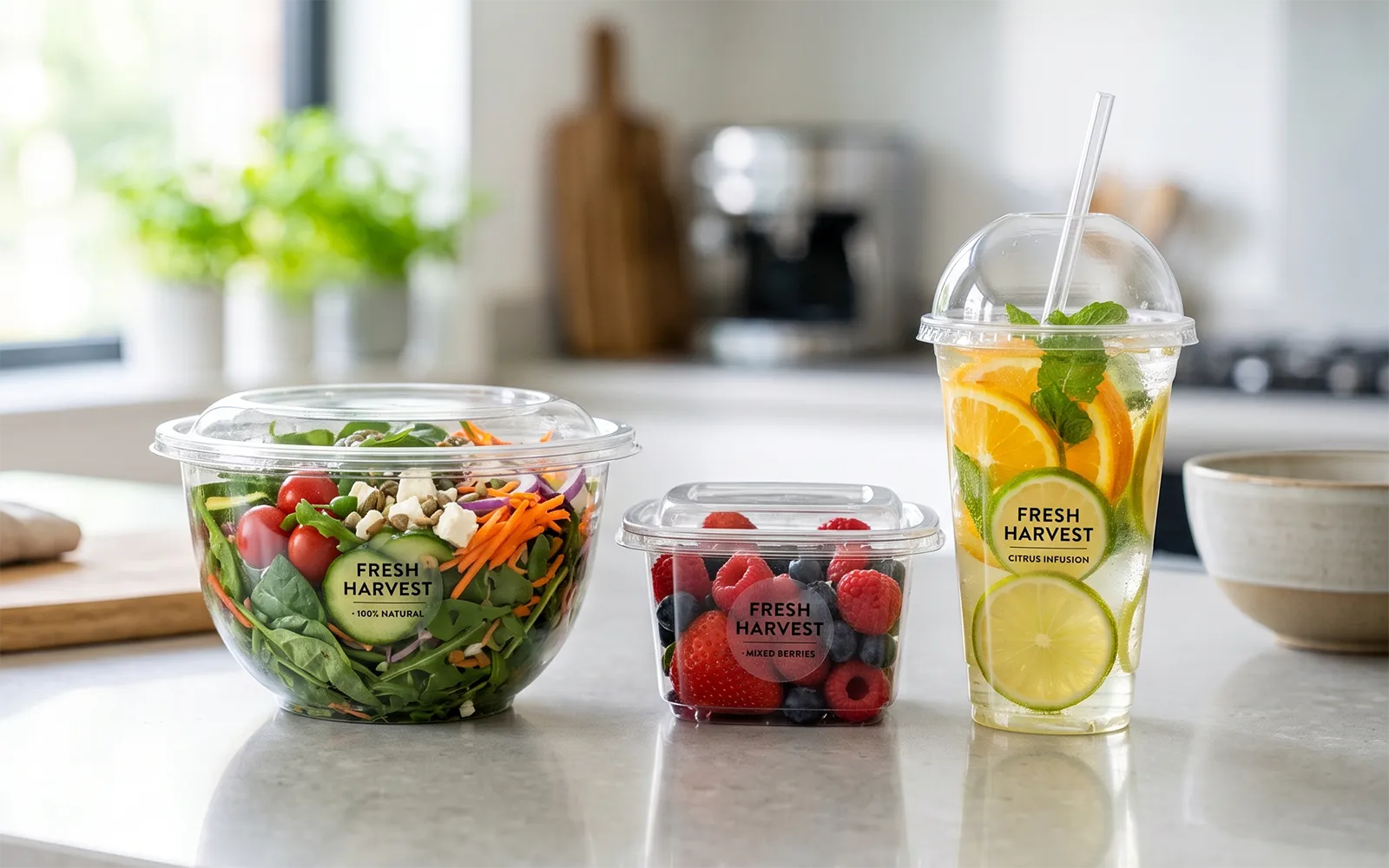
PET (polyethylene terephthalate) has quietly taken over large segments of food packaging — not through marketing campaigns, but through a convergence of material performance, processing efficiency, and regulatory alignment that makes it difficult for alternatives to compete on a total-cost basis.
For food manufacturers evaluating packaging materials, the question is rarely whether PET performs well enough. It is more often whether the specific application requirements — barrier needs, temperature exposure, shelf-life targets — can be met with standard PET, or whether the product calls for oriented PET, rPET blends, or a multi-layer approach.
What Makes PET Practically Superior for Food Packaging
Material Properties That Matter in Real Production
PET offers a useful combination of characteristics that food processors actually need. High clarity gives products strong shelf presence. Good moisture barrier performance protects dry and semi-moist goods. Chemical resistance holds up against acidic foods, oils, and typical food-contact substances.
But material properties alone do not explain PET’s dominance. What pushes it ahead is how those properties translate into production reality:
- Thermoforming compatibility: PET sheets process well on high-speed thermoforming lines, with consistent wall thickness and reliable release characteristics.
- Temperature resilience: PET maintains dimensional stability across cold-chain storage and ambient distribution, staying clear rather than clouding or becoming brittle.
- Sealability: PET seals cleanly with common heat-seal films, supporting reliable tamper-evident closures that retailers require.
- Lightweighting potential: PET’s strength-to-weight ratio allows material reduction without sacrificing package integrity, which directly impacts per-unit shipping costs.
Comparing PET With Common Food Packaging Materials
| Material | Clarity | Moisture Barrier | Heat Tolerance | Recyclability | Typical Cost |
|---|---|---|---|---|---|
| PET | Excellent | Good | Moderate | Widely Recycled | Low–Medium |
| PP | Good | Good | High | Recyclable | Low |
| PS | Good | Low | Low | Limited Recycling | Low |
| rPET | Excellent | Good | Moderate | Widely Recycled | Medium |
| PLA | Moderate | Low | Low | Composting Required | Medium–High |
PP remains the better choice for hot-fill applications above 90°C. But for the majority of chilled, ambient, and dry food products, PET delivers a stronger balance of clarity, barrier performance, and recyclability at a competitive price point.
How PET Fits Into High-Speed Food Production
Processing Efficiency
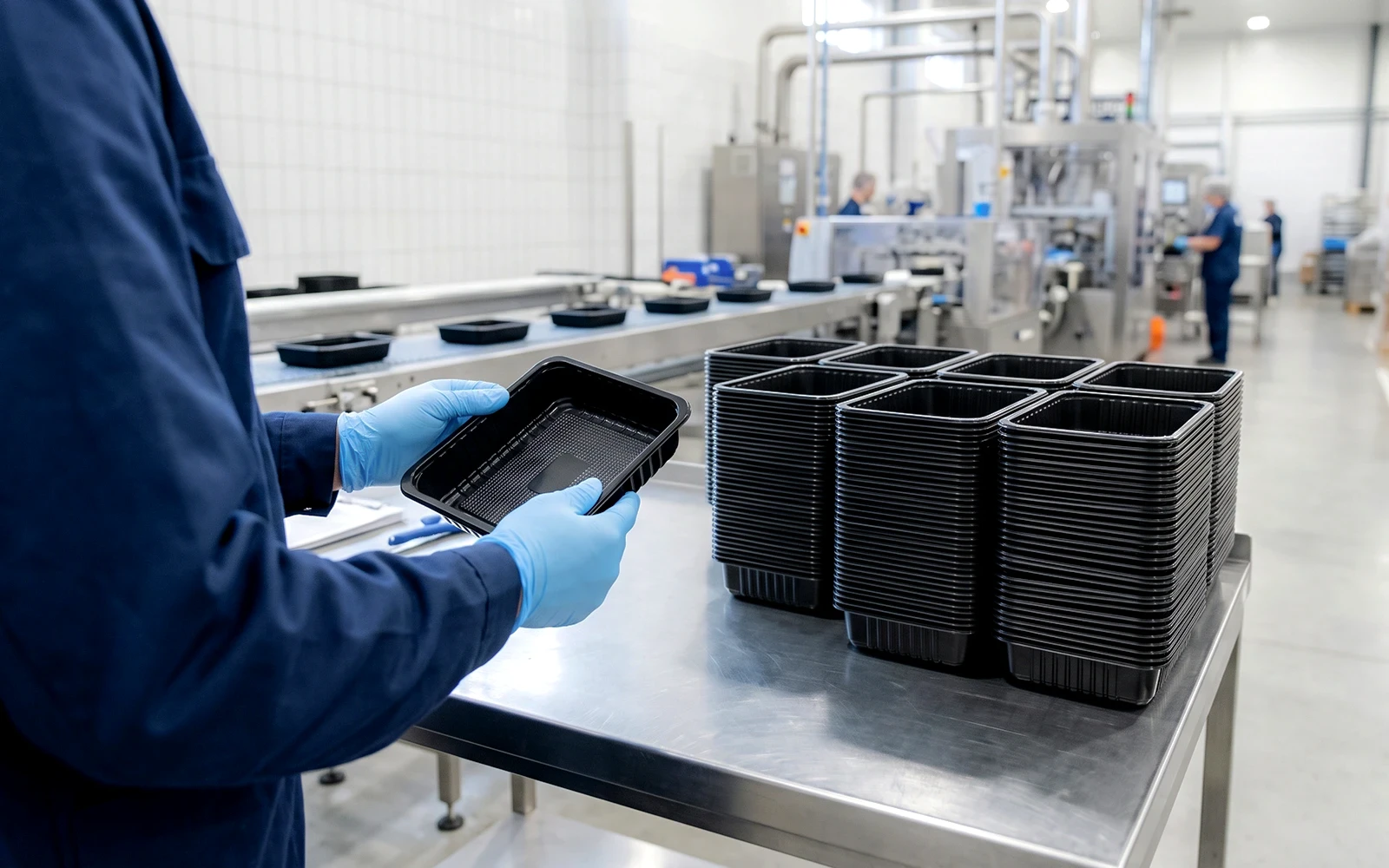
Food manufacturers running high-volume lines — whether fresh produce trays, deli containers, or bakery clamshells — depend on packaging that keeps pace with fill speeds. PET thermoforming equipment is widely available from multiple equipment suppliers, meaning tooling investment is lower and serviceability is more straightforward compared to less common materials.
The material’s processing window is forgiving. PET sheets run consistently across a range of thicknesses, and forming temperatures are well-understood across the industry. For operations producing thousands of units per hour, these practical factors typically outweigh any marginal advantage a niche material might offer on paper.
Supply Chain Resilience
PET sheet and preform supply is well-established globally. Raw material availability is stable, and lead times are predictable compared to newer bio-based alternatives where production capacity remains limited. For brands managing tight production schedules or seasonal demand surges, this reliability matters more than any sustainability headline.
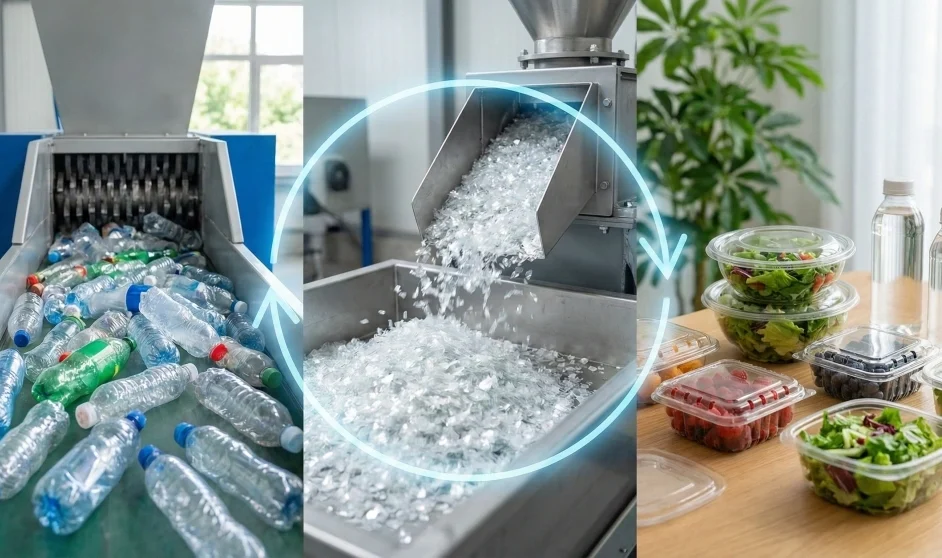
That said, rPET availability is tightening in some markets as demand from major brands outpaces collection and recycling infrastructure growth. Procurement teams should evaluate rPET sourcing options and pricing trends before committing to percentages that may prove difficult to maintain year-over-year.
Consumer Expectations and Retailer Requirements
What Shoppers Actually Want
Modern consumers expect food packaging to be transparent — they want to see the product inside. PET delivers glass-like clarity without the weight or breakage risk. It also supports easy opening and reclosing, which matters for multi-serve products and convenience formats.
Tamper evidence is no longer optional. Most major retailers mandate visible tamper-evident features for refrigerated and ambient food products. PET lids and seal structures integrate naturally with thermoformed trays, creating the visual evidence consumers have been conditioned to look for.
Recyclability as a Business Requirement
Extended Producer Responsibility (EPR) schemes are expanding across North America, Europe, and parts of Asia-Pacific. Under these frameworks, packaging recyclability directly affects compliance fees. PET — particularly PET marked with the #1 resin code — benefits from well-established collection and recycling streams in most markets.
For brands supplying private-label programs, retailers increasingly specify PET or rPET content requirements as part of their packaging guidelines. Meeting these specifications is not optional if you want to remain a qualified supplier.
Where PET Falls Short
PET is not universally ideal. Certain applications demand alternatives:
- Hot-fill products above 85°C may require PP or heat-set PET containers to prevent deformation.
- Long shelf-life products requiring oxygen barrier often need multi-layer structures or metallized PET rather than standard PET.
- Products marketed on compostability may pursue PLA or fiber-based packaging despite higher unit costs and reduced barrier performance.
Understanding these limitations upfront prevents costly redesigns after tooling investment has been committed.
Working With the Right Packaging Supplier
PET packaging performance depends as much on supplier capability as on material selection. A supplier with established thermoforming capacity, food-grade certifications covering FDA and EU standards, and experience with custom tooling can reduce both development timelines and ongoing quality risks.
Reliancepak operates 9 production lines dedicated to food-grade packaging, serving wholesale buyers across Southeast Asia, Europe, the Middle East, and the Americas. Our PET packaging solutions include thermoformed trays, containers, and specialty formats with full certification support for EU, FDA, and other international food-contact standards. With free sample availability and professional customization services, we help food manufacturers match PET packaging formats to their specific product and production-line requirements.
Frequently Asked Questions
Can PET packaging be used for microwave-ready food products?
Yes. Standard PET is suitable for microwave reheating up to approximately 70-80°C. For applications requiring higher microwave temperatures, heat-set PET or CPET (crystallized PET) should be specified to prevent warping or distortion during heating.
How do I choose between PET and rPET for my product line?
Evaluate three factors: your brand’s sustainability positioning, your retailer’s content requirements, and rPET supply stability in your sourcing region. rPET typically carries a 10-20% cost premium over virgin PET, and availability fluctuates depending on regional recycling infrastructure. Start with realistic percentage commitments you can maintain year-round.
What certifications should I require from a PET packaging supplier?
At minimum, verify FDA food-contact compliance for US markets and EU Regulation 10/2011 compliance for European distribution. Request material traceability documentation and third-party testing reports. For branded retail programs, confirm the supplier can provide consistent resin source documentation for audit purposes.
How long does custom PET packaging tooling typically take?
Standard thermoforming tool development ranges from 4-8 weeks depending on complexity and cavity count. Reorders of existing tools are typically fulfilled within 2-3 weeks. Plan tooling lead times into your product launch schedule to avoid production gaps.