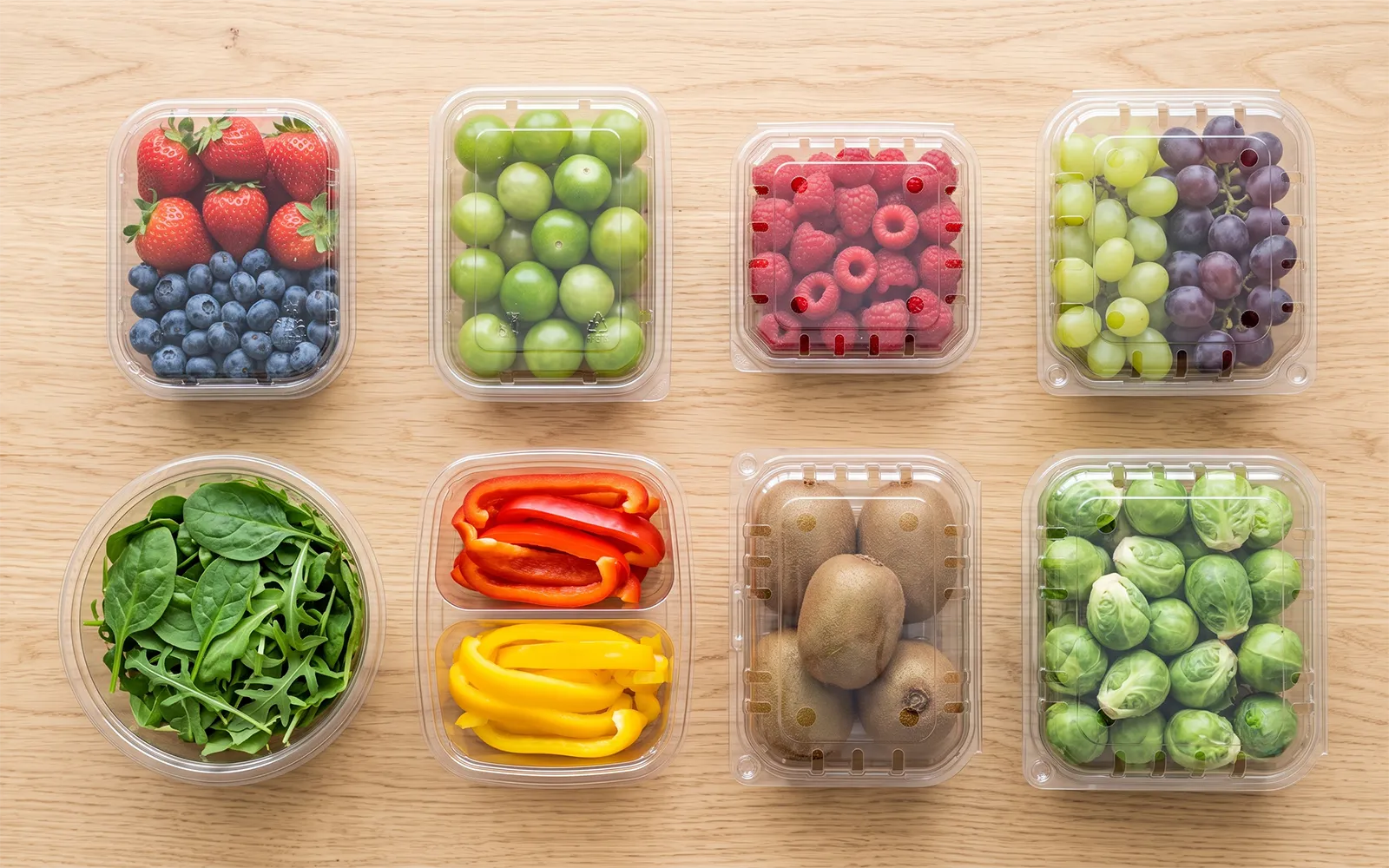
Fresh produce is among the most demanding categories to package correctly. You need visibility so consumers can assess quality at a glance, structural protection to prevent bruising during transit, and in many cases, a material that supports shelf-life extension through modified atmosphere packaging. PET and its recycled counterpart, rPET, address all three requirements — but the performance you get depends entirely on how the container is engineered.
This guide breaks down the structural, functional, and sustainability considerations that matter when evaluating PET packaging solutions for fruits and vegetables.
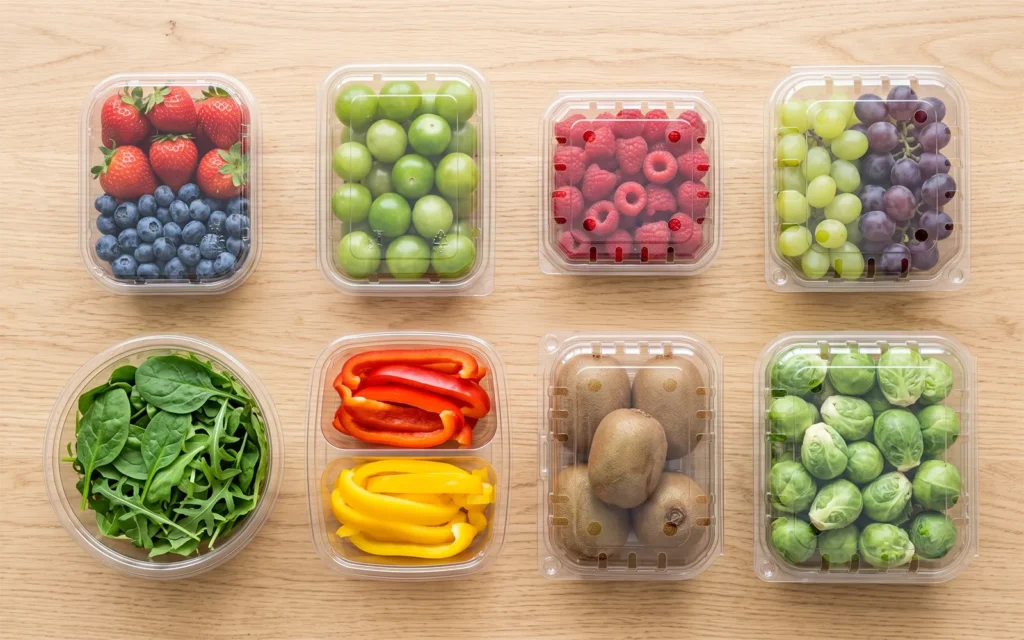
Why PET Works Well for Fresh Produce
PET offers a combination of properties that few alternative materials match in produce applications. It is optically clear, allowing full product visibility without compromising barrier performance. It is lightweight, which directly reduces shipping costs across long distribution chains. And it is food-safe by default, meeting FDA and EU contact material standards without additional coatings or treatments.
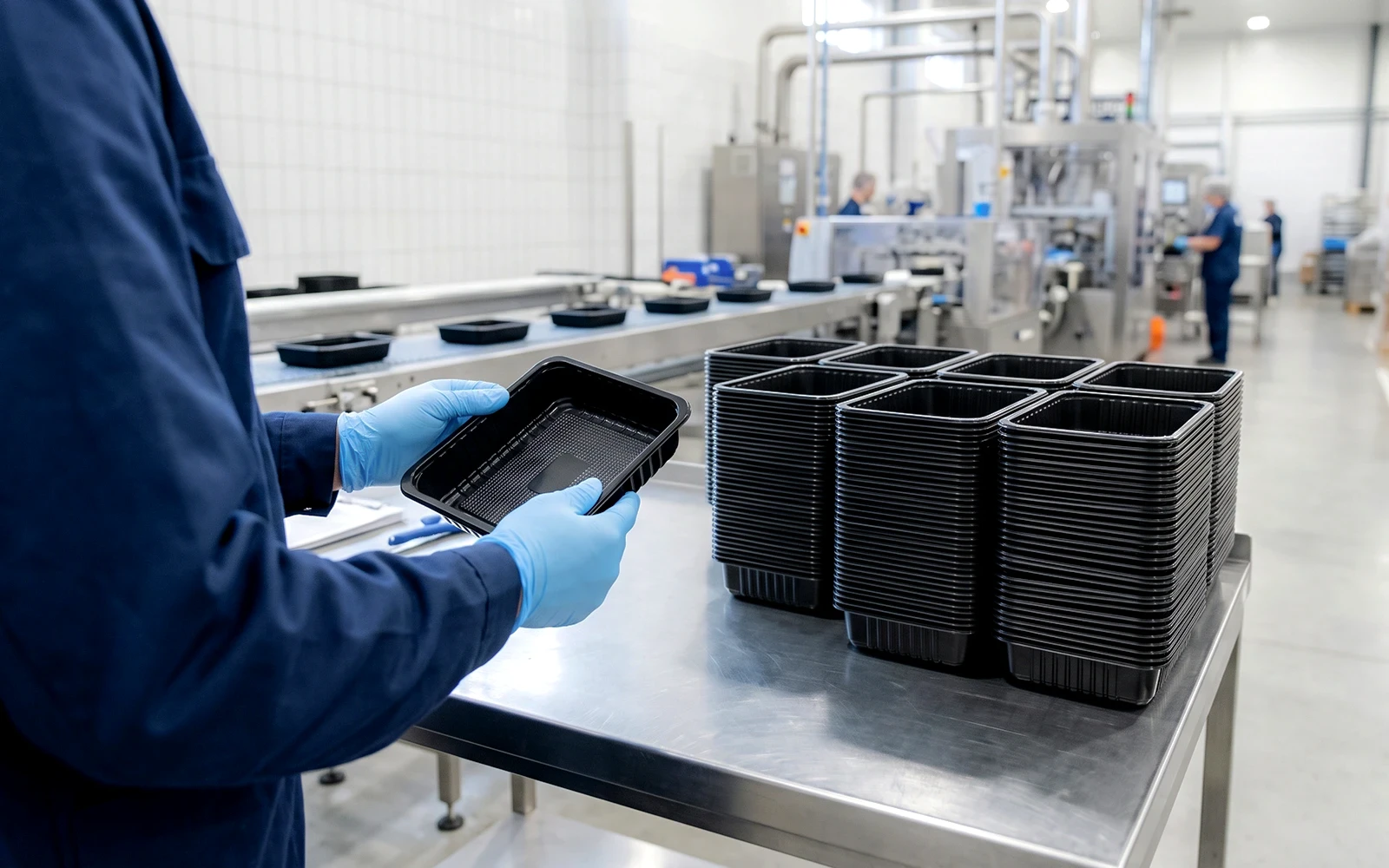
For growers and packers, PET also brings manufacturing consistency. Thermoformed PET containers can be produced at high volumes with tight dimensional tolerances — which matters when you are running automated filling and sealing lines where even minor variation causes downtime.
The trade-off is that PET is a petroleum-derived material, which creates sustainability pressure from retailers and consumers alike. This is exactly where rPET enters the conversation.
Designing for Protection and Ventilation
Produce packaging has to do something contradictory: protect delicate items from physical damage while still allowing air circulation to prevent moisture buildup and premature spoilage.
Clamshell designs remain the go-to format for berries, cherry tomatoes, and other fragile items. They provide a rigid outer shell that absorbs handling impact, while integrated ventilation slots manage humidity inside the container. The placement and size of these perforations require careful engineering — too few or too small, and you get condensation that accelerates mold; too many, and the structural integrity of the container weakens.
For larger produce like stone fruits or citrus, tray-based PET packaging with film lidding offers a different balance. The tray provides base support and stackability, while the film can be perforated or left sealed depending on the product’s respiration rate.
Key design factors to discuss with your packaging supplier include:
- Perforation pattern and hole diameter relative to product respiration rate
- Hinge durability for clamshell formats (repeated opening and closing)
- Stack strength for palletization and retail display
- Tamper-evident features required by certain retail chains
Modified Atmosphere Packaging Compatibility
For high-value produce items — pre-cut salads, premium berries, specialty tomatoes — modified atmosphere packaging (MAP) can extend shelf life by several days. That translates directly into reduced waste at the retail level and better margins for the grower.
MAP-compatible PET containers require precise sealing surfaces and consistent wall thickness. The container must hold a controlled gas mixture (typically elevated CO2 and reduced O2) without leaking, which means the thermoforming process has to maintain tight tolerances on rim flatness and corner geometry.
The economic case for MAP is strongest when the produce commands a premium price and the distribution window is long. For commodity items sold locally, the added cost of MAP sealing equipment and gas flushing may not justify the shelf-life gain.
| Feature | Standard PET | MAP-Compatible PET |
|---|---|---|
| Sealing surface tolerance | Moderate | High |
| Wall thickness consistency | Standard | Tight tolerance |
| Gas barrier performance | Basic | Enhanced with barrier layers |
| Equipment investment | Low | Higher (gas flushing systems) |
| Best suited for | Short-shelf-life produce | Premium or long-distance distribution |
rPET: Meeting Sustainability Demands Without Sacrificing Performance
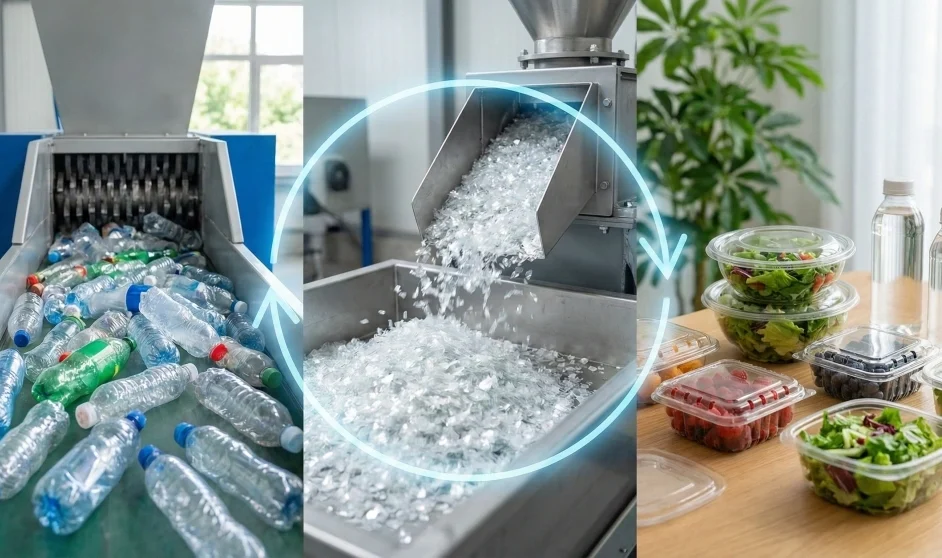
Recycled PET (rPET) is gaining traction across produce packaging as retailers face increasing pressure to reduce virgin plastic usage. The material is derived from post-consumer PET bottles that are collected, cleaned, and reprocessed into food-grade resin.
In most produce applications, rPET performs identically to virgin PET in terms of clarity, rigidity, and food safety. The main consideration is color consistency — rPET can occasionally carry a slight tint depending on the source material, which may or may not matter depending on your branding requirements.
From a procurement standpoint, rPET availability and pricing can fluctuate more than virgin PET. Supply depends on collection infrastructure and reprocessing capacity, which vary by region. If your packaging volumes are significant, securing a reliable rPET supply agreement early avoids disruption.
Reliancepak offers both virgin PET and rPET options across its produce packaging range, with food-grade certifications meeting EU and FDA standards. With 9 production lines and established export operations to markets including the US, Europe, and South America, the company can accommodate custom specifications for ventilation patterns, MAP compatibility, and branded thermoforming.
How to Evaluate a Produce Packaging Supplier
Choosing the right supplier for PET produce packaging goes beyond unit pricing. You need a partner who understands the functional requirements of fresh produce and can deliver consistency at scale.
Consider these evaluation criteria:
- Can they provide samples with your specific perforation or venting pattern for testing?
- Do they hold food-grade certifications relevant to your target market (FDA, EU 10/2011)?
- What is their minimum order quantity, and does it align with your production schedule?
- Can they support both virgin PET and rPET material options?
- Do they offer MAP-compatible container designs, and can they advise on sealing parameters?
A supplier with in-house thermoforming capability and international trade experience — like Reliancepak — can typically move from concept to production faster than one relying on outsourced manufacturing. Lead times for custom tooling typically range from 2 to 4 weeks, depending on container complexity.
Frequently Asked Questions
Can PET produce containers be recycled in municipal systems?
Yes. PET is one of the most widely recycled plastics globally. Containers marked with resin code 1 (PET/PETE) are accepted in most curbside recycling programs. rPET packaging follows the same recycling pathway.
How do I determine the right ventilation pattern for my produce?
Work with your packaging engineer to match perforation size and density to the product’s respiration rate. Delicate items like strawberries need finer venting; hardier produce like citrus tolerates larger openings.
What is the typical lead time for custom PET clamshell tooling?
Standard tooling takes 2 to 4 weeks from design approval. More complex MAP-compatible formats with precision sealing surfaces may require additional calibration time before production begins.
Is rPET more expensive than virgin PET for produce packaging?
Pricing varies by market and volume. In many cases, rPET carries a modest premium, though this gap has narrowed as recycled resin supply chains mature. Bulk procurement agreements can offset the difference.