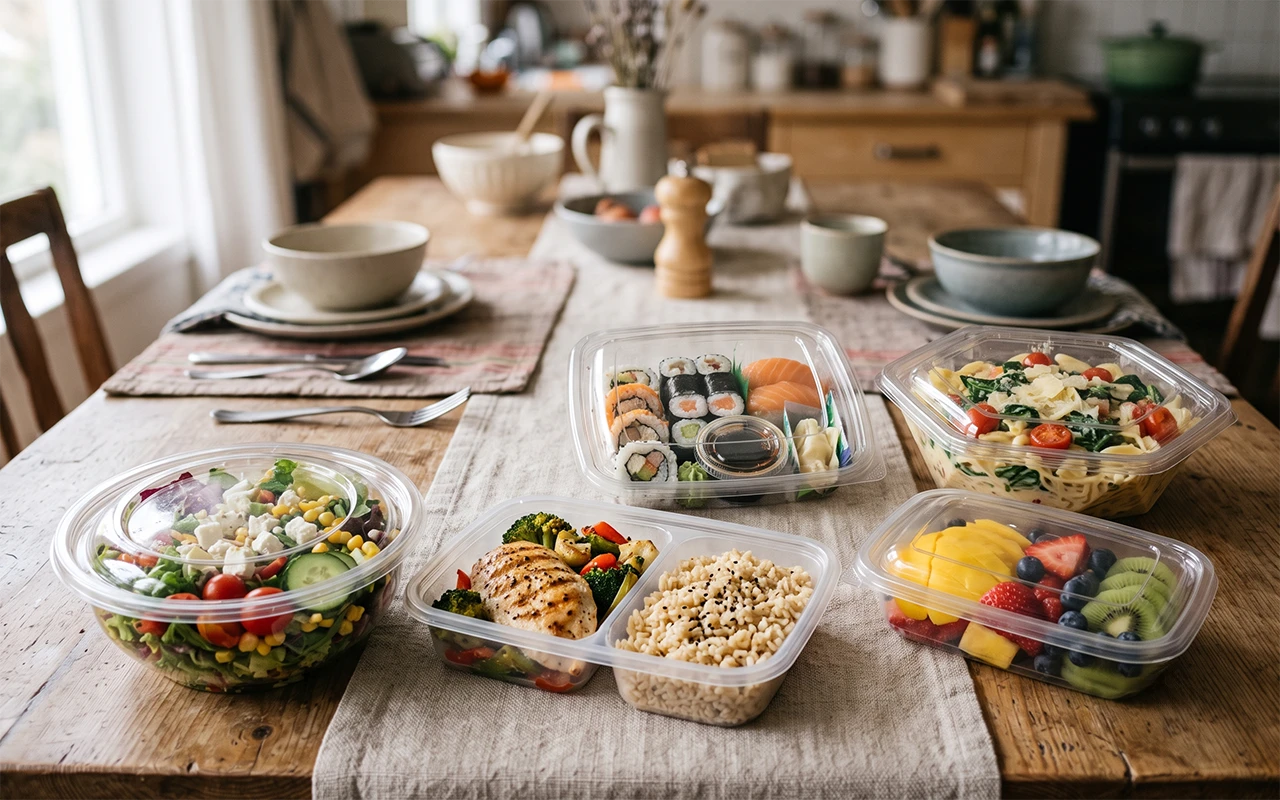
Food delivery has changed what takeaway packaging actually has to do. A container that sits on a retail shelf only needs to look good and survive casual handling. Once it goes into a delivery bag, it faces 30–60 minutes of transit: repeated handling, temperature swings, stacking under other orders, and the occasional careless drop. For wholesale buyers, choosing food delivery packaging is therefore less about appearance and more about how the design holds up under real operating conditions.
PET is a common material for this segment, and for good reason — it is clear, lightweight, and economical at volume. But PET alone does not guarantee reliable delivery performance. The container design, the closure system, and the sourcing decision determine whether your packaging protects the order or undermines it.
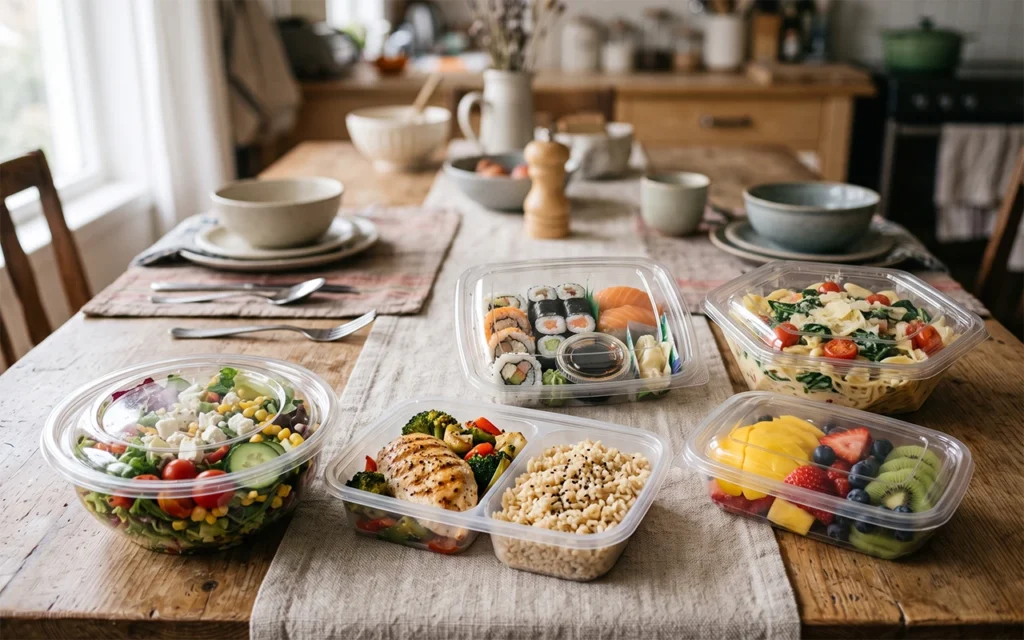
Leak Resistance and Transport Durability
Delivery packaging faces mechanical stresses that retail packaging rarely does. Leaks are the most visible failure point and usually the most damaging: a spilled curry ruins the order, the delivery bag, and the customer relationship in a single incident. Most of these problems are decided at the closure.
For liquid or sauce-heavy dishes, snap-on lids with positive locking features outperform friction-fit alternatives. A locking rim holds the lid in place during the jostling and stacking typical of a delivery run, while a friction fit can work loose when the container is squeezed or the lid is not pressed down evenly. Consistent sealing surfaces matter just as much — any variation in the rim finish creates a gap that leaks under pressure.
| Closure type | Leak protection | Typical fit |
|---|---|---|
| Snap-on lid with locking rim | High | Soups, curries, sauced dishes |
| Friction-fit lid | Moderate | Dry and semi-dry foods |
| Heat/film sealing | High | High-moisture or long-distance orders |
The trade-off for buyers is straightforward. Locking lids and film seals cost more per unit than friction-fit options. If a portion of your menu is low-moisture — sandwiches, pastries, cold salads — a friction-fit design may be the more economical call. The mistake is applying one closure type across the whole menu and discovering the difference on the road.
Brand Presentation at the Moment of Unboxing
For most delivery customers, packaging is the first physical contact they have with your brand. PET’s clarity and premium appearance are an advantage here — a clean, transparent container signals freshness before the lid comes off. That advantage only holds if the packaging arrives clean and undamaged.
A container that arrives cloudy, cracked, or leaking undoes the brand experience regardless of food quality. This is where material grade and handling consistency show up. Off-grade PET resin tends to cloud or yellow under heat; thin sidewalls crack under stacking pressure. Neither is visible at the factory gate, but both are visible in the customer’s hands. Reliable suppliers test materials against real delivery conditions and can document their resin grades and certifications.
Sourcing Considerations for Bulk Buyers
Delivery packaging is bought in volume, and volume changes the math. Three factors dominate the purchasing decision.
- Food-grade compliance. For export markets, certificates such as EU food contact standards and FDA compliance are a prerequisite, not a differentiator.
- Lead time and MOQ. Delivery demand fluctuates by season and city. A supplier’s production capacity and lead time determine how tightly you can match inventory to demand without overstocking.
- Sampling before commitment. Closures fail at the seams, and a spec sheet will not tell you how a lid behaves on your actual product. Order samples, test them with your dishes, and simulate a delivery run before committing to a full container order.
Suppliers that combine manufacturing with international trading, like Reliancepak, can simplify this process — one point of contact for production, compliance documentation, and export logistics. With 9 production lines and food-grade certification for EU and FDA markets, they are set up to serve wholesale customers who need consistent quality and predictable fulfillment.
FAQ
Can PET containers handle hot food during delivery?
Yes.
Standard PET withstands typical takeaway temperatures. Repeated exposure to very hot, high-fat contents can cause deformation over time, so test PP or C-PET alternatives if your menu runs exceptionally hot.
Do snap-on lids leak less than friction-fit lids?
Yes.
Snap-on lids with a positive locking rim hold up better under stacking and jostling, making them the safer choice for liquids and sauced dishes. They cost a bit more per unit, so pair them with your higher-moisture items.
What should I consider when sourcing delivery packaging in bulk?
Start with three checks:
- Confirm food-grade certification for your target markets.
- Match MOQ and lead time against your demand forecast.
- Test samples with your actual products before placing a full order.