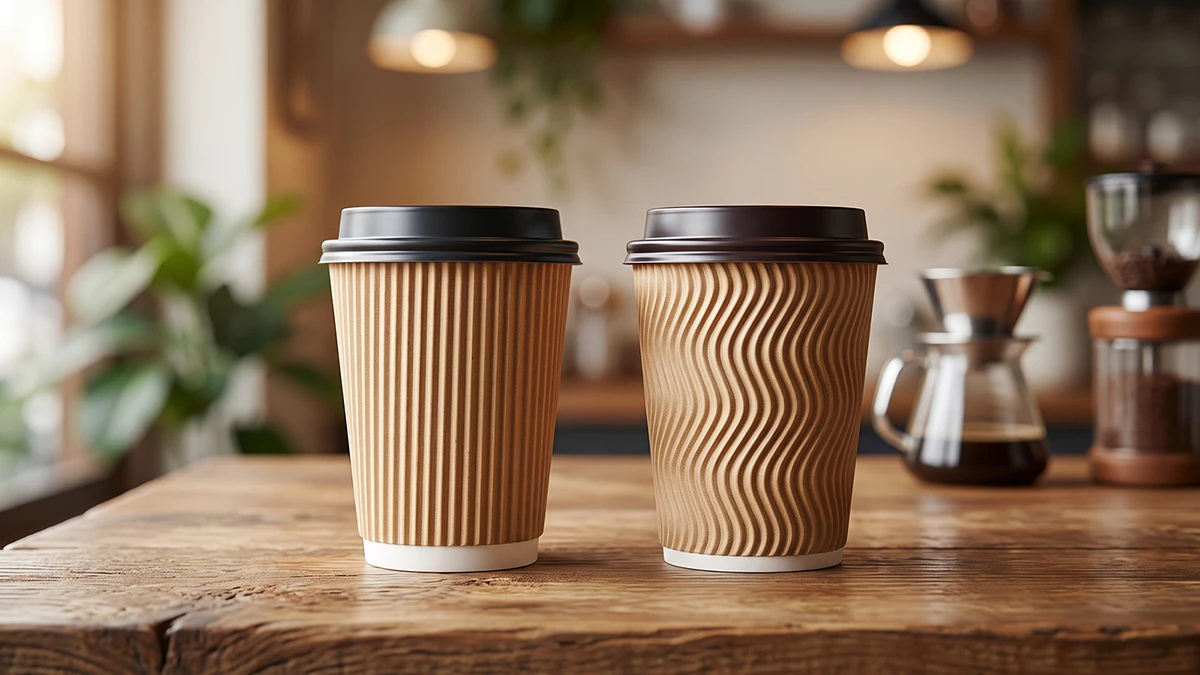
Ripple wall paper cups solve one problem for every hot-drink business: keeping the cup comfortable to hold without adding a sleeve. But when you request a quote, suppliers will usually offer you two texture options — vertical ripple (straight grooves running top to bottom) and S-wave (curved grooves in a zigzag pattern). The difference looks purely cosmetic on a sample tray, yet it affects insulation feel, printing results, and even unit cost.
This guide compares the two from a purchasing perspective, so you can match the texture to your drink menu, brand style, and budget before you commit to a run.
Quick Comparison
| Dimension | Vertical Ripple | S-Wave Ripple |
|---|---|---|
| Appearance | Clean, orderly, architectural look | Dynamic, softer visual rhythm |
| Grip feel | Grooves sit under fingers consistently | Curves distribute pressure unevenly, some buyers find it softer |
| Insulation | Comparable air-gap performance | Comparable air-gap performance |
| Printing surface | Straight rows align well with vertical logos | Curves suit patterns; small upright text may look slightly distorted |
| Production speed | Slightly faster tooling alignment | Slower, more critical die alignment |
| Typical use | Coffee chains, premium takeaway | Bubble tea, casual cafés, seasonal promos |
Appearance and Shelf Presence
Vertical Ripple
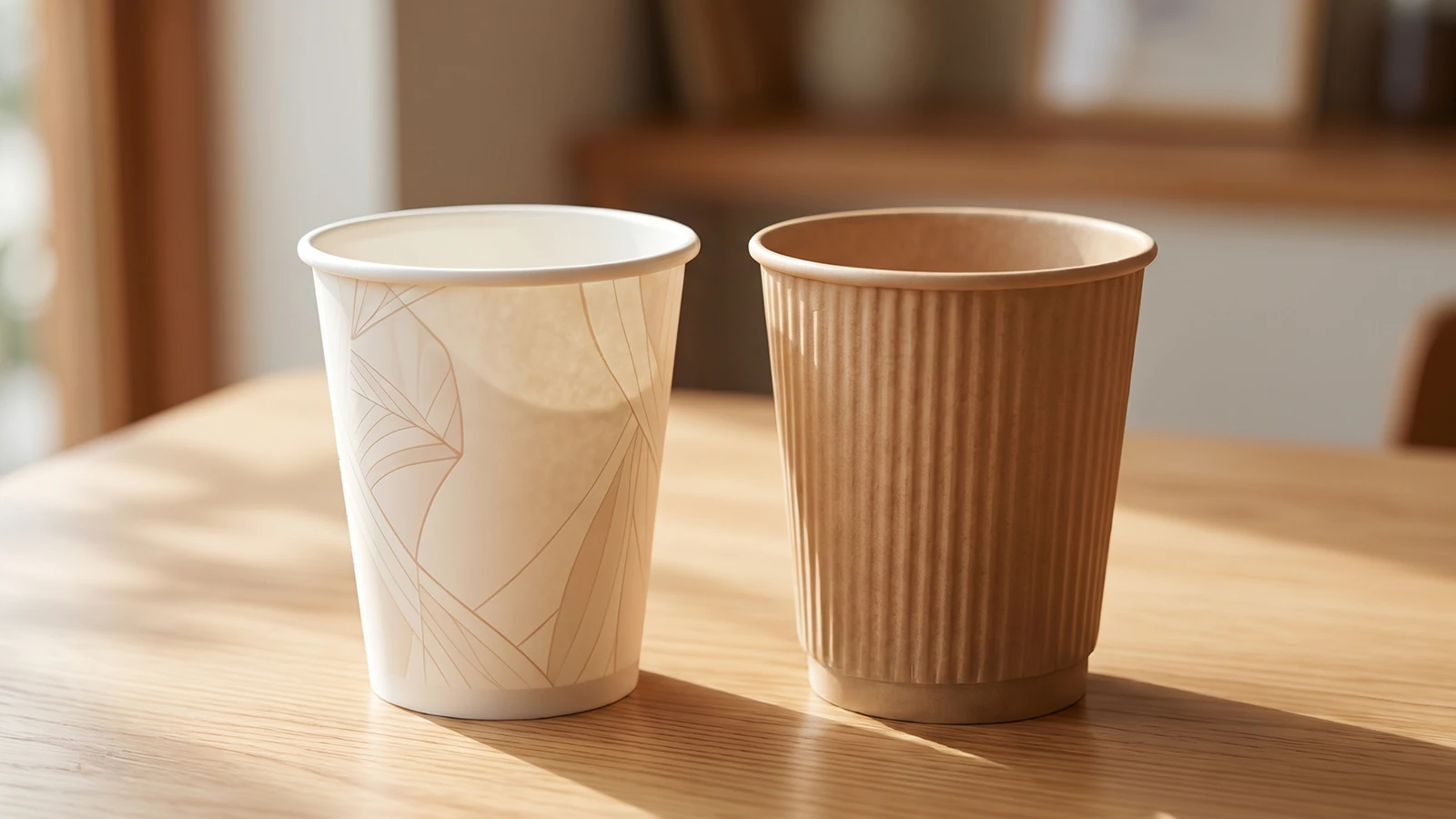
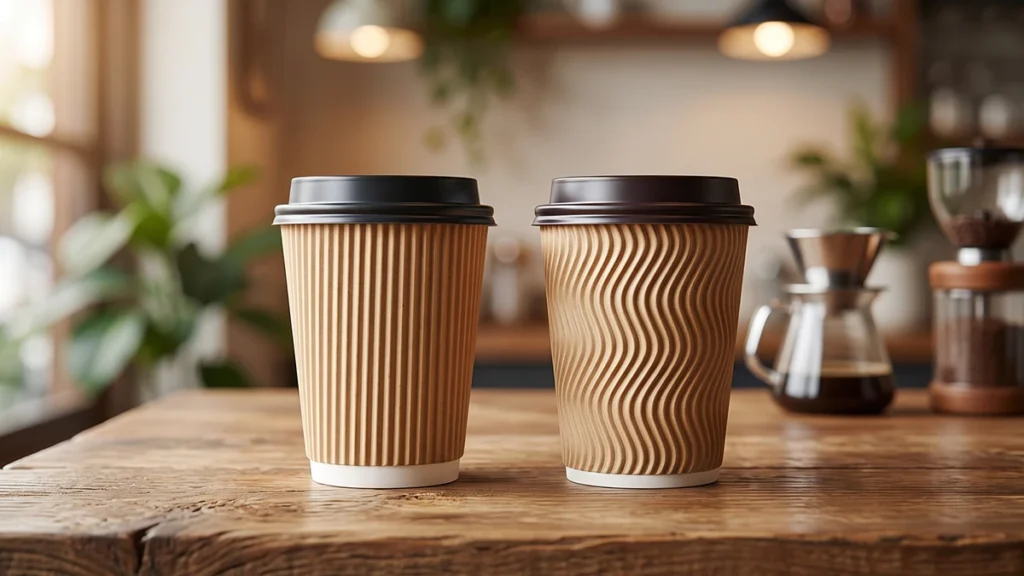
Vertical grooves create a disciplined, uniform surface. Under lighting, the parallel lines read as a deliberate design choice, which is why many coffee chains and premium takeaway brands favor this texture for latte and americano cups. If your branding leans minimal — a single logo, a solid color band — vertical ripple keeps the composition tidy.
S-Wave Ripple
S-wave grooves break the straight lines with alternating curves, giving the cup a livelier surface that catches light irregularly. It tends to photograph well and works better for playful or seasonal designs. One practical note: upright text printed across the curved grooves can appear slightly wavy, so keep critical copy on the smooth bands between grooves or move it to the lid area.
Heat Insulation and Handling
Both textures work the same way in principle: the ripple layer creates air gaps between the inner and outer walls, reducing heat transfer to the hand. In most scenarios, the difference between the two textures is minor, and either will let customers hold a fresh-poured coffee without a sleeve.
Where they diverge slightly is grip consistency. Vertical grooves give fingers a repeating ridge pattern around the full circumference, so the hold feels the same regardless of hand position. S-wave grooves vary in orientation, which some buyers report as a softer, more “organic” hold — but it is a matter of feel, not measurable performance. If your drinks run above 85°C, ask your supplier for a sample test with your actual beverage temperature rather than relying on texture claims.
Structure and Durability
The ripple layer adds rigidity to both versions compared with single-wall cups. During transport, the outer texture also acts as a buffer against minor denting.
- Vertical ripple: grooves run parallel to the cup axis, which helps the wall resist vertical crushing in stacked cartons.
- S-wave ripple: the curved pattern spreads stress diagonally, which can handle lateral pressure well but may show visible creasing at the curve joints if the paper weight is too low.
For either texture, wall performance depends more on paperboard grams per square meter (GSM) and the lamination process than on groove direction. When comparing quotes, check the GSM specification first.
Production Considerations
From a factory standpoint, vertical ripple is the simpler of the two to produce. The straight grooves align predictably with the cup-forming tooling, which typically supports faster line speeds and a lower scrap rate on large orders. This is one reason vertical ripple often quotes slightly cheaper at high volumes.
S-wave ripple requires more careful die alignment so the curves meet cleanly at the seam. Output is still fully industrial — this is a mature process — but expect marginally longer lead times or a higher minimum order quantity in some factories, depending on their existing tooling.
Usage Scenarios: Which One Fits Your Business?
Choose based on what the cup needs to do for you:
- Brand tone matters most: vertical ripple for a clean, premium café image; S-wave for a casual, youthful brand.
- Heavy printing: vertical ripple aligns better with vertical text and logos.
- Budget at scale: vertical ripple usually wins on unit cost for large repeated orders.
- Seasonal or promotional runs: S-wave’s visual variety suits limited-edition designs.
Neither texture is universally “better.” Many distributors stock both and let the client’s brand guidelines decide — our ripple wall cups product page covers both textures in one range, which is convenient if you want to test two SKUs on the same order.
Custom Sizing and Branding
Both textures are available in standard hot-drink sizes (typically 4 oz to 16 oz in most markets), and both can be customized with your logo, color scheme, and lid compatibility requirements. At Reliancepak we handle custom ripple wall cup projects end to end — OEM/ODM artwork adaptation, food-grade materials certified to FDA and EU standards, free samples for testing before mass production, and fast global delivery to markets including the United States, Europe, and the Middle East. If you are unsure which texture suits your product line, we can produce sample sets in both so you can compare with your actual beverages before placing a bulk order.
FAQ
Do vertical ripple and S-wave ripple cups insulate differently?
Not meaningfully. Both create the same air-gap insulation principle, and in typical hot-drink use (60–85°C) the hand-feel difference is negligible. Request samples tested at your actual serving temperature.
Which texture costs more?
Vertical ripple typically quotes slightly lower at high volumes because it runs faster on forming lines. The gap is usually small — confirm with a quote at your specific quantity.
Can I print a full-color design on either texture?
Yes, but plan around the grooves. Vertical ripple suits upright logos and text; S-wave handles patterns better. Keep critical small text on the smooth bands or adjust it in the artwork proof.
Are ripple wall cups recyclable?
It depends on the lining material and local recycling infrastructure. PE-lined cups face the same recycling limits as other lined paper cups; ask your supplier about available lining options and check your target market’s facilities.
What is the usual minimum order quantity for custom printing?
MOQ varies by factory, cup size, and printing method. Most wholesale suppliers set MOQ per size per design, so combining sizes under one design may reduce total cost. Contact the supplier with your quantities for an exact figure.