
Biodegradable packaging refers to packaging materials that can decompose naturally through the action of microorganisms, breaking down into water, carbon dioxide, and organic matter within a defined timeframe without leaving harmful residues in the environment. This category includes materials such as PLA (polylactic acid), bagasse, paper-based products, and other plant-derived substrates that offer functional alternatives to conventional petroleum-based plastics.
If you are a procurement manager or packaging distributor searching for sustainable packaging solutions, you have likely encountered a maze of conflicting claims, certification standards, and material options. The pressure from regulatory bodies, end consumers, and corporate sustainability goals makes the decision process even more complex. This guide serves as your definitive resource for understanding biodegradable packaging from raw material selection through wholesale purchasing strategies, helping you make informed decisions that balance environmental responsibility with operational efficiency and cost management.

What Exactly Is Biodegradable Packaging and How Does It Work?
Biodegradable packaging consists of materials engineered to break down through natural biological processes, typically within months to a few years under appropriate conditions. The decomposition occurs when microorganisms such as bacteria and fungi consume the material as a food source, converting it into natural substances.
The science behind biodegradation involves enzymatic reactions that break polymer chains into smaller molecules. Unlike conventional plastics that may persist for hundreds of years, biodegradable materials are designed with molecular structures that microorganisms can recognize and process. Here’s the deal: not all biodegradable materials perform equally across different environments.
How Do Different Biodegradation Environments Affect Breakdown?
The environment where packaging ends up significantly influences how quickly and completely it degrades. Industrial composting facilities maintain temperatures between 55-60°C with controlled moisture and oxygen levels, creating optimal conditions for rapid decomposition. Home composting environments operate at lower temperatures and with less consistency, resulting in slower breakdown rates.
Key environmental factors include:
- Temperature: Higher temperatures accelerate microbial activity
- Moisture content: Water is essential for hydrolysis reactions
- Oxygen availability: Aerobic decomposition produces CO2, while anaerobic produces methane
- Microbial population: Diverse microbial communities break down materials more efficiently
- pH levels: Most biodegradation occurs optimally at neutral pH ranges
Marine and soil environments present different challenges. Ocean temperatures and salt content create hostile conditions for many biodegradable materials, while soil composition varies dramatically by region.
What Certifications Validate Biodegradability Claims?
Third-party certifications provide verification that materials meet specific biodegradation standards. The most recognized certifications in global markets include EN 13432 (European standard), ASTM D6400 (American standard), and OK Compost (TÜV Austria). These certifications test materials under controlled conditions and set minimum thresholds for biodegradation percentage and timeframe.
Certification requirements typically specify:
- Minimum 90% biodegradation within 180 days under industrial composting conditions
- Disintegration of 90% of material into fragments smaller than 2mm within 12 weeks
- No negative effects on composting process or compost quality
- Heavy metal content below specified limits
- Ecotoxicity testing showing no harm to plant growth
| Certification | Region | Composting Type | Timeframe | Key Requirement |
|---|---|---|---|---|
| EN 13432 | Europe | Industrial | 180 days | 90% biodegradation |
| ASTM D6400 | USA | Industrial | 180 days | 90% biodegradation |
| OK Compost HOME | Global | Home | 365 days | 90% biodegradation |
| AS 4736 | Australia | Industrial | 180 days | 90% biodegradation |
Procurement professionals should request certification documentation from suppliers and verify that certifications apply to the specific product configuration being purchased, not just the raw material.
Key Takeaway: Understanding biodegradation mechanisms and certification standards helps B2B buyers evaluate supplier claims accurately and select materials that will perform as expected in their target disposal environments.
What Are the Primary Materials Used in Biodegradable Packaging?
The biodegradable packaging industry relies on several core material categories, each derived from renewable resources and offering distinct performance characteristics. PLA, bagasse, paper pulp, palm leaf, and wheat straw represent the most commercially viable options currently available at wholesale scale.
Material selection depends on your specific application requirements, including temperature resistance, moisture barriers, structural strength, and aesthetic considerations. Each material category has undergone significant development over the past decade, with manufacturers continuously improving performance to close the gap with conventional plastics.
What Makes PLA a Popular Biodegradable Option?
PLA (polylactic acid) is a bioplastic derived from fermented plant sugars, typically sourced from corn starch, sugarcane, or cassava. The manufacturing process converts these starches into lactic acid through fermentation, which is then polymerized into a versatile thermoplastic material. PLA offers clarity similar to PET plastic, making it popular for applications where product visibility matters.
PLA characteristics for packaging applications:
- Heat resistance up to approximately 50-55°C (standard PLA)
- CPLA (crystallized PLA) withstands temperatures up to 85°C
- Excellent clarity and gloss for transparent packaging
- Good printability for branding applications
- Requires industrial composting facilities for proper biodegradation
- Shelf life of 12-24 months under proper storage conditions
The material performs well for cold beverages, salad containers, and retail packaging where ambient temperatures remain controlled. CPLA versions extend applications to hot beverages and warm foods.
How Does Bagasse Compare to Other Plant-Based Materials?
Bagasse, the fibrous residue remaining after sugarcane juice extraction, has emerged as a leading material for molded fiber packaging. This agricultural byproduct transforms into sturdy containers through a pulping and molding process that requires significantly less energy than virgin paper production.
Bagasse advantages include:
- Natural heat resistance up to 100°C without additional treatments
- Microwave safe for food reheating applications
- Oil and water resistance with appropriate coatings
- Rigid structure suitable for heavy food items
- Rapid biodegradation in both industrial and home composting environments
- Carbon negative production when sourced from sugarcane processing waste
The material excels in food service applications, particularly for takeaway containers, plates, and bowls that must withstand hot and wet conditions.
What Role Do Paper-Based Materials Play in Biodegradable Packaging?
Paper and paperboard remain foundational materials in biodegradable packaging, with modern innovations addressing historical limitations around moisture and grease resistance. FSC-certified paper products offer verified sustainable sourcing, while aqueous coatings and PLA linings extend functionality without compromising biodegradability.
Paper-based packaging applications span:
- Cups and containers with biodegradable linings
- Folding cartons for dry goods
- Paper bags for retail and food service
- Molded pulp packaging for protective cushioning
- Corrugated boxes for shipping and display
The familiar feel and excellent printability of paper products make them preferred choices for brands prioritizing premium presentation alongside sustainability credentials.
| Material | Heat Resistance | Moisture Resistance | Composting Type | Best Applications |
|---|---|---|---|---|
| Standard PLA | 50-55°C | Moderate | Industrial | Cold cups, salad containers |
| CPLA | 85°C | Moderate | Industrial | Hot cup lids, cutlery |
| Bagasse | 100°C | Good (coated) | Industrial/Home | Hot food containers, plates |
| Paper (coated) | 90°C | Good | Industrial/Home | Cups, cartons, bags |
| Palm Leaf | 120°C | Excellent | Home | Premium plates, bowls |
Material innovation continues at rapid pace, with research focused on improving barrier properties, extending temperature ranges, and reducing production costs.
Key Takeaway: Selecting the right biodegradable material requires matching technical specifications to your specific application conditions, and working with suppliers who can provide detailed performance data for their products.
What Product Categories Dominate the Biodegradable Packaging Market?
Biodegradable packaging products have achieved commercial viability across several high-volume categories, with food service packaging leading adoption due to regulatory pressure and consumer demand. Cups, containers, plates, cutlery, and bags represent the largest market segments, each with specific material and design requirements.
The food packaging sector drives approximately 70% of biodegradable packaging demand globally, reflecting both the disposable nature of food service items and increasing bans on single-use plastics in this category.
What Options Exist for Biodegradable Cups and Lids?
Biodegradable cups have evolved from basic paper cups to sophisticated multi-layer constructions that match conventional plastic performance. Hot cups typically feature paper substrates with PLA or aqueous coatings, while cold cups may use transparent PLA or paper depending on application requirements.
Cup and lid specifications to evaluate:
- Wall thickness affecting insulation and rigidity
- Lid fit tolerance for leak prevention
- Stackability for efficient storage and dispensing
- Printing compatibility for custom branding
- Lid material matching cup for single-stream composting
- Size range availability for menu flexibility
The lid component often presents greater engineering challenges than cups, requiring materials that maintain flexibility for secure attachment while remaining rigid enough for drinking apertures and closures.
How Have Food Containers Evolved for Takeaway and Meal Prep?
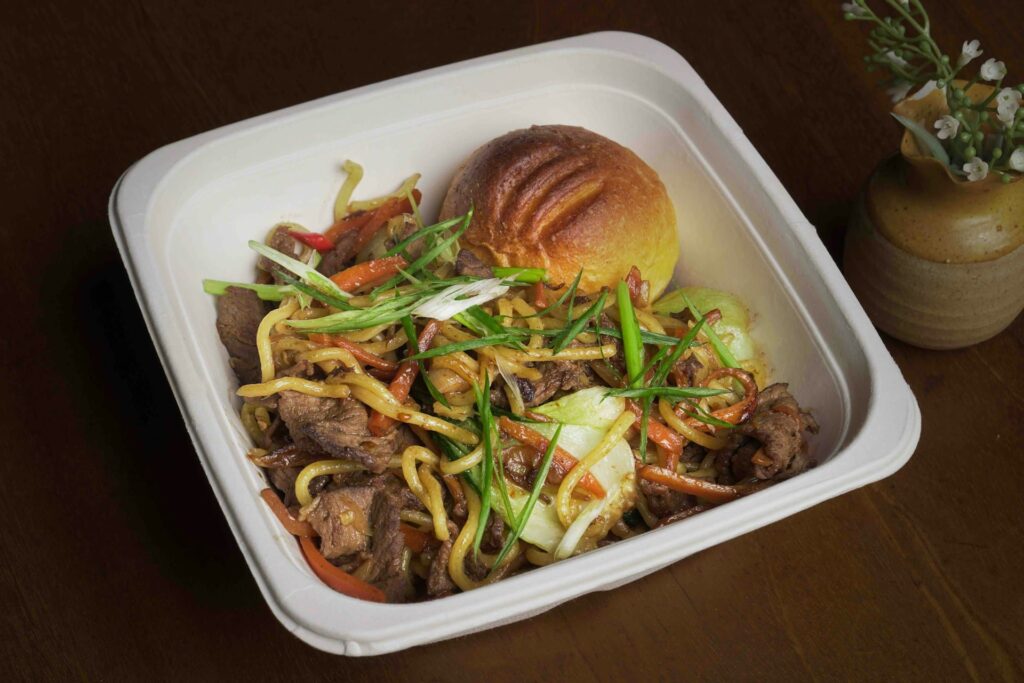
Food containers represent the most diverse category within biodegradable packaging, spanning clamshells, rectangular containers, round bowls, and multi-compartment designs. Bagasse dominates this segment due to superior heat resistance and structural integrity, though PLA and paper options serve specific niches.
Container evaluation criteria include:
- Closure mechanism security for transport
- Venting options for hot food moisture management
- Compartment configurations for combo meals
- Stackability for kitchen efficiency
- Microwave reheating compatibility
- Oil and grease resistance duration
The meal prep and delivery market has driven significant innovation in container design, with features like tamper-evident closures and integrated sauce cups becoming standard options.
What Complementary Products Complete a Biodegradable Packaging Line?
Beyond cups and containers, a comprehensive biodegradable packaging program includes cutlery, straws, napkins, bags, and specialty items. These products often determine customer perception of a brand’s sustainability commitment, as they are directly handled during consumption.
Essential complementary products:
- CPLA or wooden cutlery sets
- Paper or PLA straws in various diameters
- Unbleached or recycled content napkins
- Paper bags with reinforced handles
- Portion cups for condiments and dressings
- Food wraps and sheets for sandwich service
Coordinating materials across product categories simplifies disposal instructions for end consumers and may qualify for single-stream composting programs.
| Product Category | Primary Materials | Temperature Range | MOQ Typical Range |
|---|---|---|---|
| Hot Cups | Paper/PLA lined | Up to 95°C | 10,000-50,000 pcs |
| Cold Cups | PLA, Paper/PLA | Up to 40°C | 10,000-50,000 pcs |
| Food Containers | Bagasse, Paper | Up to 100°C | 5,000-25,000 pcs |
| Cutlery | CPLA, Wood, Bamboo | Up to 85°C | 10,000-100,000 pcs |
| Straws | Paper, PLA | Up to 40°C | 50,000-500,000 pcs |
Key Takeaway: Building a complete biodegradable packaging program requires sourcing multiple product categories, and working with suppliers who offer comprehensive product lines reduces procurement complexity and ensures material compatibility.
How Does Biodegradable Packaging Cost Compare to Traditional Alternatives?
Biodegradable packaging typically carries a price premium of 15-40% compared to conventional plastic equivalents, though this gap has narrowed considerably as production scales have increased and manufacturing efficiencies improved. The actual cost differential varies significantly by product category, order volume, and specification requirements.
Understanding total cost of ownership rather than unit price alone provides a more accurate picture for procurement decisions. Disposal costs, regulatory compliance, brand value enhancement, and potential penalties for non-compliance with plastic restrictions all factor into the equation.
What Factors Drive Biodegradable Packaging Pricing?
Raw material costs constitute the largest component of biodegradable packaging pricing, with agricultural commodity prices directly influencing PLA, bagasse, and paper costs. Manufacturing complexity, certification requirements, and supply chain logistics add additional cost layers.
Price influencing factors include:
- Raw material commodity pricing and availability
- Manufacturing process energy requirements
- Certification and testing costs
- Minimum order quantities and production run efficiency
- Shipping weight and volume (often higher than plastic equivalents)
- Customization complexity (printing, sizing, special features)
- Supplier margin expectations and market positioning
Seasonal variations in agricultural commodity availability can cause 10-20% price fluctuations throughout the year, making timing and forward contracting relevant considerations for large volume buyers.
How Can Wholesale Buyers Optimize Cost Efficiency?
Strategic purchasing approaches can substantially reduce the effective price premium for biodegradable packaging. Volume consolidation, specification standardization, and supplier relationship development all contribute to improved pricing.
Cost optimization strategies:
- Consolidate orders across product categories with single suppliers
- Standardize sizes and configurations to maximize production efficiency
- Commit to annual volume agreements for price stability
- Time orders to align with favorable commodity pricing cycles
- Accept standard products rather than full customization where possible
- Evaluate total landed cost including shipping, duties, and handling
Working with integrated manufacturers who control both trading and production operations often yields better pricing than pure trading companies, due to eliminated intermediary margins and better production scheduling control.
| Cost Factor | Impact on Premium | Mitigation Strategy |
|---|---|---|
| Raw Materials | 40-50% of premium | Volume commitments, timing |
| Manufacturing | 20-30% of premium | Standardization, scale |
| Certification | 5-10% of premium | Supplier with existing certs |
| Logistics | 15-20% of premium | Consolidated shipping |
| Customization | Variable | Limit to essential branding |
Key Takeaway: While biodegradable packaging costs more than conventional alternatives, strategic sourcing practices can reduce the premium substantially, and the full cost equation increasingly favors sustainable options as regulations tighten and disposal costs rise.
How Should Wholesale Buyers Approach Biodegradable Packaging Procurement?
Successful biodegradable packaging procurement requires systematic supplier evaluation, clear specification development, and ongoing quality management processes. The complexity of material options and certification requirements makes supplier capability assessment particularly important in this category.
B2B buyers should approach biodegradable packaging sourcing with the same rigor applied to any critical supply category, recognizing that product performance directly impacts their customers’ brand perception and operational efficiency.
What Criteria Matter Most When Evaluating Suppliers?
Supplier evaluation for biodegradable packaging should encompass manufacturing capability, quality systems, certification credentials, and commercial reliability. The ideal supplier combines production expertise with responsive customer service and transparent business practices.
Critical supplier evaluation criteria:
- Manufacturing capacity and production line capabilities
- Quality management system certifications (ISO 9001, etc.)
- Product-specific certifications (EN 13432, ASTM D6400, FDA, EU food contact)
- Sample quality consistency with production quality
- Lead time reliability and communication responsiveness
- Financial stability and business continuity planning
- Customization capabilities and minimum order flexibility
Requesting factory information, production capacity data, and customer references provides insight beyond marketing materials. Site visits or third-party audits offer additional verification for critical suppliers.
What Should a Specification Document Include?
Detailed specifications prevent misunderstandings and quality disputes. A comprehensive specification document covers material requirements, dimensional tolerances, performance standards, and packaging requirements.
Specification elements to define:
- Material composition and certification requirements
- Dimensional specifications with acceptable tolerances
- Performance requirements (temperature, moisture, structural)
- Color specifications with Pantone or sample references
- Printing requirements including artwork files and color matching
- Packaging and palletization specifications
- Labeling and documentation requirements
- Testing and inspection protocols
Obtaining pre-production samples and approving them in writing before production begins establishes clear quality expectations and provides reference standards for incoming inspection.
How Can Buyers Manage Quality Across Orders?
Maintaining consistent quality across multiple orders requires systematic inspection processes and clear communication channels with suppliers. Quality issues identified early cost far less to address than problems discovered after products reach end customers.
Quality management practices:
- Establish incoming inspection procedures with defined acceptance criteria
- Retain approved samples for comparison with incoming shipments
- Document and communicate any deviations promptly
- Conduct periodic supplier performance reviews
- Maintain open communication channels for technical questions
- Plan for contingency suppliers in case of quality or delivery failures
Building long-term relationships with reliable suppliers typically yields better results than constantly seeking the lowest price from unknown sources. Suppliers who understand your requirements and value your business invest more in maintaining quality and service levels.
| Evaluation Category | Key Questions | Red Flags |
|---|---|---|
| Manufacturing | Own factory or trading? Production lines? | Vague answers, no factory details |
| Certification | Product-specific certs? Current validity? | Generic claims, outdated certificates |
| Quality | QC processes? Sample matching? | No inspection, sample discrepancies |
| Service | Response time? Technical support? | Slow replies, limited knowledge |
| Stability | Years in business? Customer references? | New operation, no references |
Key Takeaway: Investing time in thorough supplier evaluation and specification development prevents costly quality problems and builds the foundation for reliable long-term supply relationships.
What Trends Are Shaping the Future of Biodegradable Packaging?
The biodegradable packaging market is experiencing rapid evolution driven by regulatory developments, material innovations, and shifting consumer expectations. Understanding these trends helps procurement professionals anticipate changes and position their supply chains for future requirements.
Market analysts project compound annual growth rates exceeding 10% for the biodegradable packaging sector through 2030, with food service and retail packaging leading adoption.
How Are Regulations Accelerating Market Adoption?
Government regulations represent the most powerful force driving biodegradable packaging adoption. Single-use plastic bans, extended producer responsibility schemes, and composting infrastructure investments are creating both mandates and enabling conditions for market growth.
Regulatory developments to monitor:
- EU Single-Use Plastics Directive and member state implementations
- US state-level plastic bag and container restrictions
- Asian market regulations in China, India, and Southeast Asia
- Composting infrastructure development and access requirements
- Labeling and certification requirements evolution
- Carbon pricing and environmental taxation impacts
Regulations vary significantly by jurisdiction, making geographic market analysis essential for companies serving multiple regions. Staying ahead of regulatory timelines provides competitive advantage and avoids rushed, costly transitions.
What Material Innovations Are Emerging?
Research and development investments are yielding new materials with improved performance characteristics and lower costs. Seaweed-based materials, mycelium packaging, and enhanced barrier coatings represent promising developments approaching commercial scale.
Emerging material categories include:
- Seaweed and algae-derived films and coatings
- Mycelium (mushroom root) molded packaging
- Agricultural waste fibers beyond bagasse
- Enhanced PLA formulations with improved heat resistance
- Bio-based barrier coatings replacing petroleum-derived options
- Nano-cellulose reinforced materials
Material innovations typically require 3-5 years from laboratory demonstration to commercial availability at wholesale scale, making technology monitoring valuable for long-term planning.
Will Biodegradable Packaging Eventually Replace Plastic?
The question of complete plastic replacement sparks ongoing debate within the packaging industry. Practical assessments suggest biodegradable materials will capture significant market share in specific applications while coexisting with recycled and recyclable plastics in others.
Factors influencing adoption trajectory:
- Cost parity achievement timelines by application
- Composting infrastructure development pace
- Performance gap closure for demanding applications
- Consumer behavior and disposal compliance rates
- Corporate sustainability commitment enforcement
- Circular economy model development for plastics
The most likely outcome involves application-specific optimization, with biodegradable materials dominating food-contaminated packaging where recycling is impractical, while recyclable materials serve applications where contamination is minimal and collection systems exist.
| Trend Category | Current Status | 5-Year Outlook |
|---|---|---|
| Regulatory Pressure | Accelerating | Significantly stronger |
| Material Performance | Approaching parity | Parity or superior for most applications |
| Cost Premium | 15-40% | 5-20% projected |
| Infrastructure | Limited | Expanding but uneven |
| Market Share | 5-8% of packaging | 15-20% projected |
Key Takeaway: Biodegradable packaging represents a structural market shift rather than a temporary trend, and procurement professionals who develop expertise and supplier relationships now will be better positioned as adoption accelerates.
Partner with Reliancepak for Your Biodegradable Packaging Requirements
Navigating the biodegradable packaging landscape requires a supplier partner who combines manufacturing capability with technical expertise and reliable service. Reliancepak operates as an integrated trading and manufacturing operation with 9 production lines, delivering the production control and customization flexibility that demanding B2B buyers require.
Our product range spans PLA cups, bagasse containers, paper-based packaging, and complementary products, enabling single-source procurement that simplifies your supply chain. Food-grade certifications including EU and FDA compliance provide the documentation your quality systems demand. Free samples allow you to evaluate products before committing to volume orders.
The packaging industry stands at an inflection point where sustainability transitions from differentiator to requirement. Companies that establish reliable biodegradable packaging supply chains today build competitive advantages that will compound as market transformation accelerates.
Contact our team at admin@bereliance.com to discuss your biodegradable packaging requirements and request samples for evaluation.
Frequently Asked Questions
Can I get custom branding on biodegradable packaging products?
Yes. Most biodegradable materials accept standard printing processes including flexographic and offset printing. PLA offers excellent clarity for showcasing contents, while paper and bagasse products provide good surfaces for brand graphics. Minimum quantities for custom printing typically start at 10,000-50,000 pieces depending on product type and supplier capabilities.
How do I verify that products will actually biodegrade as claimed?
Request certification documentation specific to the products you are purchasing, not just raw material certificates. Valid certifications from recognized bodies like TÜV Austria (OK Compost) or BPI (ASTM D6400) include product identification and testing dates. Verify certificates directly with issuing organizations if documentation appears questionable.
Are biodegradable packaging products safe for direct food contact?
Products manufactured for food service applications should carry food contact certifications appropriate to your market, such as FDA compliance for the US or EU 10/2011 for European markets. Request certificates of compliance and material safety data sheets. Reputable suppliers maintain current documentation and can provide it promptly upon request.
What is the typical lead time for biodegradable packaging orders?
Standard products typically ship within 2-4 weeks from order confirmation. Custom printed or specially configured products require 4-8 weeks depending on complexity and current production schedules. Sea freight adds 3-5 weeks for international shipments. Planning 8-12 weeks total from order placement to warehouse receipt provides reasonable buffer for most scenarios.
Can biodegradable packaging be stored long-term without degradation?
Proper storage extends shelf life to 12-24 months for most products. Store in cool, dry conditions away from direct sunlight and heat sources. PLA products are particularly sensitive to heat and humidity. Sealed original packaging protects products during storage. Rotating inventory on a first-in-first-out basis ensures products perform as specified when deployed.