rPET packaging costs more than virgin PET because the process of transforming post-consumer waste into food-grade resin requires a specialized infrastructure for collection, automated sorting, and molecular decontamination that virgin plastic production bypasses. While virgin PET relies on streamlined, large-scale petrochemical extraction, recycled materials must navigate a fragmented and labor-intensive supply chain to ensure safety and quality.
As a procurement manager, you might find it difficult to justify a higher unit price for “recycled” goods when virgin alternatives are readily available and cheaper. This price gap often creates a conflict between your sustainability targets and your quarterly budget constraints. Understanding the specific operational expenses involved in rPET production helps you explain the value of these materials to your stakeholders and plan your long-term inventory costs more effectively.
Why does the collection and sorting process drive up rPET costs?
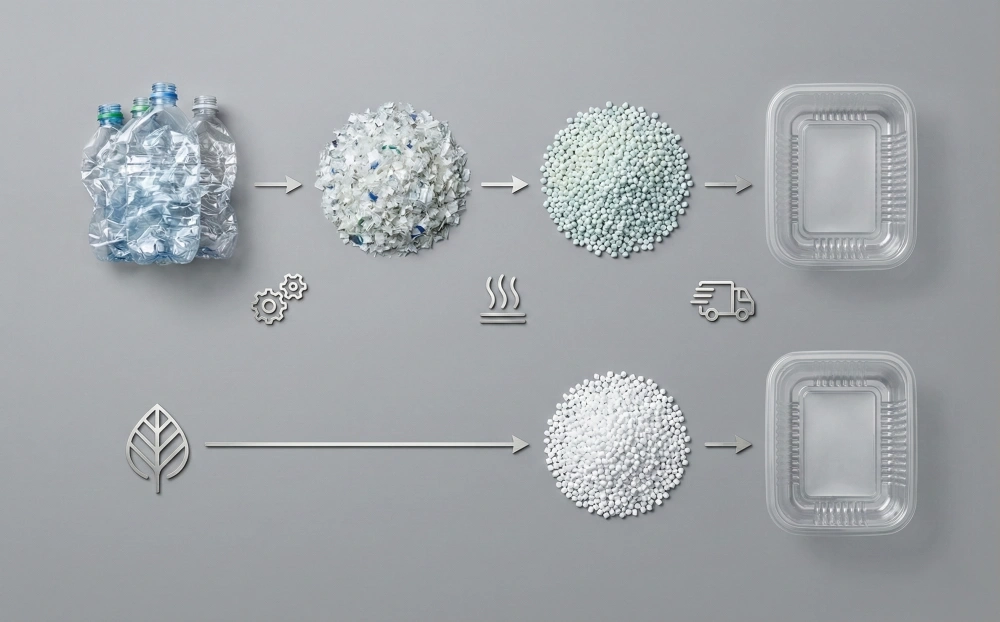
The collection and sorting phase is a major cost driver because it requires a localized, labor-intensive network to recover plastic waste and separate it into high-purity material streams suitable for food-grade processing. Unlike oil-based plastics that benefit from centralized extraction, recycled feedstock is scattered across thousands of consumer locations and must be gathered and transported to processing centers.
The logistics of decentralized waste recovery
The journey begins with the physical gathering of used bottles from households and businesses. Here’s the deal: the cost of fuel, labor, and transport for thousands of small-scale collections is significantly higher than the bulk transport of crude oil through pipelines or tankers.
- Transportation Costs: Moving low-density plastic waste is inefficient and expensive compared to high-density raw materials.
- Contamination Management: Used containers often arrive mixed with organic waste or non-PET plastics, requiring initial pre-washing and screening.
- Volume Requirements: To keep a factory running, a constant and massive volume of post-consumer waste is needed, which puts pressure on local collection systems.
Technological investments in automated sorting
Once the waste reaches the facility, it must be sorted with extreme precision. You should know that even a small amount of PVC or HDPE contamination can ruin an entire batch of What is rPET Plastic? resin.
- Optical Sorters: Factories must invest in high-tech infrared sensors to identify and separate clear PET from colored plastics at high speeds.
- Manual Quality Control: Despite automation, human inspectors are often required to remove stubborn contaminants that machines might miss.
- Residual Waste Loss: A portion of the collected material is always unusable, meaning the cost of the discarded waste must be absorbed by the price of the final rPET product.
| Expense Category | Driver | Impact on Final Price |
| Collection Logistics | Localized transport & labor | 20% – 30% Increase |
| Automated Sorting | Infrared & optical technology | High capital investment |
| Material Loss | Non-PET contamination | Yield-based cost adjustment |
The decentralized nature of recycling means that the raw material for rPET starts with a higher baseline cost than the byproduct of oil refining.
Key Takeaway: The fragmented supply chain and the need for precision sorting technology are the primary reasons recycled feedstock is priced higher than virgin resin.
How does the decontamination and pelletizing stage impact pricing?
Decontamination is an expensive stage because achieving food-grade safety standards requires high-vacuum reactors and intense thermal energy to remove volatile organic compounds and ensure the material is safe for direct food contact. This process, often referred to as “super-cleaning,” is what differentiates industrial-grade recycled plastic from the materials used in your produce trays and beverage bottles.
Meeting FDA and EU food safety standards
For your business to use rPET packaging safely, the material must be certified by agencies like the FDA or EFSA. Achieving this certification involves rigorous, multi-stage cleaning cycles that virgin plastic production does not require.
- Hot Caustic Washing: Shredded flakes are treated with chemicals and heat to strip away labels and stubborn adhesives.
- Chemical Analysis: Every batch must be tested for potential contaminants that might have been absorbed into the plastic during its “first life” as a consumer product.
- Certification Fees: Maintaining compliance with international food safety standards involves ongoing auditing and testing costs.
The energy intensity of Solid State Polymerization (SSP)
To restore the structural integrity of the plastic, it must undergo Solid State Polymerization (SSP). Fact is, this process is energy-intensive and requires the material to be held at high temperatures for extended periods under a vacuum.
- Viscosity Restoration: SSP increases the Intrinsic Viscosity (IV) of the material, making it strong enough for thermoforming.
- Energy Consumption: Running high-vacuum reactors 24/7 adds a significant utility burden to the manufacturing process.
- Equipment Maintenance: The specialized 9-line production capabilities required for this level of processing involve high maintenance and operational costs.
| Processing Step | Purpose | Cost Factor |
| Caustic Wash | Adhesive & label removal | Chemical & water utilities |
| Vacuum Reactor | Molecular decontamination | High electricity demand |
| SSP Treatment | Strength & viscosity | Time-intensive operation |
Without these advanced technical steps, recycled plastic would be unsuitable for the high-quality containers your customers expect.
Key Takeaway: The high energy cost of molecular decontamination and the need for food-grade certification add a significant premium to the final resin price.
What market dynamics influence the premium on rPET packaging?
Market dynamics, such as the surging demand from global brands and the lack of regional recycling infrastructure, create a supply-demand imbalance that keeps rPET prices high regardless of oil market fluctuations. Unlike virgin PET, which follows the price of crude oil, rPET pricing is often “decoupled” and driven by sustainability mandates.
Corporate sustainability mandates and supply shortages
Global beverage and food companies have pledged to include high percentages of recycled content in their packaging. Look at it this way: when massive corporations buy up the available supply of food-grade rPET, the price for smaller distributors and manufacturers naturally rises.
- Resin Competition: B2B buyers are often competing for the same limited pool of certified food-grade flakes.
- Contract Pricing: Large-scale buyers often secure long-term contracts, leaving less spot-market availability for smaller procurement needs.
- Inventory Stability: For a manufacturer with 9 production lines, maintaining a stable flow of high-quality recycled resin requires paying a market premium.
The impact of plastic taxes and regulatory shifts
Governments are increasingly implementing taxes on virgin plastic packaging to encourage the use of recycled materials. You should know that while this makes rPET more “expensive” in absolute terms, it often makes it the more economical choice when tax penalties are considered.
- Virgin Plastic Levies: Regions like the UK and EU charge fees on packaging that contains less than 30% recycled content.
- EPR Fees: Extended Producer Responsibility fees are often lower for companies using sustainable materials.
- Import/Export Advantages: Using rPET packaging can reduce the regulatory friction for businesses exporting to environmentally conscious markets like Spain or the Netherlands.
| Market Factor | Trend | Result for Buyer |
| Brand Pledges | High demand for resin | Price remains high |
| Plastic Taxes | Penalizing virgin use | rPET becomes tax-efficient |
| Infrastructure | Limited food-grade capacity | Supply remains constrained |
The value of rPET is found in its ability to protect your business from future taxes and improve your standing with eco-conscious clients.
Key Takeaway: Sourcing rPET is a strategic investment that balances higher resin costs against the long-term savings of avoiding plastic taxes and building brand loyalty.
Ultimately, the transition to sustainable materials involves a partnership with a manufacturer that can provide stable supply and factory-direct pricing. Reliancepak offers the technical expertise and 9-line production capacity to supply high-quality rPET packaging that meets your performance and regulatory needs. We suggest contacting our team to discuss how we can help you manage these cost factors while meeting your sustainability goals.
The future of the food packaging industry is circular, and investing in rPET today ensures your business is prepared for the regulatory landscape of tomorrow.
Frequently Asked Questions
Why doesn’t the price of rPET drop when oil prices fall?
No. Virgin PET prices are tied to crude oil because it is the primary raw material. However, the costs of rPET are tied to labor, transport, and electricity for processing. Because these operational costs are fixed and the demand for recycled content is high, rPET prices do not drop in sync with oil markets.
Can I reduce costs by using a lower percentage of rPET?
Yes. Many businesses use a 30% or 50% rPET blend to meet regulatory requirements while keeping the unit price closer to virgin plastic levels. This allows you to claim environmental benefits without the full cost premium of 100% recycled material.
Is the quality of rPET worth the extra cost?
Yes. Food-grade rPET packaging offers nearly identical physical performance to virgin plastic, including impact resistance and moisture barriers. The investment ensures your products stay fresh while satisfying the sustainability demands of your customers.
How do plastic taxes affect the total cost of ownership?
In many regions, using at least 30% rPET exempts your packaging from specific “plastic taxes.” When you add these tax savings to your procurement budget, the “expensive” rPET often becomes the more cost-effective choice compared to paying penalties for virgin plastic.
Do rPET prices vary by region?
Yes. Countries with advanced recycling infrastructure and high collection rates often have more stable rPET prices. In regions with limited 9-line production capacity or poor waste management, the cost of sourcing food-grade resin is typically higher due to import needs.