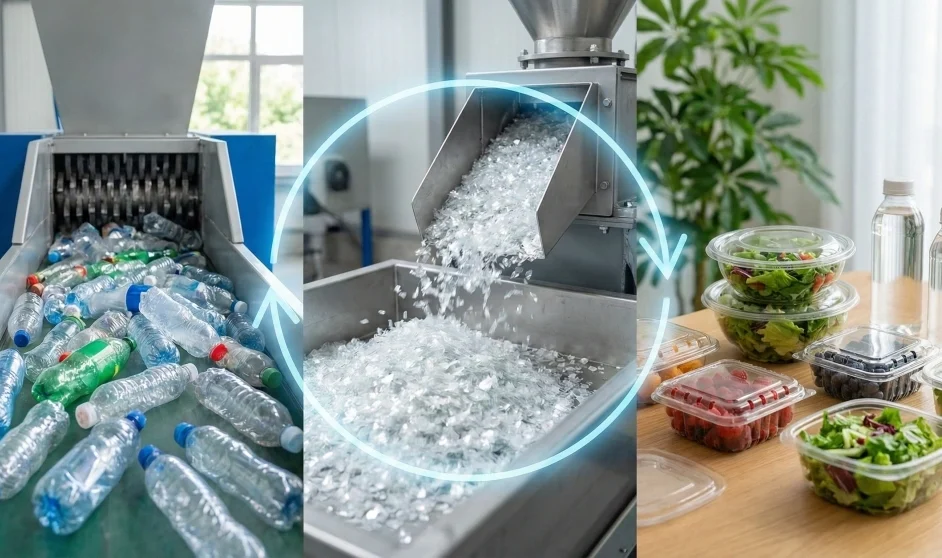
rPET food packaging refers to a wide range of trays, bowls, and containers manufactured using decontaminated, food-grade recycled Polyethylene Terephthalate resin that meets FDA and EU safety standards. These products provide the same high-clarity and structural protection as virgin plastics but with a significantly smaller environmental footprint, making them the preferred choice for bulk food distribution and retail produce sectors.
For procurement directors at large-scale food manufacturing plants or fresh produce distribution centers, sourcing reliable rPET packaging involves more than just selecting a sustainable material. You must manage specific inventory challenges, such as ensuring lid fitment across thousands of units, verifying chemical migration certificates, and maintaining a stable supply chain amidst fluctuating resin availability. This guide provides an industrial perspective on selecting and sourcing rPET containers in bulk to ensure your operational efficiency and brand compliance.
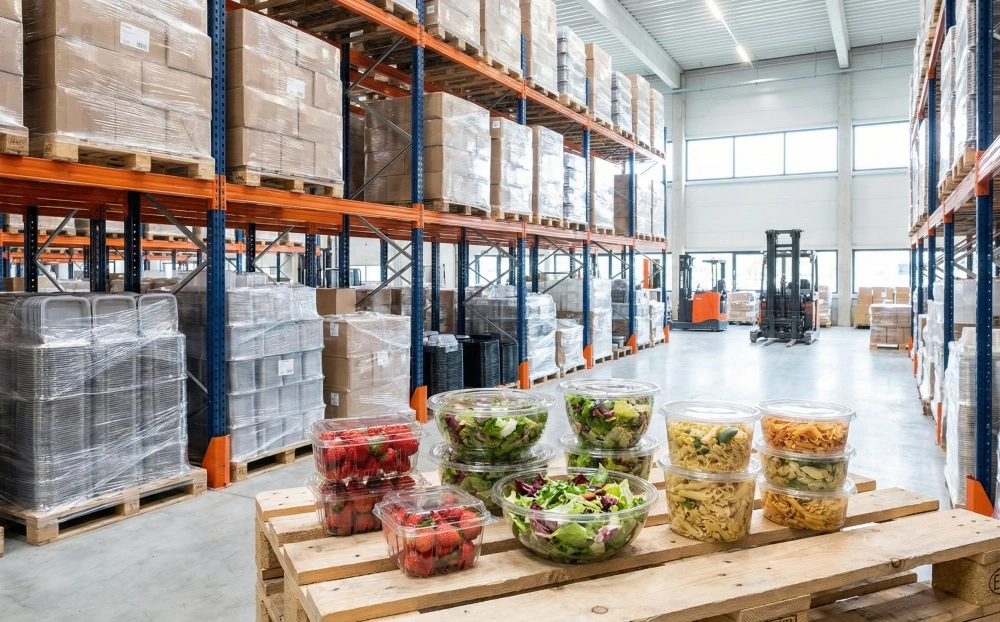
What are the primary types of rPET food packaging for bulk supply?
rPET food packaging is highly versatile, serving as the primary material for cold-chain products, deli applications, and agricultural produce. Because rPET offers excellent moisture barrier properties and impact resistance, it is typically used for items that require visibility and physical protection during long-distance logistics.
Agricultural produce trays and punnets
In the agricultural sector, rPET is the industry standard for soft fruits and microgreens. The material’s rigidity allows for stacking in refrigerated trucks without crushing the delicate contents inside.
- Vented Berry Punnets: Designed with small ventilation holes to manage humidity and ethylene gas, extending the shelf life of strawberries, blueberries, and raspberries.
- Tamper-Evident Clamshells: These features provide security for high-value organic produce, ensuring the pack has not been opened before it reaches the consumer’s kitchen.
- Microgreen Trays: Lightweight yet sturdy trays that support the root systems of specialty greens while maintaining a professional retail appearance.
Deli containers and prepared food bowls
For prepared food distributors, rPET provides a premium “glass-like” appearance that showcases the freshness of salads, pasta dishes, and sliced fruits. This is a key reason many procurement managers focus on What is rPET Plastic? when transitioning their catalog toward eco-friendly options.
- Hinged Salad Bowls: Eliminate the need for separate lid inventory, streamlining the packing process in fast-paced deli environments.
- Square Deli Tubs: Optimized for space efficiency on retail shelves and in shipping cartons, reducing the “dead air” in your logistics chain.
- Leak-Resistant Lids: Precision-engineered seals prevent cross-contamination and messy spills during third-party delivery services.
| Packaging Type | Key Feature | Best For |
| Clamshells | Secure locking tabs | Berries, grapes, tomatoes |
| Open Trays | High-speed automated filling | Salad mixes, mushrooms |
| Round Bowls | Stackable & Leak-proof | Deli salads, cold soups |
Key Takeaway: Selecting the right container shape and closure type is as important as the material itself for maintaining food quality and operational speed.
How do you verify quality and safety in rPET bulk procurement?
When purchasing rPET packaging in large quantities, the primary risk is material inconsistency. Unlike virgin resin, recycled feedstock can vary between batches, which is why working with a manufacturer that has integrated 9-line production capabilities and strict quality control is non-negotiable for food safety.
Chemical safety and decontamination protocols
Because rPET is derived from post-consumer waste, it must undergo a specialized “super-cleaning” process to be classified as food-grade. You might find that some low-cost suppliers cut corners here, which can lead to chemical migration into the food.
- Decontamination Certification: Ensure your supplier holds valid EFSA or FDA “Letter of No Objection” (LNO) certifications for their specific recycling technology.
- Batch Testing: Professional manufacturers conduct regular migration tests to confirm that the plastic does not leach harmful substances into acidic or oily foods.
- Polymer Purity: The resin must be free from non-PET plastics like PVC or HDPE, which can compromise the structural integrity and clarity of the finished tray.
Mechanical performance at scale
In high-volume food processing, a deviation of even 0.1mm in tray thickness can cause automated de-nesting machines to jam, leading to costly downtime.
- Wall Thickness Consistency: 9-line production ensures that the plastic sheet is extruded with uniform gauge, preventing “weak spots” in the container corners.
- De-nesting Features: Look for trays with engineered lugs that prevent the containers from sticking together when stacked in your packing line.
- Impact Strength: The material must remain resilient at low temperatures, specifically for products stored in commercial freezers or chilled displays.
Key Takeaway: Food-grade safety is not a “one-time” check; it requires ongoing verification of the supplier’s decontamination technology and mechanical consistency.
What are the logistics and cost factors for rPET bulk supply?
Sourcing rPET packaging at wholesale volumes requires a different financial strategy than virgin PET. While the resin itself may carry a market premium, the total cost of ownership often favors rPET when you factor in regional environmental taxes and consumer brand loyalty.
Navigating the “Green Premium”
The market price of food-grade rPET flakes is often higher than virgin resin because the collection, sorting, and cleaning processes are more labor and energy-intensive. However, this cost can be mitigated through high-volume procurement and factory-direct sourcing.
- Tax Avoidance: In many regions, such as the UK and parts of Europe, using packaging with at least 30% recycled content exempts you from significant “plastic taxes,” often making rPET the cheaper choice in the final landed cost.
- Volume Discounts: Buying in full container loads (FCL) allows manufacturers to optimize their 9 production lines, passing the efficiency savings on to the distributor.
- Customization ROI: Custom molds that reduce the total weight of the plastic (lightweighting) can lower your per-unit cost while still providing adequate protection.
Global supply chain stability
A common concern for procurement managers is the “recycled resin shortage.” As more global brands commit to 100% recycled content, the available supply of high-purity flakes becomes constrained.
- Integrated Manufacturing: Sourcing from a partner that handles both the extrusion and the thermoforming ensures that your supply is not interrupted by intermediate sheet shortages.
- Regional Export Expertise: Reliancepak’s experience in exporting to diverse markets like Spain, the Netherlands, and Malaysia means we understand the specific customs and compliance documents required for different economic zones.
| Logistics Factor | Virgin PET | rPET Packaging |
| Resin Supply | Stable (Oil-based) | High demand (Circular) |
| Regional Taxes | High (in EU/UK) | Exempt or Low |
| Brand Perception | Neutral | High Value / Sustainable |
Key Takeaway: The financial case for rPET is built on long-term tax efficiency and brand security rather than the raw cost of the resin alone.
How to choose a reliable rPET packaging manufacturer?
Choosing a B2B partner for your food containers requires evaluating their technical infrastructure and their ability to provide consistent customization. For distributors in the US or Europe, the distance from a Chinese factory must be offset by superior quality and communication.
Evaluating production capacity
A manufacturer with limited lines cannot pivot quickly to meet seasonal demand spikes (e.g., during the summer berry harvest). Reliancepak’s 9-line production setup allows for high-volume output while maintaining the flexibility for custom runs.
- Tooling Capability: Ask if the manufacturer can create custom molds for your specific fruit or vegetable dimensions to minimize movement during shipping.
- Sample Efficiency: Suggest requesting free samples to test the seal integrity and clarity on your own production equipment before committing to a full container.
- Quality Audit Access: A reliable partner will provide transparent access to their ISO and food-grade certifications upon request.
Professional customization services
In the competitive retail environment, the packaging is your “silent salesman.” Customizing your rPET trays can differentiate your brand from commodity competitors.
- Embossing: Adding your company logo directly to the mold provides a premium feel and reinforces brand identity.
- Venting Patterns: Custom airflow designs can be engineered to suit specific produce types, such as high-respiration greens.
- Color Tinting: While rPET is naturally clear, subtle tints (such as “natural green”) can be added to align with organic product marketing.
Key Takeaway: Look for a manufacturer that offers “one-stop” procurement—from design and sampling to high-speed production and international logistics.
Reliancepak provides the technical expertise and 9-line manufacturing scale necessary to support your bulk procurement of rPET packaging. We suggest contacting our team at admin@bereliance.com to discuss your specific requirements or to request a free sample of our food-grade containers.
Frequently Asked Questions
Can rPET containers be used for hot-fill products?
No. Like virgin PET, rPET has a low heat distortion temperature. It is specifically designed for cold and ambient food applications. For hot-fill needs, you should consider C-PET or PP-based materials.
What is the minimum order quantity (MOQ) for custom rPET trays?
MOQs vary depending on the complexity of the mold and the size of the tray. Generally, for a custom-sized rPET container, an MOQ of one full container load (FCL) is standard to ensure production efficiency on 9-line systems.
Does rPET packaging look “dirty” compared to virgin plastic?
No. Modern “super-cleaning” and filtration systems produce rPET that is virtually indistinguishable from virgin PET. While there might be a very subtle blue or grey tint, the clarity is more than sufficient for high-end retail displays.
Is rPET packaging 100% recyclable?
Yes. rPET is part of a circular economy. After the consumer uses the container, it can be placed back into the recycling bin to be processed into new rPET products again.
How do I ensure the lids fit perfectly on rPET bowls?
The most reliable way is to source the bowls and lids from the same manufacturer. This ensures that the thermoforming molds for both components are calibrated to the same shrinkage and tolerance levels.