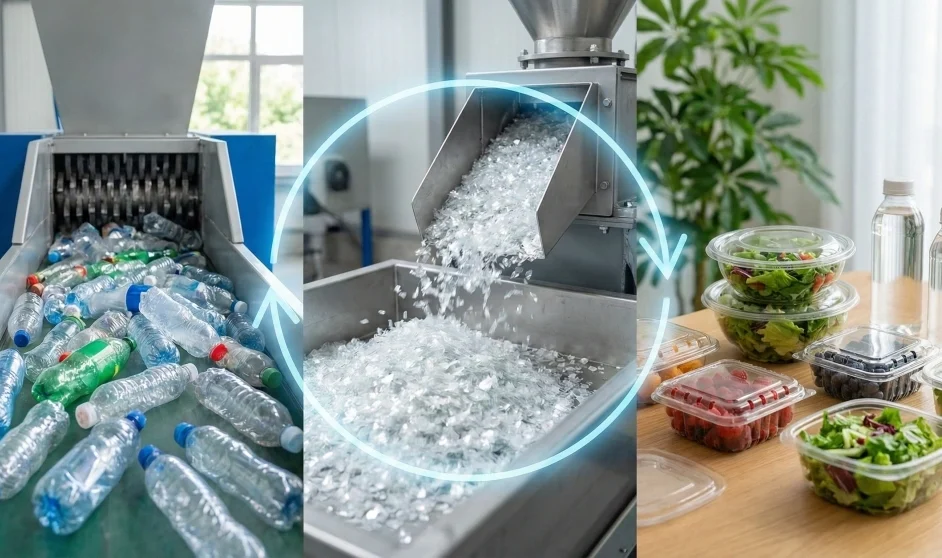
A closed-loop system in plastic packaging refers to a circular supply chain where post-consumer materials are collected, recycled, and manufactured back into their original product form without losing material quality. In the context of food-grade plastics, this means a PET bottle is recycled specifically to become another PET bottle or food tray, indefinitely diverting waste from landfills and oceans.
For procurement professionals and global distributors, the transition to a circular economy represents a fundamental shift in how inventory is managed. You might find that traditional “linear” models—where plastic is used once and discarded—are becoming increasingly expensive due to rising carbon taxes and environmental regulations in markets like the EU and North America. This guide explores the mechanics of circularity and why adopting a verified circular model is the most effective way to secure your long-term supply of high-quality food containers.
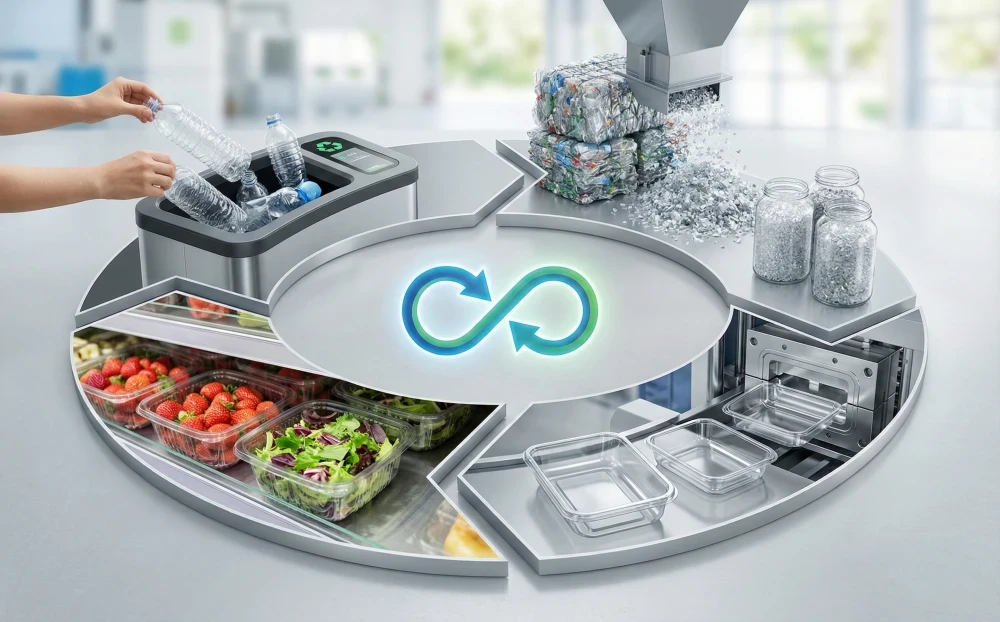
How does a closed-loop system function for plastic packaging?
A closed-loop system functions by maintaining the highest possible value of a polymer through controlled recovery and advanced decontamination processes. Unlike open-loop recycling, where plastic is “downcycled” into lower-quality items like park benches or polyester fibers, a closed loop ensures that the material stays within the food-service industry.
The stages of the circular journey
The integrity of a circular model depends on the precision of each stage in the loop. Here’s the deal: if one stage fails to maintain purity, the entire batch of resin may be downgraded to non-food use.
- Consumer Recovery: High-quality feedstock is gathered through municipal programs or Deposit Return Schemes (DRS) to ensure a clean starting point.
- Industrial Processing: Facilities utilize automated sorting and hot caustic washing to remove labels, adhesives, and organic residues.
- Molecular Restoration: Through Solid State Polymerization (SSP), the material’s viscosity and strength are restored to virgin-like standards.
Maintaining material parity
You should know that the ultimate goal of circularity is to ensure that the recycled resin performs identically to its virgin counterpart.
- Viscosity Stability: Advanced reactors ensure the plastic remains strong enough for high-speed thermoforming.
- Food Safety Compliance: Continuous decontamination ensures the material meets strict EU and FDA standards for direct food contact.
- Repeatability: By keeping the polymer “pure,” the system allows the same plastic to be recycled many times over without structural degradation.
| System Type | Input | Output | Result |
| Linear | Fossil Fuels | Landfill | Resource depletion |
| Open-Loop | Waste | Textiles/Strapping | Eventual waste |
| Closed-Loop | Waste | New Food Packaging | Indefinite Circularity |
Key Takeaway: A closed-loop system is the only model that achieves true sustainability by preventing material from ever leaving the production cycle.
Why is a closed-loop system critical for rPET packaging?
The implementation of a circular model is particularly vital for recycled PET material because it stabilizes the supply of food-grade resin and provides a predictable cost structure in a volatile market. By treating waste as a resource, businesses can insulate themselves from the price fluctuations of the crude oil market.
Enhancing supply chain security
One of the biggest risks for B2B buyers is the “recycled resin shortage.” Look at it this way: when you participate in a circular system, you are essentially “owning” your future feedstock.
- Predictable Feedstock: Circularity creates a reliable stream of high-purity flakes that are not dependent on petrochemical extraction.
- Quality Assurance: Since the material is tracked from consumer to factory, the risk of cross-contamination with non-food-grade polymers is significantly reduced.
- Scalable Production: Reliancepak’s 9-line production capabilities are optimized to handle the specific thermal properties of circular resins, ensuring consistent output for large-scale orders.
Meeting global regulatory mandates
Governments are no longer just encouraging recycling; they are mandating circularity through legislation.
- Minimum Content Requirements: Regions like Spain and the Netherlands are enforcing laws that require a set percentage of recycled content in all food packaging.
- Carbon Reduction Targets: Circular systems typically use 79% less energy than virgin production, helping your business hit ESG (Environmental, Social, and Governance) targets.
- EPR Credits: Many countries offer Extended Producer Responsibility credits to companies that can prove their packaging enters a closed-loop recovery stream.
Key Takeaway: Circularity is no longer a marketing choice; it is a regulatory necessity that ensures your products remain compliant and competitive in the global market.
What are the challenges in maintaining a closed-loop system?
While the benefits are clear, maintaining a closed-loop system requires sophisticated technology and rigorous quality control to overcome the technical barriers of polymer degradation and contamination.
Managing polymer degradation
Every time PET is heated and reshaped, its molecular chains can become shorter. Fact is, without advanced engineering, the plastic would eventually become too weak to hold food.
- Viscosity Management: SSP technology is used to “re-link” these molecular chains, maintaining the impact resistance required for shipping.
- Filtration Systems: Multi-stage melt filtration removes microscopic impurities that could cause “specks” or haze in your clear trays.
- Blend Optimization: In some cases, a small amount of virgin resin is used to “refresh” the loop and maintain structural integrity over many cycles.
Solving the contamination puzzle
The success of the loop is only as good as the purity of the waste collected. You might find that inconsistent consumer sorting is the biggest threat to your supply quality.
- Advanced Sorting: Infrared sensors must be used to exclude even the smallest fragments of PVC or colored PET from the clear stream.
- Caustic Cleaning: Intensive hot washing is required to remove 100% of consumer-applied adhesives and labels.
- Certification Audits: Third-party organizations like RecyClass or GRS provide the necessary audits to prove that the loop is indeed “closed” and verified.
| Challenge | Impact | Solution |
| Chain Scission | Brittle plastic | SSP Treatment |
| Label Adhesives | Discoloration | Hot Caustic Wash |
| PVC Contamination | Structural failure | Optical NIR Sorting |
Key Takeaway: Overcoming the challenges of circularity requires a manufacturer with high-tech 9-line infrastructure and a deep understanding of polymer chemistry.
Reliancepak is committed to helping our partners transition from linear waste models to efficient, verified circular systems. We suggest contacting our technical team to discuss how our factory-direct 9-line capacity can help you secure a sustainable, food-safe supply chain for your international distribution needs.
The shift toward a closed-loop future is the most significant development in modern packaging, ensuring that plastic remains a valuable resource rather than an environmental burden.
Frequently Asked Questions
Can all plastics enter a closed-loop system?
No. While PET and HDPE are excellent candidates for circular systems due to their high demand and robust recycling infrastructure, other plastics like polystyrene (PS) are more difficult to recycle back into food-grade quality and are often downcycled instead.
Is a closed-loop system more expensive?
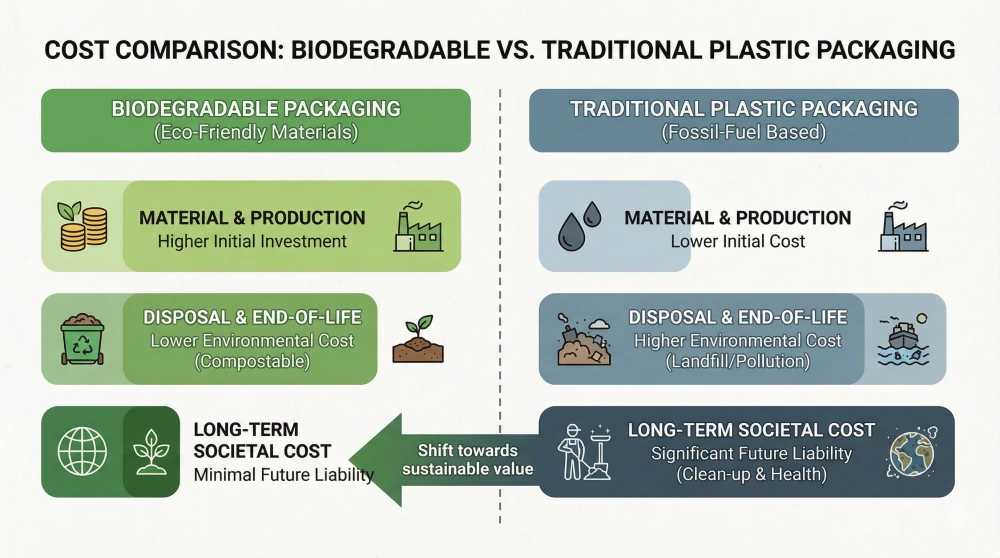
In the short term, the processing costs for circularity are higher than virgin production. However, when you factor in the avoidance of plastic taxes and the long-term stability of the resin supply, a closed-loop model often proves more cost-effective for B2B procurement.
How do I know if my supplier uses a closed-loop system?
You should ask for “Chain of Custody” (CoC) certifications and food-grade decontamination letters (LNO) from the FDA or EFSA. These documents verify that the material is being handled according to strict circular safety protocols.
Can rPET be recycled indefinitely in a closed loop?
With modern SSP technology, PET can be recycled many times. While it may eventually require a small “top-up” of virgin material to maintain perfect molecular strength, it can stay in the food-packaging loop for dozens of cycles.
Does Reliancepak support closed-loop manufacturing?
Yes. Reliancepak utilizes 9 production lines designed to handle high percentages of recycled content, supporting the global shift toward a circular economy for food trays and containers.