Choosing the right material for plastic clamshell packaging directly affects product visibility, shelf life, regulatory compliance, and end-of-life recyclability. This guide breaks down the four most common plastics used in clamshell manufacturing, compares their technical properties side by side, and gives you a practical framework for matching material to application.
The Four Core Materials in Clamshell Packaging
Not every plastic performs the same way under retail lighting, in a cold chain, or at the recycling facility. Understanding the base resin options helps you avoid costly specification errors downstream.
PET (Polyethylene Terephthalate)
PET remains the industry default for most applications. It delivers excellent optical clarity, meets FDA food-contact requirements, and carries the #1 recycling code—making it the most widely accepted material in municipal recycling streams.
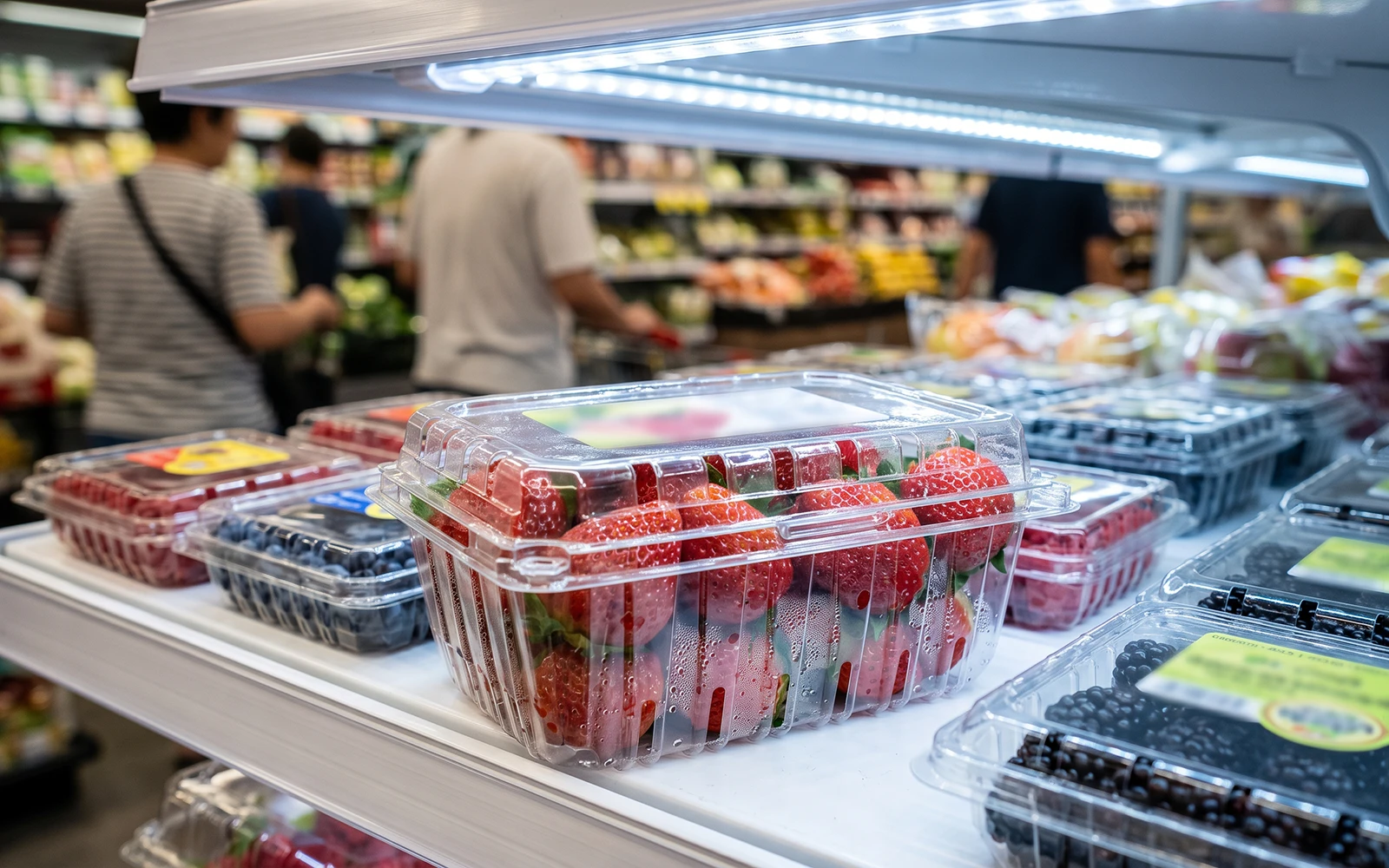
For brands selling fresh produce, bakery items, or electronics accessories where product visibility drives purchase decisions, PET offers the best balance of rigidity, transparency, and cost. Thermoformed PET clamshells typically range from 0.20 mm to 0.50 mm in wall thickness, depending on the product weight and stack-load demands.
PVC (Polyvinyl Chloride)
PVC costs less but faces growing regulatory scrutiny in several markets, particularly the EU. Its lower recyclability and chlorine content make it a harder sell for brands with sustainability commitments.
That said, PVC still sees use in non-food applications—hardware blister packs, craft supply displays, and certain industrial component packaging—where food-grade certification is not required and the buyer prioritizes unit cost over environmental positioning. If your export markets include the EU or retailers with restricted substance lists, verify PVC compliance before committing to tooling.
RPET (Recycled PET)
RPET addresses the recycled content mandate that many retailers now require. It contains post-consumer PET flake, which slightly reduces optical clarity but supports corporate sustainability targets.
The trade-off is manageable for most applications. A typical RPET clamshell retains 85–90% of virgin PET’s visual clarity, which is more than adequate for produce, deli, and bakery packaging where a subtle tint or minor haze does not undermine the product presentation. Major North American and European retailers increasingly specify minimum post-consumer recycled (PCR) content thresholds—often 30% or higher—making RPET a practical default for brands that need to meet procurement requirements without redesigning their packaging line.
PLA (Polylactic Acid)
PLA is a plant-based alternative derived from corn starch. It works for short shelf-life food applications but lacks the heat resistance of PET—something to consider if your supply chain involves warm climates or extended warehouse storage.
PLA’s heat distortion temperature sits around 55–60 °C, which means clamshells made from this material can warp in unventilated shipping containers or during summer transit in southern U.S. or Middle Eastern markets. For cold-chain produce sold within a few days of packing, PLA performs well. For anything that sits in a warehouse or on a warm retail shelf, PET or RPET is the safer bet.
Property Comparison at a Glance
The table below summarizes the key technical and commercial properties across all four materials.
| Property | PET | PVC | RPET | PLA |
|---|---|---|---|---|
| Optical clarity | Excellent | Good | Good (slight tint) | Good |
| FDA food-contact approved | Yes | Conditional | Yes | Yes |
| Recyclability (curbside) | Widely accepted (#1) | Limited (#3) | Widely accepted (#1) | Industrial composting only |
| Heat resistance | High | Moderate | High | Low (~55 °C) |
| Relative cost | Moderate | Low | Moderate | Moderate–High |
| Typical PCR content | 0% | 0% | 30–100% | 0% (bio-based) |
| Best suited for | General food & retail | Non-food blister packs | Retailers with PCR mandates | Short shelf-life cold-chain foods |
How to Select the Right Material for Your Application
Material selection is not a one-variable decision. It involves balancing product requirements, supply chain conditions, retailer mandates, and brand positioning.
Start with the Product and Its Environment
The first filter is always the product itself. Fresh berries in a refrigerated display case have very different packaging needs than screws hanging on a hardware pegboard. Map out the temperature range your packaging will encounter—from production through last-mile delivery—before you evaluate resin options.
Check Retailer and Regulatory Requirements
If you sell through major retailers, their packaging specifications often dictate material choice more than your own preferences. Walmart, Target, and several European grocers have published minimum PCR content requirements. The EU’s Packaging and Packaging Waste Regulation (PPWR) is pushing recycled content thresholds even higher over the next several years. Align your material selection with these mandates early to avoid costly re-qualification later.
Evaluate Tooling and Minimum Order Implications
Different resins thermoform at different temperatures and pressures, which affects tool design and cycle times. PET and RPET share similar processing parameters, so switching between them often requires no tooling changes. PLA may need adjusted plug-assist settings and cooling profiles. PVC, with its lower forming temperature, can run on simpler tooling but may require dedicated lines if you also run food-grade PET on the same equipment.
If you need custom thermoformed clamshells built to your specifications, Reliancepak offers OEM/ODM services with free sample runs so you can validate material and form factor before committing to full production volumes.
Factor in End-of-Life and Brand Perception
Consumers increasingly notice—and comment on—packaging material. A PLA clamshell marketed as “compostable” only breaks down in industrial composting facilities, not in a backyard bin or landfill. If your marketing claims reference sustainability, make sure the material’s actual end-of-life pathway matches the claim. Misleading packaging claims carry both reputational and, in some jurisdictions, legal risk.
Common Design Features That Affect Material Performance
Beyond resin selection, the physical design of the clamshell influences how the material performs in the real world.
Hinge type matters. A living hinge made from PET can flex thousands of times without cracking; the same design in PLA will fatigue much faster. If your clamshell needs to be opened and re-closed repeatedly, specify a material and hinge geometry that supports the expected cycle count.
Ventilation patterns are critical for fresh produce. Perforations or die-cut vents manage moisture and ethylene gas buildup, extending shelf life. The size and placement of these vents must balance airflow with structural integrity—a 0.30 mm PET sheet handles venting patterns differently than a 0.25 mm PLA sheet.
Stacking and nesting geometry determines how many units fit per pallet and whether the clamshells deform under load during transit. Thicker walls add rigidity but increase material cost and per-unit weight, which affects freight charges.
Frequently Asked Questions
What is the most common plastic used for clamshell packaging?
PET (Polyethylene Terephthalate) is the most widely used material. It offers strong optical clarity, FDA food-contact compliance, and broad curbside recyclability under the #1 recycling code.
Can RPET clamshells be used for direct food contact?
Yes. RPET that meets FDA food-contact regulations is approved for direct food contact. The post-consumer flake is cleaned and reprocessed to food-grade standards, though you should request certification documentation from your supplier.
Is PLA a good substitute for PET in all applications?
No. PLA works well for short shelf-life, cold-chain food items, but its low heat distortion temperature (around 55–60 °C) makes it unsuitable for products stored or shipped in warm conditions.
Do major retailers accept PVC clamshell packaging?
Acceptance varies. Some retailers have restricted or banned PVC due to recyclability and chlorine content concerns. If you sell through large retail channels, check their specific packaging material policies before selecting PVC.
How do I verify that my clamshell packaging meets food-grade standards?
Request test reports and certifications from your supplier confirming compliance with FDA 21 CFR or EU Regulation (EC) No 1935/2004. Reputable manufacturers provide these documents as part of their standard quality assurance process.