TL;DR: If you’re sourcing party cups for events, retail, or brand activation, this guide walks you through every decision — from material selection to bulk pricing to 2025 design trends — so you buy smarter, not harder.
Choosing the right party cups means balancing eco-impact, cost, durability, and brand visibility. Popular options include plastic (cheapest, durable), paper (eco-friendly, compostable), and biodegradable blends (premium green appeal). For customization, digital printing and rapid prototyping let you test designs fast. Bulk buyers save 30–50% with MOQs of 5k–50k, depending on material. Event-specific needs — like weddings (elegant), festivals (durable), or corporate events (branded) — drive material and design choices. Stay ahead with 2025’s bold colors, minimalist logos, and sustainability-first messaging.
You’re not just buying cups. You’re choosing a product that touches guest experience, brand identity, and environmental conscience. Whether you’re a catering manager, brand marketer, or B2B buyer, this guide cuts through the noise. Learn what most suppliers won’t tell you — and find your perfect party cup match.
Why Party Cups Matter More Than You Think
Let’s be real — party cups are rarely the star of the show. But they’re the silent heroes. Spill-proof? Check. Easy to stack? Check. Branded? Double-check. They’re the first impression guests have of your event — or your brand. Get them wrong, and you’re stuck with soggy napkins, leaked drinks, and muddy logos. Get them right, and you’re building loyalty, reducing waste, and maybe even going viral.
I’ve spent years talking to event planners, food service buyers, and packaging engineers. The truth? Most people pick cups based on price alone. That’s a mistake. The right cup saves money in the long run — through fewer replacements, less cleanup, and stronger brand recall.
That’s why we’re going deep. Not just “what’s out there,” but “what’s best for YOU.”
What Exactly Are Party Cups?
Party cups are single-use drinking vessels designed for casual or large-scale events. Think weddings, birthdays, festivals, concerts, corporate mixers, and sports games. They come in various materials, sizes, and finishes — and increasingly, they’re branded not just for function, but for marketing.
Unlike everyday coffee cups or water bottles, party cups prioritize:
- Durability (to survive a dance floor or tailgate)
- Stackability (to fit in serving carts or coolers)
- Cost efficiency (especially for bulk buys)
- Visual appeal (to match themes or brand colors)
And yes — they’re also a massive market. Global demand for disposable party cups is projected to hit $47 billion by 2027. That’s a lot of birthday cake and mimosa spills.
How to Choose the Right Material for Party Cups
You’ve probably heard the debates: plastic vs. paper vs. biodegradable. Which is best? The answer: It depends.
Let’s break down the pros, cons, and use cases for each.
Plastic Party Cups
Used in 60% of mass-market events, plastic cups are the OGs of the party scene.
Pros:
- Cheapest per unit (as low as $0.08–$0.15)
- Leak-proof and durable (great for outdoor events)
- Clear or colored options (flexible branding)
Cons:
- Not eco-friendly (unless recycled — which rarely happens)
- Can crack under pressure or extreme temps
Best for: High-volume, low-budget events — think school fairs, tailgates, or fast-food chains.
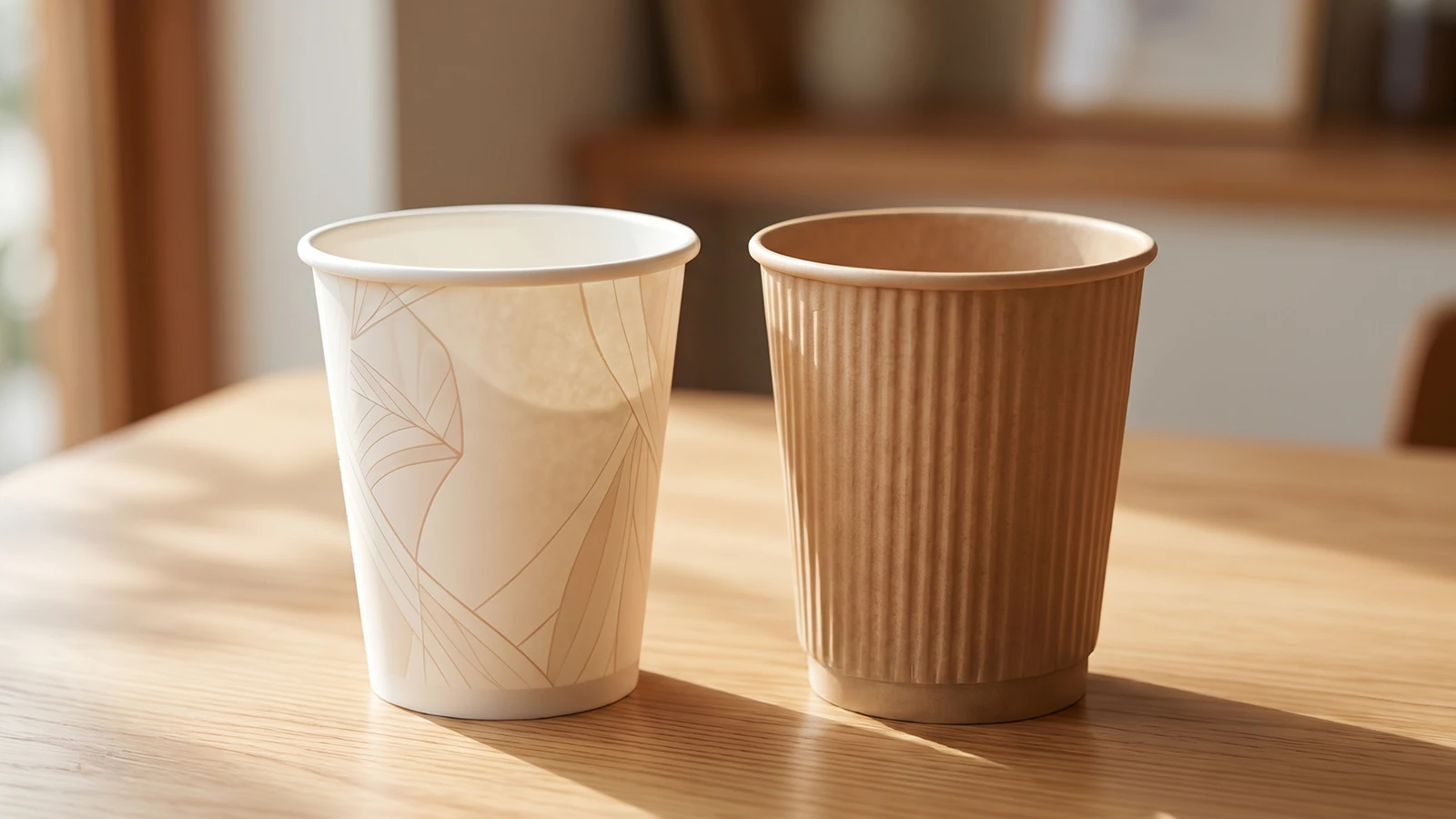
Paper Party Cups
Paper cups have made a comeback — thanks to compostability and clean aesthetics.
Pros:
- Biodegradable or compostable (if lined correctly)
- Feels premium — great for weddings or upscale events
- Can be printed with subtle, elegant designs
Cons:
- Can soggy if left with liquid too long
- Usually more expensive than plastic ($0.15–$0.40)
Best for: Eco-conscious brands, artisanal cafes, or branded events where “sustainability” is part of the vibe.
Biodegradable & Plant-Based Party Cups
This is where innovation meets ethics. Made from PLA (corn starch) or sugarcane fiber, these cups look and feel like plastic — but break down faster.
Pros:
- Eco-credentials that impress customers
- Can be composted industrially (if facilities exist)
- Marketed as “premium green”
Cons:
- Higher cost ($0.30–$0.75)
- Often require specific disposal (not curbside recycling)
- May not be as durable in heat or water
Best for: Green-washed brands, festivals with composting bins, or corporate clients demanding ESG compliance.
Quick Comparison Table: Party Cup Materials
| Material | Cost Per Cup | Durability | Eco-Friendly? | Best Use Case |
|---|---|---|---|---|
| Plastic | $0.08–$0.15 | High | Low | High-volume, outdoor |
| Paper | $0.15–$0.40 | Medium | Medium | Weddings, cafes |
| Biodegradable | $0.30–$0.75 | Medium | High | Eco-events, branding |
Types of Party Cups: Plastic, Paper, and Biodegradable Options
Not all party cups are created equal — even within the same material category. Let’s dive into the subtypes you’ll actually encounter on the market.
Plastic Subtypes
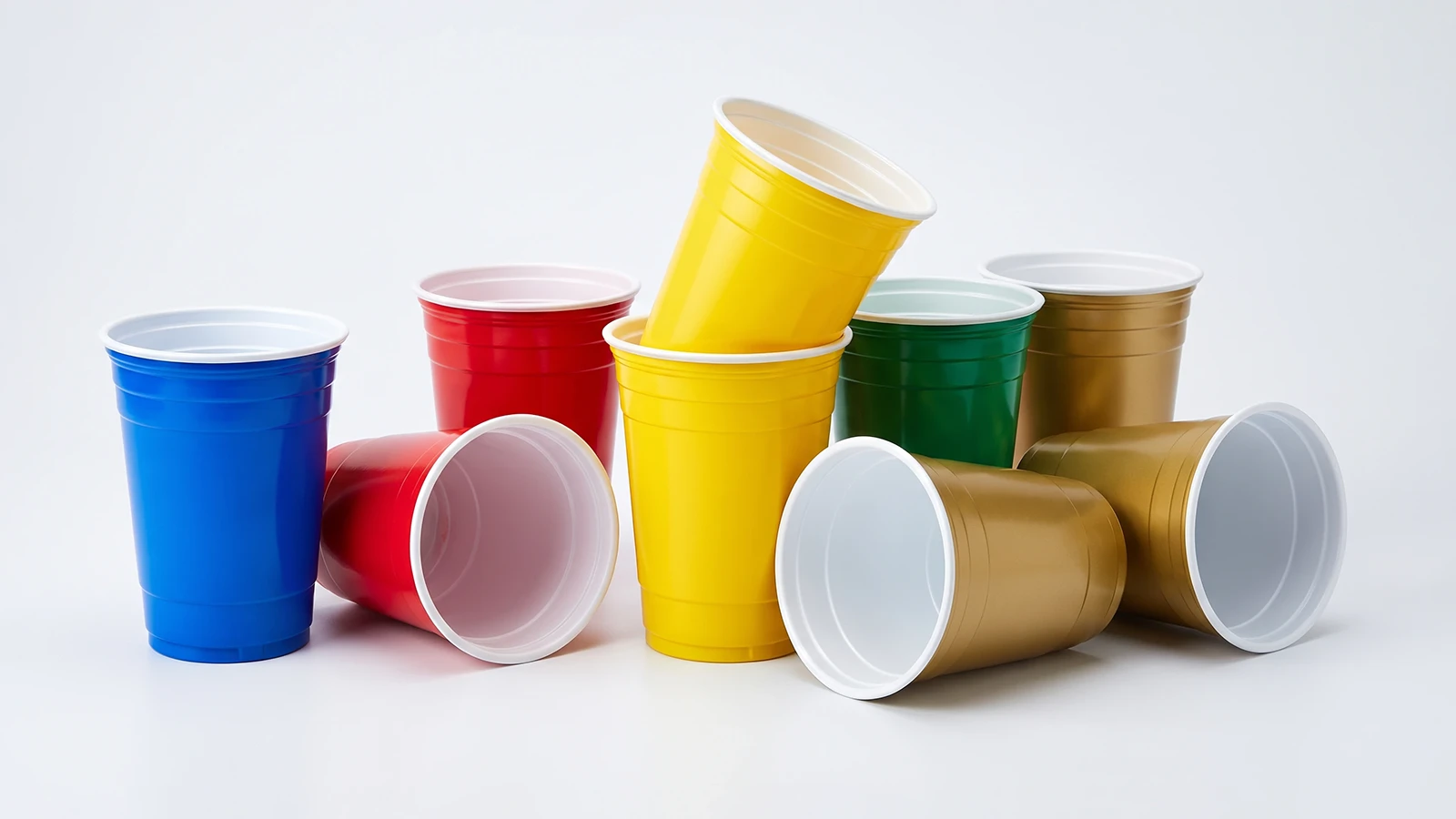
- PS (Polystyrene) – Cheap, glossy, often translucent. Classic “party cup” look.
- PP (Polypropylene) – More flexible, heat-resistant. Great for hot drinks or outdoor use.
- PET (Polyethylene Terephthalate) – Clear, rigid, slightly more expensive. Common for premium branding.
Paper Subtypes
- Wax-lined – Old-school, not compostable, but feels sturdy.
- PLA-lined – Compostable, but requires industrial facilities.
- Unlined – For dry goods only — not practical for drinks.
Biodegradable Subtypes
- PLA (Corn-based) – Shiny, plastic-like, compostable.
- Bagasse (Sugarcane) – Rougher texture, ideal for hot drinks.
- Molded Fiber – Made from recycled paper pulp — great for eco-focused brands.
Pro Tip: Don’t confuse “biodegradable” with “compostable.” Only compostable cups break down in home or industrial systems. Biodegradable may take years — and often just break into microplastics.
Customization: From Basic Logo to Full-Event Branding
Custom party cups aren’t just about slapping a logo on a plastic cup. Done right, they turn your event into a branded experience. And with today’s tech, it’s easier — and smarter — than ever.
Printing Technologies for Party Cups
Not all printing is equal. Here’s what you need to know before you pick a supplier.
1. Digital Printing
Great for short runs and vibrant designs. No plate setup. High detail, full color. But costs more per unit.
Best for: Small batches, high-end events, test designs.
2. Offset Printing
Cheaper per unit for large orders. Needs plate setup (minimum 1,000–5,000 units). Less flexible on design changes.
Best for: Grocery chains, major brands, bulk party packs.
3. Screen Printing
Excellent for bold, solid colors. Durable and tactile. But not great for gradients or fine detail.
Best for: Festivals, sports teams, outdoor events where durability matters.
Bonus Tip: Ask for a “color match” — Pantone or CMYK — to ensure your logo looks exactly like your brand guide. Many suppliers skip this unless you ask.
Rapid Prototyping for Custom Party Cups
Want to see your design before ordering 10,000 units? That’s where rapid prototyping comes in.
Some suppliers now offer “sample runs” — small batches printed with your exact design, using the same material and finish as your final order. You get:
- Real-life feel and durability test
- Color and alignment accuracy
- A chance to tweak before bulk buy
Why it matters: A misprinted logo or wrong size cup can cost you thousands in reprints — and damage your brand. Prototyping reduces that risk.
Cost: Usually $50–$200 per sample. Worth every penny if your cup is part of your customer experience.
Party Cup Design Trends in 2025
You don’t want your party cups to look like they’re from 2015. Fresh, sharable, sustainable — that’s the 2025 vibe.
1. Bold, block colors — but minimalist logos
Less is more. Think large, solid blocks of color with small, clean logos. The cup itself becomes the canvas.
2. Eco messaging front and center
“Compostable,” “Made from plants,” “Zero waste” — not just on the bottom, but on the side. Passionate customers notice.
3. Metallic & holographic finishes
Luxury eventos are using metallic inks and holographic patterns — especially for weddings or milestone birthdays.
4. Interactive QR codes
Scan the cup to save the event date, follow the brand, or enter a giveaway. It’s not just a cup — it’s a touchpoint.
5. Themed sets (not just one cup)
Matching cup, napkin, plate — all designed as a package. Event planners love this for seamless branding.
Bulk Buying Party Cups: Cost Breakdown and ROI Tips
If you’re buying for retail, catering, or large-scale events, you’re probably thinking about cost per unit. Let’s talk numbers — and how to save without sacrificing quality.
Price Range by Material and Quantity
| Material | 500–1,000 units | 5,000 units | 25,000 units | 50,000+ units |
|---|---|---|---|---|
| Plastic | $0.20–$0.30 | $0.10 | $0.08 | $0.07 |
| Paper | $0.40–$0.50 | $0.25 | $0.20 | $0.18 |
| Biodegradable | $0.75–$0.90 | $0.50 | $0.40 | $0.35 |
Note: Prices vary by region, print complexity, and supplier.
Hidden Costs to Watch For
- Setup fees for printing — usually $50–$300 per design (waived for large orders)
- Shipping & packaging — some suppliers charge extra for pallets or air shipment
- Minimum order quantities (MOQ) — can range from 500 to 5,000
- Custom tooling — if you need a unique shape or lid, expect $1,000–$5,000+
How to Negotiate Like a Pro
- Ask for tiered pricing — “What’s the cost at 10k? 25k? 50k?”
- Bundle materials — e.g., 10k plastic + 5k paper = better rate
- Commit to repeat orders — “If I buy 50k now, can I lock in this price for 6 months?”
- Ask about off-season discounts — suppliers often discount in slow months (Jan–Feb, July–Aug)
Event-Specific Party Cups: From Weddings to Corporate Events
One-size-fits-all? Nope. Your event type should drive your cup choice — not the other way around.
Weddings: Elegance Over Everything
Brides care about aesthetics, not just price.
- Materials: Paper or biodegradable (for eco-marriages)
- Design: Soft pastels, gold foil, minimalist logos
- Size: 12oz–16oz — elegant, not bulky
- Extras: Matching napkins, branded straws, custom lids
Pro Tip: Offer “bride & groom” sets — his cup, her cup — for Instagram-worthy moments.
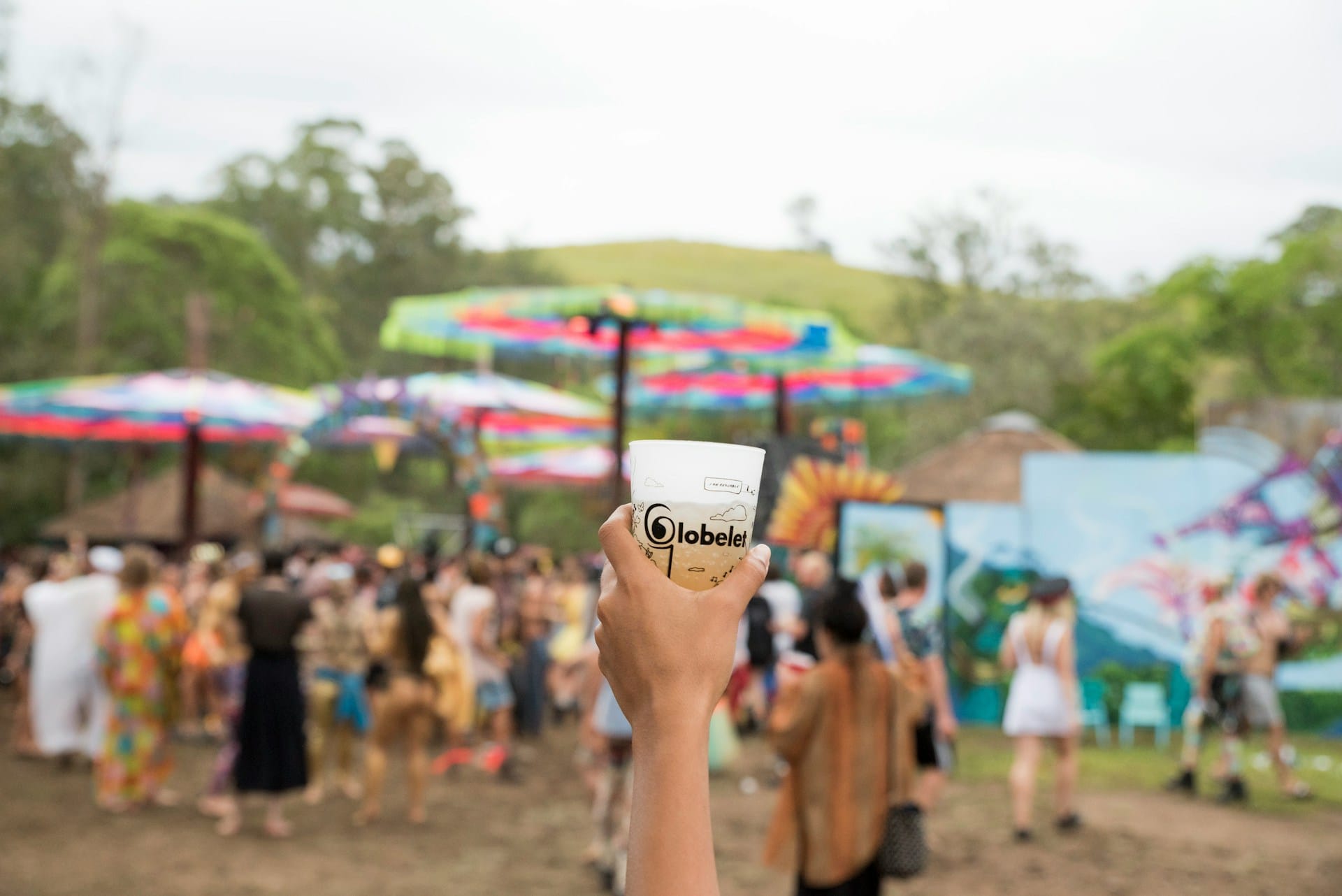
Festivals & Outdoor Events: Durability is King
Think mud, heat, rain, and a thousand spilled drinks.
- Materials: Plastic or PP — tough, leak-proof, stackable
- Design: Bold colors, bright logos, QR codes for social
- Size: 16oz–20oz — big enough for long lines
- Extras: Lids, straws, spill-proof grip
Pro Tip: Use individual packaging for hygiene — especially post-pandemic.
Corporate Events: Branding That Pays Off
You’re not just serving drinks — you’re serving brand impressions.
- Materials: Biodegradable or premium paper (for ESG alignment)
- Design: Clean, professional, consistent with brand palette
- Size: 12oz–16oz — standard for conferences or mixers
- Extras: Printed messages (“Thank you for attending!”), laser-cut logos
Pro Tip: Include a giveaway tag — “Scan to win a gift card” — boosts engagement.
Sustainability and Environmental Impact: What You Need to Know
Let’s address the elephant in the room: party cups and waste. It’s not going away — but you can make smarter choices.
The Truth About “Compostable” Cups
Many cups labeled “compostable” require industrial facilities — which 90% of cities don’t have. So they end up in landfills anyway.
Ask vendors:
- “Is this certified compostable?” (Look for BPI or TÜV OK Compost)
- “Can it break down in a backyard compost?”
- “What’s the actual degradation time?”
Recycling Challenges
Most party cups — even paper — can’t be recycled because of plastic linings. The only real solution? Reuse or choose truly compostable options.
Best practice: Partner with a waste provider that offers on-site composting — especially for large events.
The Rise of Reusable Party Cups (Yes, Really)
Some festivals and events are now using reusable plastic cups with deposit systems.
- You pay $1–$2 deposit per cup.
- Return it for refund.
- Cup gets washed and reused.
Pros:
- Huge eco win
- Saves long-term cost
- Builds brand loyalty
Cons:
- Requires logistics (collection bins, staff, cleaning)
- Risk of loss or damage
Worth it? For festivals or venues that host recurring events — absolutely.
How to Choose the Right Supplier
You’ve got your specs. Now, who’s gonna make them? Choosing the right manufacturer is half the battle.
Red Flags to Avoid
- No MOQs — too good to be true. Often means poor quality or no real inventory.
- No samples — if they won’t send you one, why should you trust them?
- No compliance certs — ask for ISO, BRC, or FDA certificates if food-safe.
- Vague timelines — “We’ll ship when ready” = red flag.
Green Flags to Look For
- Custom tooling in-house — faster prototyping, better quality control
- Eco-certifications — BPI, TÜV, FSC — real proof, not just marketing
- Bulk discount tiers — clear, transparent pricing
- Sample options — even small runs for testing
- Customer reviews — look for case studies or testimonials
Real-World Case Studies
Case 1: Eco Festival in Austin
Goal: Serve 50,000 guests with zero landfill waste.
Solution: Biodegradable cups + on-site composting bins.
Result: 95% of cups composted. Festival gained national eco-cred.
Case 2: Corporate Gala in NYC
Goal: Impress 500 high-profile guests with luxury branding.
Solution: Custom 16oz paper cups with gold foil logo and matching napkins.
Result: 78% of guests kept the cup as a souvenir.
Case 3: Wedding Planner in LA
Goal: Organic, rustic wedding with 150 guests.
Solution: Compostable cups with hand-lettered “Mr. & Mrs.” and floral design.
Result: Viral Instagram posts — “I kept the cup!” became a trend.
Conclusion: Buy Smarter, Not Just Cheaper
Party cups are more than plastic or paper. They’re touchpoints. They’re brand builders. They’re waste creators — or eco-champions.
The right cup doesn’t just hold a drink — it reflects your values, your brand, and your event’s vibe. Whether you’re sourcing for a rooftop wedding, a music festival, or a corporate gala, the key is to match your cup to your audience — not the other way around.
Don’t just buy the cheapest option. Ask the hard questions. Test samples. Compare materials. Think long-term — not just per-unit cost, but total cost of ownership. Will it leak? Will it break? Will it get thrown away — or saved as a souvenir?
And remember: customization isn’t a luxury. It’s a strategy. A well-designed, branded cup becomes a walking billboard. A compostable cup speaks volumes about your values. A bold, colorful cup creates Instagram moments. You’re not just buying packaging — you’re investing in experience.