
An air tight container is primarily evaluated by its material’s gas transmission rate and thermal resistance, which determine how effectively it maintains a protective barrier against external elements. The choice of material—whether Polypropylene (PP), Polyethylene Terephthalate (PET), or Aluminum—directly dictates the preservation level and structural integrity of the food packaging system.
Managing a global supply chain requires packaging that survives temperature extremes and rough handling without losing its seal. You likely struggle with choosing between cost-effective plastics and high-barrier metals, often facing the risk of premature spoilage or brittle packaging in frozen conditions. This analysis provides the technical data you need to select the right substrate for your distribution model to ensure product safety and brand reliability.
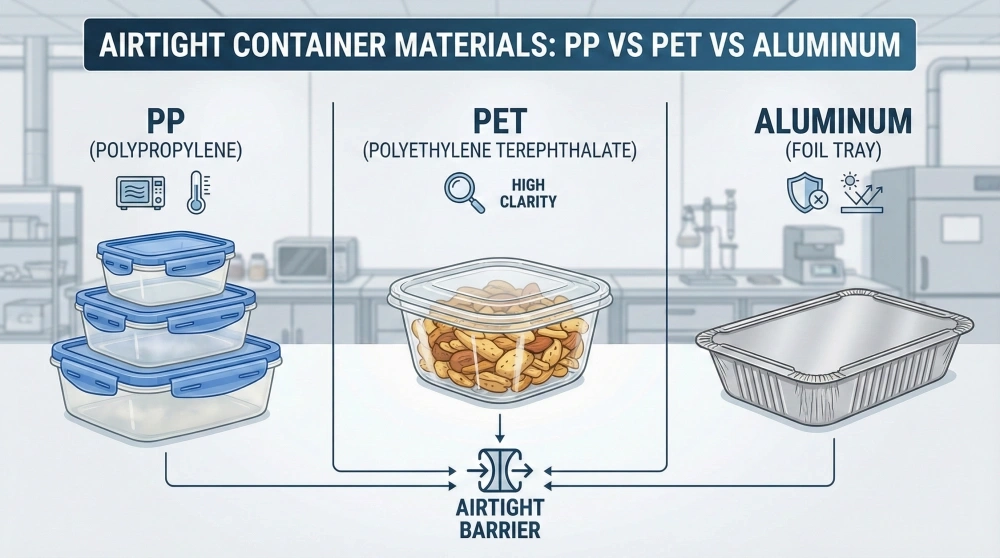
Why Is Polypropylene (PP) the Standard for an Air Tight Container?
Polypropylene is the industry standard for an air tight container because of its high melting point and superior chemical resistance to oils and acids. It offers a balanced profile of durability and cost-efficiency for bulk food distribution and industrial meal prep.
Here’s the deal. PP is the workhorse of the Reliancepak production line because it allows for both hot-fill and freezer-grade applications without compromising the seal.
Thermal Performance and Microwave Safety
PP containers are preferred for foods that require reheating or high-temperature processing before distribution.
- Withstands temperatures up to 120°C for hot-fill and microwave use
- Remains flexible at low temperatures, making it better for frozen food storage than PET
- Resists warping under heat, ensuring the lid interface stays airtight
Chemical Resistance for Preservation
The molecular structure of PP makes it highly resistant to the chemical reactions that can occur with processed foods.
- Prevents leaching or degradation when in contact with acidic or oily sauces
- Provides a reliable moisture barrier for dry goods like grains and powders
- Lightweight nature reduces shipping costs for large-scale distributors
| Property | PP Performance | B2B Benefit |
| Heat Resistance | High (Microwavable) | Versatility for hot/cold |
| Cold Resistance | High (Freezer-safe) | Reduced cracking in transport |
| Material Cost | Moderate | High ROI for wholesale |
The versatility of PP makes it the most common choice for one-stop procurement in the food service industry.
Key Takeaway: PP is the most versatile material for a wholesale air tight container due to its ability to handle temperature extremes while maintaining a consistent chemical barrier.
How Does PET Compare as a Material for an Air Tight Container?
PET provides a superior gas barrier and crystal-clear transparency for an air tight container, making it the preferred choice for retail-facing applications where visibility is a priority. Its low oxygen transmission rate (OTR) ensures that shelf-stable products remain fresh for longer durations compared to other standard plastics.
Look at it this way. If your product relies on shelf appeal and long-term oxygen exclusion, PET is the superior choice for your packaging strategy.
Visual Appeal and Retail Performance
PET is known for its glass-like clarity, which is a major factor in consumer purchasing decisions at the retail level.
- Allows for clear inspection of food quality without opening the seal
- High impact resistance prevents damage during the retail stocking process
- Compatible with high-clarity IML (In-Mold Labeling) for premium branding
Barrier Properties Against Oxygen
PET is scientifically proven to have better gas barrier properties than PP, which is vital for oxygen-sensitive foods.
- Extremely low OTR keeps coffee, nuts, and snacks crisp for months
- Prevents the loss of aroma and flavor in processed food items
- Best for cold or room temperature storage as it can deform under high heat
| Property | PET Performance | B2B Benefit |
| Clarity | Excellent (Glass-like) | Enhanced shelf appeal |
| Gas Barrier | Very High | Extended product shelf life |
| Heat Resistance | Low | Not suitable for microwave |
While PET lacks the heat resistance of PP, its gas-blocking capabilities are unmatched for room-temperature retail products.
Key Takeaway: Use PET for a retail air tight container where visual transparency and a high oxygen barrier are more important than microwave safety.
When Should You Use Aluminum for an Air Tight Container?
Aluminum is the premier choice for an air tight container when an absolute barrier to light, oxygen, and moisture is required for extreme shelf life or high-heat processing. It is typically utilized for specialized industrial packaging or airline catering that demands a 100% airtight environment and the ability to withstand retort sterilization.
Think about it. While plastics are excellent for most uses, some products require the absolute isolation that only metal can provide.
Absolute Barriers and Product Longevity
Aluminum remains the only material in the wholesale market that provides a complete barrier to all environmental factors.
- Zero gas permeability ensures indefinite shelf life until the seal is breached
- Opaque nature protects sensitive fats and oils from light-induced rancidity
- Fully recyclable, making it a sustainable choice for high-end international markets
Industrial and Specialized Applications
The physical properties of aluminum allow it to perform in environments where plastic might fail.
- Withstands retort and sterilization processes in industrial food plants
- Excellent heat conduction for rapid cooling after processing
- High perceived value for premium catering and luxury food items
| Property | Aluminum Performance | B2B Benefit |
| Light Barrier | 100% (Opaque) | Prevents oil oxidation |
| Oxygen Barrier | 100% (Absolute) | Maximum shelf life extension |
| Recycling | Infinite | Supports green initiatives |
The use of aluminum trays with airtight lidding is the gold standard for long-haul food transport in global logistics.
Key Takeaway: Aluminum is the best material for an air tight container intended for long-term storage or high-heat sterilization where a 100% barrier is mandatory.
How to Select the Right Material for Your Wholesale Operation?
Selecting the right material for a wholesale air tight container depends on your product’s sensitivity to oxygen, its storage temperature, and the expected distribution cycle. Balancing unit cost with performance ensures you do not over-engineer the packaging while still protecting product quality and meeting regulatory standards.
You should know that material selection is the foundation of a successful packaging strategy, especially when shipping to markets like Europe or the US.
Compliance and Certification Standards
Regardless of the material chosen, professional B2B buyers must prioritize safety and regulatory compliance.
- Verify that all materials carry EU and FDA food-grade certifications
- Ensure materials are BPA-free and safe for the intended temperature range
- Request laboratory migration test reports for specific food types
Logistical and Cost Considerations
The physical weight and stackability of the material impact your overall shipping and storage costs.
- PP is the most cost-effective for large-scale, high-volume distribution
- PET reduces retail waste by allowing consumers to verify product freshness visually
- Aluminum offers the highest protection for long-distance export in harsh climates
| Selection Factor | PP Recommendation | PET Recommendation | Aluminum Recommendation |
| Hot Fill | Best | Poor | Excellent |
| Transparency | Moderate | Best | Opaque |
| Unit Price | Low | Moderate | High |
A strategic analysis of your supply chain will reveal which material provides the best balance of cost and protection.
Key Takeaway: Match your material selection to your distribution temperature and shelf-life requirements to achieve the most efficient air tight container solution.
Choosing the Best Substrate for Your Business Needs
The success of your food product depends on selecting a material that aligns with your preservation goals and logistical realities. Whether you choose the thermal versatility of PP, the retail clarity of PET, or the absolute barrier of aluminum, your air tight container is the final line of defense for your brand reputation. Reliancepak provides the expert guidance and 9 production lines of certified manufacturing needed to deliver these materials to distributors and food plants worldwide.
We invite you to consult with our technical team to discuss your specific barrier requirements and request free samples for performance testing.
Reliancepak serves as a reliable partner in the global food packaging industry, ensuring every meal remains fresh from the factory to the consumer’s table.
FAQ
Is PP or PET better for long-term snack storage?
PET is generally better for long-term snack storage because it has a lower oxygen transmission rate (OTR) than PP, which helps maintain crispness and flavor for a longer period.
Can I use PET containers for hot-fill products?
No. PET has a low melting point and can deform or lose its airtight seal if filled with liquids or foods above 60°C; PP or aluminum should be used for hot-fill applications instead.
Is aluminum more expensive than plastic for airtight packaging?
Yes. Aluminum typically carries a higher unit price than PP or PET due to raw material costs and manufacturing complexity, but it offers a 100% barrier that plastics cannot match.
How do I verify if a container material is truly food-grade?
You should request official documentation from the manufacturer, including FDA or EU compliance certificates and specific migration test results for the material in question.
Can PP containers be recycled alongside other plastics?
Yes. PP is a widely recyclable material, and using it in your supply chain can help meet corporate sustainability goals, though local recycling capabilities vary by region.