
The primary difference between PET and rPET packaging lies in their origin: virgin PET is synthesized from petrochemical feedstocks (oil and gas), while rPET packaging is manufactured from post-consumer recycled plastic waste that has been processed and decontaminated. While both materials offer identical structural benefits, rPET significantly reduces carbon emissions and helps businesses comply with global plastic tax regulations.
Procurement directors and food packaging distributors often face the dilemma of choosing between the lower upfront cost of virgin resins and the long-term strategic value of recycled alternatives. You might find that while virgin PET offers unmatched clarity, the rising cost of environmental levies makes it a liability in modern supply chains. This guide compares the technical performance, financial implications, and environmental metrics of both materials to help you make an data-driven sourcing decision.
How do technical performance and clarity differ between PET and rPET?
In most food-grade applications, the physical performance of rPET packaging is designed to be indistinguishable from virgin PET. However, subtle differences in molecular structure and optical properties exist due to the nature of the recycling process.
Optical clarity and aesthetics
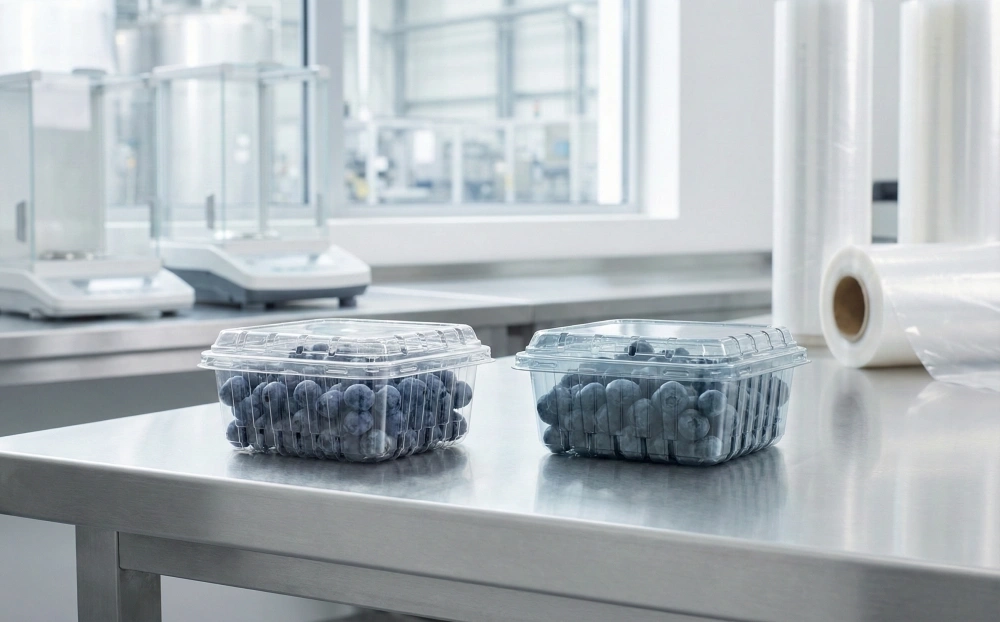
Virgin PET is known for its “crystal clear” transparency, which is the gold standard for retail visibility. Here’s the deal: because rPET is made from recycled bottles that may have had different tints, maintaining perfect clarity requires advanced filtration.
- Virgin PET: Offers a neutral, high-gloss finish with no tinting.
- rPET Packaging: May exhibit a very slight blue or grey undertone. Manufacturers often add a microscopic amount of blue toner to neutralize any yellowing that occurs during the heat-intensive recycling phases.
- Consumer Perception: For many modern shoppers, a slight tint is actually a positive “green” signal, indicating that the brand is using sustainable materials.
Structural integrity and processing
From a mechanical standpoint, both materials provide excellent moisture barriers and impact resistance. You should know that high-quality rPET undergoes “Solid State Polymerization” (SSP) to restore its molecular weight, ensuring it doesn’t become brittle.
- Tensile Strength: Both materials can withstand the high-speed vibrations of automated packing lines without cracking.
- Heat Resistance: Neither material is suitable for high-heat applications like ovens; both are optimized for cold-chain or room-temperature use.
- Formability: rPET sheets behave almost identically to virgin sheets during the thermoforming process, though they may require slight adjustments in vacuum pressure.
| Performance Metric | Virgin PET | rPET Packaging |
| Transparency | 100% Clear | 95-98% Clear (Slight tint) |
| Impact Resistance | High | High |
| Oxygen Barrier | Excellent | Excellent |
| Recyclability | 100% | 100% |
Key Takeaway: Modern rPET packaging has reached a level of technical parity with virgin plastic, making it a viable one-to-one replacement for almost all cold-food containers.
What is the true cost difference: Virgin vs. Recycled?
The financial comparison between PET and rPET is more complex than just comparing the price per ton of resin. While virgin plastic is often cheaper at the factory gate, rPET provides significant savings when you factor in global plastic taxes and brand equity. This is a crucial consideration for buyers looking to understand What is rPET Plastic? and its role in a cost-effective procurement strategy.
Resin price volatility
Virgin PET prices are directly tied to the price of crude oil and natural gas. When energy prices spike, so does your packaging cost. rPET pricing is more stable but remains higher due to the infrastructure required for collection and decontamination.
- Collection Costs: Recovering bottles from consumers and sorting them by hand or machine adds a fixed layer of cost that virgin materials avoid.
- Processing Energy: Cleaning and pelletizing recycled flakes is energy-intensive, though it uses significantly less total energy than creating new plastic from oil.
- Supply and Demand: As global brands like Coca-Cola and Unilever commit to recycled content, the demand for food-grade rPET often outstrips supply, maintaining a price premium.
Factoring in the Plastic Tax
The “real” cost of packaging now includes government levies. In markets like the UK and the EU, packaging with less than 30% recycled content is subject to heavy taxation.
- Avoidance of Levies: Using rPET packaging helps you bypass these taxes, which can often offset the higher resin price.
- Import/Export Efficiency: Distributors in Malaysia or Saudi Arabia exporting to Europe find that rPET-based products are much more competitive in the destination market.
- Extended Producer Responsibility (EPR): Many regions are shifting the cost of waste management back to the producer; rPET usage typically lowers these EPR fees.
Key Takeaway: While rPET may have a 10%–20% higher resin cost, the avoidance of plastic taxes and the reduction in regulatory risk often make it the more economical choice for international trade.
Sustainability metrics: Which material wins?
Sustainability is the primary driver for the shift toward rPET packaging. The environmental data is clear: recycled plastic outperforms virgin plastic in every major category, from carbon footprint to resource preservation.
Carbon footprint and energy use
The production of rPET requires about 79% less energy than the production of virgin PET. This is because the polymer chains have already been created; the factory only needs to clean and reshape them.
- Greenhouse Gas Emissions: Switching to rPET can reduce the CO2 emissions of your packaging by up to 60%.
- Water Consumption: Modern closed-loop recycling systems minimize water waste during the flake washing process.
- Petrochemical Independence: rPET reduces the global reliance on fossil fuels, keeping oil in the ground.
Circularity and waste management
The most significant benefit of rPET is that it prevents plastic from entering landfills or oceans. By creating a market for recycled flakes, your procurement choice directly funds the recycling infrastructure in the countries where you operate.
- Closing the Loop: rPET containers can be recycled multiple times, though they may eventually be downcycled into textiles or industrial strapping.
- Landfill Diversion: Every ton of rPET used represents thousands of bottles that did not end up as environmental pollutants.
| Environmental Impact | Virgin PET | rPET Packaging |
| Energy Consumption | 100% (Baseline) | ~21% of Baseline |
| CO2 Emissions | High | Low (-60%) |
| Resource Type | Non-renewable (Oil) | Circular (Waste) |
Key Takeaway: rPET packaging is the only viable path for food distributors to meet their ESG (Environmental, Social, and Governance) targets while maintaining high performance.
Reliancepak provides both virgin and rPET solutions to suit your specific budget and sustainability goals. With our 9-line production capacity, we can ensure consistent supply and high-quality finishes regardless of the material choice. Contact our team today for a comparison quote or to request free samples for your next project.
Frequently Asked Questions
Is rPET packaging more expensive than virgin PET?
Generally, yes. The resin price for food-grade rPET is typically higher than virgin resin due to the complex cleaning and decontamination steps. However, when you factor in regional plastic taxes and the marketing value of sustainability, the total cost of ownership is often lower.
Can I mix PET and rPET in the same container?
Yes. Many manufacturers use a “sandwich” structure or a simple blend (e.g., 30% or 50% rPET) to balance cost and clarity. This allows you to meet tax thresholds without a full transition to 100% recycled material.
Does rPET have the same shelf life as virgin PET?
Yes. The moisture barrier and chemical stability of rPET are identical to virgin PET. It will protect your food products for the same duration without any degradation of the material itself.
Why is rPET sometimes slightly grey?
This is a natural result of the recycling process. Even with advanced sorting, a small amount of labels or colored caps can enter the stream. High-end manufacturers use optical sorters and neutralizing toners to ensure this is almost unnoticeable to the end consumer.
Will switching to rPET affect my packing machinery?
In most cases, no. rPET sheets are designed to work on standard thermoforming and sealing equipment. We suggest running a small test batch to ensure that the heat-sealing temperatures are optimized for the specific recycled blend you choose.