
The quality grade of a high-grade plastic material like rPET is determined by its molecular purity, optical clarity, and the absence of volatile contaminants after the decontamination process. For a recycled resin to be classified as food-grade, it must achieve physical and chemical parity with virgin PET, ensuring it can withstand the mechanical stresses of thermoforming and the safety requirements of direct food contact.
For procurement directors at large-scale distribution centers or food manufacturing plants, distinguishing between industrial-grade and premium food-grade resins is a constant technical challenge. You might find that while a supplier offers a competitive price, the underlying material exhibits inconsistent viscosity or subtle “specks” that compromise the shelf appeal of your final product. This guide breaks down the industrial benchmarks that define a premium recycled resin, helping you source rPET packaging that aligns with your brand’s quality and safety mandates.
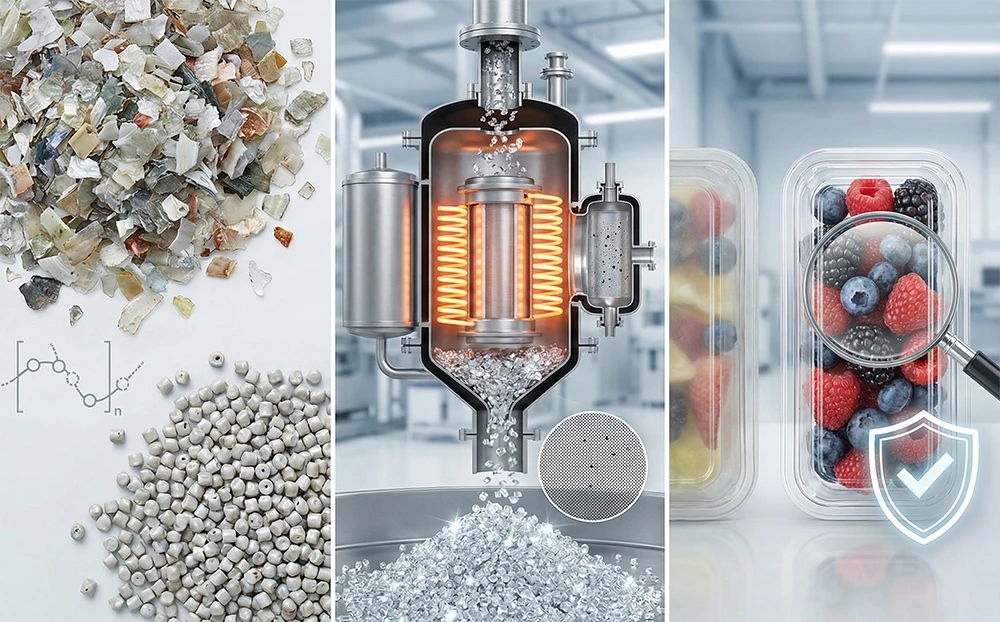
How does molecular integrity define a high-grade plastic material?
Molecular integrity, specifically measured as Intrinsic Viscosity (IV), is the most critical factor in determining the quality of recycled PET. This metric dictates how the material will behave under heat and pressure during the manufacturing phase.
The role of Intrinsic Viscosity (IV)
In the world of polymer engineering, IV represents the length of the molecular chains. Here’s the deal: longer chains create a stronger, more resilient plastic.
- IV Restoration: During the recycling process, PET chains naturally shorten (degrade). A premium facility uses Solid State Polymerization (SSP) to re-link these chains, restoring the IV to a range typically between 0.70 and 0.85 dL/g.
- Mechanical Strength: If the IV is too low, your food trays or containers will become brittle, leading to cracking during high-speed logistics or when handled by end-consumers.
- Consistency: A high-grade material maintains a tight IV tolerance across different batches, preventing your production equipment from needing constant recalibration.
Thermal stability during thermoforming
The grade of the plastic also affects its thermal window. A high-purity resin allows for a more predictable melting point, which is vital for maintaining uniform wall thickness in deep-drawn food containers.
- Even Distribution: Consistent material grade ensures that the corners of a tray remain as strong as the base.
- Shrinkage Control: Lower-grade recycled materials often exhibit irregular shrinkage, which can cause lids to fit poorly—a major concern for leak-prone deli products.
Key Takeaway: The grade of the material is not just a label; it is a technical measurement of the polymer’s molecular strength and its ability to perform under industrial stress.
What optical and sensory factors impact the grade of rPET packaging?
Beyond mechanical performance, the quality grade is determined by the sensory and optical characteristics of the plastic. In the retail food sector, transparency is a proxy for freshness, and any visual or olfactory defects can negatively impact consumer trust.
Optical clarity and “The Haze Factor”
While virgin PET is perfectly clear, recycled streams often introduce subtle tints. A high-grade plastic material minimizes these variations through advanced filtration and sorting.
- Color Neutralization: Premium rPET often has a microscopic amount of blue toner added to counteract the natural yellowing that occurs during heat cycles.
- Black Specks and Gels: These are microscopic burnt particles or non-PET contaminants. A high-grade resin is filtered down to 50–100 microns to ensure these defects are invisible to the naked eye.
- Gloss Finish: High-quality resin provides a high-gloss surface that reflects light effectively, making the food inside look more appetizing under supermarket LEDs.
Sensory and olfactory purity
Because rPET is derived from post-consumer waste, it may have been exposed to various chemicals or odors in its “first life.” Sensory purity is a hallmark of premium food-grade material.
- Volatile Organic Compounds (VOCs): High-vacuum reactors strip away these molecules during the “super-cleaning” phase.
- Odorless Guarantee: Lower-grade rPET may retain a faint plastic or chemical scent, which is unacceptable for sensitive food items like dairy or bakery goods.
- Migration Limits: Laboratory tests ensure that the material complies with global migration limits, confirming that no substances transfer from the plastic into the food.
| Quality Indicator | High-Grade rPET | Industrial-Grade rPET |
| Clarity | Crystal clear (neutral/blue) | Hazy or yellowish |
| Purity | < 10 ppm contaminants | High contaminant risk |
| Odor | Completely neutral | Possible chemical scent |
| Processing | Optimized for 9-line systems | Variable performance |
Key Takeaway: Visual and sensory consistency is what transforms a “recycled” product into a premium retail-ready solution.
How do decontamination and certification establish quality grades?
The ultimate verification of a high-grade material is the regulatory certification it carries. In the B2B supply chain, “quality” is synonymous with “certified safety.”
The “Super-Cleaning” benchmark
Not all recycling processes are equal. The grade of rPET is heavily influenced by whether the facility uses mechanical “wash-only” methods or advanced chemical decontamination.
- Challenge Testing: To reach the highest grade, a process must pass a “challenge test,” where specific contaminants are intentionally introduced and then proven to be 99.9% removed by the system.
- FDA and EFSA Approval: These organizations issue Letters of No Objection (LNO) for specific recycling technologies. Sourcing material from an LNO-certified process is the only way to guarantee a food-grade rating.
- Batch Traceability: High-quality suppliers provide a Certificate of Analysis (COA) for every shipment, documenting the specific purity levels and mechanical properties of that batch.
The 9-line production advantage
For manufacturers like Reliancepak, maintaining a high-grade output requires infrastructure that can handle the nuances of recycled polymers at scale.
- Melt Filtration: Using multi-stage filters ensures that any residual labels or adhesives are removed before the sheet is formed.
- Automated Gauge Control: High-end production lines use sensors to monitor thickness in real-time, ensuring that the high-grade plastic material is used efficiently without wasting resin.
- Customization Purity: Professional customization services ensure that even with complex molds or embossing, the material maintains its structural integrity.
Key Takeaway: Documentation and specialized manufacturing equipment are the external proofs that the resin meets the highest industrial grades.
Reliancepak utilizes advanced 9-line manufacturing and rigorous quality protocols to ensure that every container we produce meets the definition of a premium, food-safe solution. We suggest contacting our team to discuss your specific quality requirements or to request a sample of our rPET packaging materials for your next project.
The difference between a successful product launch and a logistical failure often comes down to the quality grade of your packaging. Investing in high-grade materials today protects your brand’s reputation and ensures consumer safety tomorrow.
Frequently Asked Questions
Can you achieve a 100% rPET content with a high-grade rating?
Yes. With modern SSP technology and precision sorting, it is possible to produce 100% recycled containers that meet the highest food-grade standards. However, some distributors suggest using a 70% or 80% blend to achieve a perfect balance of cost and virgin-like clarity.
Why does lower-grade rPET look yellow?
Yellowing is a sign of thermal degradation or the presence of PVC contaminants. In a high-grade material, this is prevented by using high-vacuum reactors and specific heating profiles that protect the polymer from oxidative damage.
Does the grade of rPET affect its recyclability?
A higher-grade material can be recycled more times. Because the molecular chains have been preserved through careful processing, the plastic stays in the “closed-loop” for a longer period before it eventually needs to be downcycled into fibers.
How do I verify the grade from my supplier?
Always suggest requesting a technical data sheet (TDS) and a food safety certificate. Look for specific metrics like Intrinsic Viscosity (IV) and a confirmation of FDA/EFSA compliance for decontamination.
Is high-grade rPET more expensive?
Yes. The extensive cleaning, testing, and SSP restoration required to reach a high-grade rating add to the processing cost. However, this is offset by the material’s superior performance on your packing lines and its compliance with global plastic taxes.