When you’re sourcing plastic packaging, the choice between HDPE, PET, and PP comes down to more than material cost. Each polymer behaves differently under heat, cold, and mechanical stress — and those differences determine whether your container survives the supply chain intact.
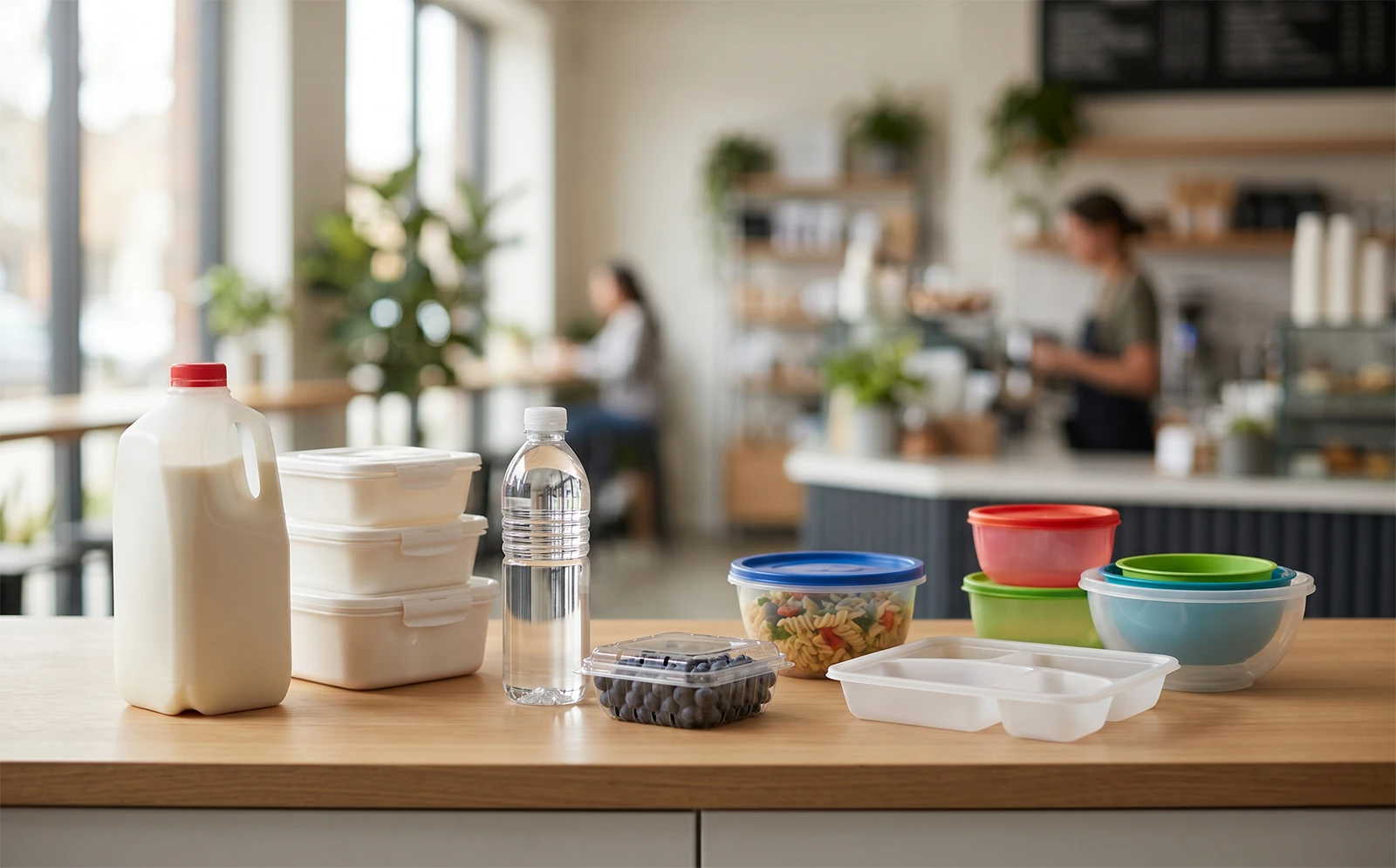
Material Properties: HDPE vs. PET vs. PP
The three polymers share the same thermoplastic family but branch off in distinct directions. Their molecular structures create real-world trade-offs in temperature tolerance, clarity, and recyclability.
| Property | HDPE | PET | PP |
|---|---|---|---|
| Maximum service temperature | 120°C short-term | 70°C | 140°C |
| Low-temperature toughness | Excellent down to -40°C | Moderate down to -10°C | Poor below 0°C |
| Clarity | Opaque, matte finish | Clear, glass-like | Translucent to clear |
| Recycling code | #2 | #1 | #5 |
| Typical wall thickness | 0.3–1.5 mm | 0.2–0.8 mm | 0.3–1.0 mm |
HDPE strikes a balance that neither PET nor PP fully matches. It isn’t as clear as PET, nor does it handle sustained heat as well as PP. But it delivers reliable toughness across a wider temperature range than either alternative.
Temperature Tolerance and What It Means for Filling
PET deforms above 70°C, which rules out hot-fill applications. If your customer runs jam or sauce lines filling product at 85–95°C, PET containers will warp or leak at the seal. PP handles those temperatures comfortably up to 140°C, making it the standard for hot-fill and microwave-ready packaging.
HDPE sits between them with a short-term service temperature around 120°C. That’s sufficient for pasteurization cycles and warm fills, but not continuous high-heat exposure. For dairy and cold-chain applications, HDPE’s moderate heat tolerance is rarely a limiting factor — the real advantage lies elsewhere.
Mechanical Toughness in Cold Chain and Transport
This is where HDPE clearly separates itself. Its low-temperature toughness remains excellent down to -40°C, meaning milk jugs, detergent bottles, and industrial containers survive frozen storage and rough handling without cracking.
PP becomes brittle below 0°C. A pallet of PP containers sitting in a refrigerated warehouse during winter transport risks impact failure at the stack base. PET fares moderately better down to -10°C, but still falls short of HDPE’s cold-weather reliability.
For distributors moving products through cold chain logistics, HDPE packaging significantly reduces field failure rates compared to the alternatives. That translates directly to fewer customer complaints and less product loss.
Clarity, Aesthetics, and Shelf Appeal
If visual product display matters to your end customer, PET is the benchmark. Its glass-like clarity makes it ideal for beverage bottles, premium food containers, and cosmetic packaging where shelf visibility drives purchasing decisions.
HDPE is naturally opaque with a matte finish. You can pigment it in nearly any color, but you won’t get transparent packaging. PP offers some translucency but rarely matches PET’s clarity.
The trade-off is straightforward: if the customer needs to see the product, PET wins. If the container primarily needs structural integrity and chemical resistance, HDPE is the more practical choice.
Recycling Codes and End-of-Life Considerations
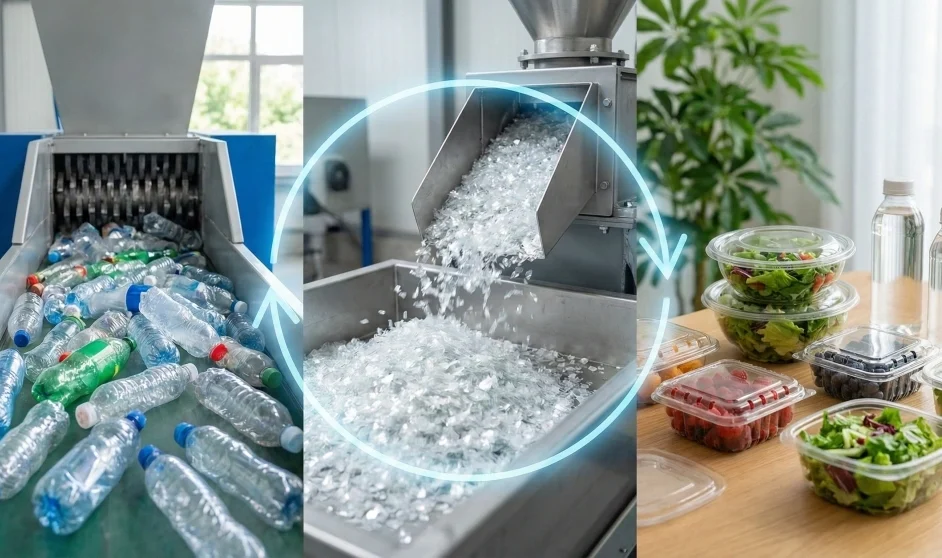
HDPE (code #2) is one of the most widely recycled plastics globally. Most municipal recycling programs accept it, and the reprocessing market is mature. PET (code #1) also has strong recycling infrastructure, particularly for beverage bottles. PP (code #5) has lagged in recycling adoption, though programs are expanding.
For buyers with corporate sustainability targets, choosing HDPE or PET over PP can simplify end-of-life reporting and improve recyclability claims. This matters when your customers’ procurement teams evaluate packaging suppliers against ESG criteria.
Choosing the Right Polymer for Your Packaging Line
If you’re supplying dairy containers for yogurt or milk, HDPE is the standard choice — it handles cold chain logistics without cracking. For hot-fill jam producers, PP is more suitable despite higher per-unit material cost. And if your customer needs clear, shelf-appealing packaging for retail beverages, PET remains the benchmark.
The right choice depends on your specific application. But when cold-weather toughness, recycling compatibility, and balanced all-around performance matter most, HDPE consistently delivers.
FAQ
Can HDPE replace PET in food packaging?
It depends. HDPE works well for shelf-stable dairy, condiments, and dry goods. But for products requiring visual clarity — like beverages or premium displays — PET remains necessary. HDPE cannot match PET’s transparency.
How do I choose between HDPE and PP for hot-fill applications?
Check your fill temperature. HDPE handles warm fills and pasteurization up to around 120°C short-term. For sustained hot-fill above that, PP is safer despite higher material cost.
Is HDPE packaging more recyclable than PP?
Yes. HDPE (code #2) has mature recycling infrastructure and broad municipal acceptance. PP (code #5) recycling is improving but less widely available. For ESG reporting, HDPE offers a clear advantage.
What should I consider when switching from PET to HDPE?
Three factors: wall thickness adjustments (HDPE needs more material for rigidity), loss of product visibility due to opacity, and seal compatibility with your existing filling line.
Can HDPE containers be used for frozen storage?
Yes. HDPE maintains impact resistance down to -40°C, making it suitable for frozen food packaging, cold chain transport, and freezer storage without cracking.