HDPE packaging serves a surprisingly wide range of industries, far beyond what most buyers initially expect. From dairy processing floors to chemical warehouses, the material’s balance of rigidity, moisture resistance, and cost efficiency makes it a go-to choice across sectors with demanding operational requirements.
Understanding where HDPE performs best helps procurement teams make smarter sourcing decisions. Not every container material suits every application, and the wrong choice can lead to product damage, compliance failures, or unnecessary cost.
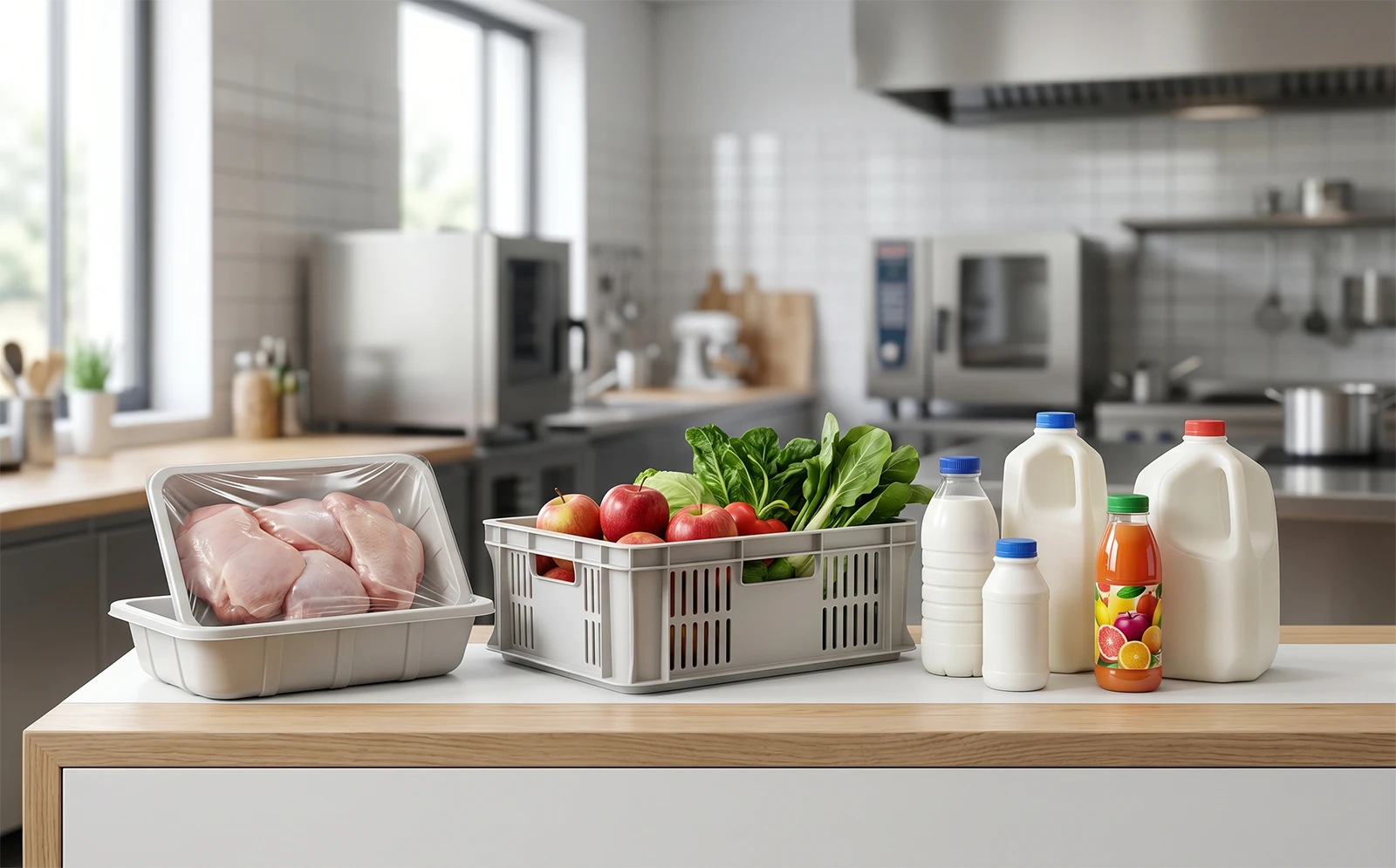
Why HDPE Works Across Multiple Sectors
HDPE’s material properties explain its cross-industry appeal. High density polyethylene resists moisture absorption, tolerates a wide temperature range, and maintains structural integrity under stacking loads. These characteristics matter in cold chain logistics, wet processing environments, and shelf-stable storage alike.
The material also meets food-contact regulatory standards across major markets, including FDA and EU certifications. For packaging buyers serving global supply chains, this dual performance profile eliminates the need to qualify separate materials for different product lines.
Dairy and Beverage Processing
The dairy sector consumes enormous volumes of food-grade HDPE annually. Milk bottles, yogurt tubs, cream containers, and juice bottles all rely on the material’s UV resistance and hermetic sealing compatibility. White HDPE bottles, specifically, prevent light-induced flavor degradation in milk products.
Screw-cap systems pair naturally with HDPE containers, creating reliable tamper-evident closures that retailers and consumers expect. For dairy processors running high-speed filling lines, HDPE’s dimensional consistency reduces jam rates and downtime.
Fresh Produce Distribution
Berry baskets, salad containers, and vegetable trays represent another major HDPE application. The rigidity required for automated packing lines is non-negotiable in produce operations running at scale. HDPE delivers that structural support while allowing vent patterns that promote airflow and reduce spoilage.
Moisture resistance proves critical here as well. Produce packaging that absorbs condensation loses consumer appeal quickly. HDPE’s low moisture uptake keeps packaging visually clean from packing through retail display.
Meat and Poultry Packaging
Chicken trays, ground beef containers, and processed meat packaging demand materials that withstand refrigerated environments without warping. HDPE maintains dimensional stability at typical cold storage temperatures, which prevents seal failures that could compromise product safety.
The material’s resistance to oils and fats also matters in meat applications. Unlike some packaging alternatives, HDPE does not absorb or react with animal fats, preserving both appearance and structural integrity throughout the supply chain.
Industrial and Chemical Applications
Beyond food, HDPE containers serve industrial sectors where chemical resistance and durability are primary concerns. Chemical drums, industrial totes, and lubricant containers all benefit from HDPE’s inertness. The material does not corrode, does not leach, and tolerates a broad pH range.
For chemical distributors, HDPE packaging reduces liability exposure compared to materials that may react with stored substances. The cost advantage over metal or fiberglass alternatives is substantial at volume.
Pharmaceutical and Cosmetic Packaging
Pharmaceutical-grade HDPE bottles, caps, and closures serve the healthcare industry’s strict cleanliness requirements. The material’s barrier properties protect sensitive formulations from moisture and contamination. Cosmetic brands also favor HDPE for lotion bottles, shampoo containers, and personal care packaging where chemical compatibility with formulations is essential.
Agricultural and Garden Products
Seed trays, fertilizer containers, and pesticide packaging all represent steady HDPE demand. Agricultural buyers typically prioritize bulk pricing and UV stability, since products may sit in outdoor retail environments for extended periods.
The table below summarizes key HDPE applications across major industry verticals.
| Industry Sector | Common HDPE Products | Key Material Properties Leveraged |
|---|---|---|
| Dairy and Beverage | Milk bottles, yogurt tubs, juice containers | UV resistance, hermetic sealing |
| Fresh Produce | Berry baskets, salad containers, vegetable trays | Rigidity, vent compatibility |
| Meat and Poultry | Chicken trays, ground beef containers | Cold stability, oil resistance |
| Industrial Chemicals | Drums, totes, lubricant containers | Chemical inertness, cost efficiency |
| Pharmaceutical | Medicine bottles, capsule containers | Barrier properties, cleanliness |
| Agricultural | Seed trays, fertilizer containers | Bulk pricing, UV stability |
Procurement Considerations for Multi-Sector Buyers
Buyers sourcing HDPE packaging across multiple verticals face a practical challenge: balancing certification requirements with cost efficiency. A dairy processor needs FDA-compliant materials, while an industrial chemical buyer may require different documentation. Working with suppliers who hold multiple certifications simplifies this process considerably.
MOQ requirements also vary significantly by product type. Standard milk bottles might carry lower minimum orders than custom-designed produce trays with specific vent patterns. Lead times typically range from two to four weeks for stock items, extending to six to eight weeks for customized orders.
Reliancepak: Multi-Industry HDPE Supply
Reliancepak operates nine production lines dedicated to food-grade and industrial packaging, serving buyers across dairy, produce, meat processing, and general industrial sectors. With clients in Malaysia, Peru, Austria, Spain, France, the Netherlands, Saudi Arabia, the United States, South America, and Tanzania, the company understands the documentation and certification requirements different markets demand.
The Reliancepak packaging solutions portfolio covers plastic trays, disposable containers, and food packaging systems designed for wholesale distribution. Free samples and professional customization services help buyers qualify products before committing to volume orders.
Frequently Asked Questions
Can I order HDPE containers for both food and industrial applications from one supplier?
Yes. Many packaging suppliers, including Reliancepak, offer both food-grade certified and industrial-grade HDPE products. Working with a single supplier simplifies logistics, documentation, and quality management across your product lines.
How do I verify that HDPE packaging meets my market’s regulatory requirements?
Request food-contact compliance certificates from your supplier. For food applications, verify FDA (US) and EU 10/2011 certifications. For industrial use, confirm chemical compatibility data specific to your stored products.
What MOQ should I expect for custom HDPE containers?
Custom HDPE orders typically require higher minimum quantities than stock items, often starting at 10,000 to 50,000 units depending on mold complexity. Stock items may be available in lower quantities, sometimes as few as 1,000 units.
How long does HDPE packaging last in outdoor retail environments?
HDPE offers good UV resistance, but prolonged direct sun exposure can cause gradual brittleness. For outdoor display applications, UV-stabilized HDPE formulations extend product life significantly, typically maintaining appearance and integrity for 12 to 18 months.
Can HDPE containers be recycled after use?
Yes. HDPE is one of the most widely recycled plastics globally, marked with resin identification code 2. Recycling infrastructure varies by region, but the material’s recyclability often appeals to brands with sustainability commitments.