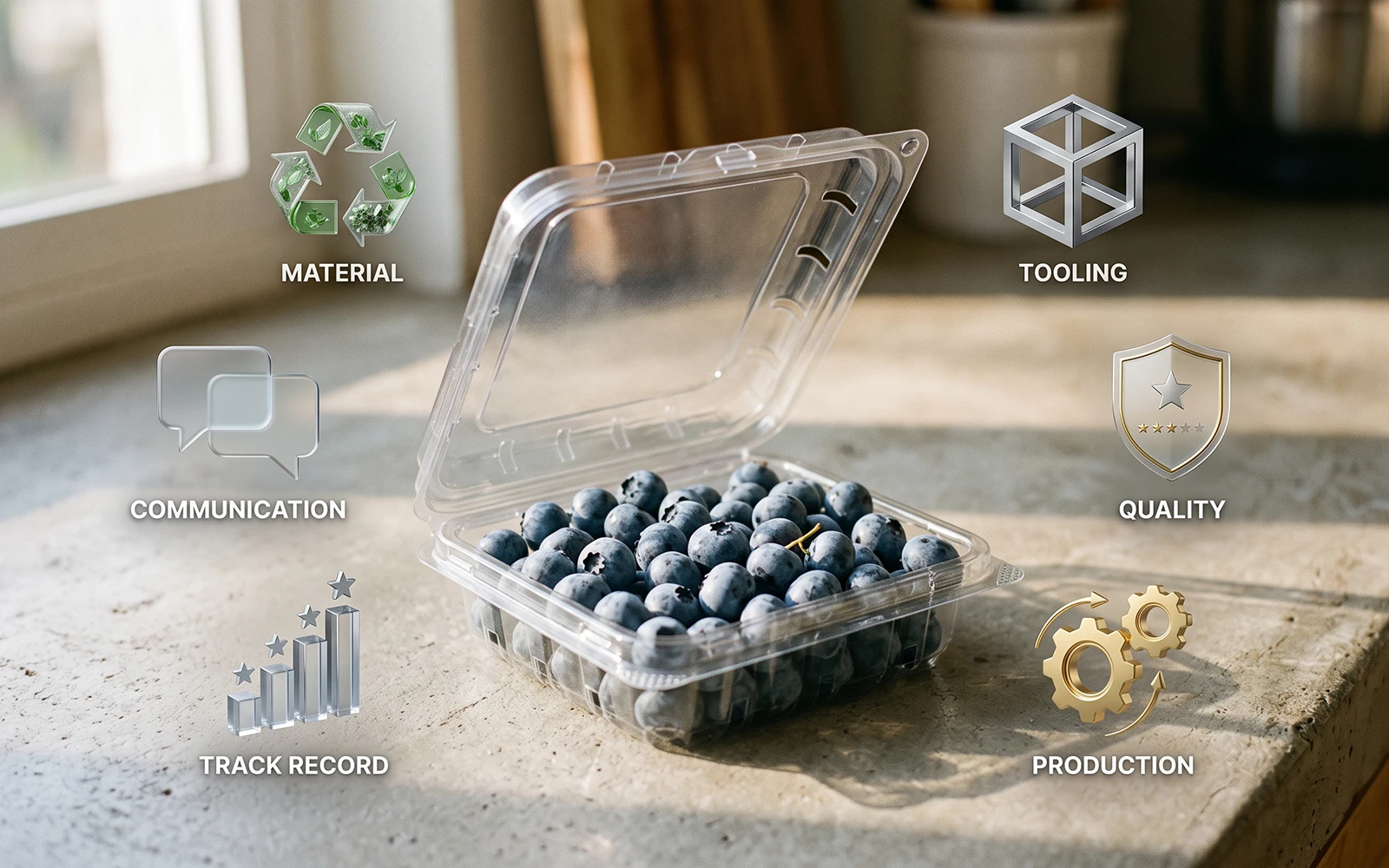
A single packaging supplier decision affects your supply chain stability, regulatory compliance, and customer experience for years. For food brands and distributors sourcing clamshell containers, the stakes are higher than in standard packaging procurement—food-contact materials carry strict certification requirements, and a poor supplier fit can mean costly product recalls or missed retail windows.
This guide walks through the key evaluation criteria when comparing clamshell packaging manufacturers, so you can make a sourcing decision based on operational facts rather than sales promises.
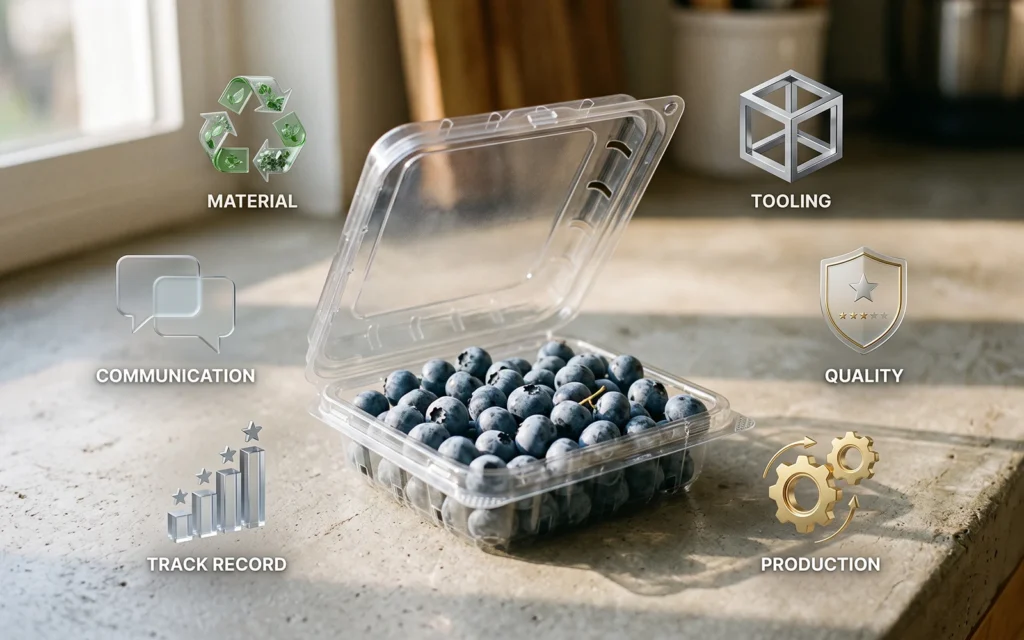
Production Capabilities and Process Fit
Not every packaging factory produces clamshells the same way. The two dominant manufacturing processes—thermoforming and injection molding—serve different product requirements and volume profiles.
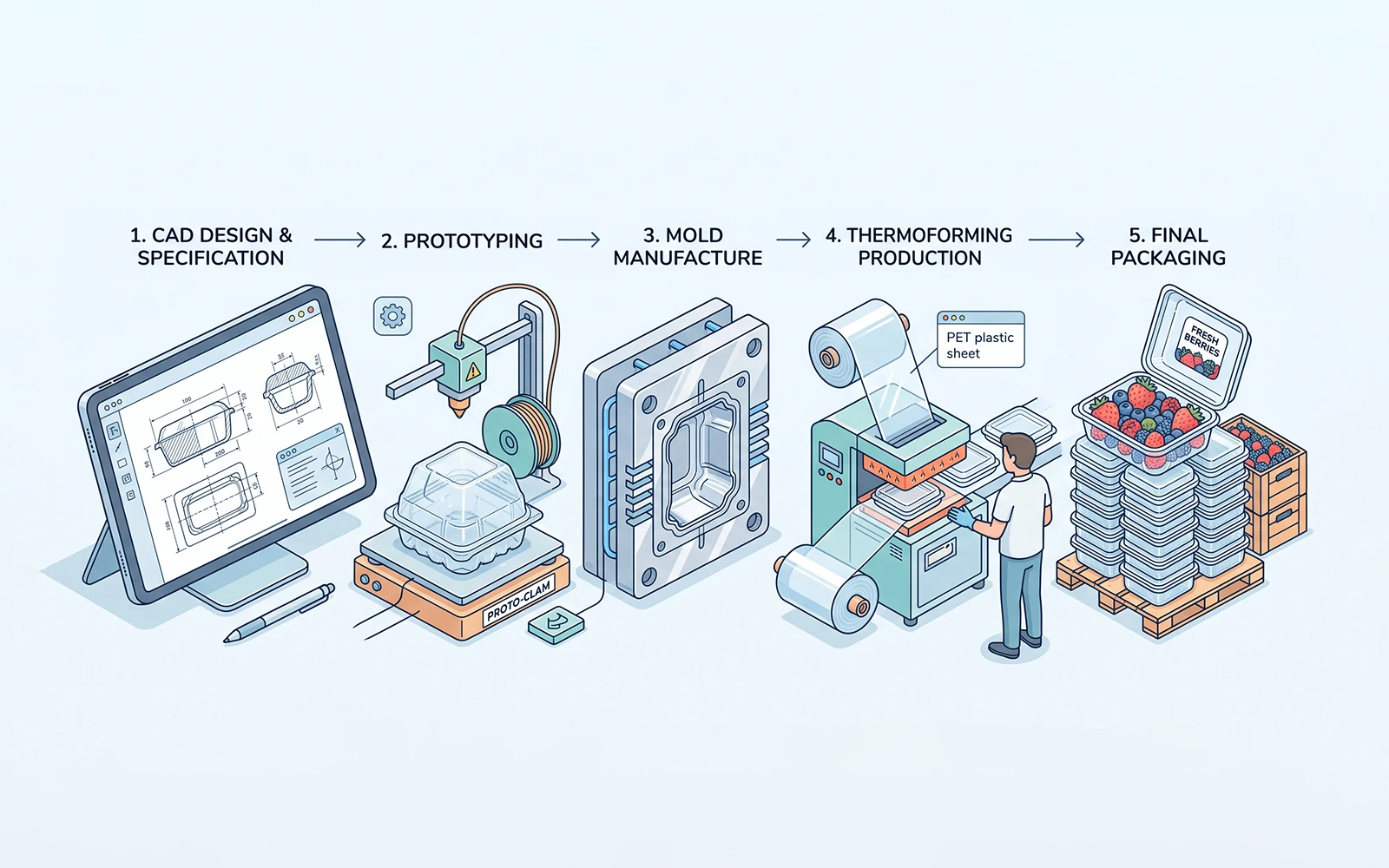
- Thermoforming heats a flat PET or PP sheet and forms it over a mold. It handles high-volume runs of clear, lightweight containers at relatively low tooling cost.
- Injection molding pushes molten plastic into a steel mold cavity. It produces thicker, more rigid containers with tighter dimensional tolerances, but tooling investment is higher.
When evaluating a clamshell packaging manufacturer, ask whether they run both processes or specialize in one. A factory with multiple production lines offers better scheduling flexibility, which matters when you need to scale order quantities during peak season without stretching lead times from three weeks to eight.
Quality Systems for Food-Contact Packaging
ISO 9001 certification is a starting point, but it does not address food safety specifically. Food-grade clamshell packaging requires additional third-party certifications, and the right one depends on your end market:
- BRC Packaging or SQF is often required by major US and UK retailers.
- FSSC 22000 provides a broader framework recognized across international food supply chains.
Ask potential suppliers for recent third-party audit reports, not just certificate numbers. Audit reports reveal the scope of certification and any corrective actions issued—details that certificates alone do not show.
Tooling, Prototyping, and Time-to-Market
Tooling cost is one of the largest upfront investments in a packaging project. A manufacturer with in-house tooling and rapid prototyping capabilities can compress your development timeline significantly.
Look for suppliers offering 3D-printed samples for fit checks and CNC-milled samples for functional testing before you commit to production steel tooling. This prototyping phase typically saves two to four weeks of back-and-forth revisions and reduces the risk of expensive mold corrections after production begins.
If a manufacturer does not offer pre-production sampling, treat that as a warning sign. Rushing into steel tooling without physical validation often leads to dimensional issues, lid-fit problems, or sealing failures that cost more to fix downstream.
Material Sourcing and Traceability
Clamshell containers for food applications are most commonly produced in PET (polyethylene terephthalate) or PP (polypropylene). Both materials are widely accepted for direct food contact when produced under proper quality controls, but the source of your raw material affects traceability and compliance.
- Domestically sourced PET sheet typically provides clearer chain-of-custody documentation, which matters for food-grade audits and sustainability certifications.
- Imported sheet can be cost-effective but requires more diligence. Ask the manufacturer for material safety data sheets (MSDS) and certificates of analysis from their sheet suppliers.
If sustainability is part of your brand positioning, ask specifically about recycled-content PET (rPET) or bio-based alternatives. A manufacturer that can offer these materials with documented chain-of-custody certifications gives you a verifiable story for your end customers—not just a marketing claim.
Communication and Project Responsiveness
For overseas suppliers, time zone differences and language barriers can slow projects by days. A simple technical question that takes 30 minutes to resolve with a local supplier might take 24 hours with a manufacturer twelve time zones away.
Evaluate responsiveness during the quoting phase. How quickly do they reply to emails? Do they provide detailed, technically accurate quotes, or generic templates with vague specifications? Slow or vague responses during the sales stage typically predict the same behavior once production begins and you need urgent problem resolution.
Look for manufacturers that assign dedicated English-speaking account managers to your project. Direct communication with a technical contact—rather than routing every question through a general inbox—reduces miscommunication on specifications, tolerances, and delivery timelines.
Domestic vs. Overseas: A Practical Comparison
| Criterion | Domestic Manufacturer | Overseas Manufacturer |
|---|---|---|
| Typical lead time | 2–4 weeks | 6–10 weeks (including shipping) |
| Per-unit cost | Higher | Lower (depending on volume) |
| Communication | Same time zone, fewer delays | Time zone gaps, potential language barriers |
| Quality audit access | Easy to schedule on-site visits | Requires travel or third-party audit firms |
| Shipping complexity | Standard freight | International logistics, customs clearance |
| Best suited for | Smaller runs, tight timelines, frequent design changes | High-volume, cost-sensitive, stable designs |
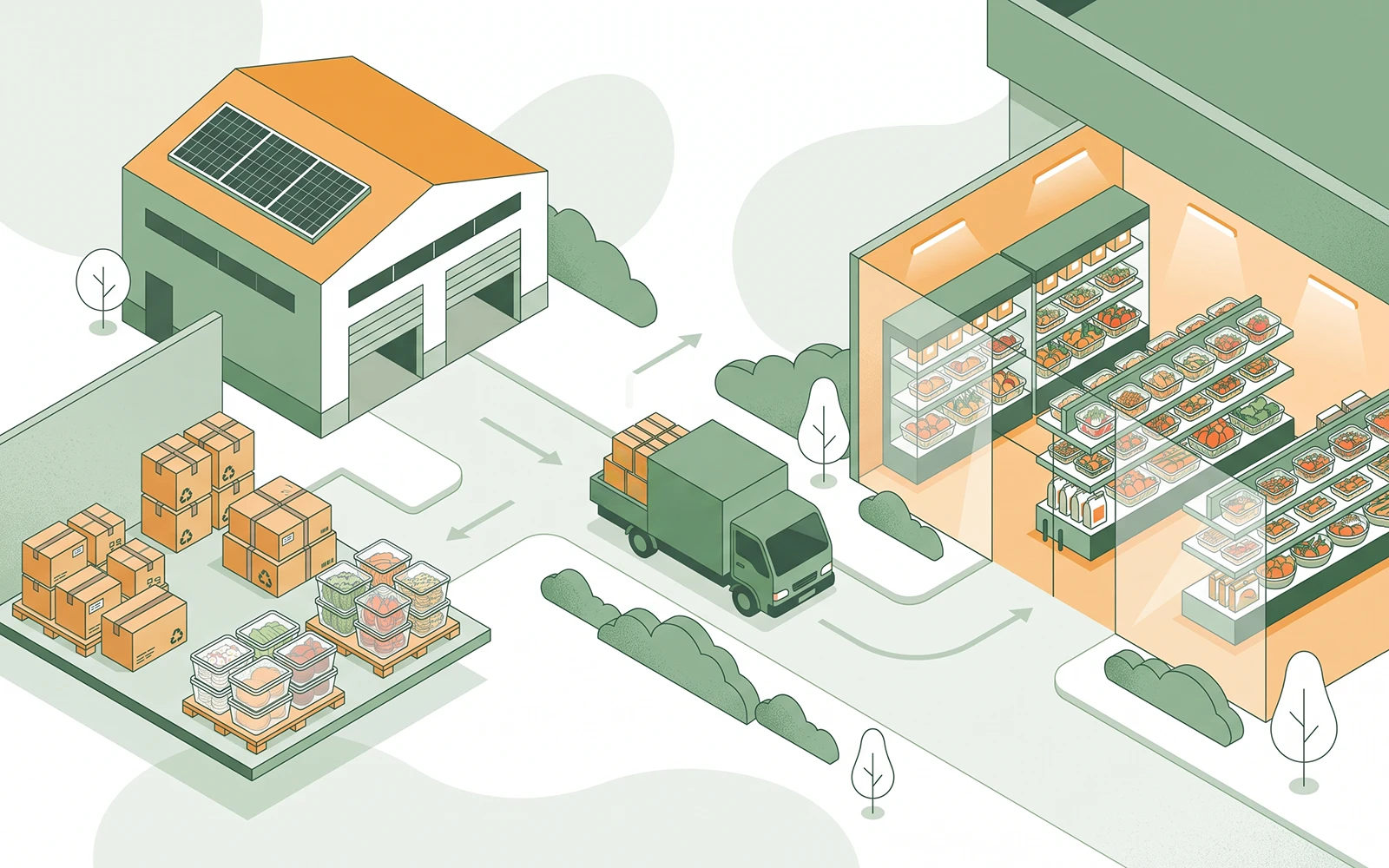
The right choice depends on your order volume, timeline flexibility, and how much direct oversight you need over the production process. Many buyers work with a mix—using domestic suppliers for urgent or small-batch orders and overseas manufacturers for steady, high-volume production.
Evaluating a Manufacturer’s Track Record
Before signing a supply agreement, ask for references from existing customers in the food industry. A manufacturer that serves food processors, fresh produce packers, or retail-ready meal brands understands the compliance landscape and packaging performance requirements specific to your sector.
Request samples of current production—not showroom samples, but actual units pulled from a production run. This gives you a realistic picture of dimensional consistency, clarity, lid-fit tolerance, and overall finish quality.
Check whether the manufacturer holds valid food-contact compliance documentation for your target market. FDA compliance is necessary for US-bound products; EU Framework Regulation (EC) No. 1935/2004 applies for European markets. A supplier experienced in your export region will already have the right documentation on file.
FAQ
What is the minimum order quantity for custom clamshell packaging?
It depends on the manufacturer and the production process. Thermoformed clamshells often start at 10,000–50,000 units for custom tooling, while stock or standard sizes may be available in smaller quantities. Injection-molded custom clamshells typically require higher minimums due to tooling costs. Ask potential suppliers about both custom and standard-size options.
How do I verify that a manufacturer’s food-grade certifications are current?
Request copies of the actual certificates and the most recent third-party audit reports. Certificates list the scope and validity period; audit reports show the findings and any non-conformances. Cross-check certificate numbers on the certifying body’s public registry when available.
What is the difference between thermoformed and injection-molded clamshells?
Thermoformed clamshells are made by heating a plastic sheet and forming it over a mold. They are lightweight, clear, and cost-effective for high-volume runs. Injection-molded clamshells are made by injecting molten plastic into a steel mold. They offer thicker walls, tighter tolerances, and more complex shapes, but at higher tooling cost.
Can I get samples before committing to production tooling?
Yes, most established manufacturers offer pre-production samples. 3D-printed prototypes verify dimensional fit, while CNC-milled samples test functional performance like lid closure and hinge durability. Skipping this step increases the risk of mold revisions after steel tooling is cut.
Should I choose a domestic or overseas clamshell packaging manufacturer?
That depends on your priorities. Domestic suppliers offer shorter lead times, easier quality audits, and simpler logistics. Overseas manufacturers often provide lower per-unit costs at higher volumes but require more planning around shipping timelines and communication. Many food brands use a hybrid sourcing strategy.