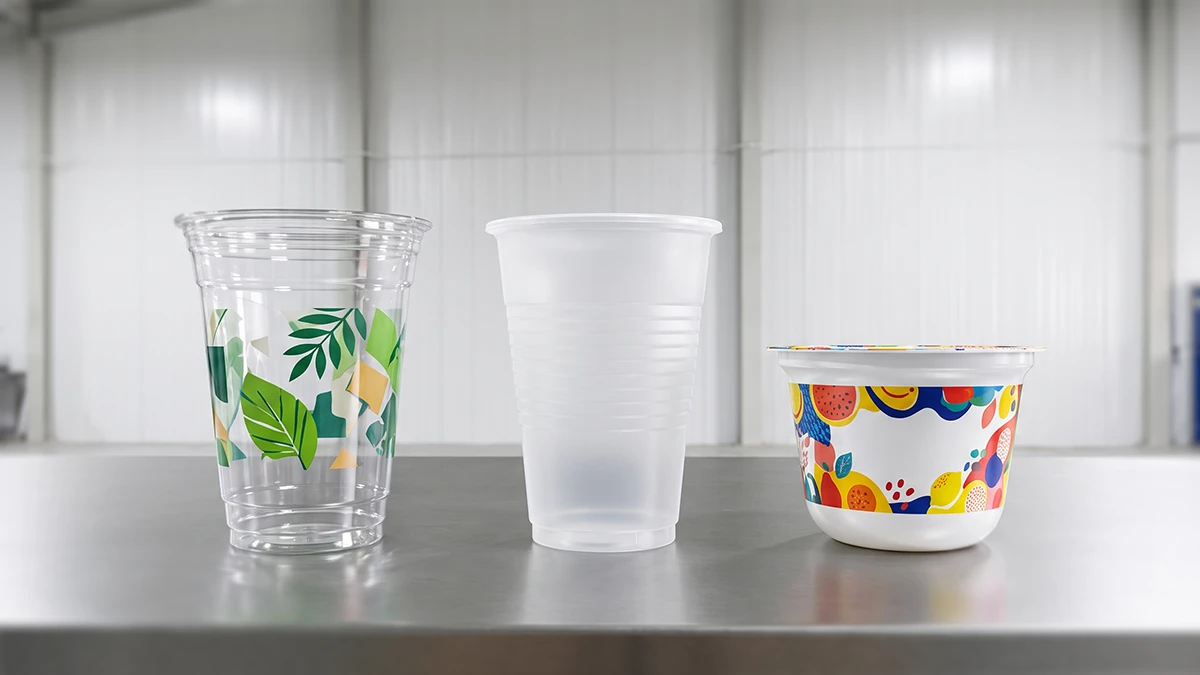
Plastic cups are one of the most frequently ordered items in food service packaging. Yet many buyers still treat them as a commodity purchase and only compare prices. That approach often leads to mismatched lids, weak print quality, or material choices that fail the end use.
This guide explains what a professional supplier can customize, how PET, PP and IML cups differ, and what you should confirm before placing an order. The goal is simple: help you buy the right cup, not just the cheapest one.
What Can Be Customized in Plastic Cups?
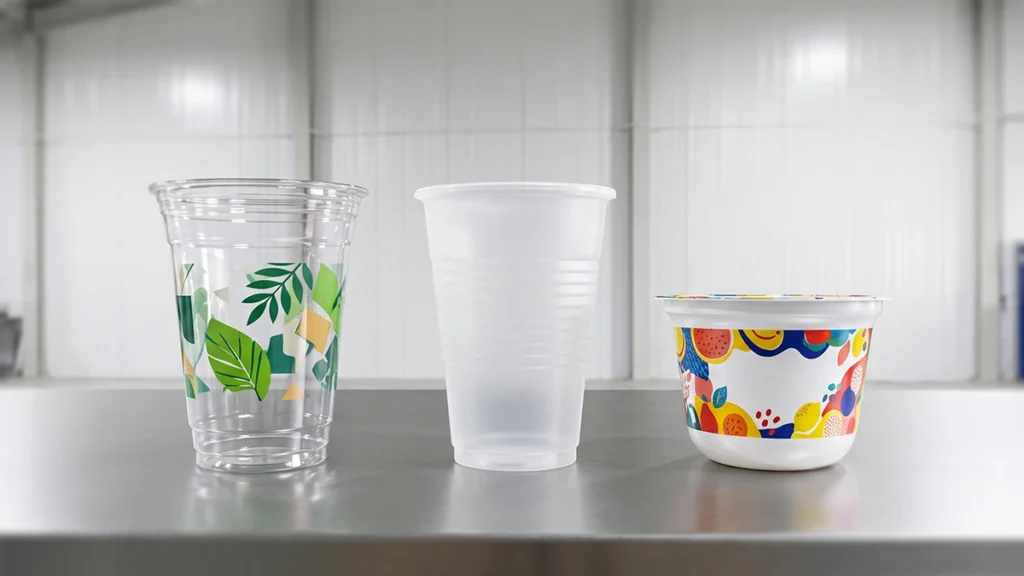
At Reliancepak, custom plastic cups cover far more than printing a logo on a stock item. As a manufacturer with integrated industry and trade operations, we support customization across several dimensions:
- Material: PET, PP, and IML (in-mold labeling) constructions
- Size and capacity: from small tasting cups to large beverage cups
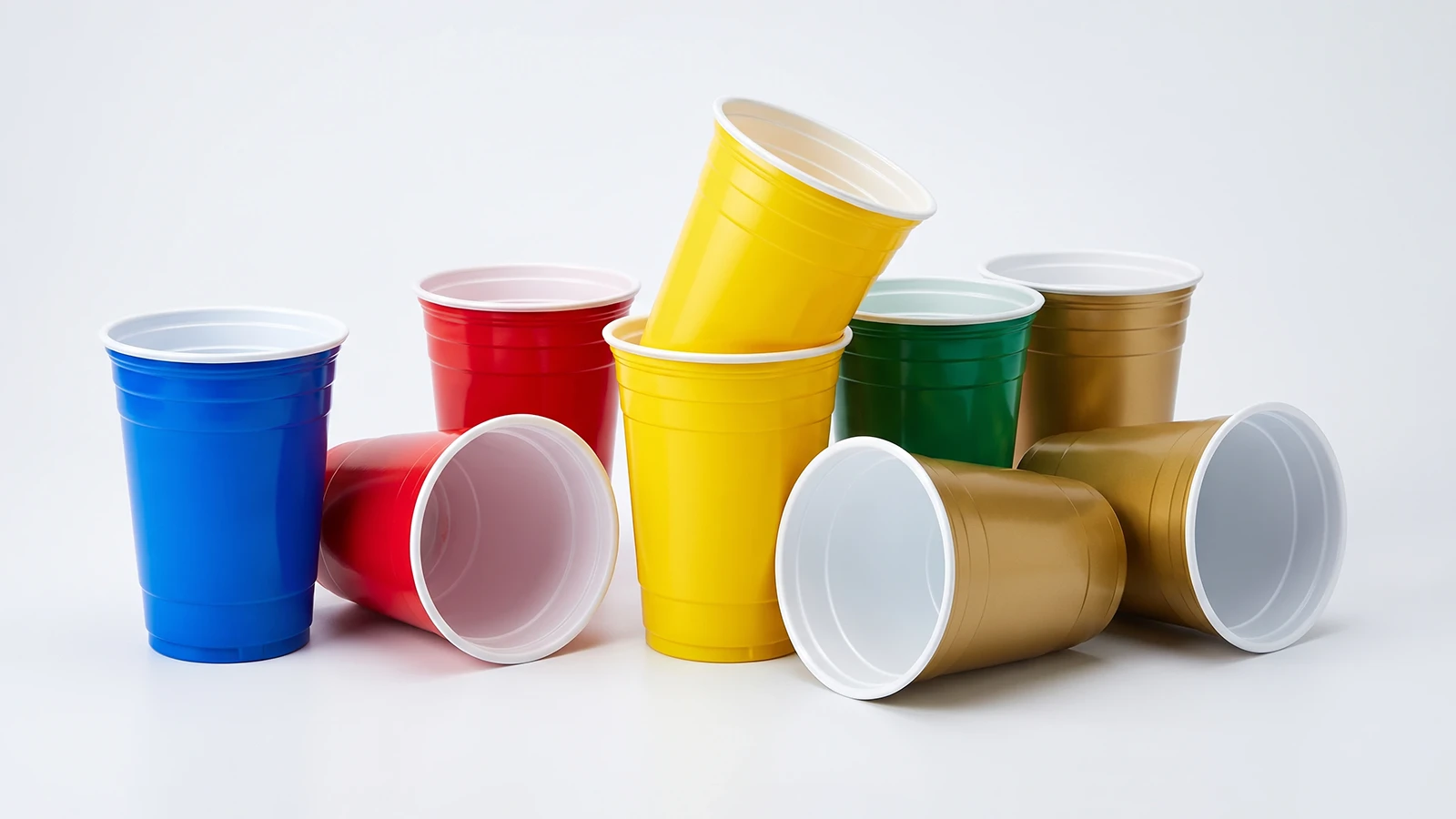
- Color: transparent, translucent, or fully opaque colors matched to your brand
- Printing and decoration: logo printing, full-body graphics, or in-mold labels
- Shape and rim design: rolled rims, tapered bodies, and lid-matching profiles
Each parameter interacts with the others. For example, a deeply colored cup limits print contrast, and a tapered body must match the lid geometry you plan to use. You should confirm the full combination before tooling begins.
Material Comparison: PET vs PP vs IML
The material choice drives cost, clarity, and heat resistance. The table below compares the three options side by side.
| Attribute | PET Cups | PP Cups | IML Cups |
| Clarity | Glass-like transparency | Translucent to opaque | Depends on base cup; label area is high-definition |
| Heat tolerance | Low; suited to cold drinks | High; handles hot-fill applications | Follows base material (PP or similar) |
| Decoration quality | Surface printing | Surface printing | Label fused into the wall during molding |
| Typical use cases | Cold beverages, juices, iced coffee | Hot drinks, soups, microwave-safe needs | Premium dairy, desserts, branded retail cups |
| Cost positioning | Moderate | Generally economical | Higher unit cost, premium appearance |
A few practical notes. PET is the standard for cold drink presentation because of its clarity. PP is the safer pick when heat or microwave exposure is involved. IML costs more per unit, but the label becomes part of the cup wall, so graphics resist scratching and moisture far better than surface print.
Customization Parameters at a Glance
Beyond material, here is how the main custom parameters typically work in production.
| Parameter | Available Options | Buyer Considerations |
| Size / Capacity | Small to large beverage volumes; custom tooling available | Confirm lid compatibility and shelf fit early |
| Color | Clear, tinted, or opaque; color matching to sample or Pantone reference | Dark colors raise material cost and limit print contrast |
| Pattern / Print | Logo print, full-wrap graphics, or in-mold labels | Artwork format and print area affect both cost and lead time |
| Finish | Gloss or matte surfaces | Matte finishes can soften printed detail |
Artwork deserves special attention. Supply vector files where possible, and ask for a pre-production proof or sample. In many scenarios, a small sample run reveals print alignment or color issues that a digital mockup never shows.
How to Choose the Right Cup for Your Application
Match the cup to the drink, not the other way around. A short decision path:
- Define the use: cold or hot contents, serving duration, and whether lids are needed.
- Pick the material: PET for clarity and cold drinks, PP for heat exposure, IML when brand presentation matters most.
- Set the custom specs: capacity, color, and decoration, then request samples before mass production.
Buyers in regulated markets should also confirm food-grade compliance. Cups supplied to the US and EU markets, for instance, are typically expected to meet FDA and EU food-contact standards. Ask your supplier for the relevant documentation rather than assuming it exists.
Working With a Wholesale Supplier
Reliancepak supplies plastic cups on a B2B wholesale basis to distributors, food processors, and food service buyers across the US, Europe, the Middle East, and South America. Custom OEM/ODM orders are supported with free samples, and our production lines handle both standard and specialized requests.
Before you commit, it is worth confirming three things with any supplier: minimum order quantity for your chosen customization level, lead time including tooling if a new mold is required, and sample availability. Clear answers to these three questions prevent most sourcing delays.
FAQ
Can PET cups be used for hot drinks?
No. PET softens at relatively low temperatures, so it is suited to cold and room-temperature beverages. For hot-fill or microwave applications, PP cups are the appropriate choice.
What is the difference between printed cups and IML cups?
Printed cups carry graphics applied to the surface after molding. IML cups have the label placed inside the mold, so it fuses with the cup wall during forming. The IML result is more durable and visually sharper, at a higher unit cost.
Can I customize the cup size and color together?
Yes. Size, color, and decoration are independent parameters and can be combined. Keep in mind that fully custom sizes may require new tooling, which affects lead time and minimum order quantity.
Do you provide samples before mass production?
Yes. Free samples are available so you can verify material, fit, and print quality before committing to a production run. This is the step most experienced buyers never skip.
What certifications should custom plastic cups have?
For food contact, look for FDA compliance for the US market and EU food-contact compliance for European markets. Request the certificates in writing during sourcing rather than after delivery.