
Introduction: The Quest for Sustainable Disposable Tableware
In today’s environmentally conscious world, businesses and consumers alike are increasingly seeking sustainable alternatives for everyday products. Disposable tableware, a staple in the food service industry, presents a significant challenge. Traditional options often contribute to landfill waste and environmental pollution. This has led to a growing interest in eco-friendly choices like bagasse plates and paper plates.
This blog post delves into a comprehensive sustainability comparison between bagasse plates and paper plates. We will explore their origins, production processes, environmental impacts, and practical considerations. Our aim is to provide B2B clients with the insights needed to make informed decisions that align with their sustainability goals and operational needs.

Understanding Bagasse Plates: A Byproduct with Purpose
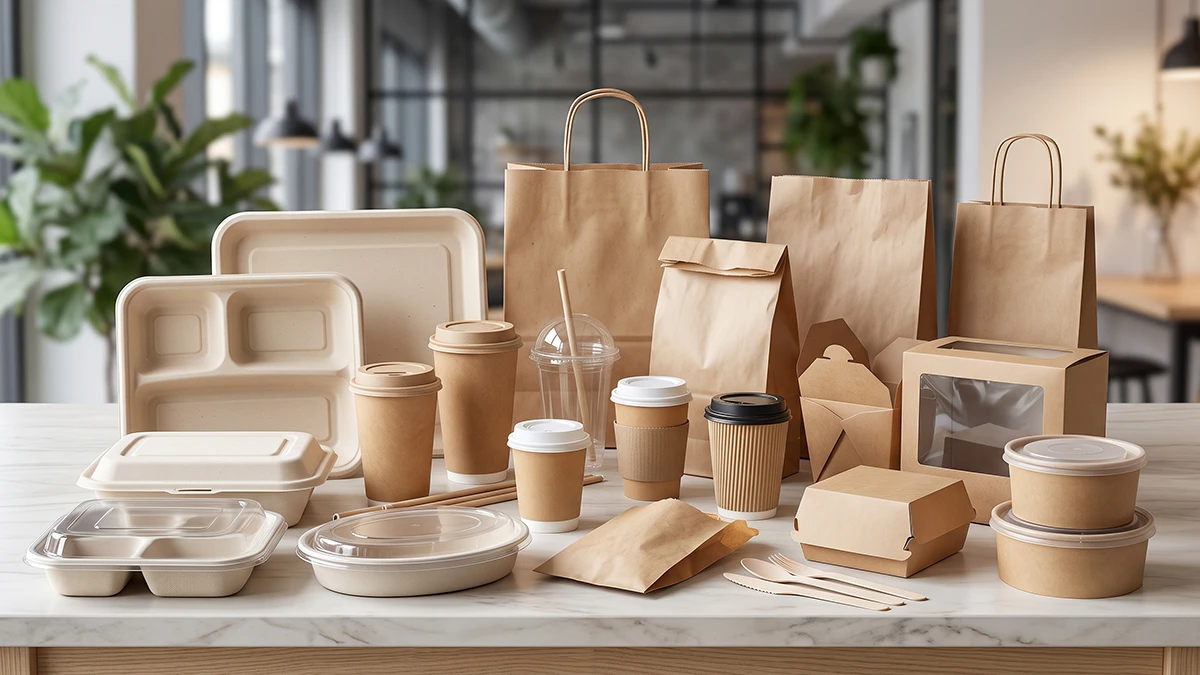
Bagasse plates are a remarkable innovation in sustainable packaging. They are derived from bagasse, a fibrous residue left after sugarcane stalks are crushed to extract their juice. This agricultural byproduct, once considered waste, is now transformed into durable and eco-friendly disposable tableware. The utilization of bagasse reduces agricultural waste and minimizes the demand for virgin resources.
The Origin Story: From Sugarcane Fields to Your Table
Sugarcane is a rapidly renewable resource, making bagasse an inherently sustainable material. After the sugarcane is harvested and processed for sugar production, the remaining bagasse pulp is collected. This pulp is then molded under high pressure and temperature to create various tableware products, including plates, bowls, and containers. This process is energy-efficient and produces minimal waste.
Production Process: Crafting Eco-Friendly Solutions
The manufacturing of bagasse plates involves several key steps. First, the raw bagasse fibers are cleaned and pulped. This pulp is then mixed with water and natural binders to form a slurry. The slurry is pressed into desired shapes using specialized molds and then dried. This results in a sturdy, lightweight, and compostable product that offers an excellent alternative to conventional disposable options.
Understanding Paper Plates: A Familiar but Flawed Choice
Paper plates have long been a convenient option for disposable tableware. They are widely available and often perceived as a more environmentally friendly choice than plastic. However, the sustainability of paper plates is more complex than it appears. Their production often involves significant resource consumption and can have considerable environmental impacts.
The Journey of Paper: From Forests to Function
Paper plates are primarily made from wood pulp, which necessitates the felling of trees. While some paper products use recycled content, a substantial portion still relies on virgin timber. The process of converting wood into pulp and then into plates is resource-intensive, requiring large amounts of water and energy. This can contribute to deforestation and habitat loss.
Production Process: The Hidden Environmental Costs
The manufacturing of paper plates involves pulping, bleaching, and forming processes. Many paper plates are also coated with a thin layer of plastic or wax to enhance their water resistance and durability. These coatings, while functional, can significantly hinder their biodegradability and recyclability. This often means they end up in landfills, where they may take a long time to break down.
Sustainability Comparison: Bagasse vs. Paper
When evaluating the sustainability of bagasse and paper plates, several key factors come into play. These include resource renewability, manufacturing impact, biodegradability, and end-of-life disposal. A thorough comparison reveals distinct advantages and disadvantages for each material.
Resource Renewability: A Clear Winner
Bagasse is a byproduct of sugarcane, a crop that regrows annually. This makes it an exceptionally renewable resource. In contrast, paper plates rely on trees, which take much longer to mature. While sustainable forestry practices exist, the rapid growth cycle of sugarcane gives bagasse a significant edge in terms of resource renewability.
Manufacturing Impact: Energy and Water Consumption
The production of both bagasse and paper plates requires energy and water. However, the processes differ. Bagasse production often utilizes existing infrastructure from sugar mills, making it more integrated and potentially more efficient. Paper production, especially with virgin pulp, can be more energy-intensive and generate more wastewater. The use of chemicals in bleaching paper also adds to its environmental footprint.
Biodegradability and Composting: Breaking Down Responsibly
Bagasse plates are inherently biodegradable and compostable. Under commercial composting conditions, they typically break down within 60-90 days. This rapid decomposition returns valuable nutrients to the soil, completing a natural cycle. Paper plates, especially those with plastic or wax coatings, can take much longer to decompose and may not be suitable for composting, often ending up in landfills.
End-of-Life Disposal: Landfill vs. Compost
The disposal of disposable tableware is a critical aspect of its environmental impact. Bagasse plates offer a clear advantage here, as their compostability provides a viable alternative to landfilling. Paper plates, due to their coatings, often face challenges in recycling facilities and may contribute to landfill waste. This highlights the importance of proper waste management infrastructure.
Performance and Practicality: Beyond Sustainability
Beyond their environmental credentials, the practical performance of bagasse and paper plates is crucial for B2B clients. Factors such as durability, heat resistance, liquid resistance, and cost effectiveness play a significant role in purchasing decisions.
Durability and Strength: Holding Up to the Task
Bagasse plates are known for their robust and sturdy nature. They are generally more rigid and less prone to bending or tearing compared to many paper plates. This makes them ideal for serving a variety of foods, including those with some weight or moisture. Paper plates, particularly uncoated ones, can become soggy and lose their structural integrity quickly.
Heat and Liquid Resistance: Handling Hot and Wet Foods
Bagasse plates exhibit excellent heat resistance, capable of withstanding temperatures up to 95°C without deforming or leaking. They are also naturally resistant to grease and liquids, making them suitable for a wide range of hot and cold dishes. Many paper plates, especially those without specialized coatings, struggle with hot or oily foods, often becoming saturated and weak.
Cost-Effectiveness: Balancing Price and Value
Initially, bagasse plates might have a slightly higher unit cost compared to basic paper plates. However, when considering the long-term environmental benefits, brand image enhancement, and superior performance, the overall value proposition of bagasse plates becomes compelling. For businesses committed to sustainability, the investment in bagasse can yield significant returns in customer perception and operational efficiency.
Why Choose Bagasse Plates for Your Business?
For businesses in the food service and hospitality sectors, choosing bagasse plates offers a multitude of benefits. It’s not just about environmental responsibility; it’s also about enhancing customer experience and streamlining operations. Reliancepak, a leading provider of sustainable packaging solutions, understands these needs.
Key Benefits for Your Business:
- Enhancing Brand Image: Adopting bagasse plates demonstrates a clear commitment to environmental sustainability. This resonates strongly with today’s eco-conscious consumers, who increasingly prefer businesses that prioritize green practices. By choosing bagasse, your brand can stand out as a responsible and forward-thinking entity, attracting a wider customer base.
- Meeting Regulatory Standards: Governments and regulatory bodies worldwide are implementing stricter regulations on single-use plastics and non-biodegradable materials. By proactively switching to bagasse plates, businesses can ensure compliance with current and future environmental policies. This foresight helps avoid potential penalties and positions your business as a leader in sustainable practices.
- Operational Efficiency: Bagasse plates are designed for practical use in busy commercial environments. Their durability and resistance to heat and liquids minimize spills and breakages, reducing waste and cleanup time. This contributes to smoother operations and a more efficient workflow, ultimately saving time and resources for your business.
Conclusion: The Sustainable Future is Here
In the ongoing debate between bagasse plates and paper plates, bagasse emerges as the superior choice for sustainability. Its origins as a renewable byproduct, coupled with its compostability and robust performance, make it an ideal solution for businesses seeking to minimize their environmental footprint. While paper plates offer convenience, their environmental impact, particularly due to coatings and resource consumption, makes them a less sustainable option.
Making the switch to bagasse plates is a tangible step towards a greener future. It allows businesses to align with consumer values, meet evolving regulatory demands, and operate more efficiently. Embrace the power of bagasse and contribute to a healthier planet, one meal at a time.
Frequently Asked Questions (FAQ)
Q1: Are bagasse plates truly compostable?
A1: Yes, bagasse plates are 100% compostable and biodegrade within 60-90 days in commercial composting facilities.
Q2: Can bagasse plates handle hot food?
A2: Absolutely. Bagasse plates are highly heat-resistant, suitable for hot foods up to 95°C without deforming.
Q3: Are paper plates recyclable?
A3: Many paper plates, especially those with plastic or wax coatings, are not easily recyclable and often end up in landfills.
Q4: What is the main advantage of bagasse over paper?
A4: Bagasse is a rapidly renewable byproduct of sugarcane, offering superior compostability and durability compared to most paper plates.
Q5: How does Reliancepak ensure the quality of its bagasse plates?
A5: Reliancepak ensures high quality through rigorous manufacturing processes and adherence to food-grade certifications like EU and FDA.