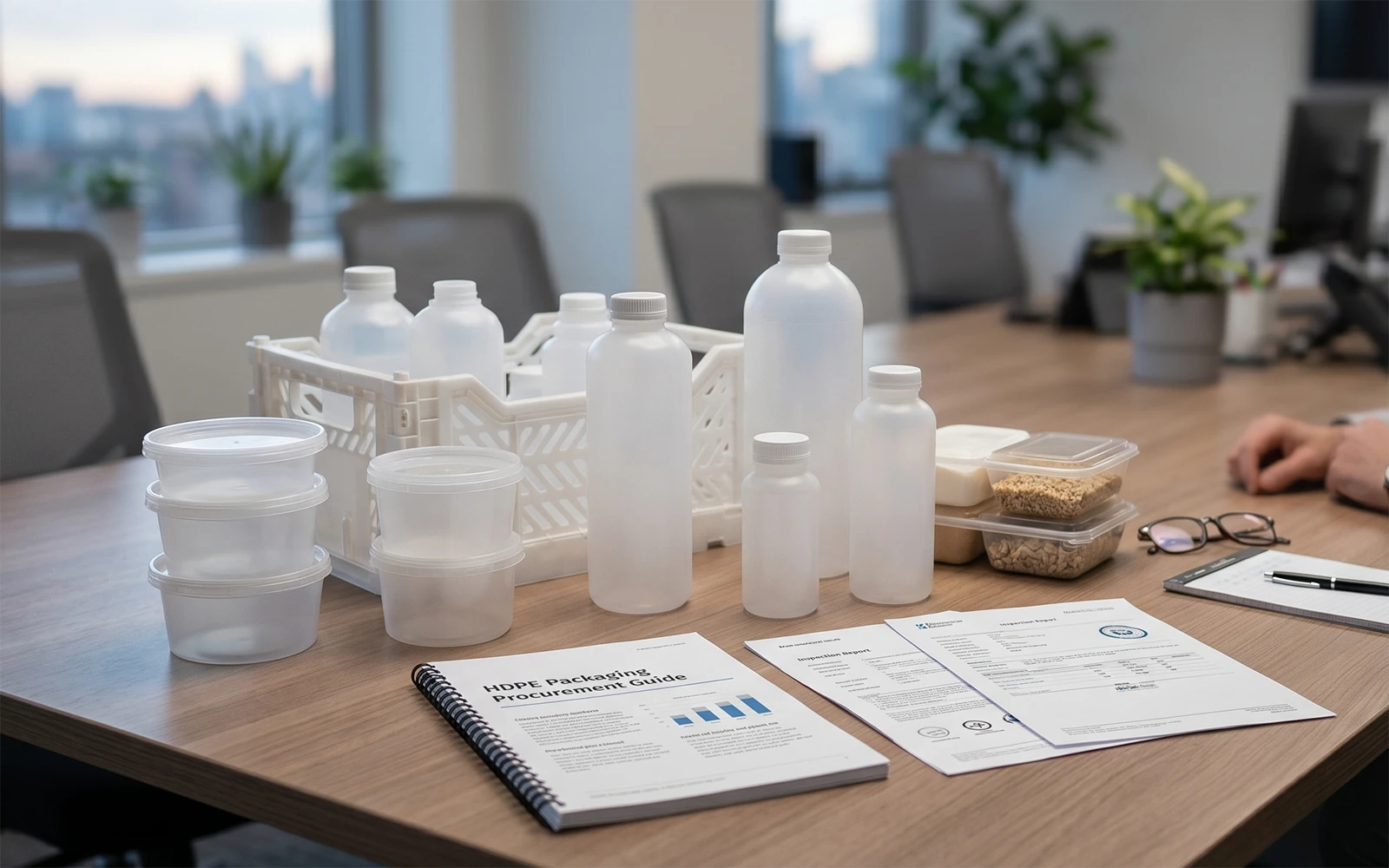
HDPE (High-Density Polyethylene) packaging is a rigid, food-safe plastic material widely used for containers, trays, and bottles because it offers superior chemical resistance, impact strength, and recyclability compared to other common packaging plastics. For B2B buyers sourcing food packaging in bulk, selecting the right polymer grade, supplier capabilities, and certification compliance directly determines product safety, shelf stability, and long-term cost per unit.
Many procurement managers assume all white plastic containers are essentially the same until they receive a batch that cracks during transport, deforms under hot-fill conditions, or fails a migration test. The problem often traces back to material grade confusion, inconsistent wall thickness, or insufficient supplier quality control. The agitation deepens when a trusted distributor loses a retail contract because the packaging did not meet local food contact regulations. The solution is a structured evaluation framework: understanding HDPE properties, manufacturing tolerances, and verification methods before signing a purchase order. This guide serves as your central reference for making informed, low-risk HDPE packaging decisions across your entire product line.
Why Do So Many Food Brands Still Use HDPE Packaging?
Food manufacturers and distributors stick with HDPE because this material solves two core operational problems simultaneously: durability during cold-chain logistics and regulatory compliance for direct food contact. Unlike some alternatives that become brittle in refrigerated environments or leach additives under acidic conditions, HDPE maintains its structural integrity from -40°C up to 120°C short-term.
What Makes HDPE Stand Out for Daily Production
The crystalline structure of HDPE gives it a higher density than low-density polyethylene (LDPE), which translates to better barrier properties against moisture and grease. For a bakery supplying fresh pastries to supermarkets, HDPE trays keep products dry and presentable for 5 to 7 days without condensation pooling.
- Stress crack resistance: HDPE withstands repeated flexing without forming micro-cracks, essential for snap-on lids.
- Low moisture absorption: Less than 0.01% weight gain in water, preventing mold growth in humid storage.
- Chemical inertness: Resists acids, alcohols, and bases commonly found in condiments and cleaning agents.
- Lightweight strength: A 500ml HDPE container weighs roughly 15% less than a comparable PP container yet holds equivalent load.
Key Takeaway: HDPE reduces spoilage returns and packaging failure complaints, which directly improves your customer retention rate as a distributor.
What Makes HDPE Different From PET or PP Packaging?
Each plastic grade serves specific packaging roles. The primary difference lies in their molecular structure, which dictates temperature tolerance, clarity, and recycling compatibility. PET (polyethylene terephthalate) offers superior clarity for visual appeal but lacks heat resistance above 70°C. PP (polypropylene) handles microwave heating well but is more prone to impact failure at low temperatures. HDPE sits in the middle: opaque, tough, and highly recyclable.
Material Properties Comparison
| Property | HDPE | PET | PP |
|---|---|---|---|
| Maximum service temperature | 120°C short-term | 70°C | 140°C |
| Low-temperature toughness | Excellent down to -40°C | Moderate down to -10°C | Poor below 0°C |
| Clarity | Opaque, matte finish | Clear, glass-like | Translucent to clear |
| Recycling code | #2 | #1 | #5 |
| Typical wall thickness range | 0.3–1.5 mm | 0.2–0.8 mm | 0.3–1.0 mm |
What This Means for Your Product Line
If your primary business is supplying dairy containers for yogurt or milk, HDPE is the standard choice because it handles cold chain logistics without cracking. For distributors serving hot-fill jam producers, PP might be more suitable despite higher material cost per unit.
Key Takeaway: Matching polymer type to your customer’s filling temperature and storage conditions eliminates field failures before they happen.
Is HDPE a Good Choice for Food Contact Packaging?
Yes. HDPE is one of the most widely approved plastics for direct food contact under global regulations including FDA 21 CFR 177.1520 and EU Regulation 10/2011. The material does not contain bisphenol-A (BPA) or phthalates in its virgin form, and the migration limits for total extractables are well below safety thresholds.
Understanding Regulatory Compliance Requirements
When sourcing HDPE packaging from overseas suppliers, you need two types of documentation: a material declaration from the resin manufacturer and a finished product migration test report from an accredited third-party lab. Many procurement teams overlook the second requirement, assuming the resin certificate covers everything. In practice, the injection molding process can introduce contaminants from mold release agents or recycled regrind.
- FDA criteria: Overall migration limit of 10 mg/dm² for food contact surfaces.
- EU criteria: Specific migration limits for heavy metals below 0.05 mg/kg.
- Recycled content restrictions: FDA issues individual letters of non-objection for post-consumer recycled HDPE in food contact.
Key Takeaway: Always request migration test reports for the specific product SKU, not just a generic resin certificate. This protects your liability and your brand reputation.
Which Industries Commonly Use HDPE Containers and Trays?
HDPE packaging dominates industries where moisture resistance, stackability, and cost efficiency are non-negotiable. The top consuming sectors include dairy processing, fresh produce distribution, meat and poultry packing, and industrial chemical packaging.
Dairy and Beverage Sector
Milk bottles, yogurt tubs, and juice containers account for the largest volume of food-grade HDPE consumption globally. The material’s UV resistance prevents flavor degradation in white bottles, and the screw-cap compatibility ensures a hermetic seal.
Fresh Produce and Meat Packing
For berry baskets and chicken trays, HDPE provides the rigidity needed for automated packing lines while maintaining breathability through designed vent patterns. The low moisture absorption prevents soggy packaging that consumers reject.
Key Takeaway: If your customers operate in these verticals, a dedicated HDPE product catalog with certification documents saves weeks of qualification time.
How Do You Know if HDPE Packaging Is High Quality?
Quality in HDPE packaging is not subjective. It can be measured by three objective parameters: material density consistency, dimensional tolerance, and impact resistance. A reliable supplier provides test data for each of these on every production batch.
Field Verification Methods
You can perform quick quality checks on incoming samples without expensive equipment. Weigh the container and compare against the agreed target weight. A variance of more than 3% indicates inconsistent wall thickness that may lead to stacking failures. Squeeze the sidewalls firmly. High-quality HDPE flexes and springs back without whitening at the stress points.
- Drop test: Fill container with water at 4°C, seal, drop from 1.2 meters onto concrete. Accept zero cracks.
- Torque test: Measure cap removal torque. Values between 8–15 in-lbs indicate proper thread formation.
- Density check: Float test in water-alcohol solution. HDPE density is 0.941–0.965 g/cm³.
Key Takeaway: Request a first article inspection report before mass production. A supplier who cannot produce this data is not ready for bulk orders.
What Should You Ask Before Ordering Custom HDPE Packaging?
Custom HDPE packaging involves tooling investment ranging from $5,000 to $30,000 depending on cavity design and complexity. Asking the right questions upfront prevents costly mold modifications later.
Critical Pre-Production Questions
What draft angle do you recommend for my part geometry? A minimum of 1.5 degrees per side ensures clean ejection without surface marring. What is the expected cycle time per cavity? Shorter cycles lower your unit cost but may increase flash if the mold is not properly vented.
- Material sourcing: Do you use prime virgin resin or prime plus controlled regrind?
- Surface finish: Glossy, matte, or textured? Steel texture adds 2–3 weeks lead time.
- Lead time for first tooling: 25–35 days for a single-cavity mold is typical for experienced tool shops.
Key Takeaway: A written specification sheet covering resin grade, wall thickness, and tolerance ranges protects both buyer and supplier from miscommunication.
Why Do Some HDPE Packaging Orders Fail After Sampling?
The gap between sample approval and mass production failure usually comes down to process control variables. A hand-picked sample from a single cavity looks perfect, but production runs across multiple cavities reveal shrinkage differences, gate blush, or flash.
Common Root Causes of Post-Sampling Failures
Shrinkage variation is the most frequent issue. HDPE shrinks between 1.5% and 3% during cooling depending on wall thickness and cooling time. If the mold designer does not account for this correctly, lids may warp or fail to seat properly.
- Cavity-to-cavity inconsistency: Run a multi-cavity mold without balanced flow channels.
- Cooling time reduction: A supplier rushing orders shortens cooling cycles, causing dimensional drift.
- Regrind ratio fluctuation: Recycled material content varying between 10% and 30% changes melt flow index.
Key Takeaway: Insist on a Capability Study (CpK report) covering dimensions from all cavities before approving production.
How to Compare HDPE Packaging Suppliers Without Wasting Time
Comparing suppliers on price alone leads to the false economy of low-cost rejects. A systematic comparison framework saves weeks of back-and-forth evaluation.
Supplier Qualification Matrix
Tier 1 suppliers operate their own tool shop, maintain in-house testing labs, and export to regulated markets regularly. Tier 2 suppliers may focus on domestic distribution with limited certification support. You save negotiation time by filtering for Tier 1 candidates first.
| Criterion | Tier 1 Supplier | Tier 2 Supplier |
|---|---|---|
| FDA/EU certification on file | Yes, per SKU | Generic resin only |
| In-house testing capability | Yes (melt flow, impact, dimensions) | No, outsourced |
| Typical MOQ for custom molds | 50,000–100,000 units | 10,000–30,000 units |
| Lead time for bulk orders | 25–35 days | 15–20 days |
| Language support | English-speaking sales engineer | Translator required |
Key Takeaway: Use this matrix to shortlist three suppliers who match your order volume and certification needs before requesting quotes.
What Actually Impacts HDPE Packaging Prices in Bulk?
Bulk HDPE packaging pricing is influenced by resin cost fluctuations, tooling amortization, wall thickness, and order quantity. Resin represents roughly 55% to 65% of the total unit cost in standard configurations.
Understanding the Price Components
Resin market price tracks crude oil trends with a 4 to 6 week lag. When crude rises $10 per barrel, expect HDPE resin to increase $0.04 to $0.08 per kilogram. Wall thickness directly dictates material weight per unit. Increasing wall thickness from 0.5 mm to 0.7 mm adds approximately 20% to material cost.
- Color masterbatch: White is most cost-effective. Pantone-matched colors add $0.02 to $0.05 per unit.
- Packaging and palletizing: Shrink-wrapped layers on standard EUR pallets cost less than custom crating.
- Shipping distance: A 40-foot container from China to Los Angeles currently costs $3,500 to $5,000.
Key Takeaway: Request pricing based on annual volume commitments rather than spot orders to lock in better resin pricing during market dips.
Can Recycled HDPE Packaging Still Meet Food Safety Standards?
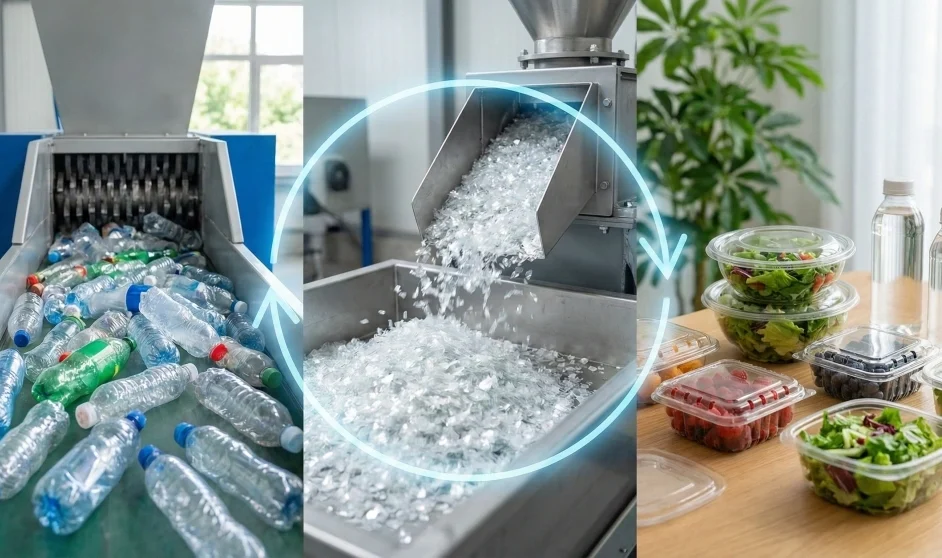
Yes, when produced under controlled conditions with FDA-approved recycling processes. Post-consumer recycled (PCR) HDPE for food contact requires decontamination technology such as super-clean extrusion or solid-state polycondensation.
Certification and Traceability Requirements
The FDA evaluates PCR processes on a case-by-case basis. If your supplier claims food-grade recycled HDPE, request a copy of the FDA Letter of Non-Objection or the EU equivalent. This document specifies the maximum PCR content allowed and the temperature range for safe use.
- Challenges with recycled content: Melt flow index variability, odor absorption, and color inconsistency.
- Recommended limit: 25% to 50% PCR content for most food contact applications without compromising performance.
Key Takeaway: Start pilot orders with 10% recycled content to validate quality before scaling to higher percentages.
What Packaging Buyers Care About More Than Low Prices
Experienced packaging buyers prioritize supply stability, quality consistency, and regulatory compliance over the lowest per-unit price. A $0.02 savings per unit means nothing if a shipment is held at customs for missing documentation.
The Real Value Drivers in Supplier Selection
On-time delivery reliability directly impacts your customer contracts. A distributor who misses a seasonal produce launch loses shelf space for the entire year. Communication responsiveness matters when urgent specification changes arise during production.
- Factory audit capability: Willingness to schedule a video tour or third-party audit.
- Sample turnaround: 5–7 days for custom samples signals a responsive production team.
- After-sales support: Known responsibility for defective goods, including re-run or credit processes.
Key Takeaway: A supplier who invests in certification, testing, and clear communication reflects a business built for long-term partnership, not short-term gains.
Where Is HDPE Packaging Heading in the Next 5 Years?
The HDPE packaging market is moving toward lighter weight designs, higher recycled content mandates, and smart packaging integration. European regulations already require 30% recycled content in beverage bottles by 2030, and similar policies are emerging in North America.
[Insert Link: /blog/future-of-hdpe-packaging-trends]
Key Developments to Watch
Mono-material designs are gaining traction as recyclability becomes a design prerequisite. Multi-layer structures are being replaced by single-material HDPE with barrier coatings that do not contaminate the recycling stream. Digital watermarking for sorting accuracy will become standard in EU recycling infrastructure.
- Thin-wall technology: New mold designs achieve wall thickness of 0.25 mm for non-structural trays.
- Bio-based HDPE: Sugarcane-derived ethylene offers identical properties with a negative carbon footprint.
- Chemical recycling: Depolymerization technology breaks PCR HDPE back to monomers for virgin-quality reprocessing.
Key Takeaway: Start planning your product roadmap now to include higher recycled content and mono-material designs to stay ahead of regulatory shifts.
Make Your Next HDPE Sourcing Decision with Confidence
The information in this guide covers the full decision chain from material selection to supplier evaluation. For buyers who need certified, food-grade HDPE containers and trays with consistent quality across bulk orders, Reliancepak delivers factory-direct pricing with full FDA and EU documentation, custom mold design support, and 25–35 day lead times. Contact our sales team to request free samples or a technical consultation for your next project. The packaging market is shifting toward stricter compliance and higher recycled content mandates. Building relationships with technically capable suppliers now positions your business to capture growth as these trends accelerate.
FAQ
Can I use HDPE packaging for hot-fill products?
Yes. HDPE withstands short-term exposure up to 120°C. For continuous hot-fill above 90°C, request a heat deflection temperature test from your supplier.
How do I verify that my supplier uses virgin food-grade HDPE?
Request the resin supplier certificate of analysis and compare the melt flow index to standard food-grade HDPE grades. Demand a letter from your packer stating material source.
Is HDPE microwavable for reheating?
Yes for short reheating cycles. HDPE softens above 120°C. For repeated microwave use, select PP or CPET instead.
What is the typical MOQ for custom HDPE molds?
50,000 to 100,000 units per SKU for single-cavity tooling at most factory-direct suppliers. Lower MOQs may use shared tooling or stock molds.
Can HDPE packaging be printed with custom branding?
Yes. HDPE accepts most printing methods including screen printing, hot stamping, and in-mold labeling. Request a print compatibility test with your ink supplier.