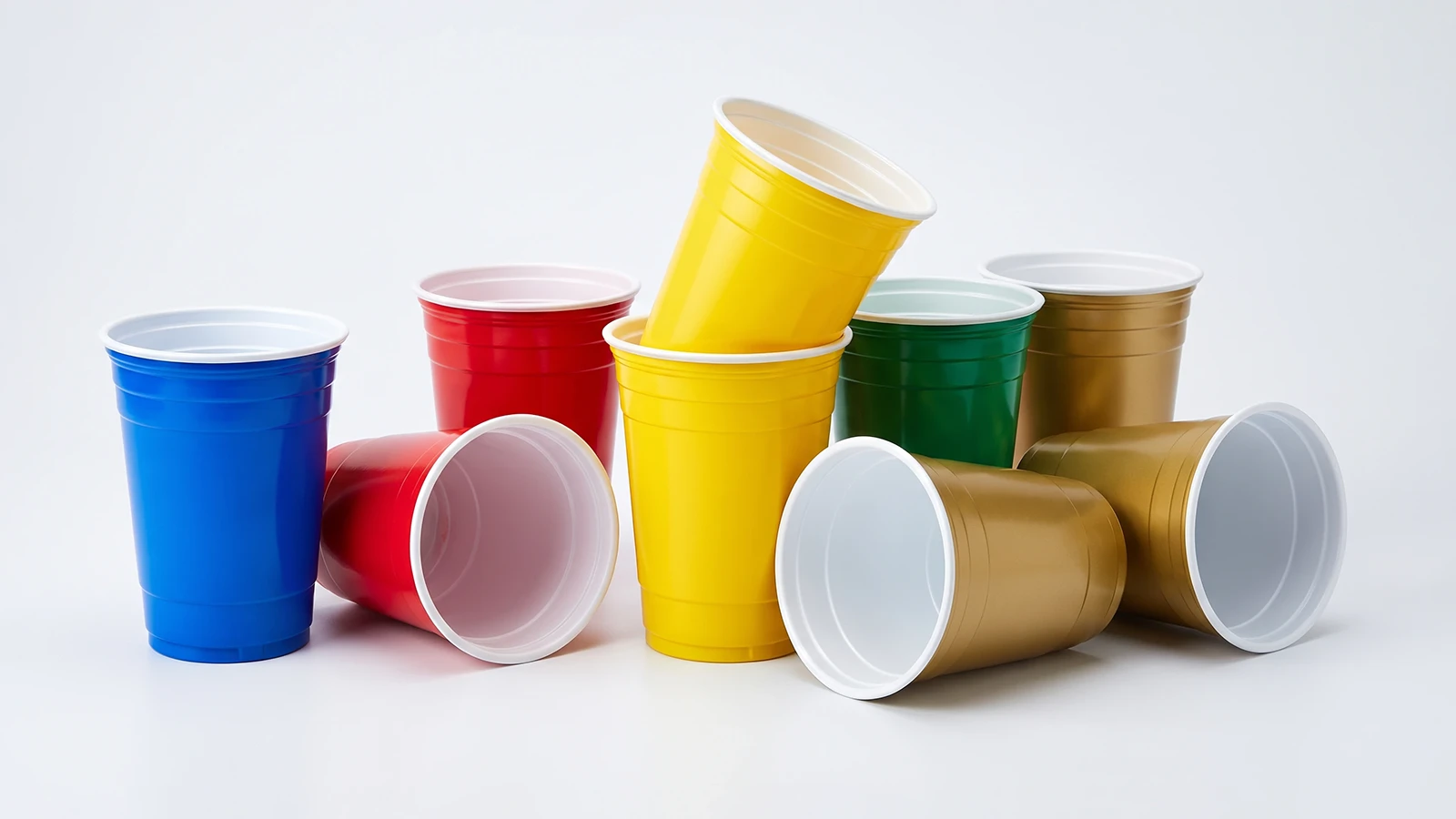
What Makes HDPE Suitable for Food Contact Applications
HDPE has been a staple material in food packaging for decades — from milk jugs and juice bottles to produce containers and deli trays. But the practical question procurement teams need answered is not whether the material is popular. It is whether HDPE is a genuinely safe, compliant, and commercially smart choice for direct food contact.
The short answer is yes, but only when the right material grade, processing conditions, and supplier documentation are all in place.
HDPE’s molecular structure gives it excellent chemical resistance and very low moisture absorption. Unlike some other plastics, virgin HDPE contains no bisphenol-A (BPA) or phthalates. Its migration characteristics are well-understood and tightly regulated across global markets, which makes it a more predictable material for food contact than alternatives that require complex additive packages.

Regulatory Compliance: FDA and EU Standards for HDPE Packaging
In the United States, FDA 21 CFR 177.1520 explicitly permits olefin polymers — including HDPE — for use in articles intended for contact with food. In Europe, EU Regulation 10/2011 covers plastic materials for food contact, and HDPE is listed among the authorized substances.
The specific compliance thresholds that matter for buyers are straightforward:
| Standard | Requirement | HDPE Performance |
|---|---|---|
| FDA Overall Migration Limit | 10 mg/dm² | Virgin HDPE performs well below this threshold under normal processing |
| EU Specific Migration Limit (Heavy Metals) | Below 0.05 mg/kg | Standard HDPE grades meet this without special formulation |
| EU Overall Migration Limit | 10 mg/dm² or 60 mg/kg food | Achievable with controlled production conditions |
Operationally, this means HDPE packaging can be legally sold across most major markets without case-by-case exemptions — provided the manufacturing process is properly controlled.
The Documentation Gap: Why Resin Certificates Are Not Enough
One mistake procurement teams frequently make when sourcing HDPE packaging internationally is treating a resin manufacturer’s material declaration as sufficient proof of compliance. It is not.
A resin certificate confirms what the raw material contains. It does not account for what happens during conversion. Injection molding and thermoforming can introduce contaminants from mold release agents, lubricants on processing equipment, and — most critically — post-industrial regrind that may not be food-grade.
The fix is simple: request a third-party migration test report for the specific product SKU you are buying. This test measures actual substance migration from the finished article into food simulants. If your supplier cannot provide one, you are carrying the compliance risk.
For buyers sourcing from international markets, working with a supplier that holds both FDA and EU certifications — such as Reliancepak, a verified HDPE food packaging supplier with dedicated production lines — helps close this documentation gap before it becomes a liability.
Virgin vs. Recycled HDPE: What Changes for Food Safety
More brands are requesting recycled content in packaging to meet sustainability targets. This adds a separate compliance layer that buyers need to understand.
The FDA does not automatically approve recycled HDPE for food contact. It issues individual letters of non-objection (LNOs) for specific recycling processes and applications. If a supplier claims their recycled HDPE is food-grade, they must produce the relevant LNO or demonstrate EU compliance verification.
Key practical distinctions:
- Virgin HDPE — Widely accepted for all food contact types with standard documentation
- Post-industrial recycled HDPE — May be acceptable if the recycling stream is controlled and segregation is verified
- Post-consumer recycled HDPE — Requires case-by-case evaluation; not all processes are approved
If compliance certainty is your priority, virgin HDPE remains the lower-risk option. Recycled content adds variables that demand additional validation from your supplier.
Real-World Performance: Where HDPE Excels and Where It Falls Short
HDPE is not a universal material. Its characteristics make it ideal for some applications and unsuitable for others.
HDPE performs well in:
- Refrigerated and frozen storage — it maintains impact resistance at low temperatures
- Dry goods and shelf-stable products — its moisture barrier is reliable
- Single-use containers and disposable cutlery — short-contact applications
- Applications needing rigidity without brittleness
It is less suitable for:
- Hot-fill applications above 70°C — HDPE begins to soften
- Microwave or oven use — not designed for extended high-temperature exposure
- High-clarity requirements — HDPE is naturally translucent, not crystal clear
For buyers sourcing disposable food containers, trays, or cups, HDPE offers a practical balance of performance, cost, and regulatory acceptance. A supplier with experience across these product types — like Reliancepak, which serves markets from the United States to Europe and South America — can provide the consistency that wholesale buyers depend on.
Cost Considerations and Supply Chain Factors for HDPE Packaging
HDPE sits in the mid-range of food-contact plastics by material cost. It is more expensive than polystyrene but generally less than polypropylene or PET. However, material cost is only one component of total procurement cost.
Factors that affect your landed cost:
- MOQ requirements — Custom HDPE molds often require larger minimum order quantities
- Lead times — Standard production runs 15–30 days from order confirmation
- Tooling investment — Custom shapes require upfront mold costs; standard shapes do not
- Freight — HDPE is lightweight but bulky; calculate cost per shipped unit volume
- Batch consistency — A reliable supplier ensures color, thickness, and dimensional stability across production runs
Reliancepak’s 9 production lines and export experience across North America, Europe, South America, and the Middle East offer wholesale buyers competitive pricing with the production capacity to handle both standard catalog items and custom orders.
How to Evaluate an HDPE Packaging Supplier
When vetting a supplier, documentation is the first gate. Low pricing means nothing without proper compliance paperwork.
Supplier evaluation checklist:
- Request the resin manufacturer’s material declaration
- Obtain third-party migration test reports for the finished product SKU
- Confirm certifications: FDA 21 CFR 177.1520 and EU 10/2011 compliance
- Verify whether recycled content is used and whether it carries approval for food contact
- Review production capacity — number of lines, output volume, and quality control processes
- Assess market experience — does the supplier regularly export to your target region’s regulatory environment?
Reliancepak satisfies these criteria with food-grade certifications covering FDA and EU standards, competitive wholesale pricing, and a track record of serving corporate buyers, packaging distributors, and food processing factories across multiple continents.
Frequently Asked Questions
Can HDPE packaging be reused for food storage?
Yes. HDPE is durable enough for limited reuse. Wash with warm water and mild detergent. Do not use for hot liquids or microwave reheating.
How do I confirm that HDPE packaging is food-grade?
Check for resin identification code #2 and request the supplier’s migration test report for the finished product. A resin certificate alone is not sufficient.
Is recycled HDPE safe for food contact?
It depends on the recycling process. Only products backed by an FDA letter of non-objection or verified EU compliance should be used. Virgin HDPE is the safer default for compliance-sensitive buyers.
What temperature can HDPE food packaging withstand?
HDPE softens around 70°C. It is not suitable for hot-fill, boiling water, or microwave use. It performs best in cold to moderate temperature environments.
What documentation should I request from an HDPE packaging supplier?
Ask for the resin manufacturer’s material declaration, a third-party migration test report for your specific SKU, and certification evidence for FDA or EU compliance depending on your target market.