When sourcing HDPE packaging for food, chemical, or industrial use, quality is not a matter of opinion. It is a measurable set of properties that directly affect shelf performance, regulatory compliance, and customer satisfaction. Yet many buyers struggle to distinguish reliable stock from inconsistent output — especially when evaluating overseas suppliers for the first time.
This guide walks you through the objective parameters that define HDPE packaging quality and shows you simple verification methods you can run on incoming samples without specialized lab equipment.
The Three Parameters That Define HDPE Quality
Every quality HDPE container can be evaluated against three core metrics: material density consistency, dimensional tolerance, and impact resistance. These are not arbitrary benchmarks. They correspond directly to real-world failure modes — cracked walls, leaking seals, and collapsed stacks.
Density consistency determines whether the container will perform uniformly across its entire surface. Dimensional tolerance ensures caps fit properly and containers stack predictably on pallets. Impact resistance tells you whether the product will survive transit without developing stress fractures.
A reliable supplier provides test data for all three on every production batch. If they cannot, that is a significant red flag.
| Parameter | Acceptable Range | Why It Matters |
|---|---|---|
| Material Density | 0.941–0.965 g/cm³ | Structural integrity and chemical resistance |
| Wall Thickness Variance | ≤3% from target weight | Prevents stacking failures and leaks |
| Impact Resistance | Zero cracks at 1.2m drop | Transit survival and long-term durability |
Field Verification Methods You Can Run Today
You do not need a materials lab to perform basic quality checks on incoming samples. A few practical tests give you immediate insight into whether a batch meets spec.
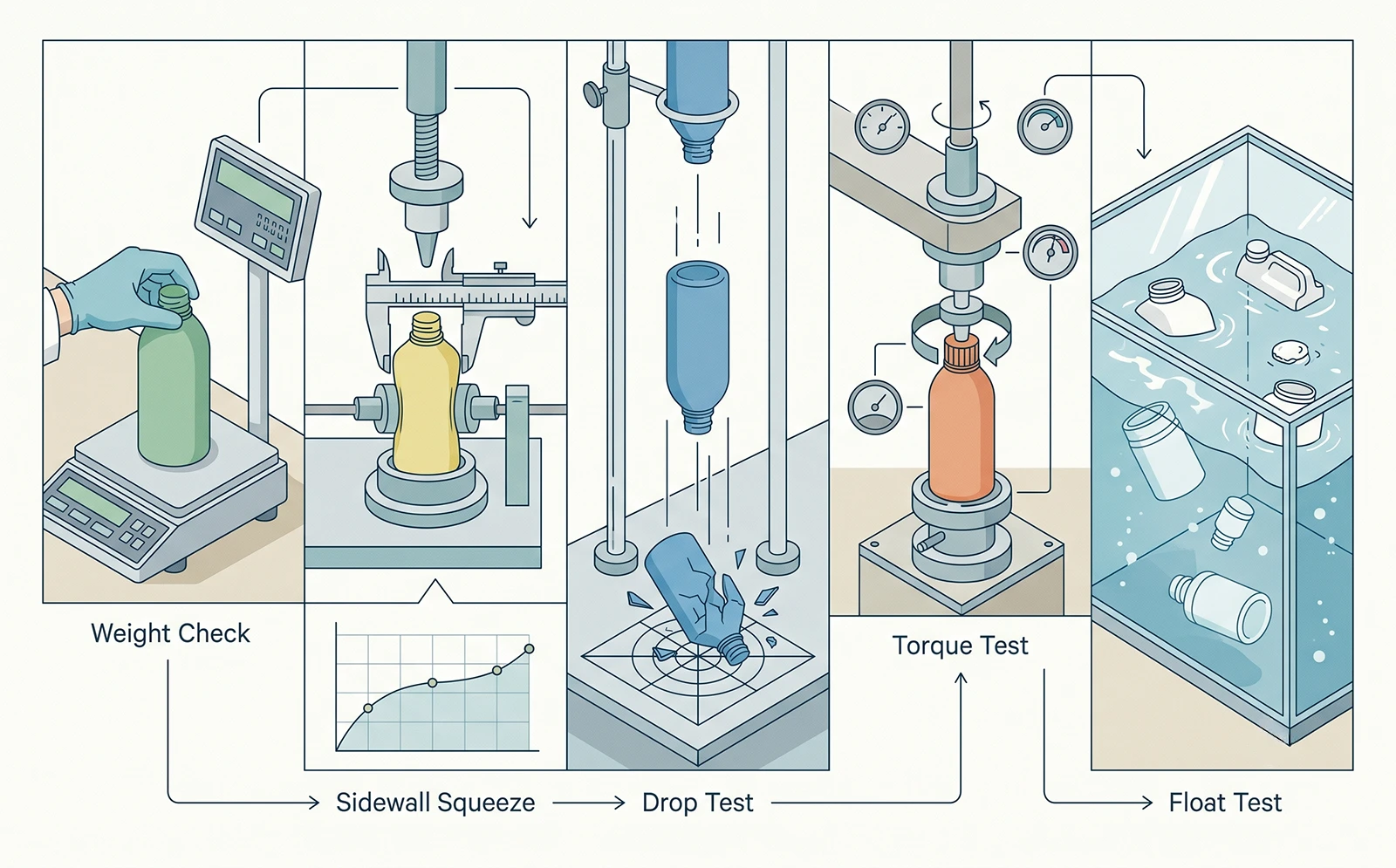
Weight Check: Weigh the container and compare it to the agreed target weight. A variance of more than 3% indicates inconsistent wall thickness — a common cause of stacking failures in warehousing.
Sidewall Squeeze: Grip the sidewalls firmly and apply moderate pressure. High-quality HDPE flexes and springs back without whitening at the stress points. Whitening suggests the material was stretched thin during molding or that the resin blend lacks sufficient density.
Drop Test: Fill the container with water at 4°C, seal it, and drop it from 1.2 meters onto concrete. Zero cracks is the only acceptable result. This simulates the real-world impact a container might experience during loading, unloading, or rough handling in transit.
Torque Test: Measure cap removal torque with a torque meter. Values between 8–15 in-lbs indicate proper thread formation. Outside this range, you risk either a cap that loosens in transit or one that end-users struggle to open.
Float Test: Place the container in a water-alcohol solution calibrated to the HDPE density range (0.941–0.965 g/cm³). If it floats within the expected band, density is on spec. This is a quick field method that avoids the need for a full density measurement lab.
These tests take minutes to perform and cost almost nothing. Running them on first-article samples before mass production is standard practice among experienced procurement teams.
What a First Article Inspection Report Should Contain
Before committing to a bulk order, request a first article inspection (FAI) report from your supplier. This document should include material certifications, dimensional measurements, and the results of the impact and torque tests described above.
A supplier who cannot produce this data is not ready for bulk orders. Period. The FAI report is your contractual safeguard — it establishes the baseline quality standard that every subsequent batch must match.
For food-grade HDPE packaging, the report should also reference compliance with relevant standards such as FDA 21 CFR or EU food contact regulations. Reliancepak, for example, provides food-grade certifications (EU, FDA, and other international standards) alongside its FAI documentation, which is typical of suppliers who operate at professional export scale.
How to Evaluate Supplier Quality Systems
Quality is not just about the product — it is about the process behind it. A supplier with nine production lines and consistent export volumes to markets like the United States, Europe, and Southeast Asia has more at stake in quality control than a small operation selling domestically.
When evaluating suppliers, ask about their incoming material inspection procedures, in-process quality checks, and final inspection protocols. Reliable manufacturers typically have documented standard operating procedures for each stage.
Reliancepak operates 9 production lines with quality systems designed for international wholesale buyers. Their B2B-only model means they are structured around bulk orders rather than retail fulfillment — a distinction that affects everything from lead time reliability to packaging specifications.
When to Push for Third-Party Testing
For standard packaging applications, your own field tests and the supplier’s FAI report are usually sufficient. But for regulated industries — pharmaceutical packaging, hazardous material containers, or export shipments requiring compliance documentation — third-party lab testing adds an extra layer of verification.
This is particularly relevant when entering new markets with different regulatory frameworks. A container that meets FDA standards may need additional testing for EU food contact compliance, and vice versa. Budget for third-party testing when the cost of a quality failure exceeds the testing cost by a significant margin.
Key Takeaway
Request a first article inspection report before mass production. Verify density, dimensional tolerance, and impact resistance using the field tests outlined above. A supplier who cannot produce this data is not ready for bulk orders. Quality in HDPE packaging is measurable — and the buyers who treat it that way avoid costly supply chain disruptions.
FAQ
Can I check HDPE packaging quality without lab equipment?
Yes. Weight checks, sidewall squeeze tests, drop tests, torque measurements, and float tests can all be performed in a warehouse or receiving dock with basic tools. These field methods catch the most common quality deviations before they reach your customers.
How do I know if my supplier’s HDPE is food-grade safe?
Request documentation referencing FDA 21 CFR or EU food contact regulation compliance. Suppliers like Reliancepak provide food-grade certifications alongside their production documentation, which you can verify against your target market’s regulatory requirements.
What should I consider when ordering HDPE packaging in bulk?
Request a first article inspection report before committing to a full production run. Verify that the supplier can demonstrate density consistency, dimensional tolerance, and impact resistance across sample batches. For export orders, confirm compliance certifications match your destination market’s regulations.
For more guidance on HDPE packaging sourcing and quality verification, visit Reliancepak or contact admin@bereliance.com.