Clamshell packaging surrounds the products you see on retail shelves every day—from fresh strawberries in grocery stores to Bluetooth headphones in electronics shops. This hinged, transparent container has become one of the most widely used packaging formats across global supply chains.
If you are a packaging buyer, procurement manager, or product designer evaluating container options, this guide walks you through everything you need to know: what clamshell packaging is, how different types compare, which materials work best for specific applications, and how to source from the right supplier.
What Is Clamshell Packaging?
Clamshell packaging is a thermoformed or injection-molded plastic container with two halves joined by an integrated hinge. The design mimics the opening and closing motion of a clam shell—hence the name. Once the product is placed inside, the container snaps shut and can be sealed through heat sealing, RF welding, or simple snap-lock closures.
The typical structure includes three core components:
- Base tray — holds the product in a custom-molded cavity
- Lid or cover — closes over the product, often transparent for visibility
- Hinge — connects the two halves, allowing repeated opening or single-use sealing
You will find clamshell packaging in virtually every industry that sells physical goods through retail or e-commerce channels. Its dominance comes from a simple combination: product visibility, tamper resistance, and relatively low unit cost at scale.
Types of Clamshell Packaging
Not all clamshells are created equal. The right type depends on your product dimensions, retail environment, and whether you need resealable access.
Full-Seal Clamshells
These bond both halves permanently through heat or RF sealing. They work well for high-value electronics and medical devices where tamper evidence is a priority. Once opened, the container cannot be resealed without visible damage.
Trapped Blister Clamshells
This format sandwiches a printed cardboard insert between the two plastic halves. It is common in hardware stores and DIY retail—you get branding space on the card plus the protective benefits of rigid plastic.
Mock Clamshells (Two-Piece)
These use two separate plastic pieces that snap together without a hinge. They offer more flexibility in shape but require slightly more assembly time on packing lines.
Fold-Over Clamshells
A single sheet of plastic folds over the product. These are lighter, use less material, and suit lower-cost items like stationery or craft supplies.
For a detailed visual comparison with sizing guidelines, see our guide on types of clamshell packaging.
Materials Used in Clamshell Packaging
Material selection affects clarity, rigidity, cost, food safety compliance, and recyclability. The three most common plastics in clamshell production are PET, PVC, and RPET—each with distinct trade-offs.
Material Comparison
| Material | Clarity | Rigidity | Food-Safe | Recyclability | Relative Cost |
|---|---|---|---|---|---|
| PET | High | High | Yes (FDA approved) | Widely recycled (#1) | Medium |
| PVC | Medium-High | Medium | Limited | Difficult to recycle | Low |
| RPET | Medium | Medium-High | Yes (FDA approved) | Contains 30-100% recycled content | Medium-High |
| PLA (bioplastic) | Medium | Low-Medium | Yes | Compostable (industrial) | High |
PET (Polyethylene Terephthalate)
PET remains the industry default for most applications. It delivers excellent optical clarity, meets FDA food-contact requirements, and carries the #1 recycling code—making it the most widely accepted material in municipal recycling streams.
PVC (Polyvinyl Chloride)
PVC costs less but faces growing regulatory scrutiny in several markets, particularly the EU. Its lower recyclability and chlorine content make it a harder sell for brands with sustainability commitments.
RPET (Recycled PET)
RPET addresses the recycled content mandate that many retailers now require. It contains post-consumer PET flake, which slightly reduces optical clarity but supports corporate sustainability targets. If eco-friendly positioning matters to your buyers, explore our guide on sustainable clamshell packaging.
PLA (Polylactic Acid)
PLA is a plant-based alternative derived from corn starch. It works for short shelf-life food applications but lacks the heat resistance of PET—something to consider if your supply chain involves warm climates or extended warehouse storage.
For a deeper technical breakdown of plastic properties and food-grade certifications, read our plastic clamshell packaging materials guide.
Applications and Industries
Clamshell packaging serves a remarkably wide range of sectors. Here is how four major industries use it.
Food and Beverage
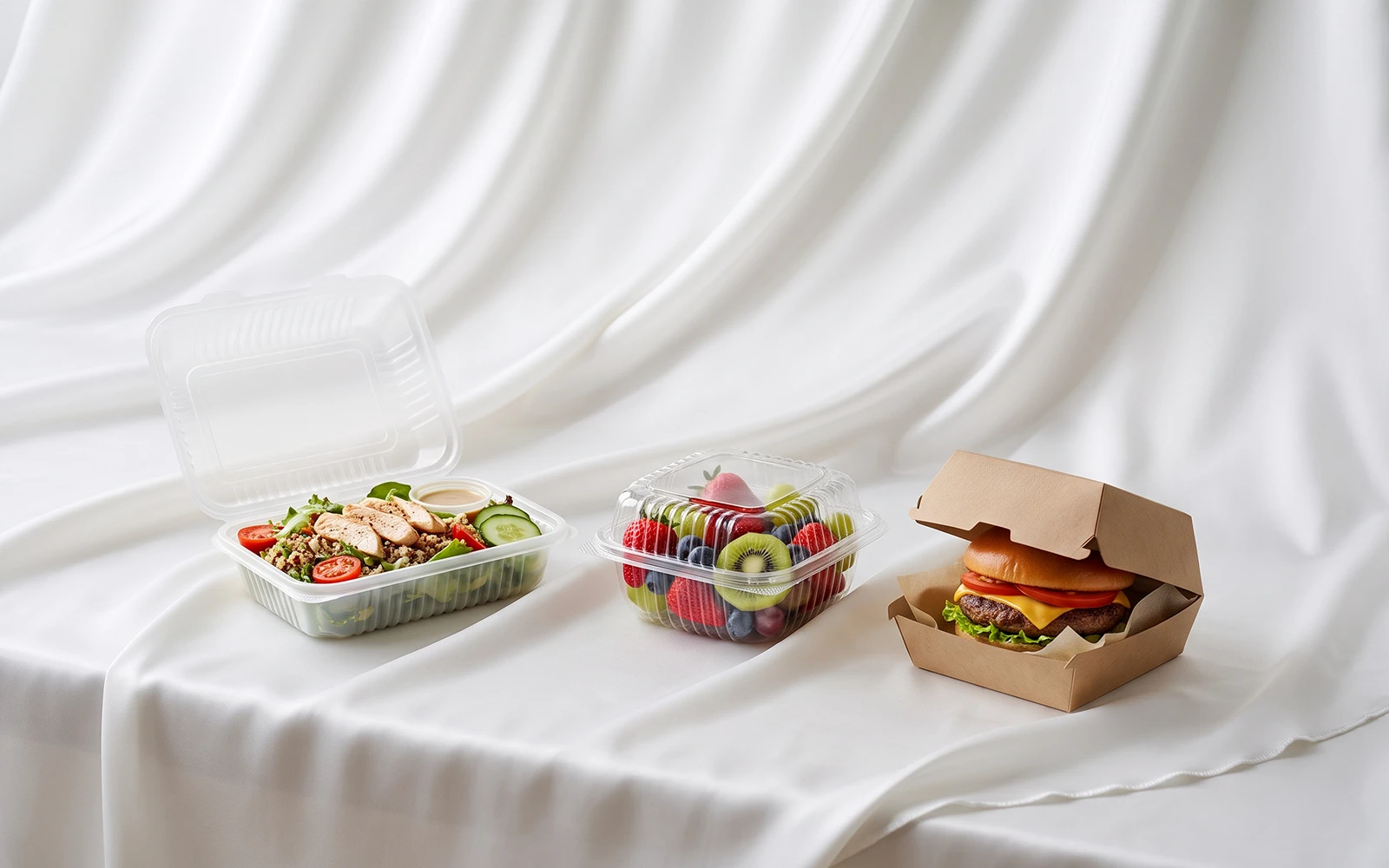
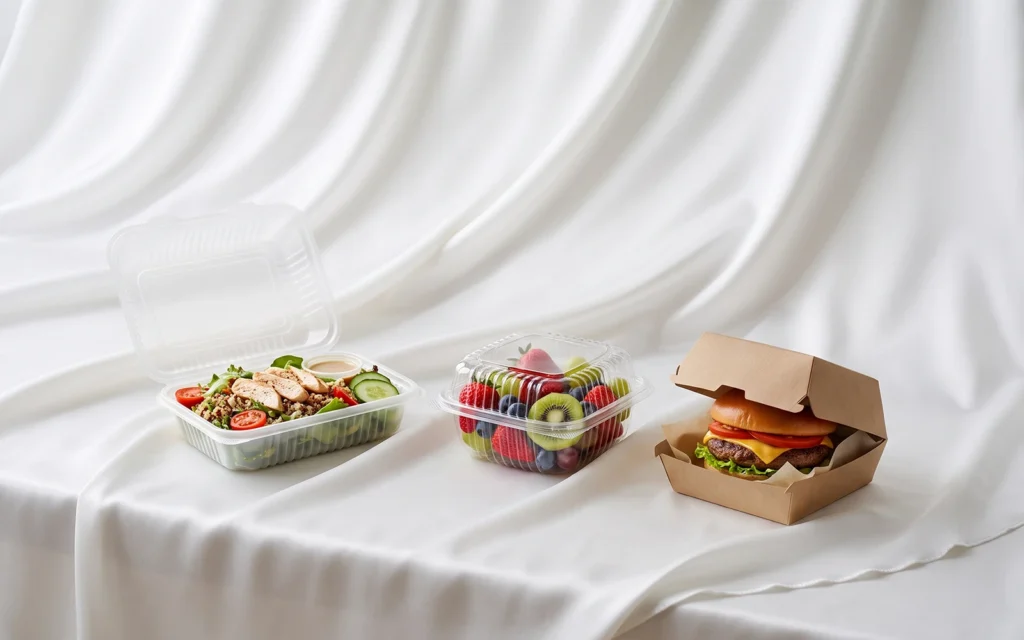
Grocery retailers rely heavily on clamshells for fresh produce, bakery items, deli products, and pre-made salads. The transparency lets consumers inspect freshness without opening the package, while the rigid structure protects delicate items like berries and tomatoes during transport.
Food-grade PET clamshells meet FDA and EU regulations for direct food contact. If you are sourcing containers for food applications, our clamshell packaging for food guide covers compliance requirements in detail.
Consumer Electronics
Headphone packages, USB accessories, power banks, and small gadgets frequently use full-seal clamshells. The tamper-evident seal deters in-store theft, and the clear plastic showcases the product without requiring staff assistance. Electronics brands also use trapped blister formats to include printed instructions and branding cards.
Retail and Point-of-Sale
Hardware stores, craft shops, and general merchandise retailers use clamshells for everything from drill bits to sewing kits. The hang-hole design (a reinforced slot at the top) allows products to hang on pegboard displays, maximizing shelf density.
Medical and Pharmaceutical
Sterile medical instruments, syringes, and diagnostic kits often ship in medical-grade clamshells that maintain sterility until the point of use. These containers must meet stricter material and manufacturing standards, including ISO 11607 compliance for sterile barrier systems.
Benefits of Clamshell Packaging
Why do so many industries default to clamshells over bags, boxes, or blister packs? The answer usually comes down to four factors.
Product Visibility
Clear plastic lets buyers see exactly what they are purchasing. This reduces returns in e-commerce and increases conversion rates in physical retail where customers cannot open sealed packages.
Tamper Resistance
Sealed clamshells provide visible evidence of tampering. For electronics, pharmaceuticals, and high-value goods, this is a critical loss-prevention measure.
Structural Protection
The rigid thermoformed shell absorbs impacts during shipping and handling. Fragile items stay secure in custom-molded cavities that prevent movement inside the package.
Retail-Ready Presentation
Clamshells hang on pegs, stand on shelves, or sit in display bins without additional merchandising materials. The product effectively becomes its own display case.
The trade-off is material usage. Clamshells use more plastic per unit than flexible pouches or paper wraps. This is where material selection and design optimization become important—choosing RPET, reducing wall thickness, or switching to fold-over designs can cut material consumption without sacrificing protection.
How to Choose the Right Clamshell Packaging
Selecting the right clamshell involves more than picking a size off a catalog. Use this checklist to evaluate your options systematically.
Step 1: Product Dimensions and Weight
Measure your product at its widest, longest, and tallest points. Add 5-10mm clearance on each side for easy insertion and removal. Heavier products need thicker walls (0.3mm+) to prevent cracking.
Step 2: Shelf Environment
Will the product hang on a peg, stand upright, or sit in a bin? Hang-hole clamshells need reinforced top edges. Stand-up designs require a flat, stable base.
Step 3: Seal Type
Single-use applications call for heat-sealed or RF-welded closures. Products that buyers want to inspect before purchase (like tools or fabrics) benefit from snap-lock resealable designs.
Step 4: Material Requirements
Food contact? Choose FDA-approved PET or RPET. Sustainability targets? Prioritize RPET or PLA. Budget-constrained? PVC may work for non-food, non-recyclable applications.
Step 5: Custom vs. Stock
Stock clamshells in standard shapes ship quickly and cost less per unit. Custom thermoformed designs require tooling investment (typically $2,000-$15,000 for the mold) but deliver a precise fit and stronger brand presence. Read more about the design-to-delivery process in our custom clamshell packaging guide.
Step 6: Compliance and Certification
Food-grade, medical-grade, or child-resistant requirements each add specific material and testing obligations. Confirm your supplier holds the relevant certifications before committing to a production run.
Step 7: Minimum Order Quantity and Lead Time
Stock items typically start at 1,000-5,000 units with 1-2 week delivery. Custom orders often require 10,000+ units and 4-8 weeks including tooling.
For buyers planning large-volume purchases, our clamshell packaging wholesale guide breaks down pricing tiers and negotiation strategies.
Sustainability in Clamshell Packaging
Packaging buyers face increasing pressure from retailers, regulators, and end consumers to reduce plastic waste. The clamshell industry is responding on several fronts.
Recycled Content
Major retailers like Walmart and Target now require suppliers to use packaging with a minimum percentage of post-consumer recycled (PCR) material. RPET clamshells containing 30-100% recycled PET flake meet this requirement while maintaining acceptable clarity and strength.
Material Reduction
Thinner gauge thermoforming—using 0.25mm PET instead of 0.35mm—can reduce material consumption by 20-30% per unit without significantly compromising structural integrity for lightweight products.
Alternative Materials
PLA and other bio-based plastics are gaining traction for short shelf-life food packaging. Paperboard clamshell hybrids, which replace one plastic half with molded fiber, are also emerging in produce packaging.
Design for Recyclability
Mono-material designs (PET base + PET lid, no mixed-material inserts) simplify the recycling stream. Avoiding PVC windows, metallic coatings, and non-recyclable adhesives helps the entire package enter the recycling system cleanly.
The sustainability landscape is moving fast. What qualifies as “eco-friendly” today may not meet tomorrow’s extended producer responsibility (EPR) requirements. Work with your supplier to future-proof your packaging choices. Our full analysis on sustainable clamshell packaging covers current regulations and emerging alternatives.
Finding a Reliable Manufacturer
The right manufacturing partner does more than produce containers—they help you avoid costly design mistakes, navigate compliance requirements, and scale production as demand grows.
Here is what to evaluate when vetting a clamshell packaging manufacturer:
Production Capabilities
Does the factory run thermoforming, injection molding, or both? Can they handle your volume requirements without excessive lead times? Factories with multiple production lines offer better scheduling flexibility.
Quality Systems
ISO 9001 certification is a baseline. Food-contact applications require additional GFSI-recognized certifications (BRC, SQF, or FSSC 22000). Ask for recent third-party audit reports.
Tooling and Prototyping
A good manufacturer offers rapid prototyping (3D-printed or CNC-milled samples) before you commit to production tooling. This saves weeks of back-and-forth and reduces the risk of mold revisions.
Material Sourcing
Does the manufacturer source PET sheet domestically or import it? Material traceability matters for food-grade and sustainability certifications.
Communication and Responsiveness
For overseas suppliers, time zone differences and language barriers can slow projects by days. Evaluate response times during the quoting phase—slow replies now predict slower responses when production issues arise.
Reliancepak, based in China, is one example of an integrated factory-and-trade operation serving global buyers. With nine production lines, FDA and EU food-grade certifications, and export experience across the US, Europe, the Middle East, and South America, they offer both stock and custom clamshell solutions with free sample availability. You can explore their food packaging options at reliancepak.com.
Frequently Asked Questions
What is the difference between clamshell packaging and blister packaging?
Clamshell packaging uses two hinged plastic halves that open and close like a shell. Blister packaging bonds a pre-formed plastic cavity to a flat backing card (paperboard, foil, or plastic). Clamshells offer 360-degree product visibility and resealability, while blisters are lighter and use less plastic per unit.
Is clamshell packaging recyclable?
Yes, PET clamshells (recycling code #1) are widely accepted in municipal recycling programs. PVC clamshells (#3) are much harder to recycle and not accepted in most curbside programs. RPET and PLA options offer improved environmental profiles. Always check your local recycling guidelines, as acceptance varies by region.
What is the typical minimum order quantity for custom clamshell packaging?
Most manufacturers require 5,000-10,000 units for custom thermoformed clamshells, though some will accept orders as low as 1,000 units with a tooling surcharge. Stock (non-custom) clamshells are often available from 500-1,000 units. Volume discounts typically begin at 25,000-50,000 units per order.
Can clamshell packaging be used for frozen food?
Yes, PET clamshells perform well in freezer conditions down to -40°C without becoming brittle. They are commonly used for frozen berries, pre-portioned meals, and ice cream novelty items. Ensure your supplier uses freezer-grade PET sheet and that the seal remains intact during temperature cycling.
How long does it take to produce custom clamshell packaging?
The typical timeline is 4-8 weeks from design approval to first shipment. Tooling fabrication takes 2-4 weeks, followed by sample approval (1 week) and production run (1-3 weeks depending on quantity). Rush orders are possible but may incur additional costs.