
The food service industry is experiencing a significant shift toward sustainable practices, with eco-friendly packaging becoming a priority for businesses and consumers alike. This comprehensive guide explores the world of eco-friendly microwave safe disposable bowls available in bulk, helping food service operators make informed decisions that balance environmental responsibility with practical business needs.
The Rising Demand for Sustainable Food Packaging Solutions
The market for sustainable food packaging is experiencing unprecedented growth, driven by converging environmental concerns, consumer preferences, and regulatory pressures. Recent market analysis shows the global sustainable packaging market is projected to reach $470 billion by 2027, with food service packaging representing a significant portion of this expansion.
This growth reflects a fundamental shift in consumer expectations. Today’s diners increasingly consider packaging sustainability when making purchasing decisions. Studies indicate that 73% of consumers are willing to pay more for sustainable packaging, and 78% feel more positive about companies that demonstrate environmental responsibility through their packaging choices.
For food service businesses, this shift represents both a challenge and an opportunity. While transitioning to eco-friendly options may require operational adjustments, it also offers significant potential for brand differentiation, customer loyalty, and future-proofing against tightening regulations.
The regulatory landscape is simultaneously evolving, with many jurisdictions implementing restrictions on conventional single-use plastics. From outright bans on certain materials to extended producer responsibility programs, these regulations are reshaping packaging requirements across the globe. Forward-thinking food service businesses recognize that early adoption of sustainable alternatives positions them advantageously as these regulations continue to expand.
What Makes Disposable Bowls Truly “Eco-Friendly”?
The term “eco-friendly” encompasses multiple factors when applied to disposable bowls, requiring careful evaluation beyond marketing claims. True environmental sustainability involves consideration of the entire lifecycle—from raw material sourcing through manufacturing, use, and end-of-life management.
Several key criteria help assess environmental claims:
- Material Source: Renewable resources (like plant-based materials) generally offer lower environmental impact than petroleum-derived plastics.
- Production Process: Energy consumption, water usage, and emissions during manufacturing significantly affect overall environmental footprint.
- Use Phase: Functionality, durability, and safety during use ensure the product fulfills its intended purpose without premature disposal.
- End-of-Life Options: Whether a product can be composted, recycled, or must be landfilled determines its ultimate environmental impact.
Common environmental certifications provide standardized frameworks for evaluation:
- Biodegradable Products Institute (BPI)1 certification verifies that products meet ASTM D6400 or D6868 standards for commercial compostability.
- TÜV Austria’s OK Compost certification indicates compliance with EN 13432 standards.
- Forest Stewardship Council (FSC) certification for paper-based components ensures responsible forestry practices.
- Recycled content certifications from organizations like SCS Global Services verify recycled material claims.
It’s essential to recognize that “greenwashing”—misleading environmental claims—remains prevalent in the packaging industry. Red flags include vague terms like “earth-friendly” without specific certifications, biodegradability claims without timeframe specifications, and green imagery without substantive environmental improvements.
Reliancepak maintains transparency in environmental claims, providing detailed information about material composition, certifications, and appropriate end-of-life management for all eco-friendly products.
Sustainable Materials for Microwave Safe Bowls
Plant-Based Plastics (PLA)
Polylactic Acid (PLA) has emerged as a leading bio-based alternative for food containers. Derived primarily from fermented plant starch (typically corn, cassava, or sugarcane), PLA offers several environmental advantages:
- Renewable Source: Made from annually renewable crops rather than finite petroleum resources.
- Lower Carbon Footprint: Typically produces 65% less CO2 during manufacturing compared to conventional plastics.
- Compostability: Breaks down in industrial composting facilities (typically 90-180 days under proper conditions).
- Familiar Performance: Offers clarity and rigidity similar to conventional plastics.
For microwave applications, standard PLA has limitations due to its relatively low heat resistance (typically softening around 60°C/140°F). However, specialized heat-resistant PLA formulations are now available that can withstand microwave reheating for short periods. These advanced formulations maintain structural integrity at higher temperatures while preserving the material’s environmental benefits.
Sugarcane and Bamboo Fiber Bowls
Plant fiber composites represent another sustainable option for microwave-safe disposable bowls:
- Sugarcane Bagasse: A byproduct of sugar production, bagasse creates sturdy, heat-resistant bowls with a natural appearance. These bowls typically withstand temperatures up to 100°C/212°F, making them suitable for microwave reheating.
- Bamboo Fiber: Rapidly renewable bamboo creates durable bowls with excellent heat resistance. Bamboo’s natural growth cycle (maturing in 3-5 years without replanting) makes it particularly sustainable.
These materials offer excellent heat resistance and structural integrity while significantly reducing plastic content. Most fiber bowls incorporate small amounts of binding agents to achieve necessary performance characteristics, but the environmental benefit comes from replacing 80-90% of conventional plastic with rapidly renewable plant materials.
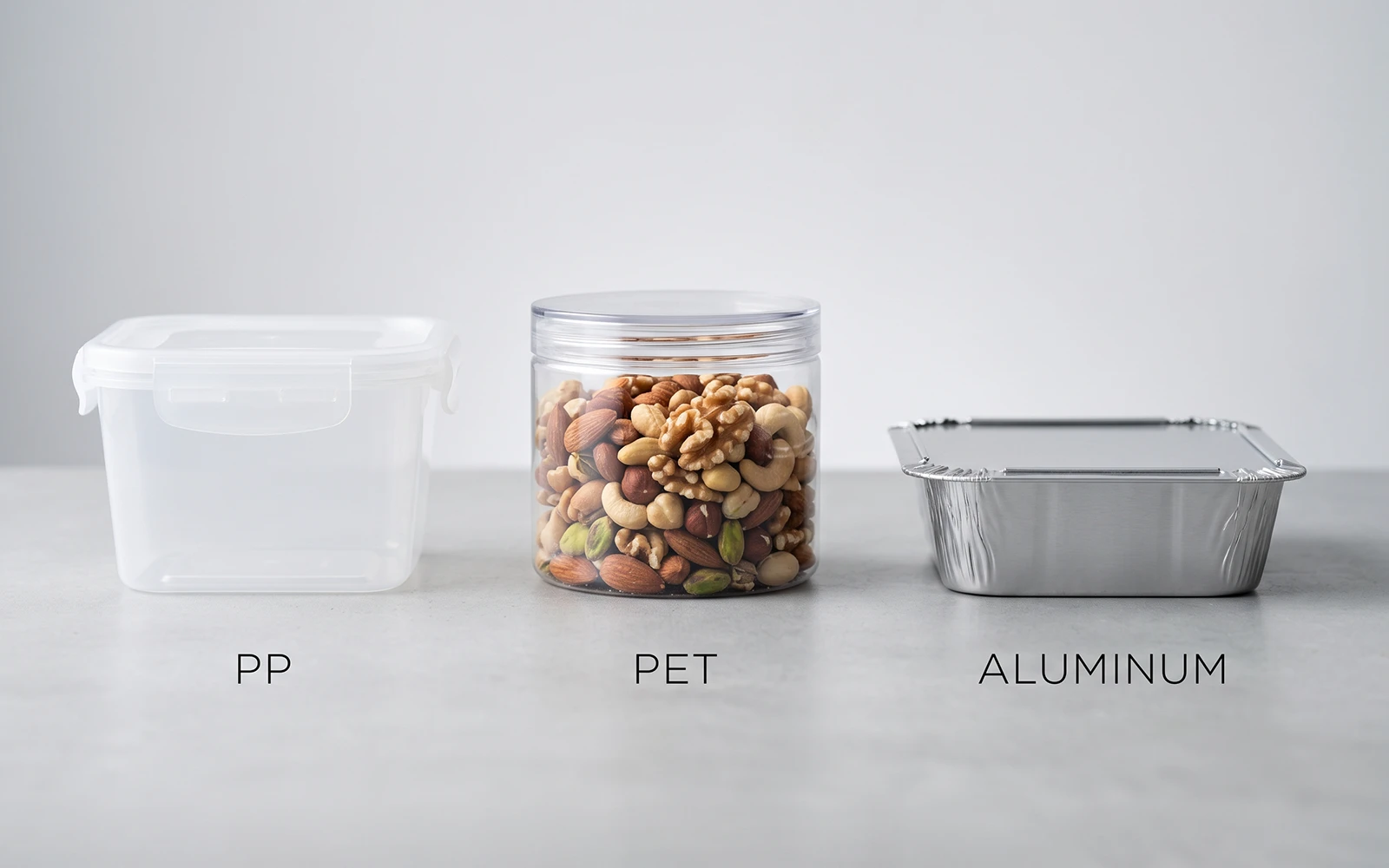
Recycled PP and PET Options
Recycled content represents another approach to sustainable packaging:
- Recycled Polypropylene (rPP): Offers full microwave compatibility with reduced environmental impact. Food-grade rPP typically incorporates 30-50% post-consumer recycled content while maintaining performance comparable to virgin materials.
- Recycled PET (rPET): While not typically microwave-safe, rPET provides excellent clarity for cold applications. Some specialized rPET formulations offer limited microwave compatibility.
These options maintain the performance characteristics of conventional plastics while reducing virgin material consumption and keeping existing plastics in circulation rather than in landfills or the environment.
Material Properties Comparison Table
| Material | Source | Microwave Safety | Heat Resistance | Compostability | Recyclability | Relative Cost | Carbon Footprint |
|---|---|---|---|---|---|---|---|
| Heat-Resistant PLA | Corn, Cassava | Good (limited time) | Moderate (80-90°C) | Industrial Only | Limited | Moderate-High | Low |
| Sugarcane Fiber | Agricultural Byproduct | Very Good | Good (100°C) | Industrial Only | No | Moderate | Very Low |
| Bamboo Fiber | Bamboo | Very Good | Good (100°C) | Industrial Only | No | Moderate-High | Low |
| Recycled PP (rPP) | Post-consumer Plastic | Excellent | Excellent (120°C) | No | Yes | Moderate | Moderate |
| Virgin PP | Petroleum | Excellent | Excellent (120°C) | No | Yes | Lower | High |
The above data is for reference only
Balancing Microwave Safety with Environmental Benefits
Creating disposable bowls that are both microwave safe and environmentally friendly presents unique challenges. The properties that make materials microwave safe—heat resistance, dimensional stability, and chemical inertness—often conflict with characteristics that enhance biodegradability or compostability.
Microwave Heating Effects on Different Eco-Materials
Different sustainable materials respond differently to microwave heating:
- Heat-Resistant PLA: Specially formulated PLA can withstand brief microwave heating but may deform with extended exposure or very hot foods. Best suited for gentle reheating rather than cooking.
- Plant Fiber Composites: Generally offer good microwave performance, with natural insulating properties that help maintain structural integrity. May absorb some moisture from foods during heating.
- Recycled PP: Performs identically to virgin PP in microwave applications, maintaining structural integrity even with extended heating or hot foods.
Understanding these differences helps match materials to appropriate applications—for example, using heat-resistant PLA for brief reheating of moderately hot foods, while selecting recycled PP for applications requiring extended heating or very hot foods.
Temperature Tolerance and Functional Limitations
Temperature tolerance varies significantly across eco-friendly materials:
- Standard PLA: Typically softens around 60°C/140°F, limiting microwave applications.
- Heat-Resistant PLA: Can withstand temperatures up to 90°C/194°F for short periods.
- Plant Fiber Composites: Generally maintain integrity up to 100°C/212°F.
- Recycled PP: Offers full heat resistance up to 120°C/248°F, comparable to virgin PP.
These temperature thresholds determine suitable applications—from cold foods only (standard PLA) to full hot food compatibility (recycled PP).
Food Safety and Eco-Material Compatibility
All food contact materials, regardless of environmental profile, must meet stringent safety standards:
- Migration Testing: Verifies that no harmful substances transfer from packaging to food, particularly important during heating.
- FDA and International Approvals: Confirms compliance with food contact regulations.
- Absence of Concerning Chemicals: Ensures materials are free from BPA, phthalates, and other substances of concern.
Reliancepak’s eco-friendly microwave safe bowls undergo comprehensive testing to verify both environmental claims and food safety compliance, ensuring they meet or exceed all applicable standards.
Reliancepak’s Eco-Friendly Microwave Solutions
Reliancepak offers several innovative solutions that balance microwave safety with environmental benefits:
- ThermaGreen™ Series: Heat-resistant PLA bowls specifically engineered for microwave reheating applications.
- NatureFiber™ Collection: Plant fiber composite bowls with excellent heat resistance and minimal plastic content.
- EcoCircle™ Line: Recycled PP bowls with 30-50% post-consumer content and full microwave compatibility.
These product lines represent different approaches to sustainable microwave-safe packaging, allowing businesses to select options that best align with their specific needs and environmental priorities.
Cost Considerations for Eco-Friendly Bulk Purchases
Price Comparison: Eco-Friendly vs. Traditional Bowls
Eco-friendly disposable bowls typically command price premiums compared to conventional options:
- PLA Bowls: 20-40% higher than conventional plastic equivalents
- Plant Fiber Bowls: 25-50% higher than conventional plastic equivalents
- Recycled Content Bowls: 10-25% higher than virgin plastic equivalents
However, these premiums have been steadily decreasing as production scales increase and technologies mature. The gap between conventional and sustainable options continues to narrow, particularly for high-volume purchases.
Bulk Purchase Economics Analysis
Volume-based pricing significantly impacts the economics of eco-friendly packaging:
- Small Orders (under 5,000 units): Highest per-unit cost, often 40-60% premium over conventional options
- Medium Orders (5,000-25,000 units): Moderate premium, typically 25-40% higher than conventional
- Large Orders (25,000+ units): Lowest premium, often 15-30% higher than conventional
- Very Large Orders (100,000+ units): Minimal premium, sometimes approaching price parity with conventional options
Strategic ordering based on projected needs can substantially reduce the cost impact of transitioning to sustainable options.
Long-Term Cost vs. Environmental Benefit Balance
When evaluating costs, businesses should consider both direct and indirect factors:
- Brand Value Enhancement: Sustainable packaging can improve brand perception and customer loyalty.
- Regulatory Compliance: Proactive adoption of sustainable packaging reduces the risk of costly forced transitions as regulations tighten.
- Marketing Differentiation: Environmental commitments provide valuable marketing content and competitive differentiation.
- Customer Willingness to Pay: Many consumers accept slight price increases for sustainable packaging.
A comprehensive cost analysis should include these factors rather than focusing solely on the initial purchase price difference.
Bulk Pricing Comparison Table
| Bowl Type | 5,000 Units | 25,000 Units | 50,000 Units | 100,000 Units |
|---|---|---|---|---|
| Conventional PP | $0.15/unit | $0.12/unit | $0.10/unit | $0.09/unit |
| Heat-Resistant PLA | $0.23/unit | $0.18/unit | $0.15/unit | $0.13/unit |
| Sugarcane Fiber | $0.25/unit | $0.19/unit | $0.16/unit | $0.14/unit |
| Recycled PP (30%) | $0.19/unit | $0.15/unit | $0.12/unit | $0.11/unit |
| Premium Price % (PLA) | +53% | +50% | +50% | +44% |
| Premium Price % (Fiber) | +67% | +58% | +60% | +56% |
| Premium Price % (rPP) | +27% | +25% | +20% | +22% |
The above data is for reference only
Practical Applications in Various Food Service Settings
Quick-Service Restaurant Packaging Strategies
Quick-service restaurants face unique challenges when implementing sustainable packaging:
- High-Volume Needs: Require consistent availability of large quantities.
- Cost Sensitivity: Operate with tight margins, making price premiums challenging.
- Diverse Menu Items: Need packaging suitable for various food types and temperatures.
- Brand Alignment: Packaging must reflect brand positioning and values.
For these operations, recycled PP bowls often provide the optimal balance of performance, sustainability, and cost. They offer full microwave compatibility, familiar handling characteristics, and moderate price premiums while still delivering meaningful environmental benefits through reduced virgin plastic use.
Takeout and Delivery Service Solutions
Delivery-focused operations have specific requirements:
- Journey Durability: Packaging must withstand transport conditions.
- Temperature Maintenance: Need to keep food at proper temperature during delivery.
- Leak Resistance: Essential for saucy or liquid-heavy menu items.
- Customer Reheating: Microwave compatibility is crucial for at-home enjoyment.
Heat-resistant PLA works well for moderately hot foods with short delivery times, while recycled PP provides superior performance for challenging delivery conditions or very hot foods. Plant fiber bowls offer excellent insulation properties that help maintain food temperature during delivery.
Catering and Event Food Service Applications
Catering operations benefit from sustainable packaging that enhances presentation:
- Visual Appeal: Natural-looking plant fiber bowls create premium, eco-conscious impressions.
- Diverse Serving Environments: Need versatile packaging suitable for various event settings.
- Batch Preparation: Require packaging that maintains food quality when prepared in advance.
- Client Expectations: Increasingly face requests for sustainable packaging options.
Plant fiber bowls have gained particular traction in catering applications, where their natural aesthetic aligns with premium positioning while their performance meets operational needs.
Healthcare and Educational Institution Requirements
Institutions have unique considerations:
- Strict Safety Standards: Need thoroughly tested, consistently performing products.
- Budget Constraints: Require cost-effective solutions for high-volume feeding.
- Sustainability Commitments: Many institutions have formal environmental goals.
- Diverse User Needs: Must accommodate various dietary requirements and serving scenarios.
Recycled PP bowls often provide the best balance for these settings, offering familiar performance with improved environmental profiles at moderate price premiums.
Storage and Handling of Bulk Eco-Friendly Bowls
Warehouse Space Optimization Tips
Efficient storage maximizes the value of bulk purchases:
- Vertical Stacking: Utilize full warehouse height with stable stacking configurations.
- Inventory Rotation: Implement first-in-first-out (FIFO) systems to prevent degradation of older stock.
- Climate Considerations: Maintain moderate temperature and humidity levels to preserve material integrity.
- Organized Zoning: Designate specific areas for different product types to improve picking efficiency.
Proper space utilization can reduce the effective cost of bulk purchasing by minimizing storage footprint per unit.
Maintaining Product Quality in Storage
Different eco-friendly materials have specific storage requirements:
- PLA Products: Keep away from heat sources and direct sunlight, which can cause warping or degradation. Ideal storage conditions are below 50°C/122°F with moderate humidity.
- Plant Fiber Products: Store in dry conditions to prevent moisture absorption that could affect structural integrity or potentially lead to mold in extreme cases.
- Recycled PP Products: Generally very stable in storage but benefit from protection against dust accumulation.
Proper storage conditions ensure that products maintain their performance characteristics until use.
Inventory Management and Turnover Strategies
Effective inventory management balances bulk savings with storage constraints:
- Par Level System: Establish minimum quantities that trigger reordering based on usage rates.
- Seasonal Adjustment: Modify inventory levels based on predictable business fluctuations.
- Usage Tracking: Implement systems to accurately monitor consumption rates across different product types.
- Supplier Relationships: Develop arrangements for scheduled deliveries that maintain optimal inventory levels.
These strategies help businesses capture bulk pricing benefits while minimizing storage requirements and reducing the risk of product degradation.
Staff Training and Usage Guidelines
Proper handling ensures optimal performance:
- Material Identification: Train staff to recognize different sustainable materials and their appropriate applications.
- Temperature Guidelines: Provide clear guidance on temperature limitations for different bowl types.
- Storage Protocols: Establish procedures for maintaining product quality from delivery to use.
- Customer Communication: Equip staff with information about the environmental benefits of packaging choices to share with interested customers.
Comprehensive training maximizes the value of investment in sustainable packaging by ensuring proper application and minimizing waste.
Customer Communication and Marketing Value
Packaging as a Brand Differentiation Tool
Sustainable packaging creates meaningful differentiation:
- Visual Distinction: Eco-friendly materials often have distinctive appearances that signal environmental commitment.
- Story Opportunity: Sustainable choices provide compelling content for brand narratives.
- Value Alignment: Environmental responsibility resonates with growing consumer segments.
- Competitive Advantage: Early adoption can establish leadership positioning in sustainability.
Businesses that effectively communicate their sustainable packaging choices transform a necessary operational expense into a valuable marketing asset.
Strategies for Communicating Sustainability Value
Effective communication maximizes the marketing benefit:
- Clear Labeling: Include recycling or composting instructions directly on packaging.
- Staff Knowledge: Train employees to accurately discuss environmental benefits when asked.
- Website Content: Create dedicated sustainability pages explaining packaging choices and environmental impact.
- Social Media Storytelling: Share behind-the-scenes content about packaging decisions and environmental benefits.
These approaches help customers understand and appreciate sustainable packaging choices, enhancing their perception of the brand.
Social Media and Eco-Packaging Interaction
Social platforms offer powerful channels for sustainability messaging:
- Visual Appeal: Eco-friendly packaging often photographs well for social sharing.
- Hashtag Campaigns: Create dedicated sustainability hashtags to encourage user-generated content.
- Influencer Partnerships: Collaborate with environmentally focused influencers to highlight sustainable practices.
- Customer Resharing: Encourage customers to share their eco-friendly packaging experiences.
These strategies extend the reach of sustainability messaging beyond immediate customers to broader audiences.
Building and Maintaining Authentic Environmental Commitments
Authenticity is essential in sustainability communication:
- Transparent Claims: Be specific and accurate about environmental benefits.
- Avoid Greenwashing: Don’t overstate environmental advantages or make unsubstantiated claims.
- Acknowledge Limitations: Be honest about areas still needing improvement.
- Demonstrate Progress: Show commitment through continuous improvement in packaging choices.
Authentic communication builds trust and credibility, enhancing the long-term value of sustainable packaging investments.

Case Studies: Successful Implementation of Eco-Friendly Bowls
Restaurant Chain Environmental Transition
A regional fast-casual restaurant chain with 35 locations implemented a comprehensive sustainable packaging program:
- Challenge: Replace conventional plastic bowls with eco-friendly alternatives without disrupting operations or significantly increasing costs.
- Solution: Phased implementation of recycled PP bowls for hot foods and heat-resistant PLA for cold items.
- Results: 42% reduction in virgin plastic use, positive customer feedback, and successful incorporation of sustainability messaging into marketing materials.
- Key Learning: Gradual transition allowed for staff training and customer education while managing cost impacts.
Cost Savings and Brand Benefits Analysis
A meal prep delivery service transitioned to plant fiber bowls:
- Challenge: Balance higher packaging costs with brand positioning and customer expectations.
- Solution: Implemented premium plant fiber bowls with clear sustainability messaging.
- Results: 15% increase in customer retention, successful 5% price increase attributed to enhanced perception of quality, and positive social media engagement.
- Key Learning: The perceived value of sustainable packaging justified both the increased packaging cost and a modest price increase.
Customer Feedback and Satisfaction Analysis
A corporate catering company switched to eco-friendly microwave safe bowls:
- Challenge: Meet client requests for sustainable options while maintaining food quality and presentation.
- Solution: Adopted a mix of recycled PP and plant fiber bowls based on specific menu requirements.
- Results: 28% increase in positive feedback specifically mentioning packaging, improved client retention, and new business attributed to sustainability practices.
- Key Learning: Clients increasingly consider sustainability practices in vendor selection, making eco-friendly packaging a business development advantage.
Reliancepak Customer Success Stories
Reliancepak has supported numerous businesses in sustainable packaging transitions:
- A university food service reduced landfill waste by 37% through implementing compostable packaging aligned with campus composting facilities.
- A regional grocery chain increased prepared food sales by 22% after transitioning deli containers to visibly sustainable options.
- A food manufacturer improved retailer relationships by proactively adopting packaging that aligned with retailers’ sustainability commitments.
These case studies demonstrate that well-executed transitions to sustainable packaging deliver business benefits beyond environmental impact.
Conclusion: Making the Switch to Eco-Friendly Microwave Safe Bowls
Summary of Key Benefits
Eco-friendly microwave safe bowls offer multiple advantages:
- Environmental Impact Reduction: Decreased reliance on virgin petroleum-based plastics and reduced waste.
- Brand Enhancement: Visible demonstration of environmental responsibility that resonates with consumers.
- Future-Proofing: Preparation for increasingly stringent packaging regulations.
- Marketing Opportunities: Compelling sustainability stories that differentiate from competitors.
While these benefits come with cost considerations, the comprehensive value proposition often justifies the investment for forward-thinking food service businesses.
Practical Recommendations for Bulk Purchasing
Strategic approaches to implementation include:
- Start with High-Visibility Applications: Begin with customer-facing packaging where sustainability is most noticeable.
- Conduct Small-Scale Testing: Test customer reception and operational performance before full-scale implementation.
- Leverage Volume Pricing: Consolidate orders to reach more favorable price tiers.
- Consider Mixed Material Strategies: Use different sustainable materials based on specific application requirements.
These approaches help businesses maximize the value of their sustainable packaging investments.
Importance of Supplier Partnership
Selecting the right supplier is crucial for successful implementation:
- Material Expertise: Choose suppliers with deep knowledge of sustainable materials and their applications.
- Supply Chain Reliability: Ensure consistent availability to prevent operational disruptions.
- Certification Documentation: Verify that suppliers provide proper documentation for environmental claims.
- Innovation Pipeline: Partner with suppliers committed to ongoing sustainable packaging innovation.
Reliancepak offers comprehensive support for businesses transitioning to eco-friendly packaging, including material selection guidance, implementation planning, and ongoing optimization.
Future Trends in Sustainable Packaging
The sustainable packaging landscape continues to evolve:
- Material Innovations: New bio-based polymers with enhanced performance characteristics.
- Improved Recycling Infrastructure: Expanding capabilities for processing diverse sustainable materials.
- Regulatory Evolution: Increasing requirements for sustainable packaging across global markets.
- Consumer Expectations: Growing demand for environmental responsibility throughout the supply chain.
Businesses that establish sustainable packaging programs now will be well-positioned to adapt to these evolving trends.
- NORTH AMERICA’S LEADING AUTHORITY ON COMPOSTABLE PRODUCTS & PACKAGING ↩︎