For buyers sourcing food packaging at volume, compliance is a supply chain problem before it becomes a paperwork problem. A container that fails migration limits, or arrives without a valid Declaration of Compliance, can stall a shipment at port, trigger a retail audit finding, and in the worst case force a product recall. Those costs land on the buyer, not on the factory that molded the tray.
This guide covers the practical side of sourcing food-contact plastic containers: what FDA and EU rules actually require, which polymers hold up across applications, which test reports and certificates to demand, how to audit a supplier, and how to structure a bulk order so compliance holds from the first container load to the fiftieth.
Compliance Is a Procurement Decision, Not a Labeling One
Most sourcing teams treat food-contact compliance as a document stapled to a quotation. That framing is backward. The material, the mold design, the additives package, the line the container runs on, and the cleaning regime between runs all determine whether the finished item is compliant. None of those are visible on a price sheet.
Three things tend to go wrong in bulk procurement. The first is scope mismatch: a container certified for refrigerated storage gets used for hot fill. The second is documentation drift: the compliance file describes the resin the supplier used two years ago, not the one on the line today. The third is trust transfer: a distributor passes along a factory’s certificate without verifying that the certificate covers the actual SKU being shipped.
Buyers who get this right treat compliance as part of supplier qualification and purchase-order terms, not as a marketing claim to be collected once.
The Regulatory Baseline for Food-Contact Plastics
Requirements differ by market, but they share a common logic: authorized substances only, migration limited to safe thresholds, and documented manufacturing controls. If your product ships to more than one region, design to the strictest applicable rule rather than re-engineering per destination.
United States: The FDA Framework
Food-contact plastics in the US are regulated as indirect food additives under Title 21 of the Code of Federal Regulations, primarily Parts 174 through 178. New food-contact substances go through the Food Contact Notification process, while long-established materials may rely on prior sanctions or GRAS status.
Two points matter during supplier review. First, the FDA does not “approve” finished containers. It authorizes substances and conditions of use. A supplier claiming blanket “FDA approval” without pointing to a specific CFR section, prior sanction, or FCN number is giving you a claim, not a compliance pathway. Second, compliance is tied to intended use conditions. A substance cleared for room-temperature dry foods is not automatically cleared for fatty foods at high temperature.
Manufacturers are also expected to operate under current good manufacturing practice so that authorized substances stay within their cleared conditions.
European Union: Framework Regulation and the Plastics Measure
The EU layer is more prescriptive, which makes document review easier. Regulation (EC) No 1935/2004 sets the general safety requirement that materials must not transfer constituents to food in quantities that endanger health or unacceptably change composition, taste, or odor.
Plastics are then governed by the specific measure (EU) No 10/2011, which carries a positive list of authorized monomers, additives, and polymer production aids, plus specific migration limits for individual substances and an overall migration limit. Regulation (EC) No 2023/2006 adds good manufacturing practice obligations for the production chain.
The document that ties this together is the Declaration of Compliance, required under Annex IV of (EU) No 10/2011. A usable DoC names the article, identifies the substances with restrictions, states the conditions of use, and is backed by migration test data. A one-page PDF that says “food grade, EU compliant” does not satisfy the requirement.
Other Markets Worth Planning For
If you sell into Asia, Latin America, or Oceania, expect additional national layers. China applies the GB 4806 series of national food safety standards for food-contact materials. Japan operates a positive list system under its Food Sanitation Act. Mercosur countries apply regional resolutions on food-contact packaging, and Australia and New Zealand regulate through the Food Standards Code. Several US states also impose separate restrictions on particular substances, so state-level review is worth budgeting into launch timelines.
| Market | Governing framework | Document to request | Where buyers get exposed |
| United States | 21 CFR Parts 174–178; Food Contact Notifications; GRAS | Substance compliance statement citing CFR section or FCN number | Vague “FDA approved” claims with no regulatory reference |
| European Union | Regulation (EC) No 1935/2004; (EU) No 10/2011; (EC) No 2023/2006 | Declaration of Compliance under Annex IV, with migration test data | DoC that omits intended use conditions or substance restrictions |
| China | GB 4806 series | GB 4806 test report covering the specific resin and article | Reports issued for a different resin grade than the one shipped |
| Japan | Food Sanitation Act positive list system | Positive list conformity declaration | Assumption that FDA or EU clearance transfers |
| Mercosur | Regional resolutions on food-contact packaging | Local conformity documentation | Documentation issued only for the export market, not the destination |
| Australia / New Zealand | Food Standards Code, packaging provisions | Supplier declaration plus supporting test data | No market-specific review until a customer asks |
Material Selection: Matching Polymer to Application
Polymer choice drives both compliance risk and unit economics. The same SKU molded in two different resins can carry materially different migration profiles and different regulatory clearances.
Cost per unit is the wrong first filter. Work backward instead: define the food type, the fill temperature, the storage and transport conditions, and the expected shelf life. Those four variables eliminate most candidate materials before price enters the conversation.
| Polymer | Resin code | Heat profile | Typical B2B applications | Procurement watch-outs |
| PET | #1 | Moderate; grade-dependent | Beverage bottles, cooking oil, condiment bottles | Common substrate for recycled-content claims; verify food-grade recycled input |
| HDPE | #2 | Moderate, short-duration exposure | Milk and juice containers, dairy tubs, liners | Often opaque, so visual defect inspection is limited |
| PP | #5 | Good heat tolerance | Hot-fill containers, microwave trays, cups, deli packaging | Clarified grades cost more; clarify spec up front |
| LDPE | #4 | Low heat tolerance | Squeeze bottles, wraps, flexible lids | Rarely the compliance problem, often the sealing failure |
| PS | #6 | Limited heat tolerance | Cold deli trays, clamshells | Restricted for fatty or hot applications; state rules vary |
| CPET | — | Dual-ovenable | Prepared-meal trays for oven and microwave | Higher tooling and unit cost; validate with the end customer |
Two practical notes. First, additives decide compliance as much as the base resin does — plasticizers, stabilizers, and colorants all carry their own restrictions, and a color masterbatch can be the reason a container fails. Second, recycled content and food-contact status are separate questions: recycled feedstock needs its own authorization pathway before it can be called food-grade.
Testing and Documentation: What to Ask For Before You Order
Test reports are where supplier claims become verifiable. Request the raw reports, not a summary page, and check that the tested article matches the shipped article in resin, color, and thickness.
The core tests for food-contact plastics cover migration of constituents under the intended conditions of use, extractables screening for substances that could migrate, overall and specific migration against the applicable limits, organoleptic evaluation for taste and odor transfer, and physical performance such as seal integrity and drop resistance. For products marketed as allergen-free or used with sensitive categories, cleaning validation and cross-contamination controls also belong in the file.
A complete documentation package for a bulk order typically looks like this:
| Document | Issued by | What to verify |
| Declaration of Compliance | Container manufacturer | Names the article, resin, restricted substances, and use conditions |
| Migration test report | Accredited third-party laboratory | Test conditions match your fill temperature and food type |
| Resin compliance statement | Resin supplier | CFR section, FCN number, or EU positive list reference |
| GB 4806 or market-specific report | Destination-approved laboratory | Covers the exact resin grade being shipped |
| GMP or quality system certificate | Manufacturer or certification body | Scope covers the producing site, not just the head office |
| Material specification and SDS | Manufacturer | Additive package, colorants, and any recycled content disclosed |
| Substance declarations | Manufacturer | Position on BPA, phthalates, and heavy metals stated explicitly |
One caution on test reports: an accredited-lab report proves what was tested on the day it was issued. It does not guarantee ongoing production. That gap is what supplier audits exist to close.
Supplier Audit: Separating Compliant Factories from Paper-Compliant Ones
Every serious supplier has a compliance folder. The question is whether the folder describes the factory you are buying from.
Start with documents because they are cheap to review. Look for consistency across the set: does the resin named in the compliance statement match the resin on the specification sheet, the test report, and the quotation? Inconsistency at this level is a reliable early warning.
Then verify production conditions. A site audit or a live video walkthrough should confirm that food-contact lines are physically separated from non-food production, that regrind and recycled scrap are controlled or excluded, that cleaning between color and resin changes is documented, and that finished goods are stored away from dust and chemical exposure.
Traceability and change control carry the most weight over a long relationship. Ask how the supplier handles a resin substitution, a masterbatch change, or a mold transfer between sites, and whether you will be notified before such a change reaches your order. Suppliers with a written change-notification process are far easier to work with over multiple production cycles. If a factory cannot describe that process, assume changes will happen silently.
For buyers working across several markets, the audit can cover multiple SKUs at once, which makes the cost easier to justify. It also means the supplier relationship is doing more work than any single purchase order.
Bulk Purchasing Checklist
Use this as a gate sequence. Skipping a gate is how compliance failures arrive disguised as logistics delays.
Before the RFQ goes out:
- Define fill temperature, food type, storage conditions, and target shelf life in writing
- State the destination markets and the certification evidence required for each
- Confirm whether the container is single-use or intended for reuse, since that changes the test set
At the RFQ stage:
- Ask for the Declaration of Compliance, migration reports, and resin statements with the quotation
- Require the supplier to name any subcontractor or secondary production site
- Request MOQ, tooling cost, sample lead time, and production lead time as separate line items
Before production:
- Approve a physical sample against your own product, not against a catalog photo
- Confirm the approved sample’s resin, color, and thickness are frozen in writing
- Agree on an AQL sampling plan and the defect classification for the order
Before shipment:
- Collect the final compliance file tied to the production lot
- Verify carton labeling, lot codes, and traceability references match the file
- Confirm pallet configuration and container utilization before booking freight
On arrival:
- Retain a reference sample from each lot for at least the product shelf life
- Log any incoming inspection findings against the supplier’s corrective action process
MOQ, Lead Time, and the Real Cost of Getting Compliance Wrong
Compliance failures rarely show up as a line item on a purchase order. They show up as air freight to replace a held shipment, rework or scrapping of printed packaging that no longer matches the container, and the labor cost of a retail audit response.
When you compare quotations, normalize them. Ask each supplier to price the same container spec, the same certification package, and the same delivery terms. A low unit price that excludes testing documentation is not a cheaper offer; it is a deferred cost.
Three commercial levers are worth negotiating early, because they are hard to change later. Tooling ownership and mold transfer rights protect you if you switch suppliers. A written change-notification clause protects your compliance file. A staged volume commitment against a fixed price band protects your landed cost through a season.
For buyers importing from Asia into the US or EU, also clarify Incoterms, who files which customs documentation, and how the factory handles a destination-market inspection hold.
Where Reliancepak Fits
Reliancepak is a B2B wholesale supplier of food packaging and containers, operating integrated production lines in China and serving distributors, food processing plants, and produce operations across the United States, Europe, the Middle East, Africa, and South America.
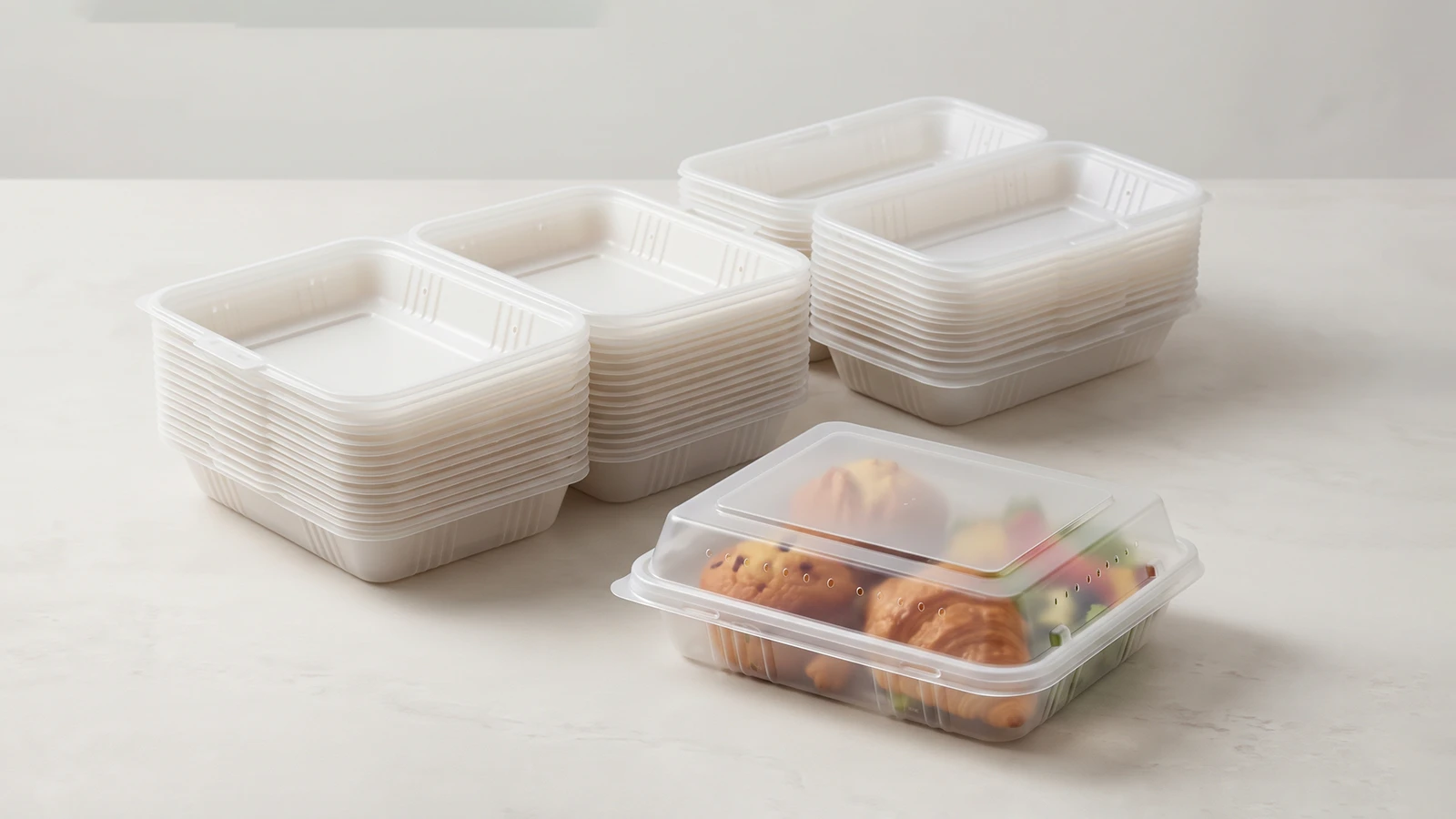
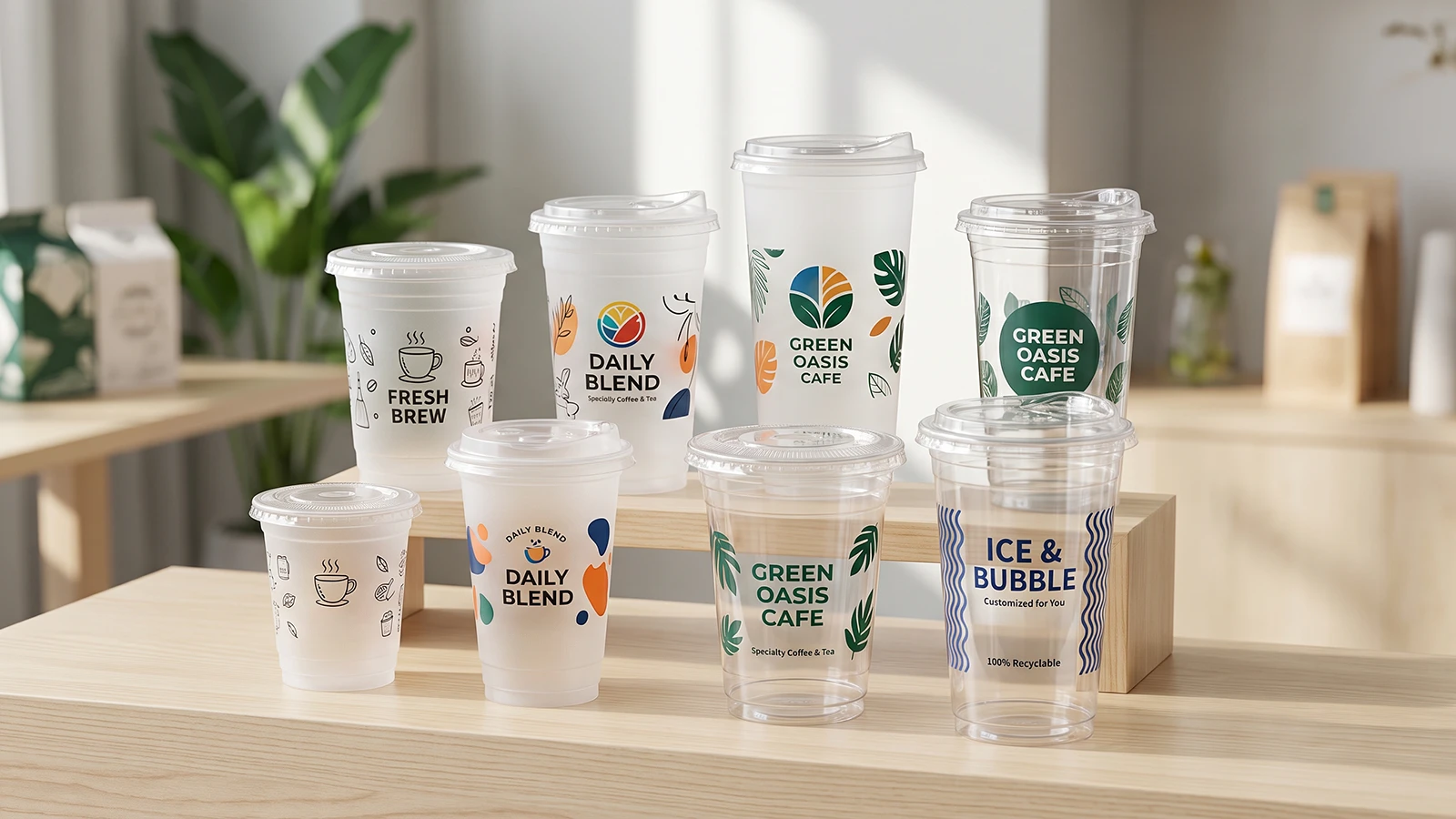
For buyers working through the checklist above, the relevant capabilities are straightforward. Food-grade materials are supplied with FDA and EU food-contact compliance documentation, so the DoC and resin statements arrive with the quotation rather than after weeks of chasing. Custom OEM and ODM work covers tray geometry, thickness, color, and print-ready specifications for private-label programs. Container ranges include plastic trays, disposable food containers, cups, paper boxes, and paper bags, which supports one-stop sourcing when a program spans several packaging categories.
If your requirement includes a rare or specialized item that most wholesalers will not quote, that sourcing case is worth raising early. Samples are available at no charge so the material, rigidity, and finish can be evaluated against your actual product before tooling is committed. Review the food-grade plastic container range to see current specifications, or send your requirement through the contact page for a quotation that includes the compliance file alongside pricing, MOQ, and lead time.
If you already have a specification, the fastest path is an RFQ with your fill conditions, destination market, and target annual volume. That single message is usually enough to come back with a costed, documentation-complete offer and a sample dispatch date. Use the sample and RFQ request form to start, and note your destination market so the correct certification package travels with the offer.
Frequently Asked Questions
Can a supplier claim “FDA approved” for a plastic container?
No. The FDA authorizes food-contact substances and their conditions of use, and does not issue approvals for finished containers. Ask the supplier to cite the specific 21 CFR section, prior sanction, or Food Contact Notification number behind the material.
Is a Declaration of Compliance enough to sell into the EU?
It is the required starting document, not the whole file. A usable DoC must identify the article, list restricted substances, state conditions of use, and be supported by migration test data generated under conditions matching your application.
Can one container be used for both US and EU markets?
Yes, in many cases, if it is designed to the stricter of the two regimes from the outset. The practical requirement is a documentation set covering both: a US substance compliance statement and an EU Declaration of Compliance under (EU) No 10/2011.
Do I need my own migration testing if the supplier already has reports?
Not always, but confirm three things first:
- The tested article matches your resin, color, and thickness
- The test conditions match your fill temperature and food type
- The report was issued by an accredited laboratory and remains current
If any of those fail, budget for independent testing before launch.
How do samples and bulk production timelines work?
Samples are typically available at no charge so material and performance can be validated first. After sample approval and a signed specification, bulk production is scheduled against your volume and destination, with lead time quoted alongside pricing and MOQ.